
I’m working on a mystery novel—I’ve been working on it for years, but am now seeing the light at the end of the tunnel—and am faced with dilemmas too numerous to whine about in only one post, so I’ll move along.
I will instead write about the one pleasure of the writing life: creating and naming characters.
My novel is set in a little town very like my own hometown. I don’t base my plot on real events, and I don’t use real people as characters—with one exception: Steve Dauchy.

Note: One of my readers, Dr. Cullen Dauchy, knows more about Steve than I do, especially about his early life, and I hope he’ll feel free to correct any errors.
Steve Dauchy was a career blood donor at Katy Veterinary Clinic in Katy, Texas. On retirement he moved to Fentress, where he lived with his veterinarian-owner’s parents, Joe and Norma Dauchy. Joe and Norma lived next door to me; in local terms, next door meant that my house was on one corner, then there was a half-acre “patch” of pecan and peach trees and grass and weeds, then a street, and then on the next corner, the Dauchy yard and their house. The point being that when Steve visited me, he didn’t just stroll across a driveway.
Joe was my dad’s first cousin, so I guess that makes Steve and me second cousins. I have a lot of cousins on that side of the family, although most are human.
Steve is a family name, with a story behind it. As I understand it, back in the ’20s or ’30s, my Great-uncle Cull (Joseph Cullen Dauchy, Sr.), enjoyed listening to a radio program about a Greek character who frequently spoke of “my cat Steve and her little cattens.” Uncle Cull was so amused by the phrase that he named a cat—probably one of the barn cats—Steve. And for the next forty or so years, he always had a cat named Steve.
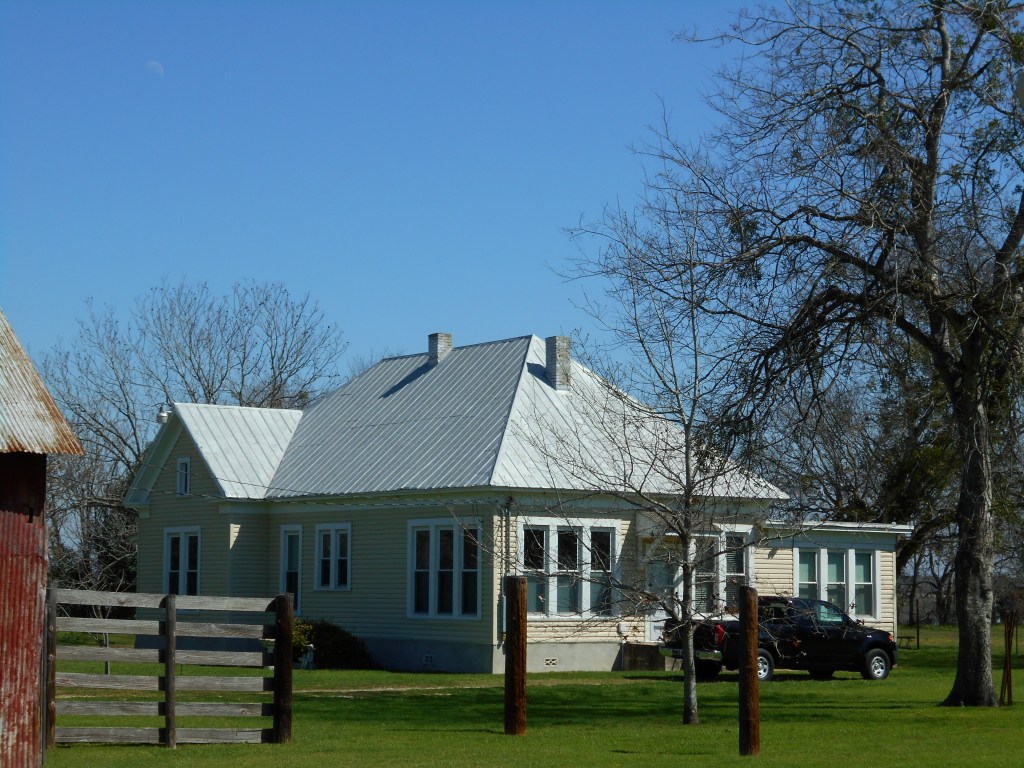
So when the clinic cat became part of the Uncle Cull’s son and daughter-in-law’s family, he became the latest in a long line of Steves.
How to describe Steve? He was a fine figure of a cat: a big tabby, deep orange, with an expression of perpetual boredom. His reaction to nearly everything translated as, “Meh.” I’ve heard that’s common among clinic cats.
Once when Steve was standing on my front porch, the neighbor’s Great Dane got loose and charged over. I was frantic, shouting at the dog, shouting at Steve. But when the dog hit the porch, Steve just looked up at him. Dog turned around and trotted home.
Some would say Steve was brave, and I’m sure he was. But I believe his grace under pressure had their roots elsewhere.
First, he had experience. He knew dogs. In his former employment, he’d observed the breed: big, little, yappy, whining, growling, howling, cringing, confined to carriers, restrained by leashes, sporting harnesses and rhinestone collars, hair wild and matted, sculpted ‘dos and toenails glistening pink from the OPI Neon Collection. He’d seen them all. He was not impressed.
Facing down a Great Dane, however, took more than experience. There was something in Steve’s character, an inborn trait that marked him for greatness: his overarching sense of entitlement. He was never in the wrong place at the wrong time. My porch was his porch. The world was his sardine.
Except for the kitchen counter. Steve thought kitchen counters were for sleeping, but Joe and Norma’s maid didn’t. Consequently, he stayed outside a lot. He took ostracism in stride and used his freedom to range far and wide. Far and wide meant my yard.
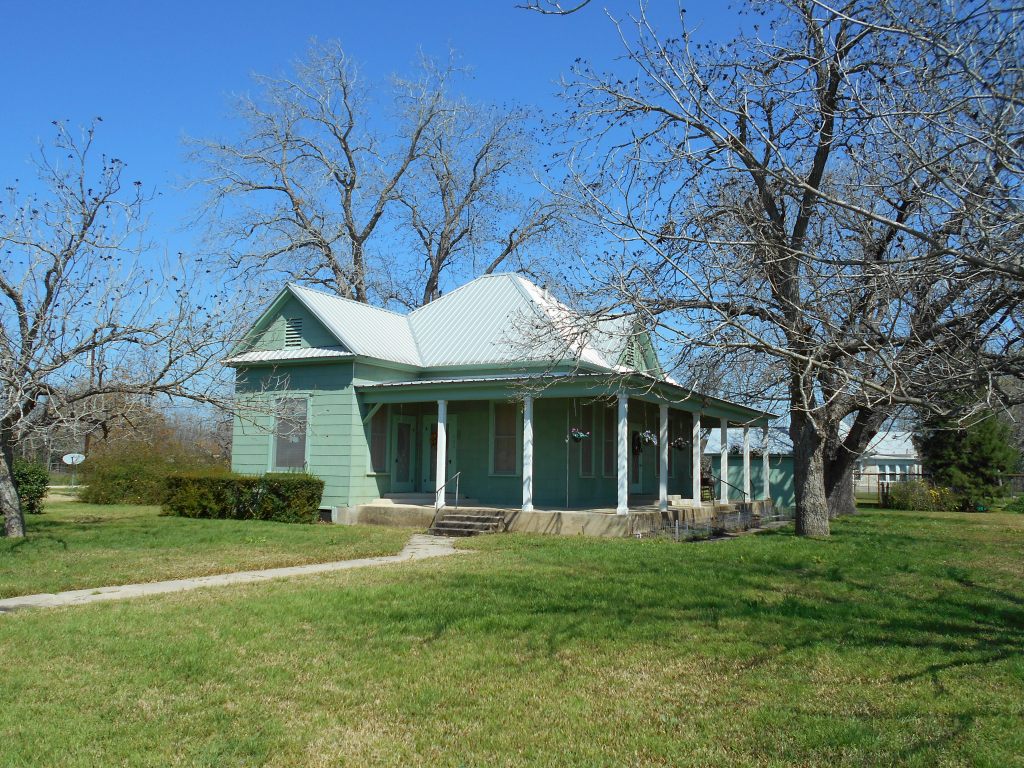
At that time I had three indoor cats—Christabel, Chloe, and Alice B. Toeclaws—and a raft of outdoor cats. The outdoor cats started as strays, but I made the mistake of naming them, which meant I had to feed them, which meant they were mine. Chief among them was Bunny, a black cat who had arrived as a teenager with his gray-tabby mother, Edith.
One day Bunny, Edith, and I were out picking up pecans when Steve wandered over to pay his respects, or, more likely, to allow us to pay our respects to him. Bunny perked up, put on his dangerous expression, and walked out to meet the interloper. It was like watching the opening face-off in Gunsmoke.
But instead of scrapping, they stopped and sat down, face to face, only inches apart. Each raised his right paw above his head and held it there a moment. Next, simultaneously, they bopped each other on the top of the head about ten times. Then they toppled over onto their sides, got up, and walked away.
That happened every time they met. Maybe it was just a cat thing, a neighborly greeting, something like a Masonic handshake. But I’ve wondered if it might have had religious significance. Bunny was a Presbyterian, and Steve was a Methodist, and both had strong Baptist roots, and although none of those denominations is big on ritual, who knows what a feline sect might entail?
Steve had a Macavity-like talent for making himself invisible. Occasionally when I opened my front door, he slipped past and hid in a chair at the dining room table, veiled by the tablecloth. When he was ready to leave, he would hunt me down—Surprise!—and lead me to the door. Once, during an extended stay, he used the litter box. Christabel, Chloe, and Alice B. Toeclaws were not amused.
Invisibility could work against him, though. Backing out of the driveway one morning, I saw in the rearview mirror a flash streaking across the yard. I got out and looked around but found nothing and so decided I’d imagined it. When I got home from work, I made a thorough search and located Steve under my house, just out of reach. I called, coaxed, cajoled. He stared. It was clear: he’d been behind the car when I backed out, I’d hit him, and he was either too hurt to move or too disgusted to give me the time of day.
It took a long time and a can of sardines to get him out. I delivered him to the veterinarian in Lockhart; she advised leaving him for observation. A couple of days later, I picked him up. Everything was in working order, she said, cracked pelvis, nothing to do but let him get over it.
“Ordinarily,” said the vet, “I would have examined him and sent him home with you the first day. I could tell he was okay. But you told me his owner’s son is a vet, and I was afraid I’d get it wrong.”
Although he was an indoor-outdoor cat, Steve managed plenty of indoor time at his own house, too, especially in winter, and when the maid wasn’t there. One cold day, the family smelled something burning. They found Steve snoozing atop the propane space heater in the kitchen. His tail hung down the side, in front of the vent. The burning smell was the hair on his tail singeing. They moved him to a safer location. I presume he woke up during relocation.
At night, he had his own bedroom, a little garden shed in the back yard. He slept on the seat of the lawnmower, snuggled down on a cushion. Except when he didn’t.
One extremely cold night, I was piled up in bed under an extra blanket and three cats. About two a.m., I woke up to turn over—sleeping under three cats requires you to wake up to turn over—and in the process, reached down and touched one of the cats. It was not my cat.
I cannot describe the wave of fear that swept over me. It sounds ridiculous now, but finding myself in the dark with an unidentified beast, and unable to jump and run without first extricating myself from bedding and forty pounds of cat—I lay there paralyzed.
Unnecessarily, of course. The extra cat was Steve. He’s sneaked in and, considering the weather forecast, decided that sleeping with a human and three other cats in a bed would be superior to hunkering down on a lawnmower.
Steve’s full name was, of course, Steve Dauchy. In my book, he will be Steve MacCaskill. MacCaskill was the name of a family who lived next door to my Aunt Bettie and Uncle Maurice. Their children were friends of my father and his brothers and their many cousins. They were a happy family.
“My family had to plan everything,” my dad’s cousin Lucyle Dauchy Meadows (Steve’s aunt) told me, “but the MacCaskills were spontaneous. If they decided they wanted to go to a movie, they just got into the car and went to a movie.” When Lucyle and the other girls helped their friend Mary Burns MacCaskill tidy her room before the Home Demonstration Agent came to examine it, one of the first things they did was to remove the alligator from the bathtub.
I heard so many delightful stories about the MacCaskill family that I decided they were too good to be true. Then, at Aunt Bettie’s 100th birthday party, my mother introduced me to Mary Burns MacCaskill, who had traveled from Ohio for the party.
So as an homage to that family, I’ve named my main character Molly MacCaskill. And when choosing a pet for Molly, I couldn’t choose a finer beast than Steve.
*
Note: Cullen Dauchy no longer owns Katy Veterinary Clinic, but he did when Steve worked there, and the clinic was Steve’s first home, so I’m leaving the link.
And I’m so glad the Home Demonstration agent didn’t inspect bedrooms when I was a girl. I didn’t have an alligator, but she might have thought I had something worse.
***
This post first appeared in Ink-Stained Wretches in 2021.
***
Kathy Waller blogs at Telling the Truth, Mainly. She has published short stories, and a novella co-written with Manning Wolfe. She is perpetually working on a novel.


 Her story “Mine Eyes Dazzle” will appear in the eclipse-themed anthology Dark of the Day, to be released on April 1, 2024. She lives in Austin.
 The post was intended to be both light-hearted and erudite—the erudite part was the reason for the Candy Crush time-outs, because although when I was in graduate school I was, at times, extremely erudite, I’m a little out of practice.
 He pleases when he smells coconut oil. I rub it on my hands at night for a moisturizer. He licks it off my hands. Sometimes he chases me onto the bed. Sometimes he gets there first and I have to wrestle him out of the way.
 But sometimes he bites. He’s always been a biter—lunge, chomp, lunge, chomp—as part of play. My fingers are toys. But where coconut oil is involved, he becomes the foe—adversary, attacker, assailant. Backbiter.
 But before I can talk about that poem, I must talk about another one: Leigh Hunt’s “Jenny Kissed Me.” It’s one of my favorites. To wit:

 It wouldn’t be difficult. Central Texas affords plenty of places to play:
 Again on my hands and knees, and practically standing on my head, I located Ernest lying in a corner near the wall. I stretched out on the carpet, reached as far as possible, and scratched his ears. He didn’t protest, but the look in his big green eyes said I’d better not make any sudden moves.
 Then the vet poked and prodded and determined Ernest had indeed ingested something he shouldn’t have, probably something the shape of a mouse tail.
 Ink-Stained Wretches