A Mind Unhinged

Posted by Kathy Waller

So you start writing your post about the incomparable Josephine Tey’s mystery novels two weeks before it’s due but don’t finish, and then you forget, and a colleague reminds you, but the piece refuses to come together, and the day it’s due, it’s still an embarrassment, and the next day it’s not much better, and you decide, Oh heck, at this point what’s one more day? and you go to bed,

and in the middle of the night you wake to find twenty pounds of cat using you as a mattress, and you know you might as well surrender, because getting him off is like moving Jello with your bare hands,

Elisabet Ney: Lady Macbeth, Detail
Elisabet Ney: Lady Macbeth, Detail (Photo credit: Wikipedia) Attribution: Ingrid Fisch at the German language Wikipedia.  GNU_Free_Documentation_License

so you lie there staring at what would be the ceiling if you could see it, and you think, Macbeth doth murder sleep…. Macbeth shall sleep no more,

and then you think about Louisa May Alcott writing, She is too fond of books, and it has turned her brain,

and you realize your own brain has not only turned, but has possibly come completely unhinged.

And you can’t get back to sleep, so you lie there thinking, Books, books, books. Strings and strings of words, words, words. Why do we write them, why do we read them? What are they all for?

And you remember when you were two years old, and you parroted, from memory, because you’d heard it so many times,

The owl and the pussycat went to sea in a beautiful pea green boat,

because happiness was rhythm and rime.

And when you were five and your playmate didn’t want to hear you read “Angus and the Cat,” and you made her sit still and listen anyway.

And when you were sixteen and so happy all you could think was, O world, I cannot hold thee close enough!, and you didn’t know who wrote it but you remembered the line from a Kathy Martin book you got for Christmas when you were ten.

And when you were tramping along down by the river and a narrow fellow in the grass slithered by too close, and you felt a tighter breathing, and zero at the bone.

And when you woke early to a rosy-fingered dawn and thought

By Dana Ross Martin, (CC BY-NC-ND 2.0), via flickr
By Dana Ross Martin, (CC BY-NC-ND 2.0)

I’ll tell you how the sun rose,
A ribbon at a time,
The steeples swam in Amethyst
The news, like Squirrels, ran –
The Hills untied their Bonnets –

And when you saw cruelty and injustice, and you remembered, Perfect love casts out fear, and knew fear rather than hate is the source of inhumanity, and love, the cure.

And when your father died unexpectedly, and you foresaw new responsibilities, and you remembered,

We never know how high we are
Till we are called to rise.

And when your mother died, and you thought,

Oh, if instead she’d left to me
The thing she took into the grave!-
That courage like a rock, which she
Has no more need of, and I have.

Fentress United Methodist Church. © Kathy Waller

And at church the day after your father’s funeral, when your cousins, who were officially middle-aged and should have known how to behave, sat on the front row and dropped a hymnbook, and something stuck you in the side and you realized that when you mended a seam in your dress that morning you left the needle just hanging there and you were in danger of being punctured at every move, and somehow everything the minister said struck you as funny, and the whole family chose to displace stress by laughing throughout the service, and you were grateful for Mark Twain’s observations that

Laughter which cannot be suppressed is catching. Sooner or later it washes away our defences, and undermines our dignity, and we join in it … we have to join in, there is no help for it,

and that, 

Against the assault of Laughter nothing can stand.

And when you fell in love and married and said with the poet, My beloved is mine and I am his.

And when, before you walked down the aisle, you handed a bridesmaid a slip of paper on which you’d written, Fourscooooorrrrrrre…, so that while you said, “I do,” she would be thinking of Mayor Shinn’s repeated attempts to recite the Gettysburg Address at River City’s July 4th celebration, and would be trying so hard not to laugh that she would forget to cry.

And when your friend died before you were ready and left an unimaginable void, and life was unfair, and you remembered that nine-year-old Leslie fell and died trying to reach the imaginary kingdom of Terabithia, and left Jess to grieve but also to pass on the love she’d shown him.

And when the doctor said you have an illness and the outlook isn’t good, and you thought of Dr. Bernie Siegal’s writing, Do not accept that you must die in three weeks or six months because someone’s statistics say you will… Individuals are not statistics, but you also remembered what Hamlet says to Horatio just before his duel with Laertes,

There’s a special providence in the fall of a sparrow. If it be now, ’tis not to come. If it be not to come, it will be now. If it be not now, yet it will come—the readiness is all.

And by the time you’ve thought all that, you’ve come back to what you knew all along, that books exist for pleasure, for joy, for consolation and comfort, for courage, for showing us that others have been here before, have seen what we see, felt what we feel, shared needs and wants and dreams we think belong only to us, that

Photograph of Helen Keller at age 8 with her t...
Photograph of Helen Keller at age 8 with her tutor Anne Sullivan on vacation in Brewster, Cape Cod, Massachusetts (Photo credit: Wikipedia)

everything the earth is full of… everything on it that’s ours for a wink and it’s gone, and what we are on it, the—light we bring to it and leave behind in—words, why, you can see five thousand years back in a light of words, everything we feel, think, know—and share, in words, so not a soul is in darkness, or done with, even in the grave.

And about the time you have settled the question to your satisfaction, the twenty pounds of Jello slides off, and you turn over, and he stretches out and leans so firmly against your back that you end up wedged between him and your husband, who is now clinging to the edge of  the bed, as sound asleep as the Jello is, and as you’re considering your options, you think,

The Owl and the Pussy-cat went to sea
   In a beautiful pea-green boat,
They took some honey, and plenty of money,
   Wrapped up in a five-pound note.
The Owl looked up to the stars above,
   And sang to a small guitar…

and by the time the Pussycat and the Elegant Fowl have been married by the Turkey who lives on the hill, and have eaten their wedding breakfast with a runcible spoon, and are dancing by the light of the moon, the moon, you’ve decided that a turned brain has its advantages, and that re-hinging will never be an option.

***

20 pounds of cat. © Kathy Waller

***

Sources:

http://nfs.sparknotes.com/macbeth/page_58.html
https://www.goodreads.com/author/quotes/1315.Louisa_May_Alcott
http://www.poetryfoundation.org/poem/171941
http://www.vintagechildrensbooksmykidloves.com/2009/06/angus-and-cat.html
http://www.poetryfoundation.org/poem/182477
https://en.wikipedia.org/wiki/Epithets_in_Homer
http://biblehub.com/1_john/4-18.htm
http://writersalmanac.publicradio.org/index.php?date=2002/10/15
http://www.twainquotes.com/Laughter.html
http://biblehub.com/songs/2-16.htm
https://en.wikipedia.org/wiki/The_Music_Man_(1962_film)
https://en.wikipedia.org/wiki/Bridge_to_Terabithia_(novel)
http://www.shareguide.com/Siegel.html
http://nfs.sparknotes.com/hamlet/page_320.html
http://www.shorewood.k12.wi.us/page.cfm?p=3642

***

“A Mind Unhinged” appeared on Austin Mystery Writers on February 25, 2016.

***
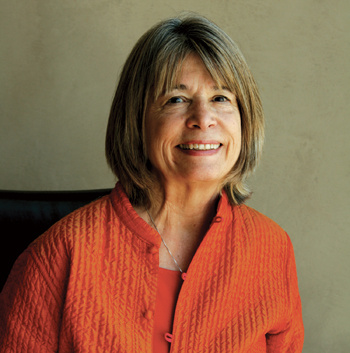
Kathy Waller [M. K. Waller] writes crime fiction, literary fiction, humor, memoir, and whatever else comes to mind. Her latest story, “Mine Eyes Dazzle,” which appears in Dark of the Day, was mentioned by Robert Lopresti as “The best mystery story I read this week” (Little Big Crimes, May 12, 2024).
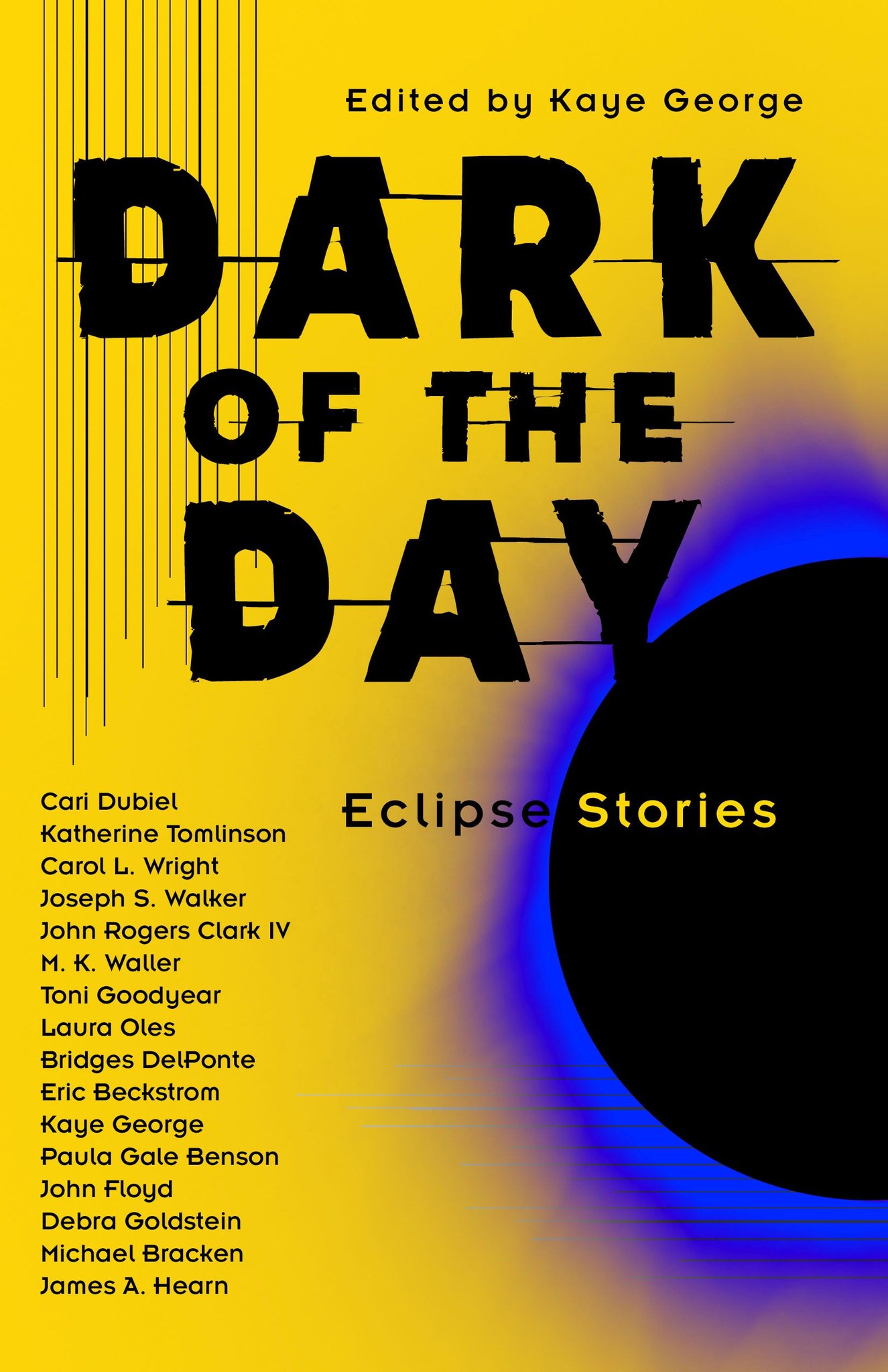
Other short stories appear in other anthologies: the Silver Falchion Award winner Murder on Wheels, Lone Star Lawless, and Day of the Dark, as well as online. She is co-author, with Manning Wolfe, of the novella STABBED,

Memories of growing up in a small town on the San Marcos River in Central Texas, and life in a large extended family, inspire much of her work. She now lives in Austin.

She blogs at Telling the Truth–Mainly. Find her on Facebook and on Amazon.
Researching the 1970s for “A Woman’s Place”

By N.M. Cedeño

The 1970s! Disco! Abba! The Eagles! Richard Nixon. The end of the Vietnam War. Women’s Rights. And, umm, yeah, other stuff. I was born mid-decade and have no real memories of the 1970s. Writing about the 1970s, for me, isn’t a matter of “write what you know,” but rather one of “research what you need to know.”

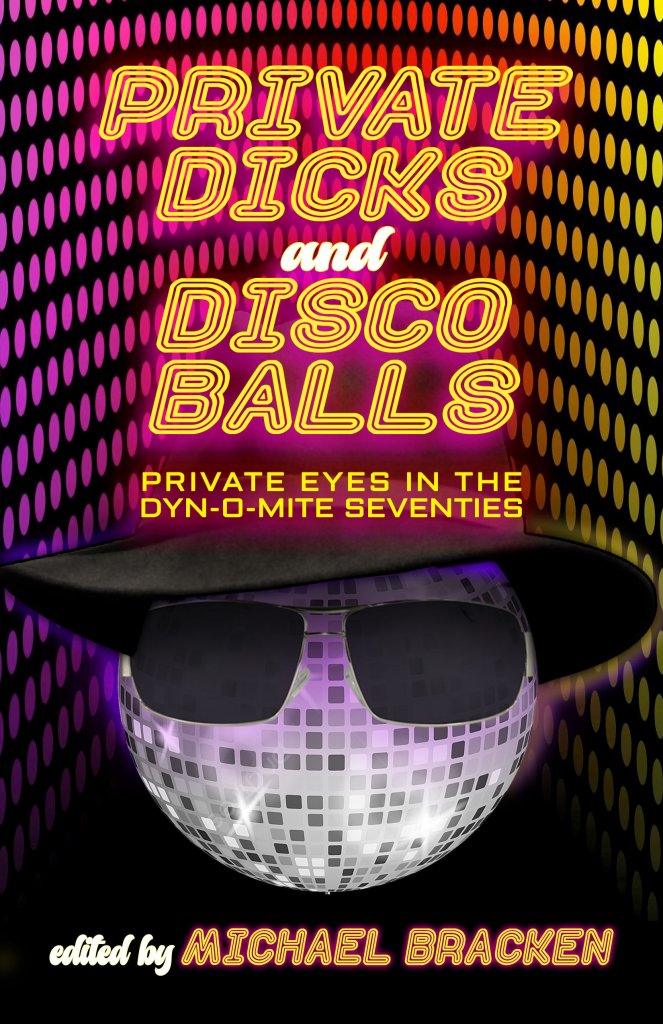
When editor Michael Bracken asked me to submit a story for the Private Dicks and Disco Balls: Private Eyes in the Dyn-O-Mite Seventies (Down & Out Books, May 2024) I read the requirements, which specified including some historical event from the 1970s, and knew I would have to dive into research.

I began searching for events of the 1970s with the help of the internet and my local library card. Logging into my local library online gave me access a plethora of research material, including the archives for Time Magazine (1923-2000), Life Magazine (1936-2000), one hundred years of The Austin American Statesman (1871-1980), and access to Newspapers.com for free. I skimmed or read news articles from major newspapers covering crime, disasters, and political issues of the 1970s. Women’s rights issues, including Title IX, employment protections, and the attempts to pass the Equal Rights Amendment, recurred in my search, leading me to the event I needed for the story: the Battle of the Sexes tennis match between Billie Jean King and Bobby Riggs. The Battle of the Sexes took place in Houston in September 1973.

I even found video from the era, including video from the tennis match itself. Archived videos are fabulous research resources. I discovered news broadcasts from Houston during the 1970s and watched several segments. The benefit of video in research for writing can’t be overstated. Watching news broadcasts provided glimpses of linguistic quirks, clothing styles, hair styles, technology, and automobiles of the 1970s. The insane way (by today’s standards) in which reporters wandered into crime scenes, shoved microphones into the face of working doctors in hospitals, and even sickened themselves while reporting on chemical disasters fed into my understanding of the decade. If a reporter could get away with that much, a private investigator could do that and more.

My research uncovered regulations on who could and couldn’t be a police officer, leading me to articles explaining how, for decades, the height requirement for the Houston Police Department eliminated all the Hispanics who applied for the police academy. The height requirement was changed in the early 1970s to allow for greater diversity in the department. I learned how women’s roles in police departments were limited and about efforts to remove those limits. This research helped in the creation of one of my secondary characters for the story: a petite, Hispanic woman with quashed aspirations for law enforcement.

In researching fires and industrial accidents, I found articles on hazardous materials being routed through Houston and the dangers they posed. I read calls for the creation of hazardous material routes around big cities. Then I reached out to an expert with knowledge of industrial explosives from the 1970s to 2000s. My father worked as an insurance underwriter for a special risk program that included insuring businesses that manufactured, distributed, or used things that go “BOOM.” He had to learn a lot about explosives. He was, and is, a fount of information.

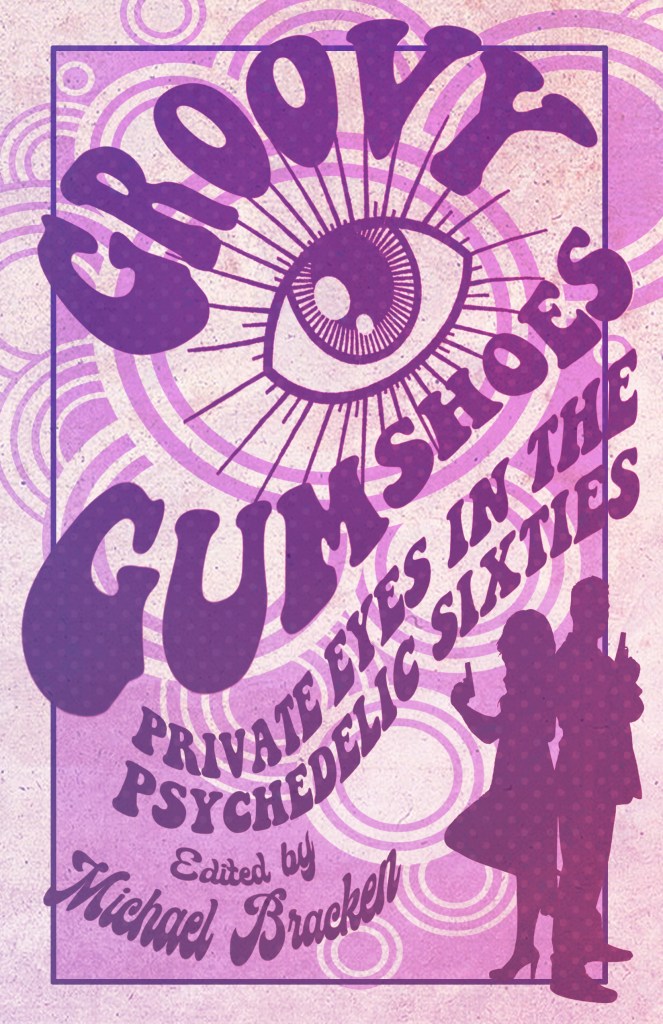
As I worked, I learned more than I needed for my story, and the research began to coalesce into a plot involving my detective, Jerry Milam, in an arson investigation that led him from Austin to Houston during the week of the Battle of the Sexes tennis match. Jerry Milam previously appeared in Groovy Gumshoes: Private Eyes of the Psychedelic Sixties, (Down & Out Books, 2022, edited by Michael Bracken) in a story entitled “Nice Girls Don’t.”

They say “write what you know,” but the caveat to that is “learn what you need to know.” I researched what I didn’t know and I melded it with what I already knew. I was already familiar with my setting in Houston, although I did consult a few maps. Describing Houston is easy for someone who was born there and visits the city regularly. Also, tucked into the story are details that I know because I have an affinity for trivia, including details that my PI would have known: like who was Red Adair (hint: John Wayne played a version of him in The Hellfighters) and what happened in Texas City in 1947 (hint: worst industrial accident in US History).

My local library online research resources are phenomenal and are my favorite place to browse when I need very specific historical information. Reaching out to experts is also beneficial for getting the nitty-gritty details right. Do you have favorite research sites? Where do you look when you need accurate information quickly?

****

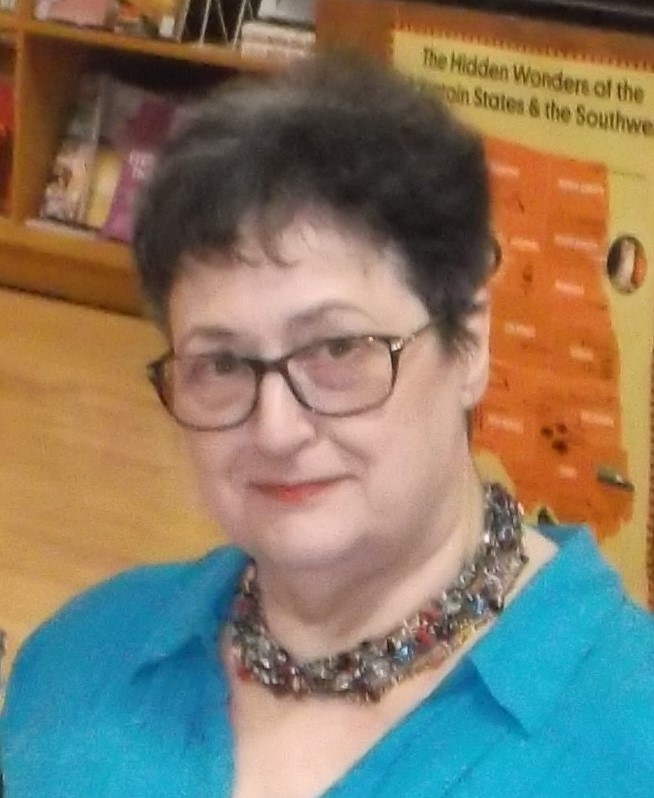
N. M. Cedeño is a short story writer and novelist living in Texas. She is active in Sisters in Crime- Heart of Texas Chapter and is a member of the Short Mystery Fiction Society. Find out more at nmcedeno.com

Closely Observed!…

by Helen Currie Foster

When you read a passage and experience words that strikes home forcefully–so forcefully that you almost gasp–what did the writer do that moved you so?

I’m collecting examples. For my husband it’s John Steinbeck’s tide pool in Cannery Row:

“…When the tide goes out the little water world becomes quiet and lovely. The sea is very clear and the bottom becomes fantastic with hurrying, fighting, feeding, breeding animals…Starfish squat over mussels and limpets, attach their million little suckers and then slowly lift with incredible power until the prey is broken from the rock…”

I’ve never seen a Monterey tide pool. Yet Steinbeck made me feel I have. I want to sit at the edge of the tide pool, hear “the snapping shrimps with their trigger claws pop loudly” and see the “black eels poke their heads out of crevices and wait for prey.”

Why? Steinbeck’s description is so closely observed…it’s as if my own eyes and ears saw and heard.

What about food? Proust’s memory of a madeleine crumb dipped in his aunt’s tea didn’t initially resonate with me (a madeleine seemed too bland; I would’ve preferred a buttery, crunchy, tender croissant!)–until I read his analysis.

When Proust discovered that his second and third bites of the madeleine lacked the same impact–“the potion is losing its magic”–he stretched his mind further. He writes that the source of memory was not his sense of sight (though his description of the scalloped pastry is charming). Instead, his memory came from taste and smell: “But when from a long-distant past nothing subsists, after the people are dead, after the things are broken and scattered, still, alone, more fragile, but with more vitality, more unsubstantial, more persistent, more faithful, the smell and taste of things remain poised a long time, like souls, ready to remind us, waiting and hoping for their moment,…and bear unfaltering…the vast structure of recollection.”

No French bakery in my grandmother’s small Texas town, Itasca. But the memory of her kitchen still comes back when I smell lavender, or yeast–my grandfather’s lavender talc, my grandmother’s ineffably delicious yeast rolls.

Here’s another powerful example from The Orphan Keeper by Camron Wright, about a young man, kidnapped from his home in India, then sent to a dishonest orphanage which places him for adoption in America where he rejects any Indian heritage and suppresses all his memories that aren’t “American.”

As a student in England he’s taken to an Indian restaurant where–reluctantly–he smells, then tastes, what’s offered:

“The scent that swirled around his neck had started rubbing his shoulder, reminding him softly that once, a very long time ago, they had met….[He] took his first bite. The spices in his mouth grabbed hands and began dancing in rhythm across his tongue–cumin, garlic, peppers, ginger, tamarind, cinnamon, and more. They weren’t just dancing–they were cheering, clapping, celebrating, singing, reminiscing. They were pulling out wallets and showing each other pictures of their kids….The mingling spices, the familiar taste, it felt like a whisper arriving with the wind, more message than memory.”

Curry, of course. Just reading this made me long for mango chutney! And I thought it a powerful description, because closely observed, and particularly because until this moment we know the protagonist has been stubbornly resistant to anything Indian.

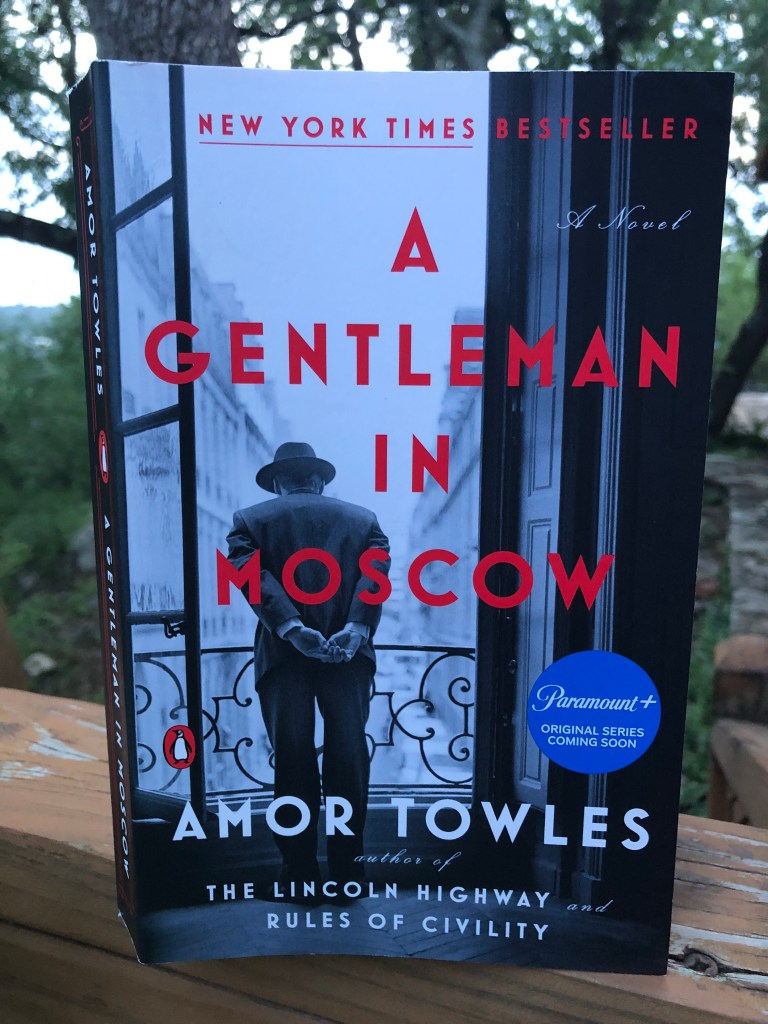
In A Gentleman in Moscow, by Amor Towles, do you recall the bouillabaisse scene? The three conspirators have carefully gathered the ingredients–hard to come by in Moscow; have picked up their spoons; and have taken their first taste. Count Rostov closes his eyes “to attend more closely to his impressions”:

“One first tastes the broth–that simmered distillation of fish bones, fennel, and tomatoes, with their hearty suggestions of Provence…One marvels at the boldness of the oranges arriving from Spain and the absinthe poured in the taverns. And all of these various impressions are somehow collected, composed, and brightened by the saffron–that essence of summer sun…[W]ith the very first teaspoonful one finds oneself transported to the port of Marseille–where the streets teem with sailors, thieves, and madonnas, with sunlight and summer, with languages and life.”

Bouillabaisse! Your memories may differ. Were you reading Julia Child and launching a kitchen experiment? Were you visiting Marseille, and were there still sailors, thieves and madonnas?

The Count has shared his memories, aroused by fish bones, fennel, tomatoes, shellfish and saffron. But your memories are your own. Also, the scene is powerful not just because it is closely observed, but also because it reminds the reader forcefully that at this point the Count has only his memories–he can’t leave the Moscow hotel, much less travel to Marseille.

I’m puzzled not to find food more “closely observed” in novels. A favorite moment: Virginia Woolf famously describes the boeuf en daube at the dinner party which is a central feature of the first half of To the Lighthouse. Mrs. Ramsay is thinking the cook “had spent three days over that dish,” as she prepares to serve it to her guests:

“…An exquisite scent of olives and oil and juice rose from the great brown dish as Marthe, with a little flourish, took the cover off. …[Mrs. Ramsay] peered into the dish, with its shiny walls and the confusion of savoury brown and yellow meats, and its bay leaves and wine, and thought, This will celebrate the occasion…”

Cookbooks, of course, intend to awaken our senses as we peruse the recipes. But the description of boeuf en daube in To the Lighthouse, with the mouthwatering anticipation it creates, has a different impact. It places us in the scene. It almost makes us, as readers, feel like guests sitting at Mrs. Ramsay’s table, alongside the odd characters Woolf has already introduced. Or possibly we also feel a bit like Mrs. Ramsay, the hostess, hoping to delight and reassure her houseguests, who are a difficult lot.

I’d love to hear other examples from readers. A “closely observed” passage can make us do just what the author wants: turn the page and keep reading! Right now I’m engrossed in Someone Always Nearby, Susan Wittig Albert’s fascinating novel about two real people, Georgia O’Keefe and Maria Chabot. I’m finding this a daring literary adventure about two daring and adventurous women, the artist you know and the woman who wanted to be indispensable to her.

It’s May–bluebonnets are gone, summer approaches. What tastes and smells bring back your summer memories? Grape popsicles, melting on the tongue? The clean bluegreen smell of Austin’s Barton Springs, mixing creek water and artesian spring water? The faint smell of chlorine from a pool crowded with splashing children? A mountain trail in the Rockies, with the cool green odor of aspen groves rising up from a creek? Dust blowing at the ball park, freshly mowed lawns, the faint rubbery smell of a sprinkler on a hot day? The smell of a roasting marshmallow just before it bursts into flame?

Good news from where I write: Ghost Bones, Book 9 in my Alice MacDonald Greer Mystery series set in the small town of Coffee Creek, Texas, will soon be out! With mystery, legal drama, and matters of the heart.

Helen Currie Foster lives and writes north of Dripping Springs, Texas, loosely supervised by three burros. She’s drawn to the compelling landscape and quirky characters of the Texas Hill Country. She’s also deeply curious about our human history and prehistory, and how, uninvited, the past keeps crashing the party. Ghost Daughter, Book 7 in The Alice MacDonald Greer Mystery series, was named Finalist in the 2022 Eric Hoffer Book Award Grand Prize Short List. Follow her:

https://www.helencurriefoster.com

and https://facebook.com/helencurriefoster/

copyright 2024 Helen Currie Foster all rights reserved