Thank You, Encyclopedia Brown!

A post by editor and author Michael Bracken over at Sleuthsayers last week made me ponder my writing influences when it comes to detective fiction. Michael, who has read more than his share of detective fiction in the course of his work recently, suggested that authors need to move away from the trope of the “broke, drunk, and horny” private eye if they want to write something that stands out from the pack. He also recommended not always starting the case in the detective’s office because that can lead to too much back story and a severe delay in moving the plot forward. Reading his post, I realized that I’ve never once had the urge to write that stereotypical “broke, drunk, and horny” character. Then, I wondered why I hadn’t.
My first published short story was a detective story. And while my character, a private investigator named Pete Lincoln, was broke, his financial situation had more to do with the times in which he lived than with his own inability to manage funds. His sex life was irrelevant to the case and didn’t come into the story at all. If he drank, it wasn’t to excess, and also didn’t come into the story. Pete lived and worked in a future world in which privacy rights didn’t exist. He appeared in a story entitled “A Reasonable Expectation of Privacy,” which was first published in Analog: Science Fiction and Fact in 2012, and reprinted in Black Cat Weekly #19 in 2022.

Given that most writers, when they first start crafting fiction, write the tropes that they absorbed while reading, I asked myself what detective fiction I had absorbed at an early age that influenced my writing and that didn’t lead me straight to writing the classic stereotype that Michael was lamenting. Who was the first fictional private detective that I read?

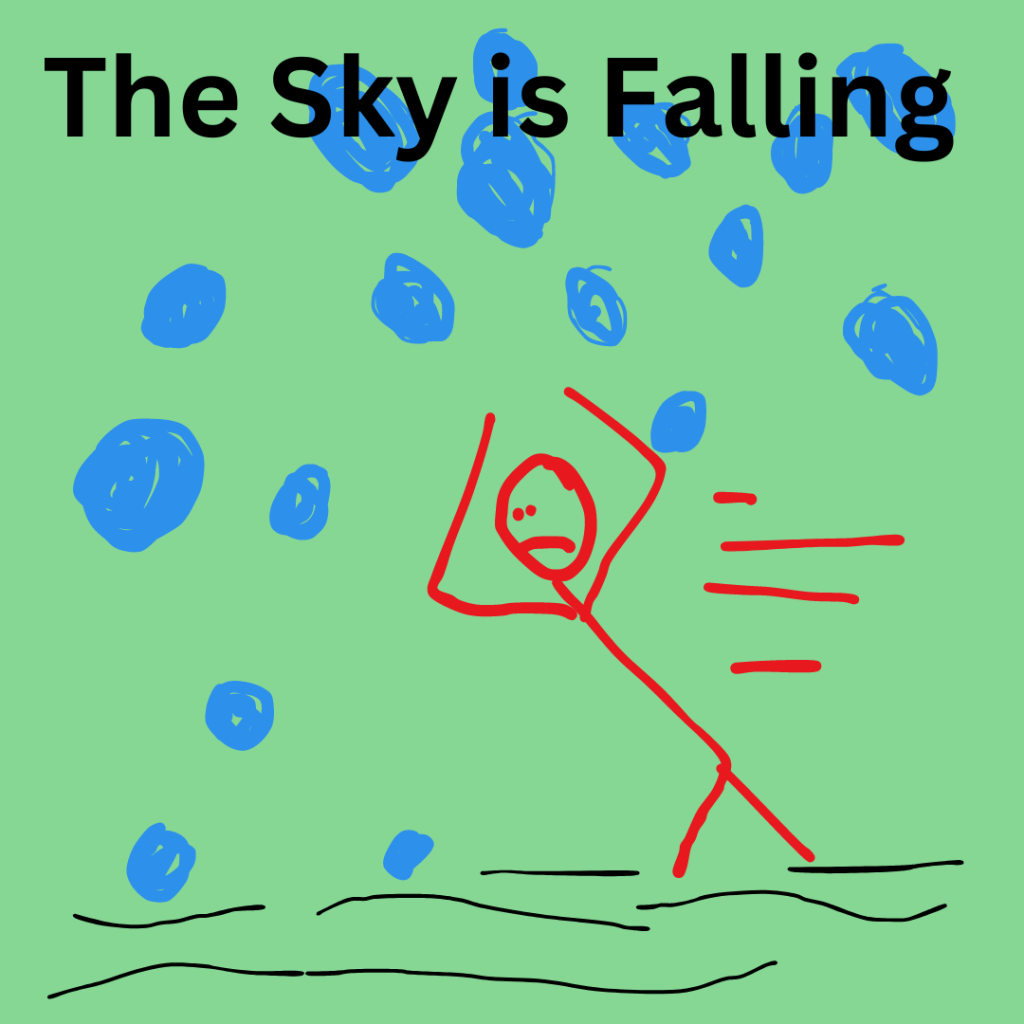
And the answer came to me: Encyclopedia Brown, Boy Detective.

Image Created with Canva

While the boy detective did teach me the basics for detective fiction, he wasn’t in financial straits since he was a child who lived a quite middle-class life with his parents. Everyone knew Encyclopedia liked his friend and partner Sally, but that didn’t remotely approach the trope of womanizing detective. As for drunk, no! While some of his cases started in his garage office with a client paying the twenty-five-cent fee, other times Encyclopedia solved cases for his father, the police chief, while sitting at the family dinner table. So the stories also taught me that not all cases had to start in the detective’s office.

By the time I read Sherlock Holmes a few years later, the pattern of how detective fiction worked was already firmly fixed in my head. While Holmes indulged in illicit substances, he also wasn’t a classic “drunk.” Holmes never panicked about paying the bills or complained about being broke. As for women, the only one that counted for anything for Holmes was Irene Adler. So Holmes, another of my early fictional detective influences, didn’t fit the stereotype either.

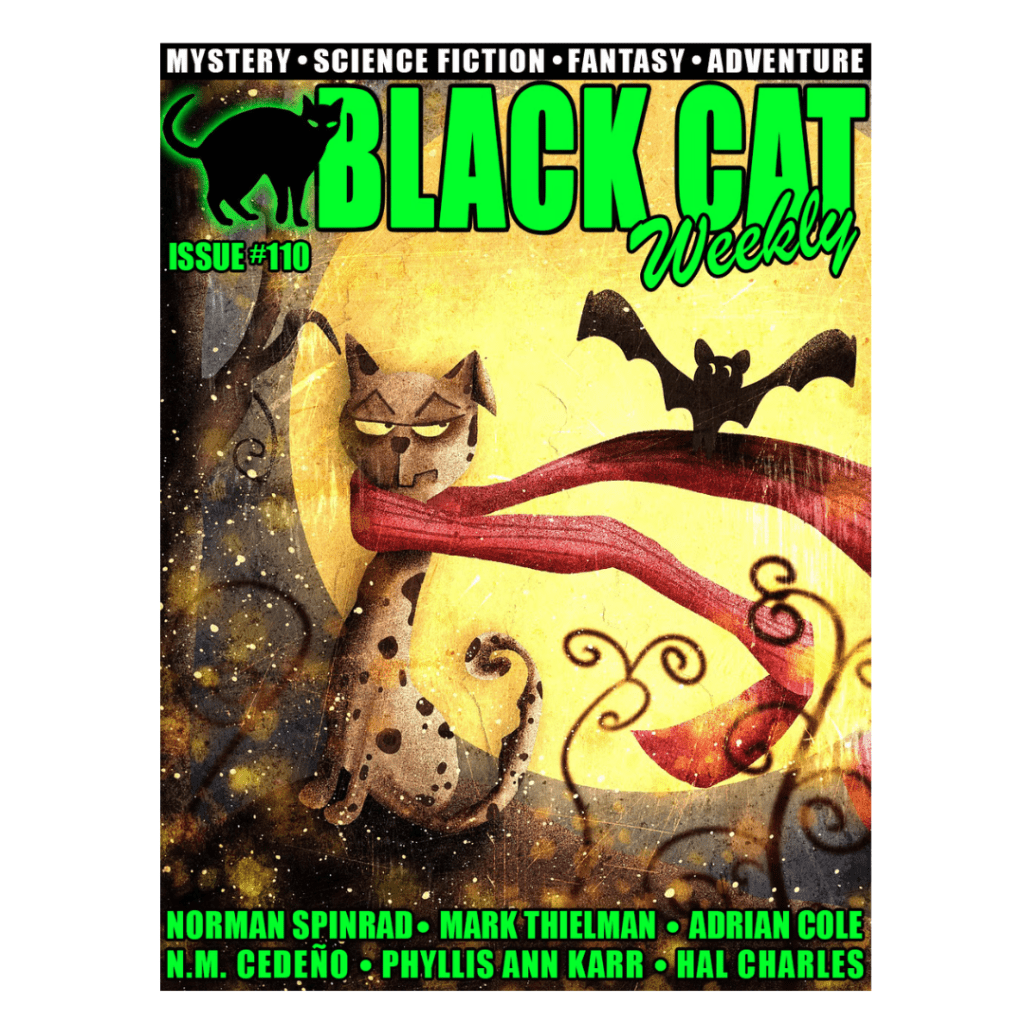
Since writing my first PI story, I’ve written many other detective stories. While I have started several of them in the detective’s office with the arrival of a client, not one of my detectives has been “drunk, broke, and horny.” For example, Detective Maya Laster is a former middle school teacher who turned a genealogy hobby into a detective business, solving mostly cold cases with the help of forensic genetic genealogy. She has appeared in two stories in Black Cat Weekly (issue #79 and #110) and will be appearing again in an upcoming anthology.

Another of my characters, PI Jerry Milam, came of age during World War II, became a police officer following the war, and suffered terrible injuries in a car wreck which ended his police career, leading him to become a private investigator. He’s a teetotaler with a solid income and chronic left hip pain who feels he missed his chance with women. He appeared in Groovy Gumshoes: Private Eyes in the Psychedelic Sixties and Private Dicks and Disco Balls: Private Eyes in the Dyn-O-Mite Seventies. One of my current works-in-progress sees him solving a case in the 1950s.

If my detectives managed to side-step the cliché of the “broke, drunk, and horny” private investigator, I have my early reading influences to thank for it. So thank you Donald J. Sobol for creating Encyclopedia Brown and teaching me to create private investigators who avoid falling into clichés.

*****

N. M. Cedeño is a short story writer and novelist living in Texas. She is active in Sisters in Crime- Heart of Texas Chapter and is a member of the Short Mystery Fiction Society. Find out more at nmcedeno.com.

Goodbye 2024 / Goals 2025

N.M. Cedeño

Between writing, watching a child graduate from high school and leave for college, shepherding another child through obtaining a driver’s license and applying for college, and undergoing unexpected eye surgery, 2024 was a busy year. The year also featured my father’s eightieth birthday party, my twenty-fifth wedding anniversary, and a vehicle totaled in a car accident. Call it the usual assortment of life’s ups and downs.

Last year I set a goal to submit three stories a month. Thanks to my unexpected vision issues and subsequent eye surgery, I didn’t quite hit that goal. I did manage to submit twenty-two unpublished stories and nine previously published stories to various venues for a total of thirty-one submissions.

Seven of the unpublished stories were accepted for publication. Four are still pending either acceptance or rejection. Of the previously published stories that I submitted, seven are still pending and two have been rejected.

Six of my stories were published in 2024. Three appeared in anthologies; two appeared in Black Cat Weekly e-zine; and one appeared on the Redneck Press website. Three short stories and one novella that were accepted for publication in 2024 are pending publication, marching toward their release dates.  

These three anthologies containing one of my stories that came out in 2024.

Speaking of that novella. Writing the novella was a challenge and an occasion for learning in 2024. I have a writing process for short stories and another process for novels. I didn’t have a process for the intermediate length. For short stories not requiring research I typically make a few notes and start writing. For full novels I make a few notes and start writing, stop after a few chapters, make more notes, write until I’m two-thirds of the way done with the plot, make revised notes, and then write until I finish the first draft of the book. My process for the novella ended up looking like neither my short story nor my novel processes.

The novella required research, which was difficult to do with one of my eyes seeing double. Writing it was difficult for the same reason. The situation called for flexibility. So, I did something that I don’t normally do. I wrote the story scene by scene by asking myself “what scenes will this story need?” Instead of starting at the beginning, I started writing with a scene I knew I would need.

After writing a few scenes, I made a list of scenes I still needed. Then I went down the list writing the scenes. If I wasn’t sure about how to write a scene, I skipped it and wrote a different scene. Then I went back, figured out the missing scenes, while adding other scenes that I came up with after I made the initial list. Finally, I connected everything. It worked better than I expected. I completed the initial draft in about a month, and finished it with time to spare before the deadline.

Looking forward to 2025, I am setting the same goal of submitting three stories per month. I already have some story deadlines on the calendar, and I’m looking forward to diving into writing them. How many stories will I write? I don’t know, and I’m a bit reluctant to set a goal. However, I do plan to stick with writing short stories with no plans to write a novel.

I plan to attend at least one writing conference in person this year. I have my sights set on Bouchercon New Orleans.

I plan to keep learning from webinars.

I also plan to read more than in 2024, an easy goal, since my reading was severely curtailed by the eye issue.

On the home front, some of 2025 will mirror 2024, with a child graduating from high school and leaving for college. We’re still waiting to find out what college. The main difference from 2024 will be that my last chick will likely fly the nest for the dorms in 2025. We will have a temporarily empty nest until the two youngest chicks return home to the nest during school breaks. Having no children at home will be a huge change in my household routines. I’m sure it will affect my writing patterns and plans in more ways than I can predict.

Here’s looking forward to the new world of 2025!

*****

N. M. Cedeño is a short story writer and novelist living in Texas. She is active in Sisters in Crime- Heart of Texas Chapter and is a member of the Short Mystery Fiction Society. Find out more at nmcedeno.com.
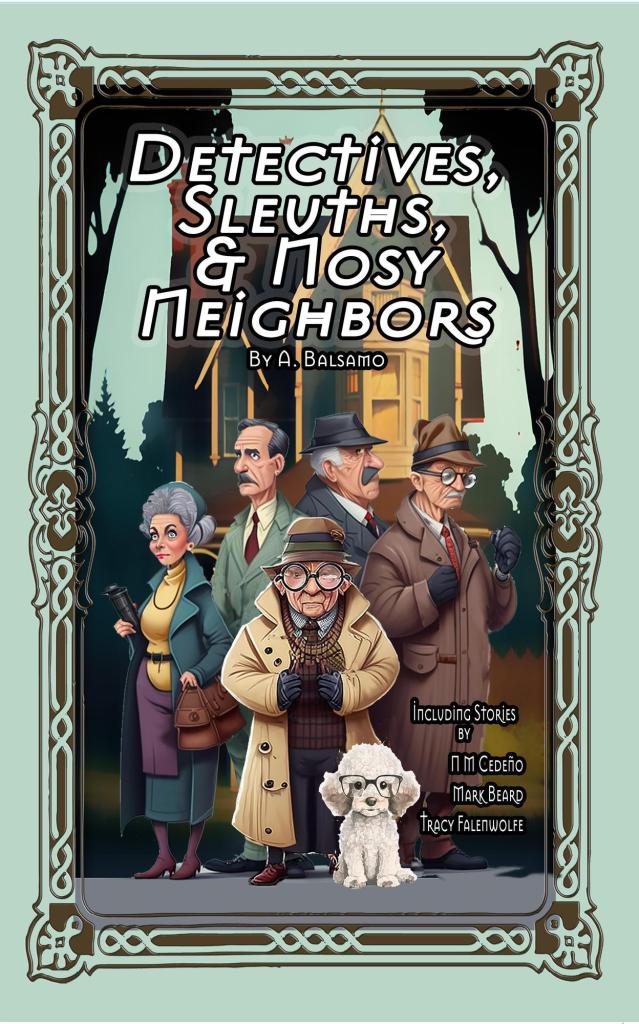
New Ghost Stories

I started reading ghost stories as a child and enjoyed the chill that the best of them sent up my spine. I began writing ghost stories, with a sci-fi and mystery twist, almost ten years ago when I wrote my first Bad Vibes Removal Services story. The series features Lea, a young history graduate student, working in a new service industry. She sanitizes and neutralizes the lingering emotional history from buildings and homes using newly invented equipment. She was drawn to the job because she’s always been sensitive to emotional atmosphere in rooms and has always been able to see ghosts.

The technology she uses in her job was created by a private detective named Montgomery in his quest to create a device to read the subatomic changes in soft materials caused when sound waves pass through them. Montgomery wanted to be able to read the recordings of conversations held in rooms in order to solve crimes. He ended up being able to track the emotional energy left in walls along with the sounds. In order to put his new technology in the public eye, he started Bad Vibes Removal Services to serve as a sister company to his own Montgomery Investigations business.

Lea, with her team of coworkers, soon discovers that she can’t neutralize the lingering emotions in a house if the source, a ghost in distress, is still present. Many of the ghosts she encounters died under questionable circumstances, leading to murder investigations.

The series started with one story. But I liked the characters so much that I wrote more stories, which led me to write a novel, The Walls Can Talk, then more stories, and another novel, Degrees of Deceit, then, more stories. The series currently has 15 or so published short stories and two novels. The latest story in the series, called “Wedding Vibes,” was published in Black Cat Weekly #145 courtesy of editor Michael Bracken. The story features Lea’s wedding reception being crashed by both a ghost and thieves trying to steal gifts. Luckily, her boss, Montgomery, her coworker and Maid of Honor, Kamika, and the rest of her friends are on the case. The thieves chose the wrong reception to crash.

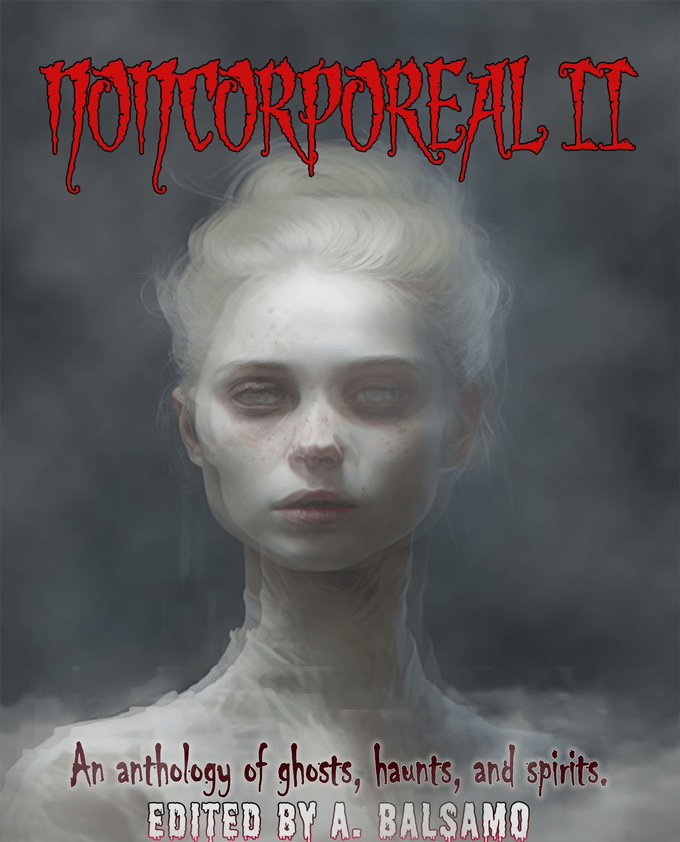
Another one of my ghost stories is rolling out right now, too. “A Lonely Death” is coming out in an anthology of spooky stories from Inkd Publishing called Noncorporeal II. Those who ordered the anthology from the Kickstarter should be receiving their copies shortly, and it will go on sale to the general public soon. The story begins with a cowboy digging a grave in the “middle of nowhere Texas” in the mid 1800s. Soon there after, a little boy whose home was built in what once was the “middle of nowhere Texas” meets a ghost. This story is told from the point of view of the ghost and from the point of view of the people in whose home the ghost appears.

This story was inspired by a three-year-old who was seen in his home talking to and looking up at an adult who the child’s mother couldn’t see. The family had several guests report either seeing a man who vanished or feeling “creeped out” in their guest room. The house was brand new, built on what had been farmland in Central Texas. My story answers the question of why a brand new house might have a ghost.

****

N. M. Cedeño is a short story writer and novelist living in Texas. She is active in Sisters in Crime- Heart of Texas Chapter and is a member of the Short Mystery Fiction Society. Find out more at nmcedeno.com

Year End Assessments 2023- A Review

By N. M. Cedeño

December again. Time to assess this year’s writing. I’ll start off by saying, the year didn’t go as well as I’d hoped, but not as badly as I’d thought either. A number of issues combined to throw me off my schedule and destroy my focus, but I have learned some new things.

For instance, I learned that x-rays and sonograms successfully diagnose kidney stones about eighty percent of the time. If that path to diagnosis fails, doctors search for other causes. It may take six or eight months of tests to explore other possible diagnoses before the problem can be correctly diagnosed. This second path to diagnosis by eliminating other options is not one that I recommend. It prolongs pain, destroys work productivity, and ruins peace of mind.

I also learned in September that baseball-sized hail falling like rain can strike with no warning. We were extremely lucky no one was outside when the assault from the sky began or someone might have been killed. Repairs are ongoing (roof, deck, gutters, garden shed, light fixtures, A/C, windows, screens, cars, etc.). As of this writing, I am awaiting yet another contractor to complete yet another repair. Dealing with three separate insurance adjustors, talking to contractors, and scheduling repairs consumed all my time for October, then half of my time for November. Trying to get active teenagers to extracurricular events with cars out of commission was another challenge.

But without some strife we wouldn’t appreciate when things are actually going smoothly. Over the years, I’ve learned to take notice and enjoy the times when everything is running like a well-oiled machine. The easy times don’t last, but neither does the strife.

Now that I’ve covered the excuses, I’ll get to the writing numbers:

Stories submitted as of late November: thirty-five.

I plan to reach thirty-six or more before the end of December. I had hoped to submit four stories per month on average, but that was not to be this year. However, submitting an average of three stories per month in a difficult year is a victory in my book.

Acceptances were low this year, too– so far only two. I have twelve submissions still pending, so maybe I’ll see more acceptances in the new year.

Publications of stories: four.

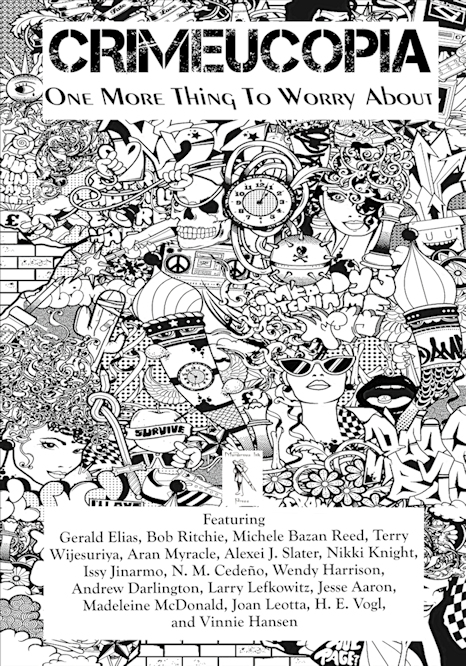
Three of my stories appeared in Black Cat Weekly courtesy of editor Michael Bracken. One appeared in an anthology-“Danger at Death’s Door” in Crimeucopia: One More Thing To Worry About from editor John Connor.

For the moment, I have one publication pending, a short story for an anthology coming out in the spring of 2024.

I did receive two invitations to contribute stories to projects this year. One I had to turn down thanks to a short deadline and the ongoing strife. The other offered a deadline far enough in the future that I could easily say yes. Also, a new editor asked me to contribute a story to a project, which I really appreciate. I had intended to reach out to new editors this year, but with the strife, that plan was postponed.

For 2024, I’m looking forward to setting new writing goals and working with more editors. I plan to watch my middle child graduate from high school in the spring and start college (!) in the fall, and see my youngest through driver’s license testing, the end of junior year, and the start of senior year (!) of high school. Also, someone else (Hooray, Pat Kelly!) will be taking over the duties of president for my Sisters in Crime Chapter, leaving me more time for writing. I’ve been on the board in various capacities since 2016 or 2017, and it’s time to bring in fresh blood. Here’s looking forward to a busy, productive 2024!

*****

N. M. Cedeño is a short story writer and novelist living in Texas. She is active in Sisters in Crime- Heart of Texas Chapter and is a member of the Short Mystery Fiction Society. Find out more at nmcedeno.com

The Good, the Bad, the Cleanup

by N.M. Cedeño

First, some good news! My story entitled “A Matter of Trust” was published in Black Cat Weekly #110 on October 8 via editor Michael Bracken. The story features genetic genealogy private investigator Maya Laster who first appeared in “Disappearance of a Serial Spouse” in Black Cat Weekly #79 in March 2023. In this, her second published case, Maya is working to help her client, Bob Rolland, prove that he’s an heir to a forgotten trust fund, when violence ensues. With Bob’s life hanging in the balance, Maya races to discover who might want to stop him from claiming his inheritance.

“A Matter of Trust” is my first story inspired by a click-bait title that I didn’t click. The article was something about a dead billionaire leaving everything in trust for his reincarnated self to inherit. I imagined a vast fortune sitting forever, waiting for an heir to step forward. I thought, what if someone left everything in trust for possible future grandchildren? And what if the only link to the information about the trust died without telling anyone? From those seeds grew a story of lost family relationships requiring a genetic genealogist to reconnect the missing pieces.

So, for those who always ask: yes, story ideas really do come from everywhere.

Next, the bad news. Two events within five days gave me ample material to consider for use in future stories, and I would not wish either of them on anyone.

First, The Hail.

Photo taken by a neighbor.

One Sunday evening, my neighborhood was hit by baseball-sized hail. If you’ve never experienced a storm like that, it’s hard to imagine the sheer power behind that kind of precipitation. Windshields and car rear windows exploded when hit by enormous hail falling at terminal velocity. Coming down in sheets like rain, pummeling everything in its path, it left its mark everywhere, from the soil, the concrete, and the asphalt to cars, roofs, light fixtures, patio furniture, and trees. It even killed birds.

My family hid in a closet, listening to what sounded like a bombardment. The weather notification that baseball-sized hail was coming arrived on our phones five minutes after we had already retreated to the closet with the dog because of the fury of the storm. The warning came far too late to try to protect anything outside, but did confirm our instinct to take cover away from windows.

Next, The SWATTING.

Four days after the storm, someone decided to commit a crime against the community by calling in a false attack at my children’s high school. For those who don’t know, per the Oxford dictionary, “swatting” is defined as “the action or practice of making a prank call to emergency services in an attempt to bring about the dispatch of a large number of armed police officers to a particular address.” Seven different agencies responded to the high school in full gear, expecting to find an active shooter.

Someone intentionally terrorized hundreds of teachers and almost four thousand students at one school. It’s an enormous high school with a dozen buildings spread over a quarter mile wide. People in one building have no idea what may be happening in another building. So when the school locked down, many kids assumed the worst was happening somewhere and texted their parents from hiding places in darkened rooms and storage areas.

The number of swatting incidents in the US rose so quickly in the past few years that the FBI has created a database to aid in tracking and investigating them. Three high schools in two districts in my area were “swatted” in one day. In my youth such incidents could be ascribed to individual teenagers playing pranks or trying to avoid a test. While that may explain a few isolated cases, evidence suggests that many of the recent swatting incidents are linked to common perpetrators, many of whom may not be in the US. Terrorists have realized that they can sow fear with a spoofed phone call.

Once I have some distance from these events and can put them in perspective, details from one or both incidents may appear in a story. For the moment, I’m still cleaning up the mess.

*****

N. M. Cedeño is a short story writer and novelist living in Texas. She is active in Sisters in Crime- Heart of Texas Chapter and is a member of the Short Mystery Fiction Society. Find out more at nmcedeno.com

Background: Short-Term Murder

I admit that the ending of my story “Short-Term Murder” in issue #88 of Black Cat Weekly may include wishful thinking. The plot of the story revolves around a murder in a short-term vacation rental in a neighborhood. Two of the neighbors work together to solve the murder after one of them, Mariah Grant, the woman who lives next to the vacation rental, becomes a suspect because of her documented dislike of the house.

The inspiration for the story:

My neighborhood has fewer than one hundred houses. I know and communicate with all of my immediate neighbors and even a few neighbors in the houses that back up to mine. The neighborhood is secluded, bounded on three sides by a dry branch of Onion Creek that only fills when it rains. The area is quiet and peaceful. Or it was until last summer.

Before last summer, the house next door to me was owned and occupied by a family of five: two parents and three boys who attended the elementary school. Children that age go to bed early. They were quiet neighbors in the evenings.

Then, the family moved and sold the property to a business. The business set to work turning what had been a single family home into a mini-hotel and party venue. The mature oaks and crape myrtles in the back yard were chopped down and equipment rolled in to dig a massive swimming pool with an outdoor sound system and party space. Around Thanksgiving, the construction noise finally stopped, and the place opened for business.

My neighbors and I quickly discovered the rental listing online. From the pictures, we could see that the company stuffed bunk beds into what had been living spaces and listed the house as “sleeps twenty.” The online ad invited (and still invites) parties and weddings of up to thirty people.

In a blink of an eye, my formerly quiet street became party central.

Petra: Protector of the house

Over the holidays, a line of cars parked in front of my house with people coming and going at all hours. My German Shepherd mix, who believes it is her duty to warn me of all dangers to my property, barked at the people milling on the sidewalk in front of my house at 1:30 in the morning. I stepped outside and asked them to move. (The local police told me later that standing in front of someone’s house at all hours isn’t allowed, and I should call them to ask the people to move. I was new to the problem then and didn’t know better.)

Group after group produced bags and bags of trash. It didn’t all fit into the bin the city provides to each house. So the guests piled trash into the recycling bins, too. When the lids wouldn’t close, the trash blew all over the neighborhood. (Yes, this is a city code violation.)

This month, a mini-bus pulled up in front of the house and disgorged fifteen or twenty women in cute, short dresses and matched cowboy hats. Bachelorette party? Sorority reunion? Who knows? They threw a rollicking, screaming pool party in the backyard. It sounded like teenage girls screaming at the top of their lungs at their favorite boy-band concert.

We have many children in the neighborhood. Do the vacationers speeding around the curved street to get to their party care about our children? Not remotely. Do they care about the house, the neighborhood, the community? Not in the slightest. Do they throw outdoor parties on Tuesday nights when everyone around them has school and work the next day? Yep. That happened this past week.

My city council member, who lives a few houses down from me, informed everyone that under city law the owners are entitled to use their property as they see fit. It’s legal to be a horrible neighbor. I’ve seen in the news that some cities are moving to classify short-term rentals as commercial lodgings, like hotels. That classification would make them illegal in neighborhoods. I’ll be watching with interest to see if the regulations pass legal hurdles.

In the meantime, if you read “Short-Term Murder” in Black Cat Weekly #88, you’ll see how I channeled my frustration into the creation of a short mystery.

****

N. M. Cedeño is a short story writer and novelist living in Texas. She is active in Sisters in Crime- Heart of Texas Chapter and is a member of the Short Mystery Fiction Society. Find out more at nmcedeno.com

Assessments 2022 / Goals 2023

By N. M. Cedeño

We’ll start with assessments:

I started 2022 with the goal of getting short stories published. In aid of that goal, I set another goal: to submit an average of three stories per month to magazines, anthologies, or contests. That’s thirty-six submissions. Why choose an average instead of a fixed monthly goal? Because I knew with travel, family responsibilities, and holidays, some months would be more difficult than others. As expected, June and July had only two submissions each. December might be the same. Giving myself the flexibility to submit four stories one month to make up for months with only two stories submitted was a practical decision. I know how these things go, so I wasn’t going to shoot myself in the foot by making the goal too rigid to meet.

End results:

I met my goal. By December, I submitted thirty-six stories to various markets to be considered for publication. I also submitted five stories for consideration for awards or recognition that includes publication. If I count those five as additional “submissions,” then I blew my goal out of the water.

Publications:

During 2022, seven of my short stories were published or reprinted in various magazines, e-zines, and anthologies. This is nothing compared to the John Floyds of the world, but pleasing for someone who only decided to focus on short fiction publication in 2020.

Six of seven covers for 2022. Seven is an awkward number!
  1. January: e-zine, Black Cat Weekly #19– “A Reasonable Expectation of Privacy” (reprint)
  2. February: anthology, After Dinner Conversation: Season Five – “The Wrong Side of History” (reprint)
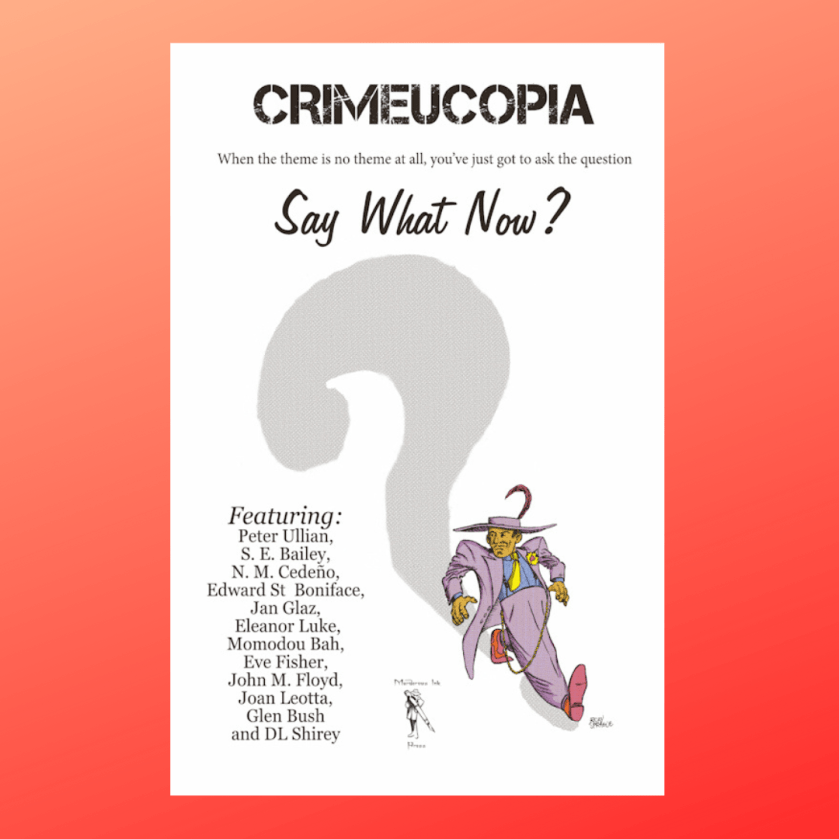
  3. March: anthology, Crimeucopia: Say What Now?– “Reaching for the Moon”
  4. April: anthology, Groovy Gumshoes: Private Eyes in the Psychedelic Sixties– “Nice Girls Don’t”
  5. June: e-zine, Black Cat Weekly #37– “Serenity, Courage, Wisdom”
  6. August: magazine, Black Cat Mystery Magazine #12– “It Came Upon a Midnight Ice Storm”
  7. December: e-zine, Black Cat Weekly #68– “Merry Library Murder”

Firsts for 2022:

For the first time, an editor approached me because someone else had failed to supply a story. This led to another first: I produced a story— from researching the historical background to submitting the finished product— in about three weeks. Was the final product as polished as I would have liked? No. But, in the end, the only issues left were minor.

For the first time, I had a story “featured” on the cover of a magazine. “Merry Library Murder” is the featured story in Black Cat Weekly #68, which was published the week before Christmas. Seeing that cover was a lovely surprise and a fabulous Christmas present.

For the first time, I submitted some of my stories for consideration in “Best of” mystery anthologies, which is a box checked on a list of professional goals. I wondered: Should I let the editors submit for me? Or should I submit my own stories? Many authors wait on this sort of thing and let others, like editors, decide. But, where is the wisdom in not putting your work forward, not ensuring it will be seen and considered? Just as work left in the drawer won’t be published, work never sent for consideration for awards won’t be recognized with awards.

Goals for 2023:

  • Increase my writing productivity.

During the pandemic years of 2020 and 2021, I was surprisingly (given the stress of those years) prolific. My writing output was steady. But 2022 did not go as well. My productivity in 2022 was much less than I had hoped. In speaking to other writers, I’ve heard many say that they felt like they hit a wall at some point in the last two years. They felt their energy levels plummet, and they felt like they didn’t have the emotional energy to invest in their writing. I too felt an energy drop this year. Instead of writing new material, I frequently focused on editing and submitting what I had already written. I kept working, but not always on new words. While I did produce new short stories, I didn’t write as many as in previous years. My creative batteries must have needed a recharge.

  • Keep submitting short stories.

I intend to keep my focus on short fiction for now. People keep asking when I will write another novel. I don’t know. Short fiction comes far more naturally than novels for me. I have always found novel writing to be a slog. Short stories are fun. So maybe I’ll focus on writing more stories than last year and submit three per month again? Or I could try for four submissions a month. Hmm. Things to think about. Decisions to be made.

  • Attempt to build relationships with more editors

As a wise editor told me: editors die or retire. Writers must build relationships with many editors to ensure a steady stream of story acceptances and publications.

  • Delegate when possible.

I’ve been elected president of my local SinC chapter again, starting in January. I’ve served on the chapter board in various capacities over the years: as vice-president, as president, as immediate past president. The position of president can be the equivalent of taking on a part-time job, or even a full time job, if I don’t delegate. People are very reluctant to volunteer right now. I may have to beg, plead, and twist some arms, which I hate to do. But I also hate to see something good fall apart for lack of volunteers. Wish me luck.

Libraries and “Merry Library Murder”

By N. M. Cedeño

The fact that the victim in my upcoming story entitled “Merry Library Murder” is a librarian is not a sign of hidden hostility or wishful thinking. Rather, the opposite is true. I set the story in a library because I spend a lot of time in libraries. Most of my reading material comes from the library, and I am a long-term library volunteer.

Of the many volunteering opportunities available in my children’s schools, the one to which I always gravitate is the assisting in the library. At one point, when I had an elementary, middle, and high school student in the house, I volunteered in all three libraries on a rotating basis each month. I started volunteering in school libraries about fifteen years ago and am still volunteering at the local high school library.

While volunteering, I’ve labeled, weeded, discarded, scanned into inventory, removed from inventory, added genre stickers to, added series number stickers to, shelved, checked-in, checked-out, magnetized, and demagnetized books. The books I’ve inventoried probably number well over 100,000. I’ve unpacked boxes of new books, packed boxes of old books, and shifted books on shelves. I’ve helped rescue books from a termite invasion and assembled and mounted signage. I once went through almost every picture book in an elementary school library to place red stickers on the spines of the ones with reading tests available for them. That meant looking up every single book on the computer to see if it had an associated test before placing or not placing a sticker on it. In order to raise funds for libraries, I’ve operated registers at more Scholastic Book Fairs than I can remember.

Last year, I helped genre-fy the entire fiction section of a high school library. How does one genre-fy a library? One separates the books by genre and creates sections: adventure, horror, science fiction, mystery, suspense, supernatural, fantasy, realistic, romance, historical, sports, humor, and classics. Graphic novels get their own section and genres, as do the books in languages other than English. This process required me to shift all the non-fiction books to make space. Consequently, I may be the only one in the entire community who has held almost every single book in the local high school library in my hands. That’s over 30,000 books.  

By far the most painful library duty I’ve ever performed is weeding fiction books. Removing fiction books from the collection that have sat on a shelf for years, untouched and unread, is a sad thing to do. But it’s something that has to be done. Shelf space is limited and new books are coming out every day.

Weeding non-fiction books that haven’t been read in years is less painful. If the material in the book is obsolete, it deserves to be removed from the library to make room for more current material. Who wants to read “How to Build a Webpage” out of a manual written in 1996? Books on teen pregnancy resources from the 1980s aren’t likely to be helpful to anyone today either. The oldest books I pulled from the shelves were from the early 1950s. They may have been useful in an archive somewhere, but not a high school library. After a day of weeding books, my hands are usually black with grime from decades of accumulated dust.

So to reiterate: I love libraries. And librarians. And Library Assistants, too. Many thanks to all the library staff I’ve worked with over the years. Sara, Becky, Maureen, Sarah, Ronda, Charity, Christina, Carole, Alyson, and all the rest, you are the best!

However, the victim in my upcoming short story, entitled “Merry Library Murder,” is a librarian. And yes, she is murdered in her own library during her town’s holiday festival. But this story is a holiday who-dunnit. Which means that justice will be served. If you’re looking for a quick holiday mystery, watch for Black Cat Weekly #68, coming out in late December. Or subscribe to Black Cat Weekly and get great reading delivered to your inbox every Sunday.

*All pictures by Pixabay.

***

N. M. Cedeño is a short story writer and novelist living in Texas. She is active in Sisters in Crime- Heart of Texas Chapter and is a member of the Short Mystery Fiction Society. Find out more at nmcedeno.com

Submitting Short Stories: It’s Like Baseball

By N. M. Cedeño

Many of the stories I write aren’t accepted the first time I submit them for publication. The majority have to be submitted over and over again to find a publication home. The process made me think of a batter stepping up to the plate in baseball because I may strike out repeatedly before scoring a run.

Most of the time, I write stories with no specific publisher in mind. I write the story because I want to or because the only way to get it out of my head- and make it stop bothering me- is to put it down on paper. Then, after the story is written, I begin the process of looking for a place to submit it. “It Came Upon a Midnight Ice Storm” is one of these stories. I wrote it for myself because I like light-hearted mysteries stories set at Christmas.

I first submitted this Christmas story for publication in mid-2018. It was rejected, struck out, eventually a total of eight times. I put it through workouts, strengthening it several times between ‘at bats’. Then, I saw a call for submissions that I thought it might fit, a call for cozy mysteries. On my ninth submission, the story was accepted. It will appear in Black Cat Mystery Magazine in a couple months.

from Murderous Ink Press, 2022

Sometimes, I’ll write a story based on requirements for a specific call for submissions, and it’s not accepted. I strike out. If the call was general enough, I can turn around and resubmit the story elsewhere with no changes. It’s ready for its next ‘at bat.’ That was the case for my story, “Reaching for the Moon.” After being initially rejected, and then rejected again, I submitted it to Murderous Ink Press, where editor John Connor accepted it for inclusion in the Crimeucopia: Say What Now? Anthology.

In other cases, the call for submissions may be in such a specific niche that I need to change the story in order to submit it elsewhere. Continuing the baseball analogy, I prepped the story to face a specific pitcher and have to make changes to face a new pitcher for the next ‘at bat.’

For example, my story “Serenity, Courage, Wisdom” was written for a very specific call for submissions for stories inspired by the music of a particular group and was rejected. In order to resubmit it elsewhere, I changed the title, which was originally a song title, and stripped out the details related to the song. Stripping those details left a hole, so instead of referencing a song, I settled on referencing a prayer that hung in my parents’ kitchen my entire childhood and that I have a copy of in my own kitchen.

After making these changes, I submitted the story to Black Cat Weekly, where the editor said the story needed a little work before he’d publish it and gave me some suggestions. In this case, I made a base hit, which requires more work on my part to make it to home plate. To get to home plate, I have to listen to the coach, aka the editor. I have to review the editor’s suggestions and work on the story with those suggestions in mind. If I don’t do the work, I get left on base and never make it home. If I do the work and send the story back to the editor, and he’s pleased and accepts the story, then I’ve rounded the bases to home plate and scored a run.

In this case, I did the work to earn the run. “Serenity, Courage, Wisdom” will be published in Black Cat Weekly #37 coming out in May 2022.

from Down & Out Books, 2022

Only one of my stories so far has been accepted on its first submission, which is the equivalent of hitting a home run. That story, “Nice Girls Don’t,” was written specifically for the anthology, Groovy Gumshoes: Private Eyes in the Psychedelic Sixties edited by Michael Bracken. I saw the call for submissions months ahead of the deadline and went to work researching material and writing the story. The anthology was published last week, debuting on April 11, 2022.

I have yet to retire any stories from the line-up. Eventually, I may have to set one aside, waiting to come out for the right call for submissions.

A Note: I’ll be participating in a panel discussion on mysteries, talking about my short mysteries, on Friday, May 13, at Hearth & Soul in Austin. Check the “Gather” tab on their website for time and location. Additional information will be posted soon.

****

N. M. Cedeño is a short story writer and novelist living in Texas. She is active in Sisters in Crime- Heart of Texas Chapter and is a member of the Short Mystery Fiction Society. Find out more at nmcedeno.com.