My Keys Won’ Work


by Kathy Waller


It’s been quite a while since I posted,* and I should wait until my turn rolls around again. But today a fellow Wretch shared something that had happened to her, and that reminded me of something that happened to me, and this is an Open week on ISW, so I decided to share what my friend’s remark reminded me of. Right now. Before I forget.

This is a repost of a repost of a post I wrote for Telling the Truth, Mainly in 2010, using my first laptop.  A monster Dell, it weighed at least fifty pounds, or seemed to at the time, but I loved it and lugged it everywhere. My introduction to coffee-shop writing, it was a sort of movable feast. But—there was one little problem. Two or three times. Read on.

*

 

INTRO, PART 2

While I was writing a post one evening, my laptop keys stopped working–one at a time, in no particular order. No matter how hard or in which direction I tapped, they didn’t depress, and nothing appeared on the screen. I considered giving up, then decided to keep a-goin’. The next day, I called technical service, was told I could replace the keyboard myself, visited Radio Shack for tools, used them, nearly stripped a screw, called tech service, received a visit from a tech, and got a quick fix.

An easily replaceable keyboard isn’t usually much to worry about, but in my keyboard’s case, there were extenuating circumstances. I was afraid something beneath the keyboard might be causing the malfunction, and that the tech might think so too. He might know how it got there and give me a look of reproof, possibly a mild reprimand. He might even sneer.
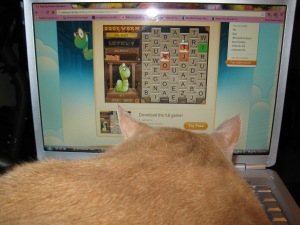
William Davis & Bookworm

I would have to stand there, blushing, and take it. My innate honesty would prevent me from saying my husband did it.

To learn why I would have blushed, you’ll have to read to the end.

Hint #1 : A single e might mean tech. But it might not. An a might mean a, or not.

Hint #2: The thing I was afraid was under the keyboard–it wasn’t cat hair. Cat hair wouldn’t have made me blush.

Hint #3: Don’t sweat the small stuff. Whatever you don’t get is small stuff. You’ll get the drift.

Hint #4: If you’re tempted to stop, please, at least skim to the end. I’ve added a translation of the last few lines. Last lines are usually important, and I’d like these to be understood. In addition, I managed to throw in a couple of words from Hamlet. 

Well, finally, here’s the post.

*****

THE POST

Wa do you do wen your keyboard malfunions?

Wen my spae bar sopped working, I aed online wi Dell e suppor.  e e old me I would reeie a new keyboard in e mail. I was supposed o insall i.

“Me?” I said. “Insall a keyboard?”

e e said i would be a snap. If I needed elp, e would walk me roug i.

I go e keyboard and looked up e insruions, wi said I ad o unsrew e bak. I jus knew I would be eleroued.

Bu I boug a se of srewdriers a RadioSak and flipped e lapop oer, remoed e baery, and aaked e srews.

e srews wouldn’ budge. I exanged a srewdrier for anoer srewdrier. I used all six. None of em worked.

I wen online again o a wi Dell. e e lisened, en old me o ry again.

I oug abou e definiion aribued o Einsein: Insaniy is doing e same ing oer and oer and expeing a differen resul.

“I wouldn’ urn,” I old e e.

He said e would send a e ou o e ouse o insall e keyboard for me. (I’m no dummy. Wen I boug e lapop, I boug a e o go wi i.)

Anyway, e nex day a e ame. He go ou is se of 3500 srewdriers, remoed e srews, ook off e old keyboard, and insalled e new one. He said I didn’ ave e rig size srewdrier. en e asked wa else I needed.

“I know you don’ ae an order for is, bu ould you wa me insall is exra memory a Dell e said I’m ompenen o insall myself?” He said e’d o i for me. I oug a was ery swee.

Anyway, i’s appened again, exep is ime i’s more an e spaebar. I’s e , , , and  keys.

I’e used anned air. So far all i’s done is make ings worse. Wen I began, only e  key was ou.

How an I wrie wiou a keyboard?

So tomorrow I’ll chat with my Dell tech and—

Well, mercy me. I took a half-hour break and now all the keys are working again. I wonder what that was all about.

Nevertheless, I shall report the anomaly. Call me an alarmist, but I don’t want this to happen a third time. I might be preparing a manuscript for submission. I’m being proactive.

But still—I’m torn. If I do need a another new keyboard, I want a tech to make a house call. I don’t have the proper screwdriver, I don’t know what size screwdriver to buy, and I don’t want to tamper with something that is still under warranty.

On the other hand, I have to consider the worst-case scenario: The tech takes out his screwdriver, loosens the screws, turns the laptop over, removes the keyboard, and sees lurking there beneath the metal and plastic plate the reason for my current technical distress: crumbs. 

And—sneer—”Been eating Oreos while you type, huh?”

e same, e earae, e disgrae a being found guily of su a soleism. e prospe is oo illing o spell ou.**

Bu for the sake of ar, I sall submi myself o e proud man’s onumely. omorrow I sall a wi Dell.***

[TRANSLATION OF ** and ***, ABOVE}

The shame, the heartache, the disgrace at being found guilty of such a solecism. The prospect is too chilling to spell out.

But for the sake of art, I shall submit myself to the proud man’s contumely. Tomorrow I shall chat with Dell.

***

I intended to wrap things up with a brief book review, but enough is enough.  I’ll save the review for next time. Anyway, the book is too good to be an add-on. It deserves to have a space all to itself.

***

Image of keyboard by Simon from Pixabay

Image by Michael Schwarzenberger from Pixabay

Image of William Davis playing Bookworm by MKW

*

Kathy Waller (aka M.K. Waller) writes crime/suspense fiction, literary fiction, humor, and whatever else comes to mind. Her stories appear in anthologies and online. She’s co-author of the novella STABBED, written with Manning Wolfe. Currently, she’s working on a who-dun-it set in small-town Texas. A native of such a town (minus murders, of course), she lives in Austin. She no longer has two cats but is happy to still have one husband.

*Kathy wishes she could say she’s been too busy doing Good Works to post,  but she hasn’t, and she doesn’t believe in telling fibs, and nobody who knows her would believe the Good Works story anyway. She’ll say only that she’s been on hiatus.

When Disinformation Leads to Death

N.M. Cedeño

Here in Texas over four hundred people have contracted measles in the past few months, resulting in the death of at least one child. Most of these cases were preventable with a vaccine. So why weren’t the victims immunized? Some are infants, too young to be vaccinated. A few may be people with compromised immune systems or other medical conditions that prevent them from receiving vaccines. However, the majority aren’t vaccinated because of conspiracy theories and false information being fed to parents, making them fear the vaccine.

Back in the 1990s, a British doctor, whose medical license was later revoked because of the medical hoax he perpetrated, falsified a study claiming to have identified a causal link between the vaccine for measles, mumps, and rubella, (the MMR vaccine) and autism. He published a massive lie that spread like wildfire and caused vaccination rates in Europe and the United States to plummet. By the time the fraud was revealed, the damage had been done.

As a parent of a child on the autism spectrum, I am absolutely certain the MMR vaccine did not contribute to the condition. I spotted variances in my child’s development by the time he was six months old. I knew something was different about the way he did and did not focus on motion months before he was given his first MMR vaccine. No vaccine caused his neurological differences. The most likely cause is a complex interaction of genetic factors.

Measles and rubella are not diseases that should ever be allowed to spread unchecked. Measles can kill, and when it doesn’t kill, it can obliterate the patient’s immune system, leaving them susceptible to a variety of infections. In countries where vaccination rates for measles are low, children who survive measles frequently die of other illnesses within a short time after having measles. Measles is also one of the most contagious diseases in the world, able to linger on surfaces and in the air for hours after an infected person has left the area.

William Morrow Paperback, reprint edition cover 2004

Rubella, depending on the stage of a woman’s pregnancy when she contracts the disease, can cause blindness, deafness, heart deformities, developmental abnormalities, and death for babies. Many infants only survive a short period after birth due to the damage caused in utero by rubella, also known as German measles. A well-known example of the harm caused by rubella was the case of actress Gene Tierney’s daughter, Daria, which inspired Agatha Christie’s novel The Mirror Crack’d from Side to Side.

Growing up, I heard the story of my uncle’s birth from my grandmother more than once. She contracted rubella while pregnant and decided not to go to the doctor for her check up that month because she knew that the doctor would push her to abort. In 1950s America, doctors saw so many deaths of newborns caused by rubella that they frequently advised a mother to abort if she contracted rubella while pregnant.

My grandmother made a choice, believing one should always give life a chance, knowing that her baby might not survive. My uncle was born at around three pounds, his growth and development stunted by the disease. He was deaf in one ear, had heart problems, had very poor vision, and only grew to about five feet tall. But he survived and lived to the age of 70, managing to get a driver’s license, go to community college, and work a variety of jobs.

As a parent, I have met other parents who chose not to vaccinate their kids. That decision, made by otherwise intelligent and educated people, still shocks and disheartens me. Reading that the parents of the child who died from measles still say that they wouldn’t have vaccinated their child scares me. How could they possibly think that the vaccine is somehow worse than the death of their child?

This current measles crisis is yet another example of conspiracy theories and false information being promoted over facts and truth to the detriment of society. Disinformation campaigns, conspiracy theories, and the current general distrust of any authority inspired me to write my latest story, entitled “Murder by Alternate Facts.” In the story a young woman named Arlene stumbles upon a wreck on a lonely country road and is forced to make a choice affecting who lives and who dies. The repercussions of Arlene’s choice inspire conspiracy theories, dividing her hometown and leading to murder.

“Murder by Alternate Facts” appears in the Murderous Ink Press anthology Crimeucopia: Chicka-Chicka Boomba! from editor John Connor.

*****

N. M. Cedeño is a short story writer and novelist living in Texas. She is active in Sisters in Crime- Heart of Texas Chapter and is a member of the Short Mystery Fiction Society. Find out more at nmcedeno.com.

Words, words, words . . .


By Dixie Evatt


Words, words, words . . .
~ Shakespeare

Before we had powerful computers in our pockets or on our laps, we had reference books. . . shelves and shelves of them.

One of my favorite possessions is a vintage Webster’s dictionary, published 1956 – when I was 10 years old. All 11-plus pounds of the five-inch-thick book teeter on a top shelf in my office. I can no longer safely lift it and the pages are laid out in three columns of typeface so tiny that my aging eyes strain to make out the words.

My book is a holdover from the days when library dictionaries were housed and opened on a specialized wooden lectern. I wonder, do libraries still have these throwbacks to that bygone day or have the enormous books all made their way to the shredder?

I never look at mine that I’m not reminded of the 1950s movie, Born Yesterday, starring Judy Holliday. She won an Oscar for her portrayal of the brassy girlfriend of an uncouth tycoon. Her character tries to overcome her limited education and rudimentary vocabulary by reading, among other texts, Alexis de Tocqueville’s Democracy in America. In one of the more humorous scenes, she struggles to make meaning of the archaic text and is advised to simply check the dictionary if she encounters any words she doesn’t understand. The increasingly frustrated Holliday would no more than read a sentence before she is up again, consulting a dictionary. Word by word. Trip by trip. Written today, the scene would surely lose its charm since she would likely be reading Tocqueville on a Kindle where all you must do is press and hold a finger on a word for the meaning to flash before you.

Like Holliday with a Kindle, writers don’t have the need for shelves full of reference books since language prompts are everywhere from the demons in autocorrect to the drop-down menus in word processing programs that produce synonyms.

The 19th Century French author Jules Renard is credited with saying, “What a vast amount of paper would be saved if there were a law forcing writers to use only the right word.

Yet, finding the right word isn’t always so easy even with all our modern assets. Luckily there are still some reference sources to help. Here are a few:

Evan Esar’s “20,000 Quips & Quotes: A Treasury of Witty Remarks, Comic Proverbs, Wisecracks and Epigrams.” If she’d thumbed through this one, Holliday would have learned that Tocqueville said, “The last thing a political party gives up is its vocabulary.”

“The Allyn & Bacon Handbook” by Leonard J. Rosen and Laurence Behrens. You must love any book that is willing to devote 22 pages to the uses and misuses of the comma alone.

Theodore M. Bernstein’s “Dos, Don’ts & Maybes of English Usage.” For instance, he explains why Mark Antony didn’t say “Friends, Romans, countrymen, loan me your ears.”

“Describer’s Dictionary: A Treasury of Terms & Literary Quotations,” by David Grambs and Ellen S. Levine. It indexes illustrative passages of more than 600 authors from travel writer Paul Theroux to contemporary British novelist Zadie Smith.

Eli Burnstein’s “Dictionary of Fine Distinction Book,” offering a humorous look at often misused words and phrases. For instance, couch vs. sofa.

Valerie Howard’s “1,000 Helpful Adjectives for Fiction Writers,” promises to spice up characteristics, qualities or attributes of a noun when a writer is having trouble capturing just the right word.”

Bill Bryson’s “Dictionary of Troublesome Words: A Writer’s Guide to Getting it Right” sets out to decipher the idiosyncrasies of the English language. Things such as 126 meanings of “set” when used as a verb and another 58 when used as a noun.

Brian Shawver’s “The Language of Fiction: A Writer’s Stylebook.” Need to be reminded when to use a comma or semicolon? Shawver’s there to help.

Kathy Steinemann’s “The Writer’s Lexicon: Descriptions, Overused Words, and Taboos.” Among other things, she offers writers cures for overused modifiers (I’m talking about you “very”).

John B. Bremner’s “The Columbia Dictionary for Writers: Words on Words.” Here you can learn the history of H. L. Mencken’s inspiration for coining the term “ecdysiast” to replace “striptease.”

Christine Lindberg’s “The Oxford American Writer’s Thesaurus.” Writing about bread? How about a baker’s dozen choices: dal, pita, rye, naan, tortilla, focaccia, ciabatta, challah, corn, sourdough, pumpernickel, baguette, etc.

“Associated Press Stylebook and Briefing on Media Law” has been found on the desk of every journalist for decades since it dictates uniform rules for grammar, punctuation, style for capitalization and numbers, preferred spelling, abbreviations, acronyms, and such.

“Words, words, words,” is the sarcastic response Hamlet gave when Polonius asked him what he was reading. Fortunately, authors still have no shortage of excellent reference books to help them find the right ones.

***

A former political reporter in Austin, Dixie also taught writing at Syracuse University. When she teamed up with Sue Cleveland to write fiction, they sold a screenplay to a Hollywood producer. Although the movie was never made, the seed money financed ThirtyNineStars, their publishing company. Through it they published two award-winning thrillers (Shrouded and Digging up the Dead) under the pen name, Meredith Lee. Dixie’s first solo mystery was Bloodlines & Fencelines, set in a tiny Texas town near Austin. Kirkus reviews described the book as, “A twisty whodunit that’s crafted with care and saturated with down-home Southern charm.” She is working on second mystery in the series. www.dlsevatt.com

***

Image of dictionary by PublicDomainPictures from Pixabay

Publicity photo of William Holden and Judy Holliday for Born Yesterday via Wikipedia

Image of tablet  by Gerd Altmann from Pixabay

EQUINOX!

by Helen Currie Foster

March 14, 2025

“An excess of animal spirits”–springtime! Really? Molly Ivins was right as usual when she wrote, “Texas–land of wretched excess!” We’ve had ridiculous lows, unseen for decades. Early daffodils and hyacinths came, shivered, and shriveled in the unholy cold winds roaring across the plains. But we’ve also had the earliest 90 degrees in decades! Wretched excess indeed!

Just two days until the vernal equinox on March 19, and spring. What makes us wander outside, searching for the first bluebonnet, the first violet? What makes us huddle outside the garden store, searching through the little plants shivering in the breeze, fingering seed packets, carrying home small pots of basil and blue salvia even though the weather’s far too untrustworthy for planting? What is this proto-agricultural spirit that makes us lug home the potting soil, hoe the garden bed? More sunlight? Cabin fever? Some early human gene? We, the Animal Kingdom, working with the Plant Kingdom?

I’m rereading Barry Cunliffe’s Europe Between the Oceans: 9000 BC-AD 1000 (https://amzn.to/3RfJzj6), a book I value not just for the stunning photographs of prehistoric sites and art, but for describing a history of human inventiveness. Cunliffe, Oxford Professor Emeritus of Archeology since 2007 (many books–– https://bit.ly/3XZkmNA), says “massive transformation” occurred in Europe between 1300-800 BC. Population growth required developing more crops than wheat and barley, including lentils, peas and—“the celtic bean (Vicia faba).”

Immediately I ordered a giant pack of fava bean seeds.

This image has an empty alt attribute; its file name is img_0981.jpg

Then I read the label: they’re mostly a winter crop–but this year I’m desperate. With last year’s blistering hot drought, I wound up with only one pot of cherry tomatoes on the porch and a dozen wilting jalapeno plants in the garden. Cunliffe’s reference to Vicia faba fired my imagination—envisioning myself harvesting large fuzzy green pods, containing delectable beans, and adding a little vinaigrette…olive oil (since 4000 BC) and vinegar (3000 BC). Using an ancient bean and ancient vinaigrette recipe! Possibly those beans were harvested, and the vinaigrette shaken, by some long-ago ancestor 3000 years ago, making me wonder if we have genetic preferences, genetic recipe roots? After all, we of the Animal Kingdom depend on the Plant Kingdom (oxygen, vinaigrette, and wine!).

Mysteries offer escape—a protagonist we like, an intriguing plot, a vivid setting. Like plants, favorite old mysteries offer much when we revisit. Mystery writers? They’re good to “talk to.” This morning I discovered on the shelf my dad’s 1934 Modern Library edition of Dashiell Hammett’s The Maltese Falcon, with a brief bio and the “new introduction” by Hammett.

This image has an empty alt attribute; its file name is img_0980.jpg

I didn’t know Hammett had worked as an operative for Pinkerton’s Detective Agency before he started writing! “Drifting through a miscellany of ill-paid jobs, he found a temporary solution to his economic problem by shadowing real malefactors with what might be called conspicuous success.” Then came the World War: “He won a sergeantcy and lost his health.”

Hammett can remember where he got his characters. Here’s a snippet of what he says about The Maltese Falcon:

“Dundy’s prototype I worked with in a North Carolina railroad yard; Cairo’s I picked up on a forgery charge in Pasco, Washington, in 1920; Polhous’s was a former captain of detectives…Effie’s once asked me to go into the narcotic smuggling business with her in San Diego…”

Hammett then muses about his own protagonist. “Spade had no original. He is a dream man in the sense that he is what most of the private detectives I worked with would like to have been and what quite a few of them in their cockier moments thought they approached. For your private detective does not—or did not ten years ago when he was my colleague—want to be an erudite solver of riddles in the Sherlock Holmes manner; he wants to be a hard and shifty fellow, able to take care of himself in any situation, able to get the best of anybody he comes in contact with, whether criminal, innocent by-stander or client.”

What a great description, and didn’t Humphrey Bogart nail it?

It strikes me that this new character of his upended the vision of the members of the London 1930 Detectives Club—Hammett gave the wide-eyed mystery audience a protagonist who is not a secret member of the aristocracy (Albert Campion) or a perfect gentleman (Roderick Alleyn) or a hyper-particular French veteran drinking tea and waxing his moustache (Hercule Poirot)…but a “hard and shifty fellow…able to get the best of anybody.” Welcome to the New World’s new-style mystery protagonists, the children of Hammett, Raymond Chandler, Sara Paretzky and others…including that hybrid protagonist, Mary Russell, in Laurie King’s Mary Russell and Sherlock Holmes series.

For Mary Russell and Sherlock Holmes, the scent of honey is a repeat theme (her Holmes is a beekeeper). I like her Holmes, I like her Russell, and just finished her Garment of Shadows (2012). https://bit.ly/4iTwmYZ King has chosen a fascinating and ambitious setting: the 1920’s, with Spain and France fighting for control of Morocco, each coveting its crucial strategic location at Gibraltar, while various Moroccan groups—Berber and otherwise—fight for independence. King uses first person point of view for Mary Russell, who’s suffering from acute amnesia—forgetting her childhood and even her marriage––but uses third person POV for Holmes’s chapters. Those shifts sometimes confused me. But her depth of history and geography, and her vivid descriptions of the magical city of Fez with its souk, bring the setting alive. Mary Russell herself has become quite a protagonist, with linguistic skills—including Arabic––and the imagination and drive to devise a daring escape from a horrible prison. I’d like to learn knife-throwing like Mary Russell (she keeps one in her boot) but the likelihood seems dim.

Writer/theologian Bruce Reyes-Chow mentioned how, when stuck, he’d “talk through ideas with myself, my plants…” I intend to follow his lead. On our deck sit five jasmine plants we’ve toted around since the seventies. I think they sometimes do communicate with me—“I’m dry-y-y-y!” But from now on, when I’m stuck on a plot, I’ll go consult them. Every spring, those jasmine produce tiny white flowers with an unmatchable scent. In search of even more scent, this year I’ve planted another mix of old and new. Rose de Recht is a fragrant pink heirloom damask, Fragrant Blush promises pink perfume, and Star of the Republic is tough, like her name, but delicate pink with exquisite fragrance.

This image has an empty alt attribute; its file name is img_0978.jpg

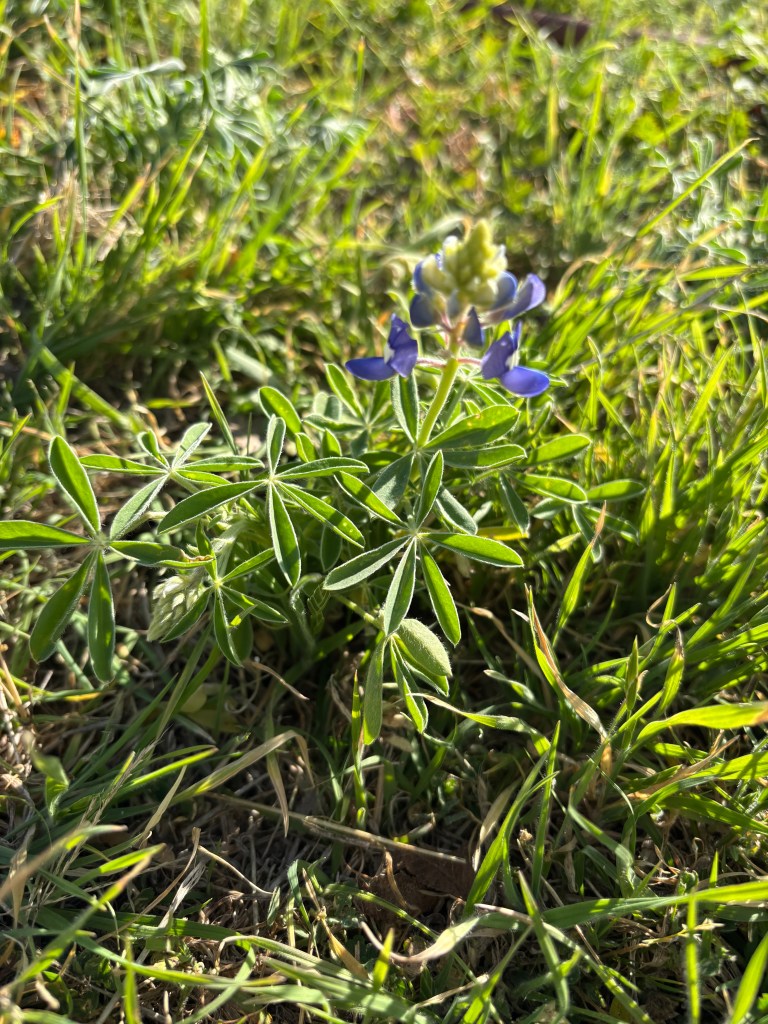
And now suddenly the redbuds, with their irresistible yet evanescent fuchsia buds, are blooming. I’ve seen our first bluebonnet,

This image has an empty alt attribute; its file name is img_0974.jpg

and the first purple prairie verbena. The live oaks know it’s almost the equinox—they’ve flung down their old leaves (aided by the fierce winds) and are preparing their catkins and baby leaves. The cedar elms have put out tiny chartreuse leaves just in the last two days.

This image has an empty alt attribute; its file name is img_0973.jpg

So it’s spring! Grab that trowel! And after all your work, you deserve to loll on the couch at night with a good mystery. I’m halfway through the tenth book in my Hill Country murder mystery series. This one raises a question I find intriguing and difficult. Can justice be served when, unauthorized to pronounce justice, we take justice into our own hands? Is that still justice? I’m discussing it with the plants. More to come….

This image has an empty alt attribute; its file name is img_1776.jpg

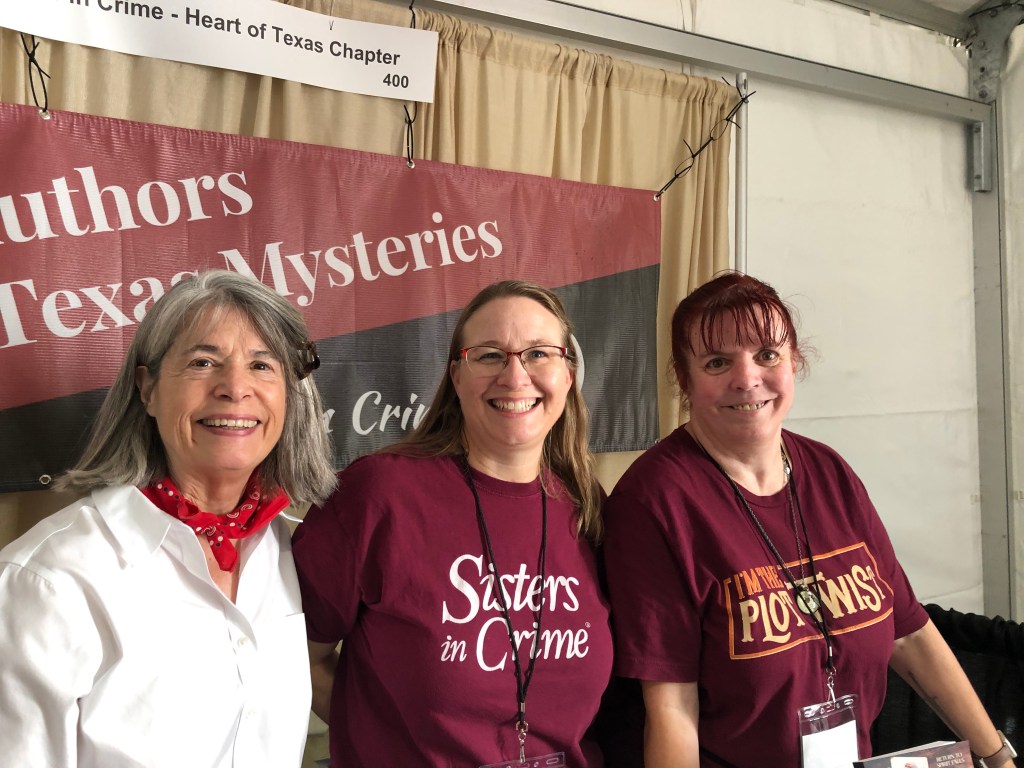
Here are Helen, Noreen Cedeno, and Juanita Houston at the Texas Book Festival!–Heart of Texas Sisters in Crime

Award-winning Helen Currie Foster lives and writes the Alice MacDonald Greer Mystery series (9 volumes so far) north of Dripping Springs, Texas, loosely supervised by three burros. She’s working on Book 10. She’s drawn to the compelling landscape and quirky characters of the Texas Hill Country. She’s also deeply curious about our human history and how, uninvited, the past keeps crashing the party.

Follow her at http://www.helencurriefoster.com and at https://www.amazon.com/stores/Helen-Currie-Foster/author/B00R1X9RXK?https://www.facebook.com/helencurriefoster

WRITING CHARACTERS’ EMOTIONS

BY

Francine Paino, a.k.a. F. Della Notte

People don’t stand or sit like stone statues, unless there’s a reason. They move, breathe, and respond to situations with emotions, internally and externally, and so they should in stories. Thus, the author must find words to bring the reader into the character’s heart and mind. Writers spend hours thinking about what their characters are feeling. How do we show the reader those emotions?  Eyes are one of the most popular tools to convey feelings.

Yes, those spherical bodies of different shapes, colors, and densities are called the windows of the soul. Thousands of pages have been dedicated to the power of the eyes.  There are hundreds, of eye expressions, including wild, frightened, gooey, flinty, evil and the list goes on. Each one of those words or phrases evokes a sense of the person’s feelings. For a writer, those eyes may be a windows of the story. But wait— Are they enough? How else may we show a character’s emotions?

Body language is one. He slouched, lowering his eyes. That may indicate disappointment to the reader. She flung her long blond hair back over her shoulder and lifted her chin. Conceit? Defiance? It could be either, depending on the scene. However, there is another often overlooked part of the body that exhibits emotions: hand gestures.

Hand gestures may emphasize words, or be used in place of words. Communication experts have recently added hand gestures to the lexicon of terms revealing emotions and thoughts.

An NIH, National Library of Medicine, 2014 article on gestures’ roles in speaking, learning, and creating language concludes, “gestures provide both researchers and learners with an ever-present tool for understanding how we talk and think,” and hand gestures are used in many cultures and societies.

In Around the World in 42 Gestures, we travel with examples of hand motions and their meanings and learn reasons to familiarize ourselves with them when visiting foreign lands. While polyglots speak many languages, for the majority, some prep time learning a few regional hand gestures would be easier and more effective than trying to master language skills. With hand gestures, one can say a lot with one move instead of struggling through vocabulary, grammar, and pronunciation combinations, and it would be wise to understand if a positive Western gesture isn’t welcome in a foreign land. For example, the gesture we use—crossed fingers to wish good luck, in Vietnam is an anatomically-themed insult.

Tapping your forehead with bunched fingers in Peru means, “I don’t get it. I’m not smart enough, and in France, touching your index finger below the eye indicates, “I don’t believe you.” Moving on to Spain, passing your forefinger and middle finger (V formation)  down your face from your eyes indicates, “I’m broke.” Moving east to Russia, pulling your left hand behind your head and scratching your right ear, says, “This is getting too complicated.” Indeed, that is the right gesture for such a sentiment.

Coming back west, we end our short tour in Italy, a country one cannot visit, in reality or in fiction, without understanding the loaded meanings of at least some of the gestures so common in Italian culture.

Italians are universally known to incorporate hand movements with words and often in place of them. The Italian Language Center identifies roughly 250 hand gestures that are part of Italian conversations. Why so many?

Theories suggest that the iconic hand gestures result from a long history of Italy being invaded by many nations that imposed their languages, cultures, and mannerisms. From the Ancient Greek colonization along the Mediterranean coast to subsequent invasions by the Carolingians, Normans, Visigoths, Arabs, and Germans, these hand gestures developed as a means of communication among people with no common language – and have stuck around ever since. The hand gestures may have sprung up to ease communication.”

Although many of these motions vary by region, among the most common and generally understood by all are bunching all five fingers on one hand and bringing them to the lips in a symbolic kiss, which expresses appreciation for any masterpiece, even in cooking.

There is one Italian gesture, however, one should use sparingly, if at all. Holding four fingers together and swiping them outward from under the chin can mean, “I don’t give a damn,” but it also has a ruder meaning. As a visitor to Italy, I think it’s best not to test that one.

In book four of the Housekeeper Mystery Series, Murder in the Cat’s Eye, Father Melvyn and Mrs. B. take a group of eccentric parishioners to Rome to learn about the lives of the earliest Christians. In this adventure, the reader will encounter the quirks of the travel group that could land them in the hoosegow, a series of crimes that engulf the unsuspecting travelers from Austin, Texas, an Italian detective, and several characters who are not what they seem. It will serve the reader well to understand the hand motions that are part of Italian communications. Perhaps this book will require a glossary of gestures.

Buon viaggio e buona lettura.

 (Have a good trip and happy reading.)

https://www.worktheworld.com/infographics/around-world-42-hand-gestures,

https://pubmed.ncbi.nlm.nih.gov/22830562/

Thank You, Encyclopedia Brown!

A post by editor and author Michael Bracken over at Sleuthsayers last week made me ponder my writing influences when it comes to detective fiction. Michael, who has read more than his share of detective fiction in the course of his work recently, suggested that authors need to move away from the trope of the “broke, drunk, and horny” private eye if they want to write something that stands out from the pack. He also recommended not always starting the case in the detective’s office because that can lead to too much back story and a severe delay in moving the plot forward. Reading his post, I realized that I’ve never once had the urge to write that stereotypical “broke, drunk, and horny” character. Then, I wondered why I hadn’t.

My first published short story was a detective story. And while my character, a private investigator named Pete Lincoln, was broke, his financial situation had more to do with the times in which he lived than with his own inability to manage funds. His sex life was irrelevant to the case and didn’t come into the story at all. If he drank, it wasn’t to excess, and also didn’t come into the story. Pete lived and worked in a future world in which privacy rights didn’t exist. He appeared in a story entitled “A Reasonable Expectation of Privacy,” which was first published in Analog: Science Fiction and Fact in 2012, and reprinted in Black Cat Weekly #19 in 2022.

Given that most writers, when they first start crafting fiction, write the tropes that they absorbed while reading, I asked myself what detective fiction I had absorbed at an early age that influenced my writing and that didn’t lead me straight to writing the classic stereotype that Michael was lamenting. Who was the first fictional private detective that I read?

And the answer came to me: Encyclopedia Brown, Boy Detective.

Image Created with Canva

While the boy detective did teach me the basics for detective fiction, he wasn’t in financial straits since he was a child who lived a quite middle-class life with his parents. Everyone knew Encyclopedia liked his friend and partner Sally, but that didn’t remotely approach the trope of womanizing detective. As for drunk, no! While some of his cases started in his garage office with a client paying the twenty-five-cent fee, other times Encyclopedia solved cases for his father, the police chief, while sitting at the family dinner table. So the stories also taught me that not all cases had to start in the detective’s office.

By the time I read Sherlock Holmes a few years later, the pattern of how detective fiction worked was already firmly fixed in my head. While Holmes indulged in illicit substances, he also wasn’t a classic “drunk.” Holmes never panicked about paying the bills or complained about being broke. As for women, the only one that counted for anything for Holmes was Irene Adler. So Holmes, another of my early fictional detective influences, didn’t fit the stereotype either.

Since writing my first PI story, I’ve written many other detective stories. While I have started several of them in the detective’s office with the arrival of a client, not one of my detectives has been “drunk, broke, and horny.” For example, Detective Maya Laster is a former middle school teacher who turned a genealogy hobby into a detective business, solving mostly cold cases with the help of forensic genetic genealogy. She has appeared in two stories in Black Cat Weekly (issue #79 and #110) and will be appearing again in an upcoming anthology.

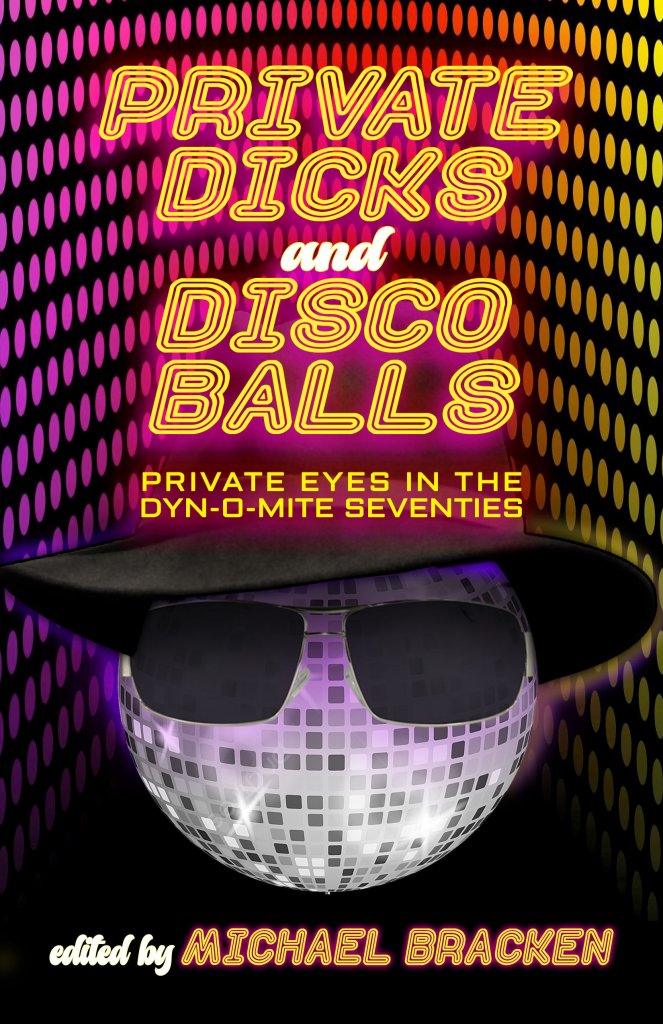
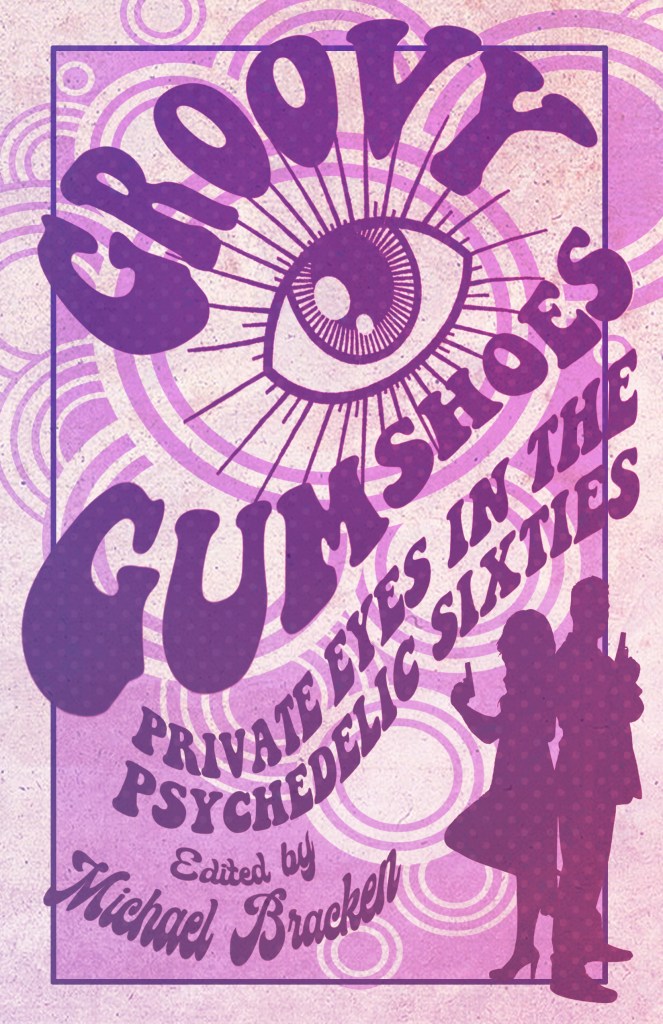
Another of my characters, PI Jerry Milam, came of age during World War II, became a police officer following the war, and suffered terrible injuries in a car wreck which ended his police career, leading him to become a private investigator. He’s a teetotaler with a solid income and chronic left hip pain who feels he missed his chance with women. He appeared in Groovy Gumshoes: Private Eyes in the Psychedelic Sixties and Private Dicks and Disco Balls: Private Eyes in the Dyn-O-Mite Seventies. One of my current works-in-progress sees him solving a case in the 1950s.

If my detectives managed to side-step the cliché of the “broke, drunk, and horny” private investigator, I have my early reading influences to thank for it. So thank you Donald J. Sobol for creating Encyclopedia Brown and teaching me to create private investigators who avoid falling into clichés.

*****

N. M. Cedeño is a short story writer and novelist living in Texas. She is active in Sisters in Crime- Heart of Texas Chapter and is a member of the Short Mystery Fiction Society. Find out more at nmcedeno.com.

Rain, rain go away. . .

By: Dixie Evatt

It might just be the Texas temperatures that have been rocking from the 20s to the 80s since the first of the new year. Or maybe it’s the ominous news reports about melting ice caps or the drought conditions paired with hurricane-force winds that helped fuel the Los Angeles wildfires. Whatever the case, I find my mind traveling again and again to thoughts of weather and the influence it has on stories, both fictional and real. 

As writers we’ve inherited wise advice about incorporating weather into our stories. For instance, Number One in Elmore Leonard’s Ten Rules for Good Writing is “never open a book with weather.” While that advice is close to dogma, it has been debated (see: Jo-Anne Richards bit.ly/41a4oCk and Roz Morris bit.ly/3WUcAEk

Richards, an internationally published novelist, says of the admonition to avoid opening your novel with weather isn’t an iron-clad rule. It’s a prompt to the writer to if the story is stronger by opening with a paragraph where you find people doing something. That doesn’t mean a weather opening never works. She gives this example of an opening from Maggie O’Farrell’s “The Hand that First Held Mine.”

Listen. The trees in this story are stirring, trembling, readjusting themselves. A breeze is coming in gusts off the sea, and it is almost as if the trees know, in their restlessness, in their head-tossing impatience, that something is about to happen.

Morris, a former ghost writer who writes the “Nail Your Novel” blog, offers an example of a weather opening that she likes because it is intensely descriptive and the storyteller lures in the reader. Her sample story opening is from “The Rapture” by Liz Jensen.

That summer, the summer all the rules began to change, June seemed to last for a thousand years. The temperatures were merciless …It was heat to die in, to go nuts in or to spawn. Old folk collapsed, dogs were cooked alive in cars…The sky pressed down like a furnace lid, shrinking the subsoil, cracking concrete, killing shrubs from the roots up…

Although the advice about beginning a story with weather can be debated, there’s also the middle and end of the story to consider. Susanne Bennett, a German-American writer, identified seven ways writers can use weather to tell their story in her 2022 post on “Writers Write”: conversation starter; backdrop; sensual experience; foreshadowing; sense of conflict; motif; and acting force. In fact, she advised, the weather can stand as the last word (where it is almost another character).  bit.ly/4hSBBYq

Bennett also reminds us that the old saw about showing not telling is likewise true for weather. For example, she edited the sentence, “On a sunny day, Jane went to the public library” to read “A T-shirt is enough,” Jane thought, glad to put her cardigan aside… Who needed extra baggage on a day like this?”

“The Great Gatsby” by F. Scott Fitzgerald is chock full of weather references, many illustrating Bennett’s points. One researcher counted 111 separate weather references, from heat, to wind to sun to rain, most of which can be linked to mood or passion in the story.

Weather can also emerge out of the obscurity of background symbolism to overtly influence action. There’s an oft-cited example of one snow scene in “Catcher in the Rye” by J.D. Salinger when Holden Caufield makes a snowball but is so conflicted he is unable to throw it. Would Agatha Christie’s closed-room mystery “And Then There Were None” even have been possible if a ferocious storm hadn’t trapped the ten victims on an isolated island off the Devon coast? Or, how about the necessity of a crop-killing drought to cause the Joad family to pick up stakes and abandon their home in John Steinbeck’s “Grapes of Wrath”?

Weather might incite action or prevent it. My book club recently read “To the Lighthouse” by Virginia Woolf and one of the most memorable refrains is about weather. In the story, the family plans, again and again, to visit the lighthouse the next day but only if the weather is “fine.” It almost never seems to be. 

Would the passionate and cruel relationships in “Wuthering Heights” by Emily Brontë feel the same without a violent storm “rattling over the Heights in full fury,” taking down tree limbs in its wake? Wuthering, after all, means tumultuous storms.

Sometimes weather carries double duty, carrying both mood and action, as in “The Scarlet Letter” by Nathaniel Hawthorne; “Misery” by Stephen King; and “Transit of Venus” by Shirley Hazzard. When the long-suffering Hester Prynne in “The Scarlet Letter” removes her cap and then the scarlet letter she is awash in sunlight. 

In “Transit of Venus” you just know Ted Tice is going to have a rough go of it when he arrives, soaked through. “He looked up from his wet shoes and his wet smell and his orange blotch of cheap luggage. And she looked down, high and dry.”

Not unlike Annie Wilkes the weather is unsettling and unpredictable in “Misery.” As the weather changes, she changes, leading Paul Sheldon, the author she holds captive, to conclude, “I am in trouble here. This woman is not right.”

There are so many other memorable weather scenes in literature that Pulitzer Prize winning writer Kathryn Schultz pulled from her almanac of examples in a 2015 article in “New Yorker” magazine. bit.ly/3WVj0D9

And, finally the 2024 Academy-Award nominated movie “The Room Next Door,” brings together all of the advice about injecting weather into a story. We see its use to create mood, develop characters and foreshadow events when the dying Martha (played by Tilda Swinton) recites parts of James Joyce’s “The Dead” to her friend Ingrid (played by Julianne Moore).

It had begun to snow again. He watched sleepily the flakes, silver and dark, falling obliquely against the lamplight..His soul swooned slowly as he heard the snow falling faintly through the universe and faintly falling, like the descent of their last end, upon all the living and the dead.

Dixie Evatt (DLS Evatt)

A former political reporter in Austin, Dixie also taught writing at Syracuse University. When she teamed up with Sue Cleveland to write fiction, they sold a screenplay to a Hollywood producer. Although the movie was never made, the seed money financed ThirtyNineStars, their publishing company. Through it they published two award-winning thrillers (Shrouded and Digging up the Dead) under the pen name, Meredith Lee. In 2021 Dixie launched a solo mystery (Bloodlines & Fencelines) that Kirkus described as, “A twisty whodunit that’s crafted with care and saturated with down-home Southern charm.” She is working on a prequel (Gravel Roads & Shallow Graves) set to launch in 2025. www.dlsevatt.com

THE DAILY GRIND: COFFEE TIME!

by Fran Paino, a.k.a. F. Della Notte

Coffee is a staple of life all around the world. Something I can understand and agree with. In “Coffee Facts and Statistics,” Lark Allen offers fascinating stats on the American Coffee habit.

A once famous bishop said, “Americans may not consider themselves ‘addicted’ to coffee, but the average American is physically, biologically, psychologically, and neurologically unable to do anything worthwhile before he has a cup of coffee. And that goes for prayer, too.”  The Venerable Fulton J. Sheen.

 What is coffee, anyway? A scientific answer can be found in The New Rules of Coffee: A Modern Guide for Everyone, where authors Jordan Michelman and Zachary Carlson go into lengthy detail about different types, brands, and varieties of coffees. They point out, “Like wine grapes, arabica or robusta plants have their own typicity and genetic diversity.” After more botany details than one might want to read, they conclude, ‘… you’re talking about a piece of fruit with seeds inside.’ Just like wine grapes. Yes? And like wine, coffee has an ancient history.

There is much speculation about the origins of coffee. Still, all agree that coffee originated in the high-altitude forests of Ethiopia, Sudan, and Kenya and goes back to a time when North America was yet unknown to the extant world. My favorite possibility/story/myth about the discovery of coffee is the legend of Kaldi, first told by Antoine Faustus Nairon, a Maronite who became a Roman professor of Oriental languages. His treatise is considered one of the first ever written on coffee, in 1671, Rome.

The legend takes us to Abyssinia (now Ethiopia), where a goat herder named Kaldi noticed that his unfriendly goats changed after eating berries from a particular tree that grew in the forest high up on the Abyssinian plateau. They became lively and more pleasant and couldn’t sleep at night. Kaldi decided to eat the berries and found himself filled with energy. Not knowing what to do, Kaldi brought some to the Islamic abbot of a nearby Sufi monastery. The abbot brewed the berries into a drink and found that it kept him awake throughout the long, required hours of night prayers. The abbot informed other monks who tried the brew made from these berries, and word spread rapidly eastward and reached the Arabian Peninsula, then spread throughout the world. Before coming to the United States, coffee found its greatest fans in European cities.

America’s love affair with coffee is estimated to have begun as early as 1607, when John Smith, founder of Jamestown, Virginia, introduced it to the colonists. Here are other fun facts, supplied by A.I., about coffee’s rise to power in the U.S. Tracing coffee in the United States, one can find specific dates and activities. In 1670, Dorothy Jones became the first person to sell coffee in Boston, Massachusetts, and in 1697, the Dutch opened the first coffee house in New York. In 1713 a Dutch merchant presented a coffee tree to King Louis XIV of France. George Washington recorded in his diary in 1760 that he attended a ball where coffee was served. Coffee grew in popularity after the 1773 Boston Tea Party. Understandable, I’d say. One of the most interesting activities around coffee took place during the American Civil War, 1861-1865. Coffee was a standard issue ration for the Union and Confederate armies. The soldiers on both sides often ran out of food and supplies, including coffee and tobacco. Union and Confederate soldiers occasionally exchanged northern coffee for southern tobacco along the quieter fronts.

Today, in the U.S., we no longer worry about north and south for our coffee supply. We may buy it in coffee shops such as Starbucks and sometimes sit down, but we most often take it away.  In Europe, however, the takeaway culture hasn’t taken over. In Italy and France, it is customary to drink a small, strong shot of espresso standing at the bar. This is considered a quick, social interaction, with many people opting to savor it at the bar while chatting with the barista or friends. 

Some key points about European coffee bar customs: Espresso is the norm. Most European coffee cultures center around espresso as the standard coffee order, with variations like “lungo” (longer shot) or “ristretto” (shorter, stronger shot) available depending on what one prefers.  Standing at the bar to drink it is common, and it’s paid for before receiving the drink.  Morning coffee is different. While espresso is enjoyed throughout the day, milk-based drinks like cappuccino or café au lait are often considered more of a breakfast item. 

Country-specific nuances: In Italy: “Un caffè” means a single espresso, and it’s considered a faux pas to order a cappuccino after lunch. In France, “Café” refers to a standard espresso, and a “café au lait” is a coffee with a more significant portion of milk.  In Spain, the term ‘solo’ is received as a request for espresso coffee served in a small glass.  

Here in the United States, we drink our coffees sitting, on the go, in large or small containers or cups. Most Americans prefer their coffee with at least some milk and often with sugar or artificial sweeteners.

I love my coffee any time of the day, but in the late afternoon, I bow to caffeine’s power to keep me awake at night, so I cheat and switch to decaf.  

Thus, it is no surprise that the protagonists in the Housekeeper Mystery Series, Father Melvyn Kronkey, is an unusual Irishman who prefers coffee to tea, a habit instilled in him by his trusty right hand, Mrs. B. Over many a cup of coffee, they use wit, intellect and intuition to reason out motives and solve crimes.  

In book four, Murder in the Cat’s Eye, now underway on the pages and in Italy, Father Melvyn, and Mrs. B. take a group of parishioners to Rome to study the lives of ancient Christians, living in a harsh, pagan society, and how they flourished after being outlawed, and punished by gruesome deaths. But will Father Melvyn and Mrs. B. only deal with the ancient world, or will they find themselves embroiled in current crimes, death, and destruction in a strange country? Watch for it in late spring or early summer.

Meanwhile, Happy Reading!

Frosty Weather!

by Helen Currie Foster

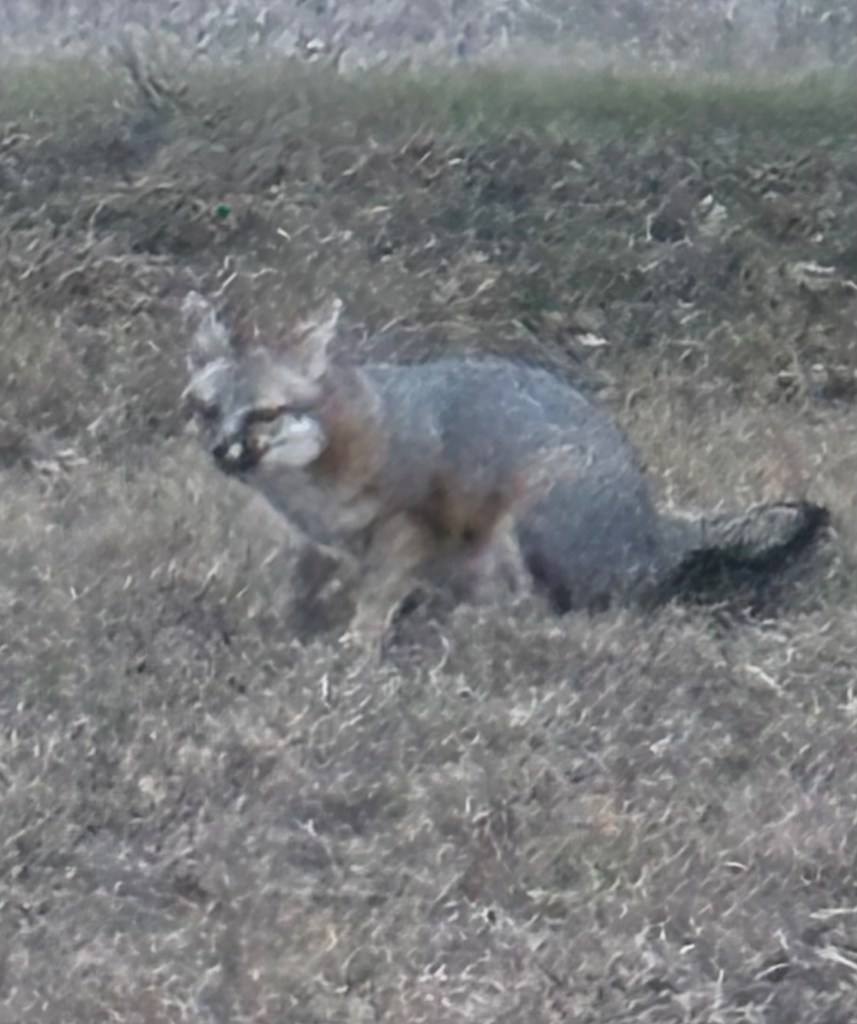
Brr!! It’s so cold the foxes are prowling the front yard looking for snacks and the birds are up at dawn waiting for their humans to show up with the bird feeders.

Dawn and twilight, twilight and dawn: Out here in the Hill Country, planets and stars still visit regularly. Lately Mars (on Jan. 12 it came as close to us as it gets, every couple of years) has been showing off after dark in the eastern sky, glowing orange-red like a war god’s shield. Jupiter rises high above, competing on brightness with Venus off in the west. Last week Venus revealed itself above the sunset, above rows of pink clouds like swishing skirts below. Close to Venus but a bit “left” or south you can spot Saturn (admittedly I get help from the Skyview app)—small and far away but Saturn still hopes we’ll at least leave a comment in the planetary visitor’s book. I find it both exciting and comforting that out here we still can see planets, unbothered by earthly chaos, spinning through space, away from us, then back again. (If lights are encroaching on your nights, consider joining Dark Sky!)

Which takes me back to our earlier sky-watching ancestors. Housebound this icy weekend, I found myself checked 23andMe and discovered I have the first in a list of Neanderthal gene variants, tactfully (really beautifully) described as: “…one variant associated with having difficulty discarding rarely-used possessions.”

Spang on! So true! I know some of you readers are fully capable of blithely opening a dusty box of someone’s old t-shirts and thinking—does he really want to keep his t-shirt from basketball camp thirty years ago? Surely not. Off to Goodwill!

But because that shirt unearthed memories of stories of basketball camp, my Neanderthal variant ordered, “put that box back on the shelf!”

And “rarely-used possessions” can still be extremely valuable. The perfect rock for chipping a new axe? The best cave for winter living? The skin bag of crushed ochre? It’s important to remember where these things are! https://www.durham.ac.uk/departments/academic/archaeology/archaeology-news/neanderthals-the-oldest-art-in-the-world-wasnt-made-by-homo-sapiens/

Still, in our “too much stuff” world, while 23andMe offered a tactful way to describe this Neanderthal variant, perhaps a more useful term is—“difficulty discarding memory-stirring possessions.”

Maybe your home (like mine) also holds a number of “rarely-used possessions.” For Marie Kondo the operative question was “does it evoke joy?” My new question for the “rarely-used possession” is, does this actually stir memories? What “memory containers” do we really, truly, keep going back to? Not just keep, but go back to? Pick up and look at again? And remember?

For me? Not old diaries. Certainly not yearbooks. Nor even boxes of pictures. But certain old clothes do remind me of memories and milestones: the suit bought for interviewing during law school. A treasured fleece from a rowing competition. Even childhood clothes that are long-gone live in memory—the sweater a grandmother knitted (second grade), the scratchy little swimsuit for swimming in a mountain lake (third grade), the blouse saved for with baby-sitting money.

Other sources of memories, similarly intangible? Music, of course, especially if dancing was involved! First time slow-dancing in seventh grade! First time at the Broken Spoke, trying the Cotton-Eye Joe! Sam’s Town Point on a perfect night–– https://www.samstownpointatx.com/––with Floyd Domino and the All-Stars and everyone dancing! http://www.floyddomino.com/dates-news.html Do dance memories stick in your head too?

One cache of memories I desperately wish I had––and you might too––involves the night-time communal dances of the San people of the Kalahari, in southern Africa. These memories are vividly described in Once Upon a Time Is Now, A Kalahari Memoir,

by the extraordinarily distinguished anthropologist Dr. Megan Biesele, a treasured friend. https://amzn.to/4at9o8o  Megan lived with the San people and on many, many nights watched them engaged for hours of singing, dancing, retelling traditional stories—and healing. She describes the synchrony of the dance around the fire:

“Anything…could happen as the people took up the tools…of their voices and their hands, their legs and their feet, their knowledge of each other, and of their reliable power to create, with each other, a force for heath and peace. As the voices blended in a polyphony of endless incremental variation, as the powerful stamping of the men’s feet took them in measured, inexorable progress around and around the dance circle, I felt the waves of energy…it was impossible not to become linked to the process myself.  [P]eople seemed with each movement, each note of singing, to call out to each other and to receive instantaneous response…. Every dark night could become a bright night of the soul.” (Id. at 173-4)

I still haven’t figured out how to get Alice, my protagonist in the Ghost mystery series set in the Texas Hill Country, to the Kalahari. She and her beau, Ben Kinsear, would really like to go. Meanwhile they will keep dancing at the Beer Barn, in Coffee Creek. Also, Alice still keeps her kids’ baby clothes, and one of her mother’s hand-made dresses, and the white Gibson-girl dress her great-grandmother wore back before WWI.

But maybe I’ll take a spring-cleaning-vow for a box or two. Watch this space.

Meanwhile, remember the birds can lose 10% of their weight just keeping warm on a frigid night. Keep your feeders filled! And stay warm!

Helen Currie Foster lives and writes the award-winning Alice MacDonald Greer mystery series in the Texas Hill Country, north of Dripping Springs, loosely supervised by three burros. Coming soon–Book 10 in the series!

Goodbye 2024 / Goals 2025

N.M. Cedeño

Between writing, watching a child graduate from high school and leave for college, shepherding another child through obtaining a driver’s license and applying for college, and undergoing unexpected eye surgery, 2024 was a busy year. The year also featured my father’s eightieth birthday party, my twenty-fifth wedding anniversary, and a vehicle totaled in a car accident. Call it the usual assortment of life’s ups and downs.

Last year I set a goal to submit three stories a month. Thanks to my unexpected vision issues and subsequent eye surgery, I didn’t quite hit that goal. I did manage to submit twenty-two unpublished stories and nine previously published stories to various venues for a total of thirty-one submissions.

Seven of the unpublished stories were accepted for publication. Four are still pending either acceptance or rejection. Of the previously published stories that I submitted, seven are still pending and two have been rejected.

Six of my stories were published in 2024. Three appeared in anthologies; two appeared in Black Cat Weekly e-zine; and one appeared on the Redneck Press website. Three short stories and one novella that were accepted for publication in 2024 are pending publication, marching toward their release dates.  

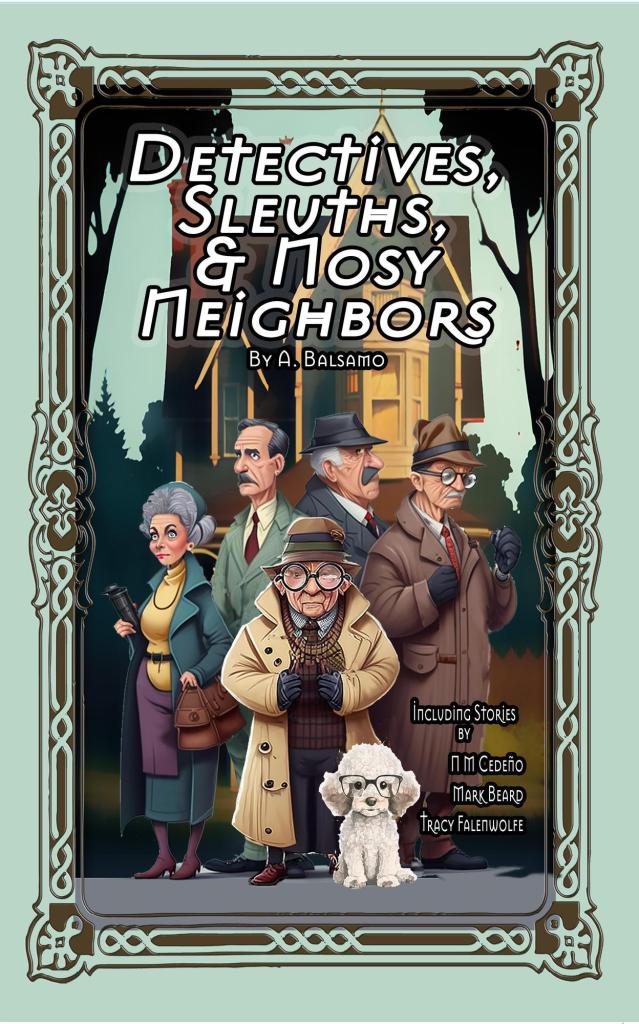
These three anthologies containing one of my stories that came out in 2024.

Speaking of that novella. Writing the novella was a challenge and an occasion for learning in 2024. I have a writing process for short stories and another process for novels. I didn’t have a process for the intermediate length. For short stories not requiring research I typically make a few notes and start writing. For full novels I make a few notes and start writing, stop after a few chapters, make more notes, write until I’m two-thirds of the way done with the plot, make revised notes, and then write until I finish the first draft of the book. My process for the novella ended up looking like neither my short story nor my novel processes.

The novella required research, which was difficult to do with one of my eyes seeing double. Writing it was difficult for the same reason. The situation called for flexibility. So, I did something that I don’t normally do. I wrote the story scene by scene by asking myself “what scenes will this story need?” Instead of starting at the beginning, I started writing with a scene I knew I would need.

After writing a few scenes, I made a list of scenes I still needed. Then I went down the list writing the scenes. If I wasn’t sure about how to write a scene, I skipped it and wrote a different scene. Then I went back, figured out the missing scenes, while adding other scenes that I came up with after I made the initial list. Finally, I connected everything. It worked better than I expected. I completed the initial draft in about a month, and finished it with time to spare before the deadline.

Looking forward to 2025, I am setting the same goal of submitting three stories per month. I already have some story deadlines on the calendar, and I’m looking forward to diving into writing them. How many stories will I write? I don’t know, and I’m a bit reluctant to set a goal. However, I do plan to stick with writing short stories with no plans to write a novel.

I plan to attend at least one writing conference in person this year. I have my sights set on Bouchercon New Orleans.

I plan to keep learning from webinars.

I also plan to read more than in 2024, an easy goal, since my reading was severely curtailed by the eye issue.

On the home front, some of 2025 will mirror 2024, with a child graduating from high school and leaving for college. We’re still waiting to find out what college. The main difference from 2024 will be that my last chick will likely fly the nest for the dorms in 2025. We will have a temporarily empty nest until the two youngest chicks return home to the nest during school breaks. Having no children at home will be a huge change in my household routines. I’m sure it will affect my writing patterns and plans in more ways than I can predict.

Here’s looking forward to the new world of 2025!

*****

N. M. Cedeño is a short story writer and novelist living in Texas. She is active in Sisters in Crime- Heart of Texas Chapter and is a member of the Short Mystery Fiction Society. Find out more at nmcedeno.com.