The Million Dollar Question and A Goodbye

If mystery/crime is still one of the top selling genres for books, why are so many mystery magazines and publishers having such a hard time surviving compared to speculative fiction markets? The demise of Down & Out Books this month, coming on the heels of other closures, sales, and consolidations, has me thinking about the continued shrinkage of the mystery market and about what really drives sales for a particular genre. (With Down & Out’s closure, two of my stories that were awaiting publication need new publishers.)

Every couple of months, someone in the short mystery community asks how to sell more crime fiction short stories to the reading public. Someone else always answers that short stories don’t sell well because they are considered literary fiction, a category which sells far less than any other form of fiction. Others say that it’s simply a well-known fact that people don’t read short stories because they prefer novels and series.

Why assume short fiction is considered “literary” when short science fiction and short fantasy don’t seem to have problems selling? Why assume few people read short fiction when the existence of so many successful short speculative fiction markets seems to belie that supposition?

Go to any writers’ submission information site, Submission Grinder, Chill Subs, etc., and you will find far more markets for short speculative fiction (science fiction / fantasy / some horror) than you will for short mystery / thriller / suspense. The markets for short speculative fiction pay their authors far better than the crime genres, too. Why do they pay more? Because they have the sales numbers to support the pay.

In the short mystery fiction community, authors are frequently exhorted to buy more anthologies and subscribe to more magazines to support our community so that it doesn’t vanish. But if authors are the only audience, something is seriously wrong. Are dancers or actors told to buy tickets to their own theatrical performances so the show doesn’t close? Are artists urged to purchase artwork to prevent galleries from failing? Are musicians told to buy as many songs and albums as possible to help keep the music industry afloat? No. In all those creative-arts-based industries, business leaders recognize that it takes more than just the creators to support the industry. It would be ludicrous to believe that the creators alone could support an industry. Ergo, no amount of chiding of short mystery authors is going to improve sales numbers. It takes fans to support a genre.

So why aren’t crime and mystery fans buying short fiction while sci-fi and fantasy readers are? Are we marketing in the wrong places? Are we failing to draw in younger readers who then grow up to be buyers and subscribers? Maybe. But I think the situation is more complex than that. The mystery genre had a heyday, a golden age when it was all the rage in the early to mid-1900s. Once upon a time, Ellery Queen was a television series. So was Alfred Hitchcock Presents.

Today, we have Michael Connelly’s many works on streaming services. Craig Johnson’s Longmire and Tony (and Anne) Hillerman’s Leaphorn and Chee did well on screen, too. Only Murders in the Building has made a splash. The Enola Holmes movies are popular. People love the Brit Box mystery offerings. But the mystery genre offerings for the last three or four decades have been a drop in the bucket compared to the speculative fiction options available in the larger world of entertainment.

Today’s science fiction and fantasy stories are features of computer games and blockbuster movies. A glance at market offerings confirms that some mystery computer games exist, but very few are pure mystery. Most computer games with mystery plots are set on other planets, in other galaxies, in the future, or have other speculative elements.

Is there a connection between the current abundance of speculative fiction entertainment in games and movies and the thriving speculative short fiction market? Probably. Speculative fiction has been central to the cultural zeitgeist for several decades now, the same decades in which the mystery genre markets have been slowly vanishing.

What short mystery fiction really needs is a new golden age of mystery with a strong resurgence in the crime genre on screens. Until then, short mystery fiction writers will have to find other ways to reach readers. Which means we have to try the smaller-scale techniques and the more personal methods to increase our fanbase.

Some authors are trying book trailers on TikTok, YouTube videos, and social media posts in the hope of going “viral.” This month, I tried an even more direct approach to spread the word about short mystery fiction to youth. I spoke to a class at the local high school about how to revise short stories. I brought with me a half a dozen crime fiction anthologies and a handful of magazines and displayed them for the students. I told them to read, read, read. I recommended that they seek the “best of” anthologies for their genres. I recommended that they subscribe to magazines and ezine.

Will any of those kids read a crime fiction anthology or buy a crime fiction magazine subscription? I have no idea. However, I do know that we need to stop blaming authors for not buying enough magazine subscriptions to keep a magazine afloat or enough books to keep a small publisher from going bankrupt.

And now, a farewell. The Ink-Stained Wretches blog is closing, too. I will be moving over to post on the Austin Mystery Writers blog. All of the other members of this blog, except me, are already there. Look for my next post over at Austin Mystery Writers.

Thanks for reading.

Noreen

Naming Characters: Steve Dauchy MacCaskill

I’m working on a mystery novel—I’ve been working on it for years, but am now seeing the light at the end of the tunneland am faced with dilemmas too numerous to whine about in only one post, so I’ll move along.

I will instead write about the one pleasure of the writing life: creating and naming characters.

My novel is set in a little town very like my own hometown. I don’t base my plot on real events, and I don’t use real people as characters—with one exception: Steve Dauchy.

Not Steve, but close

Note: One of my readers, Dr. Cullen Dauchy, knows more about Steve than I do, especially about his early life, and I hope he’ll feel free to correct any errors.

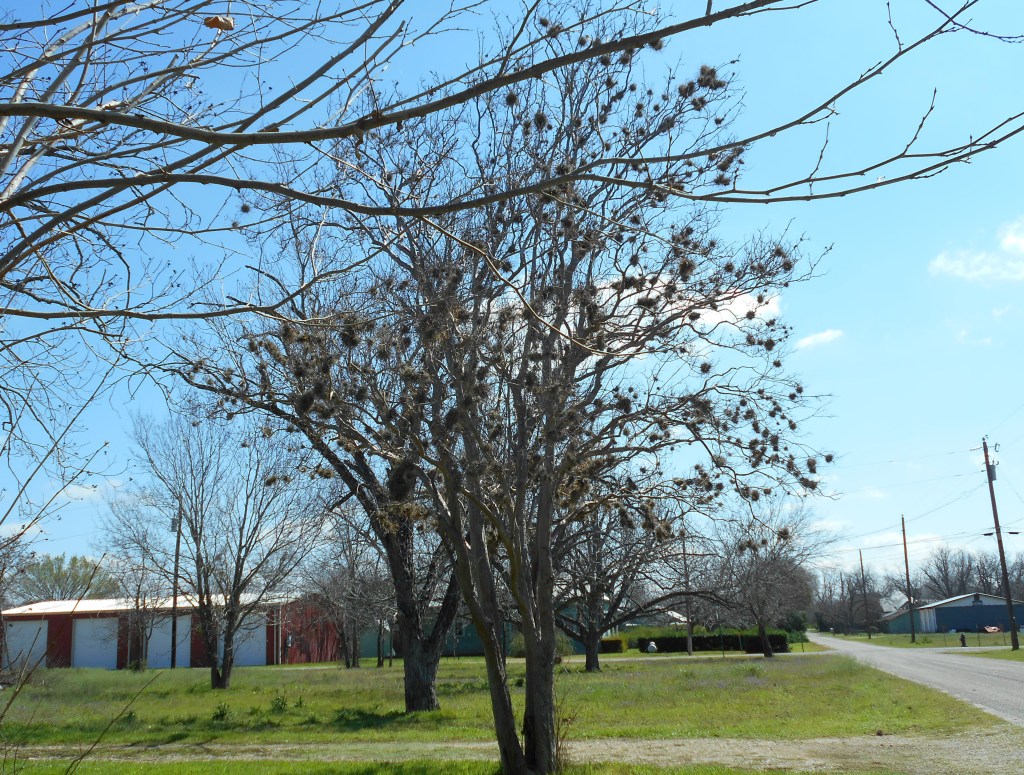
Steve Dauchy was a career blood donor at Katy Veterinary Clinic in Katy, Texas. On retirement he moved to Fentress, where he lived with his veterinarian-owner’s parents, Joe and Norma Dauchy. Joe and Norma lived next door to me; in local terms, next door meant that my house was on one corner, then there was a half-acre “patch” of pecan and peach trees and grass and weeds, then a street, and then on the next corner, the Dauchy yard and their house. The point being that when Steve visited me, he didn’t just stroll across a driveway.

Joe was my dad’s first cousin, so I guess that makes Steve and me second cousins. I have a lot of cousins on that side of the family, although most are human.

Steve is a family name, with a story behind it. As I understand it, back in the ’20s or ’30s, my Great-uncle Cull (Joseph Cullen Dauchy, Sr.), enjoyed listening to a radio program about a Greek character who frequently spoke of “my cat Steve and her little cattens.” Uncle Cull was so amused by the phrase that he named a cat—probably one of the barn cats—Steve. And for the next forty or so years, he always had a cat named Steve.

Uncle Cull and Aunt Myrtle Dauchy’s house, home of the first Steves

So when the clinic cat became part of the Uncle Cull’s son and daughter-in-law’s family, he became the latest in a long line of Steves.

How to describe Steve? He was a fine figure of a cat: a big tabby, deep orange, with an expression of perpetual boredom. His reaction to nearly everything translated as, “Meh.” I’ve heard that’s common among clinic cats.

Once when Steve was standing on my front porch, the neighbor’s Great Dane got loose and charged over. I was frantic, shouting at the dog, shouting at Steve. But when the dog hit the porch, Steve just looked up at him. Dog turned around and trotted home.

Some would say Steve was brave, and I’m sure he was. But I believe his grace under pressure had their roots elsewhere.

First, he had experience. He knew dogs. In his former employment, he’d observed the breed: big, little, yappy, whining, growling, howling, cringing, confined to carriers, restrained by leashes, sporting harnesses and rhinestone collars, hair wild and matted, sculpted ‘dos and toenails glistening pink from the OPI Neon Collection. He’d seen them all. He was not impressed.

Facing down a Great Dane, however, took more than experience. There was something in Steve’s character, an inborn trait that marked him for greatness: his overarching sense of entitlement. He was never in the wrong place at the wrong time. My porch was his porch. The world was his sardine.

Except for the kitchen counter. Steve thought kitchen counters were for sleeping, but Joe and Norma’s maid didn’t. Consequently, he stayed outside a lot. He took ostracism in stride and used his freedom to range far and wide. Far and wide meant my yard.

Steve’s house

At that time I had three indoor cats—Christabel, Chloe, and Alice B. Toeclaws—and a raft of outdoor cats. The outdoor cats started as strays, but I made the mistake of naming them, which meant I had to feed them, which meant they were mine. Chief among them was Bunny, a black cat who had arrived as a teenager with his gray-tabby mother, Edith.

One day Bunny, Edith, and I were out picking up pecans when Steve wandered over to pay his respects, or, more likely, to allow us to pay our respects to him. Bunny perked up, put on his dangerous expression, and walked out to meet the interloper. It was like watching the opening face-off in Gunsmoke.

But instead of scrapping, they stopped and sat down, face to face, only inches apart. Each raised his right paw above his head and held it there a moment. Next, simultaneously, they bopped each other on the top of the head about ten times. Then they toppled over onto their sides, got up, and walked away.

That happened every time they met. Maybe it was just a cat thing, a neighborly greeting, something like a Masonic handshake. But I’ve wondered if it might have had religious significance. Bunny was a Presbyterian, and Steve was a Methodist, and both had strong Baptist roots, and although none of those denominations is big on ritual, who knows what a feline sect might entail?

Steve had a Macavity-like talent for making himself invisible. Occasionally when I opened my front door, he slipped past and hid in a chair at the dining room table, veiled by the tablecloth. When he was ready to leave, he would hunt me down—Surprise!—and lead me to the door. Once, during an extended stay, he used the litter box. Christabel, Chloe, and Alice B. Toeclaws were not amused.

Distance Steve traveled between his house and mine. His house is way over there behind the trees.

Invisibility could work against him, though. Backing out of the driveway one morning, I saw in the rearview mirror a flash streaking across the yard. I got out and looked around but found nothing and so decided I’d imagined it. When I got home from work, I made a thorough search and located Steve under my house, just out of reach. I called, coaxed, cajoled. He stared. It was clear: he’d been behind the car when I backed out, I’d hit him, and he was either too hurt to move or too disgusted to give me the time of day.

It took a long time and a can of sardines to get him out. I delivered him to the veterinarian in Lockhart; she advised leaving him for observation. A couple of days later, I picked him up. Everything was in working order, she said, cracked pelvis, nothing to do but let him get over it.

“Ordinarily,” said the vet, “I would have examined him and sent him home with you the first day. I could tell he was okay. But you told me his owner’s son is a vet, and I was afraid I’d get it wrong.”

Although he was an indoor-outdoor cat, Steve managed plenty of indoor time at his own house, too, especially in winter, and when the maid wasn’t there. One cold day, the family smelled something burning. They found Steve snoozing atop the propane space heater in the kitchen. His tail hung down the side, in front of the vent. The burning smell was the hair on his tail singeing. They moved him to a safer location. I presume he woke up during relocation.

At night, he had his own bedroom, a little garden shed in the back yard. He slept on the seat of the lawnmower, snuggled down on a cushion. Except when he didn’t.

One extremely cold night, I was piled up in bed under an extra blanket and three cats. About two a.m., I woke up to turn over—sleeping under three cats requires you to wake up to turn over—and in the process, reached down and touched one of the cats. It was not my cat.

I cannot describe the wave of fear that swept over me. It sounds ridiculous now, but finding myself in the dark with an unidentified beast, and unable to jump and run without first extricating myself from bedding and forty pounds of cat—I lay there paralyzed.

Unnecessarily, of course. The extra cat was Steve. He’s sneaked in and, considering the weather forecast, decided that sleeping with a human and three other cats in a bed would be superior to hunkering down on a lawnmower.

Steve’s full name was, of course, Steve Dauchy. In my book, he will be Steve MacCaskill. MacCaskill was the name of a family who lived next door to my Aunt Bettie and Uncle Maurice. Their children were friends of my father and his brothers and their many cousins. They were a happy family.

“My family had to plan everything,” my dad’s cousin Lucyle Dauchy Meadows (Steve’s aunt) told me, “but the MacCaskills were spontaneous. If they decided they wanted to go to a movie, they just got into the car and went to a movie.” When Lucyle and the other girls helped their friend Mary Burns MacCaskill tidy her room before the Home Demonstration Agent came to examine it, one of the first things they did was to remove the alligator from the bathtub.

I heard so many delightful stories about the MacCaskill family that I decided they were too good to be true. Then, at Aunt Bettie’s 100th birthday party, my mother introduced me to Mary Burns MacCaskill, who had traveled from Ohio for the party.

So as an homage to that family, I’ve named my main character Molly MacCaskill. And when choosing a pet for Molly, I couldn’t choose a finer beast than Steve.

*

Note: Cullen Dauchy no longer owns Katy Veterinary Clinic, but he did when Steve worked there, and the clinic was Steve’s first home, so I’m leaving the link.

And I’m so glad the Home Demonstration agent didn’t inspect bedrooms when I was a girl. I didn’t have an alligator, but she might have thought I had something worse.

***

This post first appeared in Ink-Stained Wretches in 2021.

***

Kathy Waller blogs at Telling the Truth, Mainly. She has published short stories, and a novella co-written with Manning Wolfe. She is perpetually working on a novel.

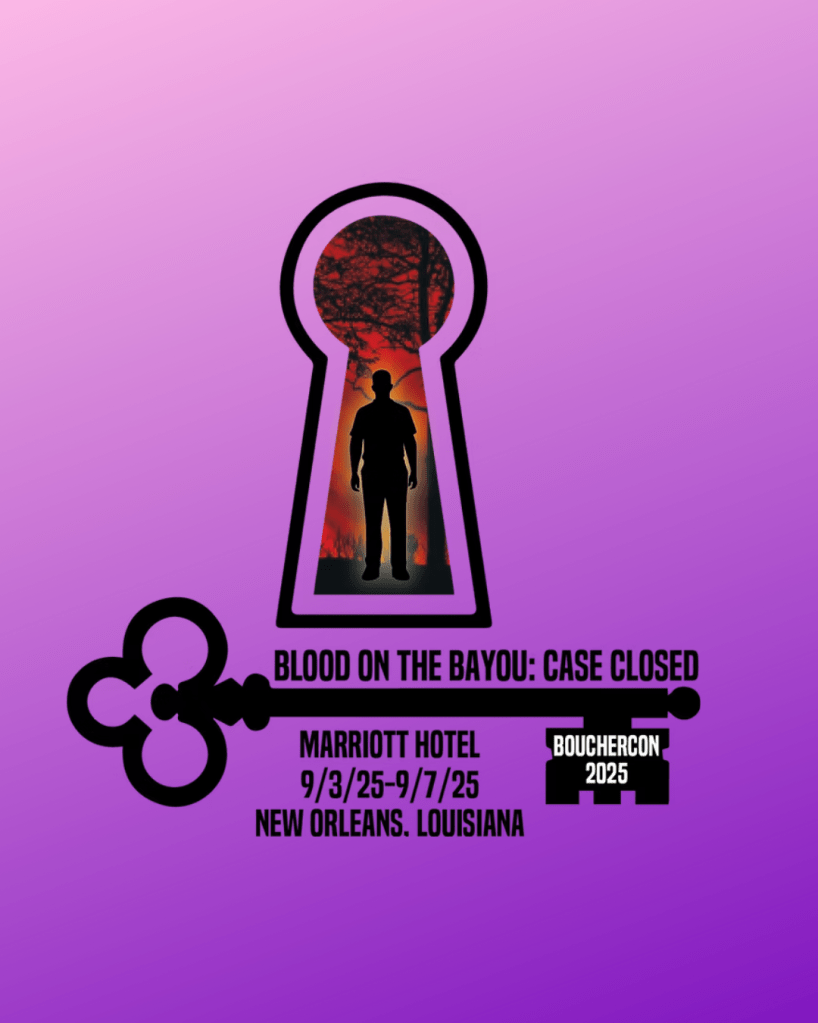
Bouchercon and Imposter Syndrome

Bouchercon is what the mystery community calls the World Mystery Convention. When I registered to attend my first Bouchercon in 2019, I didn’t place myself on the list of authors willing to be on a panel to discuss writing in front of attendees. I felt like I was a rank beginner who needed to attend the conference to learn, not to teach anybody anything. In spite of receiving encouragement to sign up for a panel from a regular conference attendee, I didn’t feel qualified.

At that time, I’d had one short story traditionally published and had self-published four novels and a bunch of short stories. That one traditionally published story, entitled “A Reasonable Expectation of Privacy,” had appeared in Analog: Science Fiction and Fact in 2012 and came in third in the 2013 Analog Readers Poll. In 2019, I was also the chapter president for Sisters in Crime: Heart of Texas Chapter after previously serving two years as vice-president. While I volunteered at the 2019 Bouchercon to sit and greet people at the Sisters in Crime table and organized meetups for my chapter members, I felt discussion panels were for distinguished writers with long lists of publications, not me. Who was I to sit on a panel?

I arrived at Bouchercon in Dallas and eagerly set out to attend discussion panels, and quickly realized that I’d under-rated myself. In several of the panels I attended, men were up on the dais, discussing their one and only short story publication. Those men felt confident enough with a single publication to place themselves on the list for a panel assignment. And that one story had indeed qualified them to discuss their writing.

“Imposter Phenomenon” was first described in high-achieving women by two female psychologists in 1978. They discovered that despite receiving recognition, accolades, or achieving success in their fields, many high-achieving women suffered from severe self-doubt, feeling that they didn’t deserve their success. Later studies found the phenomenon doesn’t discriminate, striking both men and women.

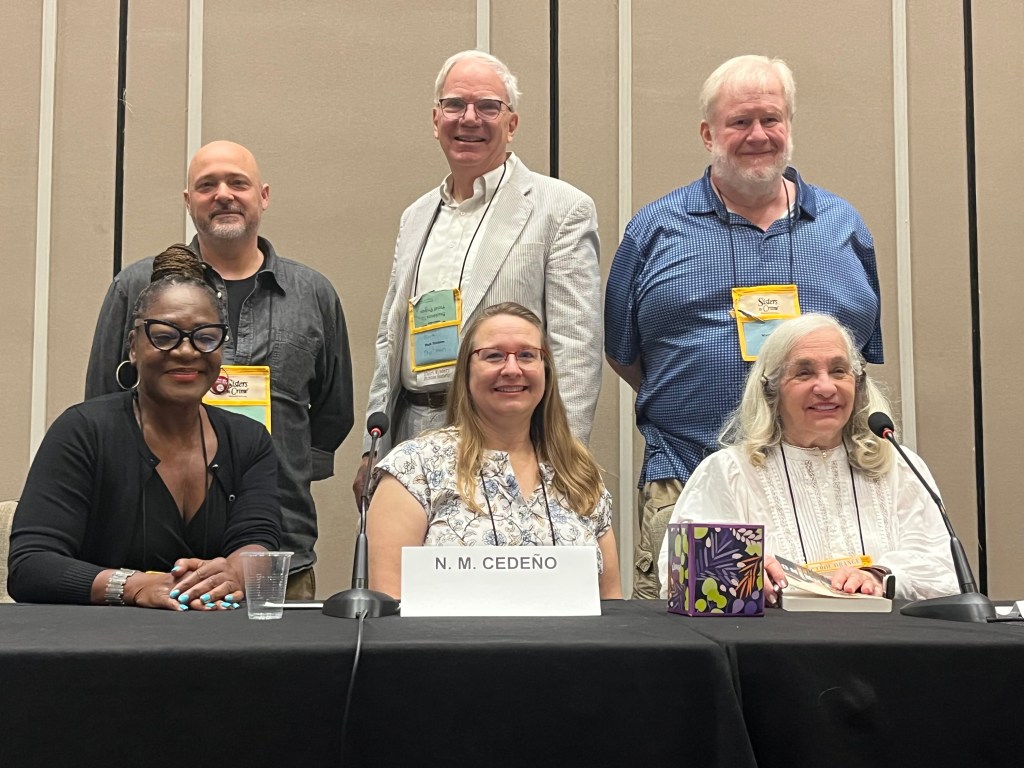
photo by KT Bartlett 2025

Last week, I attended Bouchercon 2025 in New Orleans, my second time to attend the world mystery conference. I learned my lesson in 2019 and placed myself on the list to be on a panel when I registered. And I was assigned to a panel discussing how authors create their authorial voices. I arrived in the assigned room to discover that I’d been placed on a panel with two English professors, a magistrate judge, and an art expert who were all mystery writers, with another mystery writer as the moderator. The line-up could have been intimidating. But I held my own and had as much intelligent information to offer about the topic as everyone else.

During the conference, I witnessed someone else suffering from “Imposter Syndrome.” I attended the Anthony Awards Ceremony and found myself seated at a banquet table with another author and her husband. The author was nominated for the Anthony Award. When an organizer of the event announced that each nominee and a guest or two of their choice should come to the front of the room to sit at tables reserved especially for them, the nominee at my table told her husband that she didn’t feel like she should go. I told her that she was nominated and deserved to be at the front. She refused to move, too self-effacing to feel that she belonged, even though she’d been nominated. The look on her face said that she doubted she would win, so she didn’t belong with those at the front closest to the stage.

When the ceremony reached my table-mate’s category, her husband began to record video on his phone. He had more faith in his wife than she had in herself. The look on her face when her name was called as the winner of the Anthony in her category was sheer surprise. She rose and went to accept her reward, no speech in hand, because she never expected to win. She managed to say a few words, thanking people while trembling slightly, and returned to our table, still in shock.

I congratulated her and told her that she deserved the award. She gave me a doubtful smile. I hope after she processes her win, she will realize that she did belong at the front of the room. I hope that she learns to accept that she is worthy of her own success.

I’ve met and heard of writers who do beautiful work, but are too filled with self-doubt to submit the work for publication or to publish it themselves. Their stories remain hidden in drawers and on hard drives. I’ve read novels that barely rose above average, but still were published. The difference in an average story that was published and a great story that was hidden away is frequently found in the confidence of the author in their own work.

What many of those self-doubting writers don’t know is how welcoming the mystery community is. The mystery community welcomes everyone at Bouchercon. By virtue of your attendance, you belong. Strangers will walk up and start conversations with you. Year round, organizations such as the Crime Writers of Color, Sisters in Crime, and the Short Mystery Fiction Society welcome aspiring writers and writers at every level of their careers, providing support and information to help them succeed.

If you are a writer, aspiring or published, of any genre, join a group and meet other writers. You belong!

*****

N. M. Cedeño is a short story writer and novelist living in Texas. She is active in Sisters in Crime- Heart of Texas Chapter and is a member of the Short Mystery Fiction Society. Find out more at nmcedeno.com.

The End of a Dream?

My first published story appeared in Analog: Science Fiction and Fact in 2012. Since about 2020, I’ve been making a concerted effort to land a story in that magazine’s sister mystery magazines, Ellery Queen Mystery Magazine (EQMM) and Alfred Hitchcock Mystery Magazine (AHMM). This has been my dream, my professional goal for years now. Thanks to changes in the industry, I may need to find a new goal.

Those who don’t follow the short fiction world may not be aware that a handful of the top paying professional mystery and science fiction magazines were sold to new owners in the last six months. Analog: Science Fiction and Fact, Asimov’s Science Fiction, EQMM, and AHMM were operated by Dell Magazines which was owned by Penny Press since 1996. The magazines were purchased earlier this year by Must Read Magazines, a division of Must Read Publishing, which is owned by Paragraph 1, Inc. Paragraph 1 also purchased The Magazine of Fantasy and Science Fiction which had been owned by Gordon Van Gelder since 2001.

What does that mean for readers?

So far, not much, other than a delay in the release of the latest magazine. My July/August issue of AHMM arrived this week, late under the previous publication timeline. The editors at the mystery magazines remain the same, which suggests that kinds of stories chosen for publication will remain the same.

What does this mean for authors?

Contract changes galore! UGLY ONES! The new owners have disposed of the old contracts, which were industry-standard short fiction contracts, and replaced them with new contracts that do not reflect the industry standard in any way.

The changes to the contracts are so extreme that authors are protesting loudly. Some, like Kristine Kathryn Rusch, have publicly announced that they will not be submitting to the magazines anymore and have pulled all pending stories because of failed contract negotiations. The Science Fiction and Fantasy Writers of America and Mystery Writers of America have both reviewed the contracts and entered negotiations on behalf of authors in hopes of improving the contract terms. Writer Beware has issued a warning statement on the contract terms, which included a waiver of moral rights and clauses covering production, merchandising, reprint, anthology, and other rights. The Submission Grinder formally delisted all of the magazines because of these “non-standard” contract terms.

In response, the owners of Must Read Magazines state that they are revising the contracts, supposedly replacing the moral rights waiver with other language. But even if that waiver is removed, the intellectual property rights grab involving production, merchandising, reprints, anthology, and other rights may remain.

This leaves me questioning what I should do. My last story in the queue at EQMM was recently rejected, but I have two stories submitted to AHMM right now. Do I leave them in the queue and see how negotiations play out? Do I pull them, as other authors have done, and submit them elsewhere?

If the top authors are pulling out, the quality of the magazines may decrease. Admittedly, my chances of getting a story published increase if others choose not to submit. But do I want to be in a magazine only because others decided the terms of the contract were too unfair? Does that make me a scab, willing to accept harmful terms out of desperation? Do authors stand a better chance of getting better terms if we all reject onerous contracts? We are all free-lancers with loose affiliations through memberships in writing organizations, not members of a union.

For now, this is all just a thought exercise about a dream, a goal I’d set for myself, a goal I may have to reset.

*****

N. M. Cedeño is a short story writer and novelist living in Texas. She is active in Sisters in Crime- Heart of Texas Chapter and is a member of the Short Mystery Fiction Society. Find out more at nmcedeno.com.

The Research Rabbit Hole: Jewel Theft 1950s-1960s

I’ve been researching background for another story featuring my character Jerry Milam, a World War II veteran and ex-cop turned PI. In looking for crimes for my detective to solve, I started digging into old newspapers for information on jewel thefts. I chose the topic because I’d read about the robbery of the American Museum of Natural History in New York in 1964. While the robbers were later caught, only ten of the twenty-four stolen gems were recovered. In researching that theft, I discovered that the Witte Museum in San Antonio was robbed in 1969, with a thief smashing a glass display case in order to snatch the forty-nine carat McFarlin Diamond, a canary yellow, emerald cut stone described as being the size of a hen’s egg, which was also never recovered.

Then, I fell down the rabbit hole.

Back in the days when J. Edgar Hoover was still in charge of the FBI, jewel thefts were all the rage in crime. Jewels, once removed from their settings, were impossible to identify because, unlike today, they had no microscopic serial numbers etched on them. Etching of jewels for identification purposes began in 1983. While watches had serial numbers, most people didn’t bother to make a note of theirs. Fences were happy to purchase stolen jewels and watches because they were so hard to link back to the original owners. Most gem stones were easily recut or reset and resold, vanishing forever.

Most jewel robberies in the 1950s and 1960s were committed by stealth, leading to the image of the lithe cat burglar crawling over rooftops firing the popular imagination. Alfred Hitchcock even made the movie To Catch a Thief, released in 1955, with Cary Grant playing a retired jewel thief known as the Cat.

Between 1959 and 1967, Lauren Bacall, Winston Churchill, Sophia Loren, Eva Gabor, and Yul Brenner, along with other famous and wealthy people, were relieved of their jewels by thieves. With the exception of Eva Gabor, none were present at the time of the theft. Thieves, likely the same ones who robbed the American Museum of Natural History’s gemological exhibit a few months later, waited for Eva Gabor and her husband to return to their hotel room in order to steal her twenty-five-thousand-dollar diamond ring, which they had been unable to locate while she was away from the room. They pistol whipped and bound Ms. Gabor and forced her husband to retrieve the ring from the hotel safe before making their getaway.

If you are wondering why one ring was enough for the thieves to risk adding armed robbery and kidnapping to the charges against them, consider that the average income in 1965 was less than seven thousand dollars a year. A twenty-five-thousand-dollar ring was worth several years income to most people.

My research led me to realize that even without serial numbers and etched identification codes, certain jewels would be easier to trace than others. Which jewels might be more traceable? Cabochon star rubies and sapphires. A rounded, polished shape, called a cabochon, was how all jewels were prepared before cutting was developed for gemstones. Opals are still prepared and set as cabochons.

Star rubies and star sapphires exhibit a phenomenon called asterism, a star pattern visible when light hits the stone. The star is created by long inclusions inside the stone. Stones with asterism are rounded and polished as cabochons, not cut, to preserve the star within them.

The Edith Haggin DeLong Star Ruby
By Vicpeters – Own work, CC BY 4.0, https://commons.wikimedia.org/w/index.php?curid=165353250

Star rubies and star sapphires are valued based on the clarity and size of their stars, the color saturation and transparency of the stone, by their shape, and by their inclusions and cloudy areas. These same features make the stones more easily traceable and identifiable. While other gems can be recut and reset to disguise them, star rubies and star sapphires can’t be cut because the rounded shape is what allows the star to be seen.

Is it any surprise that the most valuable stones recovered from the American Museum of Natural History robbery were the Star of India, one of the largest blue star sapphires in the world, and the DeLong Star Ruby, while the Eagle Diamond was never found?

That’s enough rantings from the rabbit hole.

*****

N. M. Cedeño is a short story writer and novelist living in Texas. She is active in Sisters in Crime- Heart of Texas Chapter and is a member of the Short Mystery Fiction Society. Find out more at nmcedeno.com.

A Well. A Story.

By Dixie Evatt

I recognize that sometimes I can be excessively literal. That’s why when Julia Cameron reminds us to make time to fill our creative well, I picture an actual old-timely water well. In my mind’s eye, ideas, quotes, games, puzzles, cartoons, pictures, and music pour into the well from every direction – a rainstorm of colors, smells and sounds.

I was first introduced to the concept when I joined an Austin creative community, led by the inestimable Ann Ciccoletta, Artistic Director of Austin Shakespeare. The group draws inspiration from Cameron’s self-help classic, The Artist’s Way – A Spiritual Path to Higher Creativity. Since its initial publication in 1992 it has been reprinted more than forty times and served as a catalyst for dozens of other inspirational works by Cameron. Her message is intended for everyone– writers, artists, photographers, actors, composers, dancers, poets, musicians, singers, and everyday folks alike alike — who want to unlock their inner creative self. Her advice:

Filling the well involves the active pursuit of images to refresh our artistic reservoirs. Art is born in attention. Its midwife is detail… In filling the well, think magic. Think delight. Think fun. Do not think duty. Do not do what you should do …Do what intrigues you, explore what interests you; think mystery, not mastery. A mystery draws us in, leads us on, lures us.

Once married to Martin Scorsese, Cameron’s life was a rollercoaster of good times-bad times-terrible times until she ultimately found sobriety. In an article about the 30th anniversary of her landmark book, The Guardian says:

Inspired by the Alcoholics Anonymous model, the book offers a programme for “artistic recovery”.

Cameron has benefited from her own advice with twenty-three titles on creativity to her credit along with seven books on spirituality; three works of fiction; one memoir; seven plays; five prayer books; four books of poetry; and one feature film.

The prompt for that bombardment of ideas to “fill the well” is can be the weekly Artist Date – another Cameron recommendation consisting of making an appointment with yourself to intentionally seek out sources of inspiration. In gardens. In museums. In craft stores. In coffee shops. Anyplace that can excite the senses is a destination for a date with oneself.

I find that it’s often a good idea to pair these dates with something to nudge you forward. For instance, I subscribe to Austin Kleon’s weekly newsletter (it drops into my email each Friday). It lists his “ten things worth sharing” with brief commentary and links to articles, songs, books, films, podcasts, events, and other content. Kleon is an Austin-based, best-selling author (Steal Like an Artist) who, like Cameron, writes to inspire others. More can be found at his website: https://austinkleon.com.

I was reminded of these never-ending sources of inspiration when, in late April, I had the good fortune to share a table with Spike Gillespie at the Austin Public Library’s second annual Greater Austin Book Festival (aka GAB Fest). Gillespie is well known in Austin writing circles for her unflinching commentary and multiple books. She lives on a ranch outside the city where she hosts gatherings for writers to find inspiration.

We had a chance to chat as we watched readers and fellow authors mill around the book festival, occasionally dropping by our table to ask about our book displays. Then a little girl – probably no more than seven or eight years old — approached to help herself to our free mints. She kept picking up one after another until her hands couldn’t hold anymore. After she walked away my conversation with Gillespie built on the encounter …and how often desire can exceed capacity. From there we talked about the importance of being a listening writer. To observe. To absorb. To listen.

I thought about this later and remembered what Cameron advised writers in her 2021 book, The Listening Path: The Creative Art of Attention:

We do not struggle to think something up; rather we listen and take something down. Very little effort is required; what we are after is accuracy of listening.

Inspiration can be right under your nose. It can come over the transom unexpectedly. It can spring from an unplanned conversation. It may drop into your email. Watch for it so you can fill the well.

CAPTIONS

Well — AI Generated

Photo — Dixie (L) and Spike (R) 2025 GABFest

May is Upon Us! : A Spring Report

N.M. Cedeño

Derringer Awards: Short Mystery Fiction Society

I spent part of April reading to vote for the Derringer Awards and to come up with my nominations for the Anthony Awards. The Derringer Award Winners were announced May 1 by the Short Mystery Fiction Society. I’m happy to recommend all of the Derringer Awards winners to anyone looking to dip their feet into the world of mystery short stories. If you have time, read all of the Derringer finalists, too. All of the stories were extremely well done. The Anthony Award nominees also have been announced.

Then, April’s reading fun ended to make way for May’s madness.

May is one of those months that I hope to survive and not drop any of the many balls I’m trying to keep in the air while dealing with whatever curveballs the world throws at my family.

May brings the expected…

Torrential rains causing Flash Flooding. Tornado watches and warnings. Hail. A family birthday. Mother’s Day. AP Exams requiring early morning drop-offs. The end of the college semester and dorm move-out. Tech week for a senior showcase musical review plus two performances of the review. A high school graduation with a family party planned and invitations mailed to celebrate it. Etc.

These May events mark the passage of the season like clockwork. From the end of school events to the spring storms, I’m used to dealing with these things.

This May has also brought the unexpected.

This month’s unexpected events so far include a car wreck, knocking a vehicle out of commission, so that I have to drive my offspring everywhere again. This driving includes 7:30 am drop offs at the high school for AP exams and 9:00 pm pick-ups at the theater after rehearsal for tech week. As a bonus, I get to deal with two insurance companies calling and emailing me for information. On the bright side, the motorcycle rider who collided with the bumper of the car was miraculously uninjured. (The call telling me that the accident involved a motorcycle was heart-stopping. They aren’t called donor-cycles in hospitals for nothing.)

The second unforeseen event was the sad and horrific suicide of a high school senior that my daughter knew. Knowing that a girl so full of promise ended her life a mere three weeks before graduation is gut-wrenching for everyone, even those only tangentially connected to her. For my child, who saw her every day at school, the death came as a terrible shock.

So, of course, since my brain is spinning, I started an unnecessary project– stripping the paint from a 1960s Drexel secretary desk that is in need of refinishing. My dear brother, who goes to more estate sales than he should, dropped…er gifted the piece to me after his wife rejected it for their house. The process of refinishing the desk is coming along slowly since I’m only working on it an hour or two a day, here and there. I needed a somewhat mindless, manual project to work away some stress. Scraping and sanding has been therapeutic and soothing.

When I’m done with the refinishing project, I’ll have something tangible to show for my labors and a sense of satisfaction in a job well done, like the feeling I get from writing a story but without the deep concentration needed to invent a plot and characters. That deep concentration is eluding me at the moment, so I’ve been editing what I’ve already written more than writing new material. However, in spite of May’s madness, I have submitted three stories to magazines already this month. I hope to submit a few more since I’m behind schedule on my submissions for the year.

I do have three stories accepted for publication at the moment. I’ll provide more about those stories when I have fixed publication dates.

I hope your May is going well!

***

N. M. Cedeño is a short story writer and novelist living in Texas. She is active in Sisters in Crime- Heart of Texas Chapter and is a member of the Short Mystery Fiction Society. Find out more at nmcedeno.com.

When Disinformation Leads to Death

N.M. Cedeño

Here in Texas over four hundred people have contracted measles in the past few months, resulting in the death of at least one child. Most of these cases were preventable with a vaccine. So why weren’t the victims immunized? Some are infants, too young to be vaccinated. A few may be people with compromised immune systems or other medical conditions that prevent them from receiving vaccines. However, the majority aren’t vaccinated because of conspiracy theories and false information being fed to parents, making them fear the vaccine.

Back in the 1990s, a British doctor, whose medical license was later revoked because of the medical hoax he perpetrated, falsified a study claiming to have identified a causal link between the vaccine for measles, mumps, and rubella, (the MMR vaccine) and autism. He published a massive lie that spread like wildfire and caused vaccination rates in Europe and the United States to plummet. By the time the fraud was revealed, the damage had been done.

As a parent of a child on the autism spectrum, I am absolutely certain the MMR vaccine did not contribute to the condition. I spotted variances in my child’s development by the time he was six months old. I knew something was different about the way he did and did not focus on motion months before he was given his first MMR vaccine. No vaccine caused his neurological differences. The most likely cause is a complex interaction of genetic factors.

Measles and rubella are not diseases that should ever be allowed to spread unchecked. Measles can kill, and when it doesn’t kill, it can obliterate the patient’s immune system, leaving them susceptible to a variety of infections. In countries where vaccination rates for measles are low, children who survive measles frequently die of other illnesses within a short time after having measles. Measles is also one of the most contagious diseases in the world, able to linger on surfaces and in the air for hours after an infected person has left the area.

William Morrow Paperback, reprint edition cover 2004

Rubella, depending on the stage of a woman’s pregnancy when she contracts the disease, can cause blindness, deafness, heart deformities, developmental abnormalities, and death for babies. Many infants only survive a short period after birth due to the damage caused in utero by rubella, also known as German measles. A well-known example of the harm caused by rubella was the case of actress Gene Tierney’s daughter, Daria, which inspired Agatha Christie’s novel The Mirror Crack’d from Side to Side.

Growing up, I heard the story of my uncle’s birth from my grandmother more than once. She contracted rubella while pregnant and decided not to go to the doctor for her check up that month because she knew that the doctor would push her to abort. In 1950s America, doctors saw so many deaths of newborns caused by rubella that they frequently advised a mother to abort if she contracted rubella while pregnant.

My grandmother made a choice, believing one should always give life a chance, knowing that her baby might not survive. My uncle was born at around three pounds, his growth and development stunted by the disease. He was deaf in one ear, had heart problems, had very poor vision, and only grew to about five feet tall. But he survived and lived to the age of 70, managing to get a driver’s license, go to community college, and work a variety of jobs.

As a parent, I have met other parents who chose not to vaccinate their kids. That decision, made by otherwise intelligent and educated people, still shocks and disheartens me. Reading that the parents of the child who died from measles still say that they wouldn’t have vaccinated their child scares me. How could they possibly think that the vaccine is somehow worse than the death of their child?

This current measles crisis is yet another example of conspiracy theories and false information being promoted over facts and truth to the detriment of society. Disinformation campaigns, conspiracy theories, and the current general distrust of any authority inspired me to write my latest story, entitled “Murder by Alternate Facts.” In the story a young woman named Arlene stumbles upon a wreck on a lonely country road and is forced to make a choice affecting who lives and who dies. The repercussions of Arlene’s choice inspire conspiracy theories, dividing her hometown and leading to murder.

“Murder by Alternate Facts” appears in the Murderous Ink Press anthology Crimeucopia: Chicka-Chicka Boomba! from editor John Connor.

*****

N. M. Cedeño is a short story writer and novelist living in Texas. She is active in Sisters in Crime- Heart of Texas Chapter and is a member of the Short Mystery Fiction Society. Find out more at nmcedeno.com.

Words, words, words . . .


By Dixie Evatt


Words, words, words . . .
~ Shakespeare

Before we had powerful computers in our pockets or on our laps, we had reference books. . . shelves and shelves of them.

One of my favorite possessions is a vintage Webster’s dictionary, published 1956 – when I was 10 years old. All 11-plus pounds of the five-inch-thick book teeter on a top shelf in my office. I can no longer safely lift it and the pages are laid out in three columns of typeface so tiny that my aging eyes strain to make out the words.

My book is a holdover from the days when library dictionaries were housed and opened on a specialized wooden lectern. I wonder, do libraries still have these throwbacks to that bygone day or have the enormous books all made their way to the shredder?

I never look at mine that I’m not reminded of the 1950s movie, Born Yesterday, starring Judy Holliday. She won an Oscar for her portrayal of the brassy girlfriend of an uncouth tycoon. Her character tries to overcome her limited education and rudimentary vocabulary by reading, among other texts, Alexis de Tocqueville’s Democracy in America. In one of the more humorous scenes, she struggles to make meaning of the archaic text and is advised to simply check the dictionary if she encounters any words she doesn’t understand. The increasingly frustrated Holliday would no more than read a sentence before she is up again, consulting a dictionary. Word by word. Trip by trip. Written today, the scene would surely lose its charm since she would likely be reading Tocqueville on a Kindle where all you must do is press and hold a finger on a word for the meaning to flash before you.

Like Holliday with a Kindle, writers don’t have the need for shelves full of reference books since language prompts are everywhere from the demons in autocorrect to the drop-down menus in word processing programs that produce synonyms.
The 19th Century French author Jules Renard is credited with saying, “What a vast amount of paper would be saved if there were a law forcing writers to use only the right word.

Yet, finding the right word isn’t always so easy even with all our modern assets. Luckily there are still some reference sources to help. Here are a few:

Evan Esar’s “20,000 Quips & Quotes: A Treasury of Witty Remarks, Comic Proverbs, Wisecracks and Epigrams.” If she’d thumbed through this one, Holliday would have learned that Tocqueville said, “The last thing a political party gives up is its vocabulary.”

“The Allyn & Bacon Handbook” by Leonard J. Rosen and Laurence Behrens. You must love any book that is willing to devote 22 pages to the uses and misuses of the comma alone.

Theodore M. Bernstein’s “Dos, Don’ts & Maybes of English Usage.” For instance, he explains why Mark Antony didn’t say “Friends, Romans, countrymen, loan me your ears.”

“Describer’s Dictionary: A Treasury of Terms & Literary Quotations,” by David Grambs and Ellen S. Levine. It indexes illustrative passages of more than 600 authors from travel writer Paul Theroux to contemporary British novelist Zadie Smith.

Eli Burnstein’s “Dictionary of Fine Distinction Book,” offering a humorous look at often misused words and phrases. For instance, couch vs. sofa.

Valerie Howard’s “1,000 Helpful Adjectives for Fiction Writers,” promises to spice up characteristics, qualities or attributes of a noun when a writer is having trouble capturing just the right word.”

Bill Bryson’s “Dictionary of Troublesome Words: A Writer’s Guide to Getting it Right” sets out to decipher the idiosyncrasies of the English language. Things such as 126 meanings of “set” when used as a verb and another 58 when used as a noun.

Brian Shawver’s “The Language of Fiction: A Writer’s Stylebook.” Need to be reminded when to use a comma or semicolon? Shawver’s there to help.

Kathy Steinemann’s “The Writer’s Lexicon: Descriptions, Overused Words, and Taboos.” Among other things, she offers writers cures for overused modifiers (I’m talking about you “very”).

John B. Bremner’s “The Columbia Dictionary for Writers: Words on Words.” Here you can learn the history of H. L. Mencken’s inspiration for coining the term “ecdysiast” to replace “striptease.”

Christine Lindberg’s “The Oxford American Writer’s Thesaurus.” Writing about bread? How about a baker’s dozen choices: dal, pita, rye, naan, tortilla, focaccia, ciabatta, challah, corn, sourdough, pumpernickel, baguette, etc.

“Associated Press Stylebook and Briefing on Media Law” has been found on the desk of every journalist for decades since it dictates uniform rules for grammar, punctuation, style for capitalization and numbers, preferred spelling, abbreviations, acronyms, and such.

“Words, words, words,” is the sarcastic response Hamlet gave when Polonius asked him what he was reading. Fortunately, authors still have no shortage of excellent reference books to help them find the right ones.

***

A former political reporter in Austin, Dixie also taught writing at Syracuse University. When she teamed up with Sue Cleveland to write fiction, they sold a screenplay to a Hollywood producer. Although the movie was never made, the seed money financed ThirtyNineStars, their publishing company. Through it they published two award-winning thrillers (Shrouded and Digging up the Dead) under the pen name, Meredith Lee. Dixie’s first solo mystery was Bloodlines & Fencelines, set in a tiny Texas town near Austin. Kirkus reviews described the book as, “A twisty whodunit that’s crafted with care and saturated with down-home Southern charm.” She is working on second mystery in the series. www.dlsevatt.com

***

Image of dictionary by PublicDomainPictures from Pixabay

Publicity photo of William Holden and Judy Holliday for Born Yesterday via Wikipedia

Image of tablet  by Gerd Altmann from Pixabay

Thank You, Encyclopedia Brown!

A post by editor and author Michael Bracken over at Sleuthsayers last week made me ponder my writing influences when it comes to detective fiction. Michael, who has read more than his share of detective fiction in the course of his work recently, suggested that authors need to move away from the trope of the “broke, drunk, and horny” private eye if they want to write something that stands out from the pack. He also recommended not always starting the case in the detective’s office because that can lead to too much back story and a severe delay in moving the plot forward. Reading his post, I realized that I’ve never once had the urge to write that stereotypical “broke, drunk, and horny” character. Then, I wondered why I hadn’t.

My first published short story was a detective story. And while my character, a private investigator named Pete Lincoln, was broke, his financial situation had more to do with the times in which he lived than with his own inability to manage funds. His sex life was irrelevant to the case and didn’t come into the story at all. If he drank, it wasn’t to excess, and also didn’t come into the story. Pete lived and worked in a future world in which privacy rights didn’t exist. He appeared in a story entitled “A Reasonable Expectation of Privacy,” which was first published in Analog: Science Fiction and Fact in 2012, and reprinted in Black Cat Weekly #19 in 2022.

Given that most writers, when they first start crafting fiction, write the tropes that they absorbed while reading, I asked myself what detective fiction I had absorbed at an early age that influenced my writing and that didn’t lead me straight to writing the classic stereotype that Michael was lamenting. Who was the first fictional private detective that I read?

And the answer came to me: Encyclopedia Brown, Boy Detective.

Image Created with Canva

While the boy detective did teach me the basics for detective fiction, he wasn’t in financial straits since he was a child who lived a quite middle-class life with his parents. Everyone knew Encyclopedia liked his friend and partner Sally, but that didn’t remotely approach the trope of womanizing detective. As for drunk, no! While some of his cases started in his garage office with a client paying the twenty-five-cent fee, other times Encyclopedia solved cases for his father, the police chief, while sitting at the family dinner table. So the stories also taught me that not all cases had to start in the detective’s office.

By the time I read Sherlock Holmes a few years later, the pattern of how detective fiction worked was already firmly fixed in my head. While Holmes indulged in illicit substances, he also wasn’t a classic “drunk.” Holmes never panicked about paying the bills or complained about being broke. As for women, the only one that counted for anything for Holmes was Irene Adler. So Holmes, another of my early fictional detective influences, didn’t fit the stereotype either.

Since writing my first PI story, I’ve written many other detective stories. While I have started several of them in the detective’s office with the arrival of a client, not one of my detectives has been “drunk, broke, and horny.” For example, Detective Maya Laster is a former middle school teacher who turned a genealogy hobby into a detective business, solving mostly cold cases with the help of forensic genetic genealogy. She has appeared in two stories in Black Cat Weekly (issue #79 and #110) and will be appearing again in an upcoming anthology.

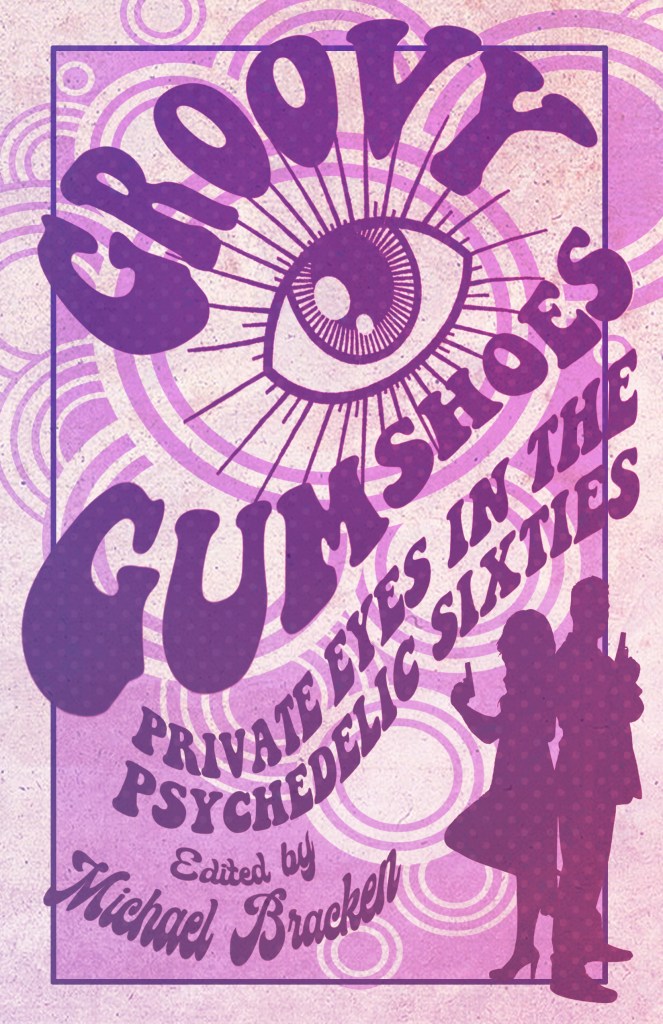
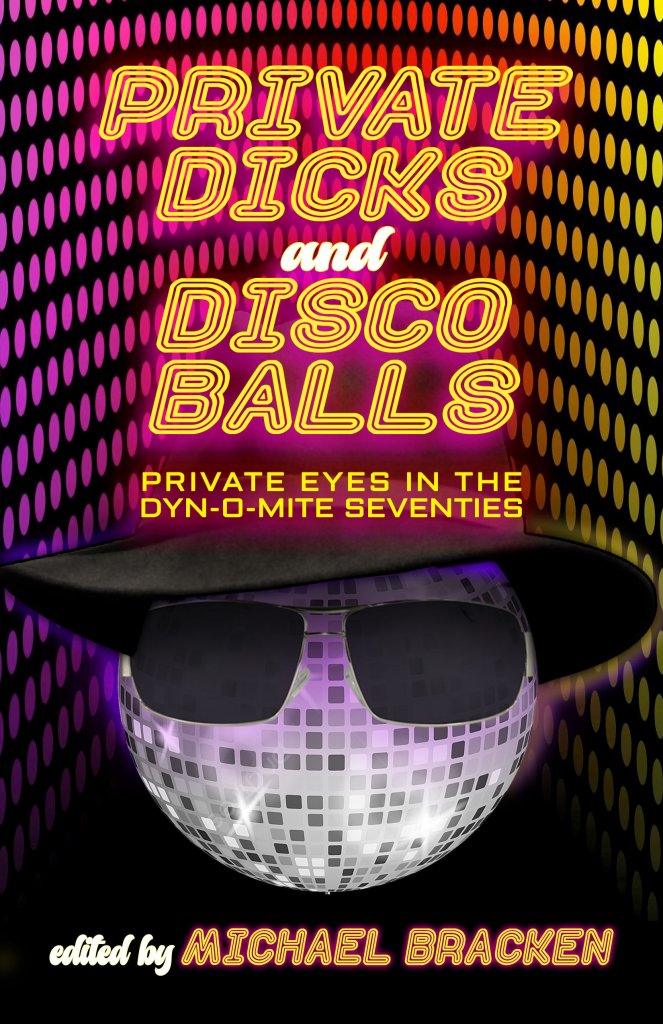
Another of my characters, PI Jerry Milam, came of age during World War II, became a police officer following the war, and suffered terrible injuries in a car wreck which ended his police career, leading him to become a private investigator. He’s a teetotaler with a solid income and chronic left hip pain who feels he missed his chance with women. He appeared in Groovy Gumshoes: Private Eyes in the Psychedelic Sixties and Private Dicks and Disco Balls: Private Eyes in the Dyn-O-Mite Seventies. One of my current works-in-progress sees him solving a case in the 1950s.

If my detectives managed to side-step the cliché of the “broke, drunk, and horny” private investigator, I have my early reading influences to thank for it. So thank you Donald J. Sobol for creating Encyclopedia Brown and teaching me to create private investigators who avoid falling into clichés.

*****

N. M. Cedeño is a short story writer and novelist living in Texas. She is active in Sisters in Crime- Heart of Texas Chapter and is a member of the Short Mystery Fiction Society. Find out more at nmcedeno.com.