Year End Assessments 2023- A Review

By N. M. Cedeño

December again. Time to assess this year’s writing. I’ll start off by saying, the year didn’t go as well as I’d hoped, but not as badly as I’d thought either. A number of issues combined to throw me off my schedule and destroy my focus, but I have learned some new things.

For instance, I learned that x-rays and sonograms successfully diagnose kidney stones about eighty percent of the time. If that path to diagnosis fails, doctors search for other causes. It may take six or eight months of tests to explore other possible diagnoses before the problem can be correctly diagnosed. This second path to diagnosis by eliminating other options is not one that I recommend. It prolongs pain, destroys work productivity, and ruins peace of mind.
I also learned in September that baseball-sized hail falling like rain can strike with no warning. We were extremely lucky no one was outside when the assault from the sky began or someone might have been killed. Repairs are ongoing (roof, deck, gutters, garden shed, light fixtures, A/C, windows, screens, cars, etc.). As of this writing, I am awaiting yet another contractor to complete yet another repair. Dealing with three separate insurance adjustors, talking to contractors, and scheduling repairs consumed all my time for October, then half of my time for November. Trying to get active teenagers to extracurricular events with cars out of commission was another challenge.

But without some strife we wouldn’t appreciate when things are actually going smoothly. Over the years, I’ve learned to take notice and enjoy the times when everything is running like a well-oiled machine. The easy times don’t last, but neither does the strife.

Now that I’ve covered the excuses, I’ll get to the writing numbers:

Stories submitted as of late November: thirty-five.

I plan to reach thirty-six or more before the end of December. I had hoped to submit four stories per month on average, but that was not to be this year. However, submitting an average of three stories per month in a difficult year is a victory in my book.

Acceptances were low this year, too– so far only two. I have twelve submissions still pending, so maybe I’ll see more acceptances in the new year.

Publications of stories: four.
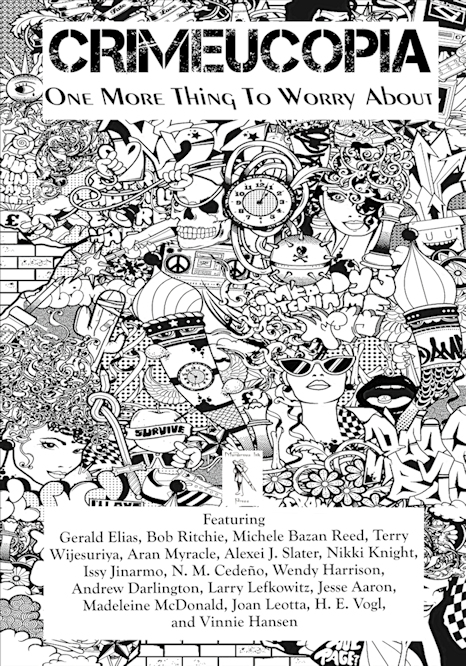
Three of my stories appeared in Black Cat Weekly courtesy of editor Michael Bracken. One appeared in an anthology-“Danger at Death’s Door” in Crimeucopia: One More Thing To Worry About from editor John Connor.

For the moment, I have one publication pending, a short story for an anthology coming out in the spring of 2024.

I did receive two invitations to contribute stories to projects this year. One I had to turn down thanks to a short deadline and the ongoing strife. The other offered a deadline far enough in the future that I could easily say yes. Also, a new editor asked me to contribute a story to a project, which I really appreciate. I had intended to reach out to new editors this year, but with the strife, that plan was postponed.

For 2024, I’m looking forward to setting new writing goals and working with more editors. I plan to watch my middle child graduate from high school in the spring and start college (!) in the fall, and see my youngest through driver’s license testing, the end of junior year, and the start of senior year (!) of high school. Also, someone else (Hooray, Pat Kelly!) will be taking over the duties of president for my Sisters in Crime Chapter, leaving me more time for writing. I’ve been on the board in various capacities since 2016 or 2017, and it’s time to bring in fresh blood. Here’s looking forward to a busy, productive 2024!

*****

N. M. Cedeño is a short story writer and novelist living in Texas. She is active in Sisters in Crime- Heart of Texas Chapter and is a member of the Short Mystery Fiction Society. Find out more at nmcedeno.com

Writing “Disappearance of A Serial Spouse”

As I’ve mentioned before on this blog, submitting short stories to markets and getting the right story in the hands of the right editor at the right publisher to fit with other stories in a given anthology or magazine is like tossing dice. Or maybe I’m throwing proverbial spaghetti at the wall and seeing what sticks. No matter the figure of speech, only a few of my stories have been accepted on their first submission. Many are submitted and resubmitted several times before they are accepted for publication. Such is the nature of the short story world. As a result, I may write a story for one call for submissions only to have it published somewhere else.

“Disappearance of a Serial Spouse” is one of those stories written for a specific anthology call, but published somewhere else. So what was the initial call that inspired this story? Way back in the middle of the of the pandemic, a slew of short mystery fiction writers were discussing the many anthologies inspired by music on a groups.io list. (In case you weren’t aware, you can purchase crime fiction inspired by the music of Billy Joel, Joni Mitchell, Jimmy Buffet, Paul Simon, and many, many more.) Someone suggested the need for an anthology based on one hit wonders. An editor liked the idea, and soon a call for submissions appeared. (Yes, this is unusual. Remember there was a pandemic on.)

I loved the idea of the anthology and went to work quickly to find a song that might inspire a story. And I found a song, one that played over and over on the radio around the time I got married. I’m ninety-nine percent sure that the DJ played the song at my wedding reception. I had my song, next I needed a protagonist.

The protagonist ended up being inspired by the news. I had read story after story on cold-cases being closed by genetic genealogy work. A serial killer was caught because of his daughter’s DNA. Bodies long-buried as John Doe and Jane Doe are finally being identified thanks to genetic database comparisons. Families are getting closure, finally learning that a missing loved one is dead, finally knowing their relative’s burial place. All of these cases inspired an idea for a new detective, someone who used genetic genealogy to solve cases. And so Maya Laster, a chocoholic, former school teacher and genealogy hobbyist turned genetic genealogist detective was born.

In my story, a client comes to Maya seeking family connections and hoping to discover why her father vanished during her childhood in the 1970s. Maya quickly discovers the client’s father was not who he seemed to be and that he had a very long history as a bigamist. Determining what became of the man required far more than Maya’s usual archival research.

The story also required research into 1970s era matters, since the disappearance happened then. I blogged about the research in a previous post.

I completed the story and submitted it to the anthology call, hoping for an acceptance. But then life troubles, business challenges, illness, and other complications interfered with the editor and the publishing company. Those who submitted stories were told that the anthology was delayed and that we were welcome to submit the stories elsewhere, but to let the editor know if it was accepted anywhere. Still I waited on resubmitting, hoping that the situation would resolve as the editor hoped it would. I heard nothing for months. The story had been submitted for over 500 days before I decided I should submit it elsewhere. So I sent it off again. And it got rejected. So I submitted it again. And it was accepted for Black Cat Weekly #79. AND it’s the “featured story” mentioned on the cover!

What one hit wonder song inspired my story? Mambo #5 by Lou Bega.

A note: I heard recently that the one hit wonder anthology is still pending. I’m hoping it gets published eventually. I’d love to see which songs inspired crime stories for other authors.

***

N. M. Cedeño is a short story writer and novelist living in Texas. She is active in Sisters in Crime- Heart of Texas Chapter and is a member of the Short Mystery Fiction Society. Find out more at nmcedeno.com

Mining Family History for Characters

My father is the family genealogist. He did extensive research into both his family and my mother’s family. Dad’s family is rather straightforward—all arriving in Texas in the 1870s and 1880s from what is now the Czech Republic. My mother’s mother was Irish American. Her parents arrived in the US just before 1900, so she had aunts, uncles, and cousins in Cork. While some of my Czech and Irish relatives had life-threatening adventures in settling in the US, they didn’t inspire the characters in my short story, “Danger at Death’s Door.” That honor goes to my Danish relatives.

Lars Peter took the last name Ottosen after his step-father Otto.

One ancestor whose history I researched to create a character was one of my great-great-grandfathers on my mother’s father’s side, a man named Lars Peter. Lars Peter’s mother was unmarried when she gave birth to him in 1842 in Denmark. Family oral history says that she was employed at the court in Copenhagen, left to give birth, and was later ‘recalled’ to court. Her child, Lars Peter, was sent away to boarding school where he excelled scholastically. Among other things, he learned to speak, read, and write in both English and Danish. (We have proof of his lovely penmanship because later in life he was a US census-taker, and the names and addresses of his neighbors are recorded in his beautiful handwriting.) After leaving school, Lars Peter joined the military. He was a big man for his time, reaching over six feet tall and 190 pounds as a teenager.

In 1864, sick of Danish-German wars, Lars Peter left the military and signed on to crew a ship bound for the US from Denmark. He arrived in the midst of the US Civil War. Lars Peter jumped ship, ran for his life to avoid being forced into the Union Army by men seeking to draft newly arrive immigrants, made his way to the Great Lakes region, married, and settled on Washington Island. After presenting him with five children, three of whom survived, Lars Peter’s first wife died in childbirth along with a sixth child. The women on the island advised Lars Peter to remarry because he needed someone to care for his young children while he worked. So he crossed to the mainland on his sailboat and walked to farms, looking for an unattached female of marriageable age. He found a woman named Christine (apparently tripping and falling through her family’s front door).

Lars Peter and Christine

Christine also features in my story, although very briefly and under a different name. She was an immigrant from Denmark of the serf class, uneducated in anything but sewing and farm/household work. She also had one eye that wandered because she was born with it fused closed, and it didn’t open until she was three years old. Christine emigrated to escape near slavery, her life controlled by the Count who owned the estate where she was born, and to escape the scandal that attached to a woman if a man jilted her, refusing to marry her after a marriage had been arranged by their families. She was visiting relatives while recovering from an extended illness, when Lars Peter asked her to come care for his children, and if she liked the situation, get married. She agreed to go with him. Christine fell for his children, and possibly him, and they were married. They went on to have seven children, the last of whom was my great-grandfather, Robert, born in 1897.

Obituary for Lars Peter

Family history states that Lars Peter admitted knowing who his father was, but he refused to name the man. That line of the family tree remains a mystery. Lars Peter died in 1924, a highly regarded citizen of Washington Island, having served as census taker, postmaster, town clerk, town chairman, assessor, and roadmaster at various points in his life.

Lars Peter’s history provides much of the background for the character named Lars Pedersen in my short mystery story “Danger at Death’s Door.” My Lars Pedersen character is also an “educated bastard” from Denmark and a widower in need of a mother for his young children. I named one of the children in the story Robbie, after my great-grandfather Robert, even though he wouldn’t have been born yet. Robert died in 1990 in Texas and lives in my memory as Great-Gampie, a tall man, several inches over six feet, with broad shoulders and a penchant for storytelling.

In my story, my character Lars takes a voyage across the Great Lakes. During the voyage, the ship’s captain hands Lars “one more thing to worry about” when he asks him to investigate a crime aboard ship. As far as I know, the real Lars Peter never encountered a mystery aboard a ship that required him to act as a detective. That portion of the story is entirely fictional.

“Danger at Death’s Door” is scheduled for publication in March 2023 in the mystery anthology Crimeucopia: One More Thing to Worry About, from editor John Connor at Murderous Ink Press.

***

N. M. Cedeño is a short story writer and novelist living in Texas. She is active in Sisters in Crime- Heart of Texas Chapter and is a member of the Short Mystery Fiction Society. Find out more at nmcedeno.com

Facing a Writing Challenge

by N. M. Cedeño

Many writers find motivation in challenging themselves in various ways. Some attempt to write a novel length manuscript each November as part of National Novel Writing Month (NaNoWriMo). Some writers set daily, weekly, or monthly word count targets as challenges to meet. Most do this because they know that when they challenge themselves, they find out what they are capable of accomplishing and learn to push themselves to accomplish more.

Sometimes we writers set these goals for ourselves, other times someone, like an editor in need of a story, provides the challenge for us.

Opportunity Knocks:

In the last week of May 2022, I received an unexpected writing challenge. It arrived in the form of an email from an editor, inviting me to submit a short crime fiction story for an anthology. The catch was that the original deadline, which the editor was willing to extend for me, was only about a week away.

I read the submission criteria, considered my options, and reviewed what was already on my schedule. Then I asked for a month, June, to submit the story, not knowing if that would work for the editor’s timeline.

Could I have said no? Sure. But I recognized that the challenge was also an opportunity to show myself and the editor what I was capable of doing. I was afraid the editor might need the story sooner than my suggested deadline and that he might say no.

The editor replied to my email, agreeing to give me until the end of June to submit the story.

Hooray! And Yikes! I had a deadline to meet.

Meeting the Deadline:

The short story had to fit the specifications for the anthology in question which meant that it had to be set during a particular time period and incorporate some historical event. The time in question happens to be the decade in which I was born, so I have no personal memories of historical events from then. I had to do research. Normally, I research until I get a good grasp for an era before writing. I’ve been known to fall down research rabbit holes and find far more material than I need. My research process had to be curtailed to cover only what was essential: the time and place where I was going to set the story.

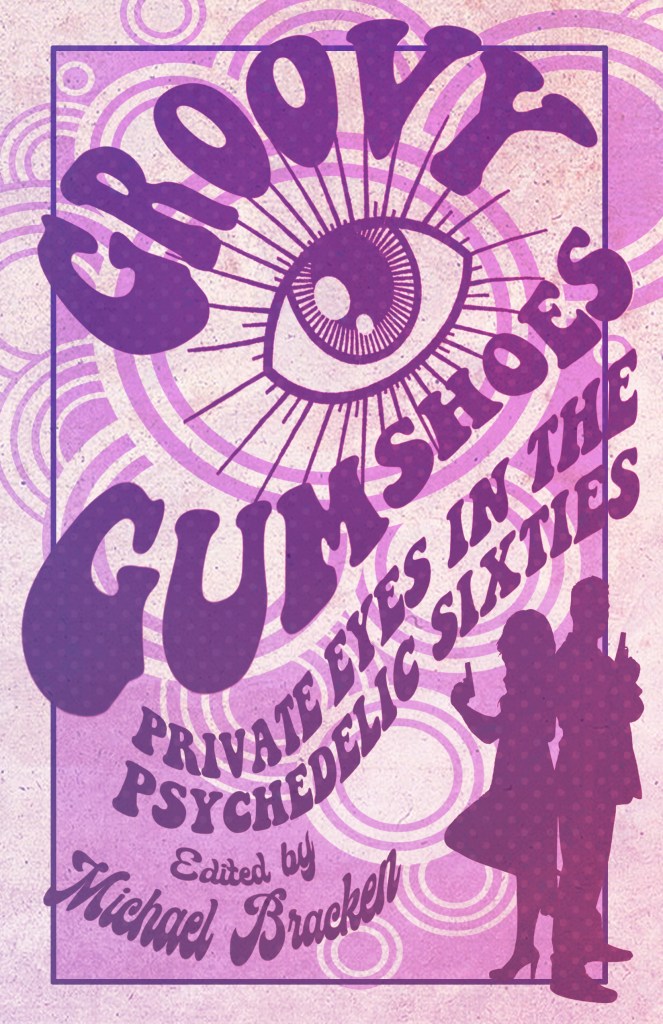
Next, I selected a previously created character to make a second appearance in my new story. That character, a private detective named Jerry Milam, appeared in a story called “Nice Girls Don’t” which I wrote for the anthology Groovy Gumshoes: Private Eyes in the Psychedelic Sixties. Already having a protagonist saved me from having to create a main character from scratch.

After researching the decade and selecting a protagonist, writing the first draft took about three days, resulting in a manuscript that was missing some details. Then, I left on a previously scheduled, nine-day, family vacation, taking my laptop, but knowing I wouldn’t have time to do much work. As it turned out, I only opened the laptop twice during my trip, both times late in the evening.

Once I returned home, I went to work in earnest adding the details I knew were missing. The middle of the story felt muddled, so I reworked it in another draft the following day. Satisfied that the manuscript was complete, I emailed the story to two of the world’s best beta readers, two analytical and detail-oriented people who know that I WANT them to point out every possible error. They know I can take criticism. (I’d rather hear about errors from them than have the story rejected for those same errors!) Both returned notes on the story within a few days, for which I am extremely grateful. (Thanks, Mike and Deb!) After reviewing what errors my beta readers noticed, I corrected and completed the final draft of the story.

In the next few days, I reviewed word choices and line edited the entire document. I made MSWord read the story to me, so I could proofread by listening for errors. Finally, I submitted the story to the editor on June 18, almost exactly four weeks after I received the initial invitation to submit.

Did I hesitate before hitting “send” to submit the manuscript, wondering if I needed to review it one more time?

Yes.

Did I send it anyway?

Yes.

Results:

A week later, I heard back from the editor. The story was accepted for the anthology. I’ll provide more details on the story closer to publication.

I met the challenge and learned something. I could have done it in even less time. I’m glad that when an opportunity dropped in my lap, I was able to rise to the occasion. I’m grateful that the editor gave me the opportunity to meet this challenge.

Leave me a comment on writing challenges you’ve met!

*****

N. M. Cedeño is a short story writer and novelist living in Texas. She is active in Sisters in Crime- Heart of Texas Chapter and is a member of the Short Mystery Fiction Society. Find out more at nmcedeno.com.

Submitting Short Stories: It’s Like Baseball

By N. M. Cedeño

Many of the stories I write aren’t accepted the first time I submit them for publication. The majority have to be submitted over and over again to find a publication home. The process made me think of a batter stepping up to the plate in baseball because I may strike out repeatedly before scoring a run.

Most of the time, I write stories with no specific publisher in mind. I write the story because I want to or because the only way to get it out of my head- and make it stop bothering me- is to put it down on paper. Then, after the story is written, I begin the process of looking for a place to submit it. “It Came Upon a Midnight Ice Storm” is one of these stories. I wrote it for myself because I like light-hearted mysteries stories set at Christmas.

I first submitted this Christmas story for publication in mid-2018. It was rejected, struck out, eventually a total of eight times. I put it through workouts, strengthening it several times between ‘at bats’. Then, I saw a call for submissions that I thought it might fit, a call for cozy mysteries. On my ninth submission, the story was accepted. It will appear in Black Cat Mystery Magazine in a couple months.

from Murderous Ink Press, 2022

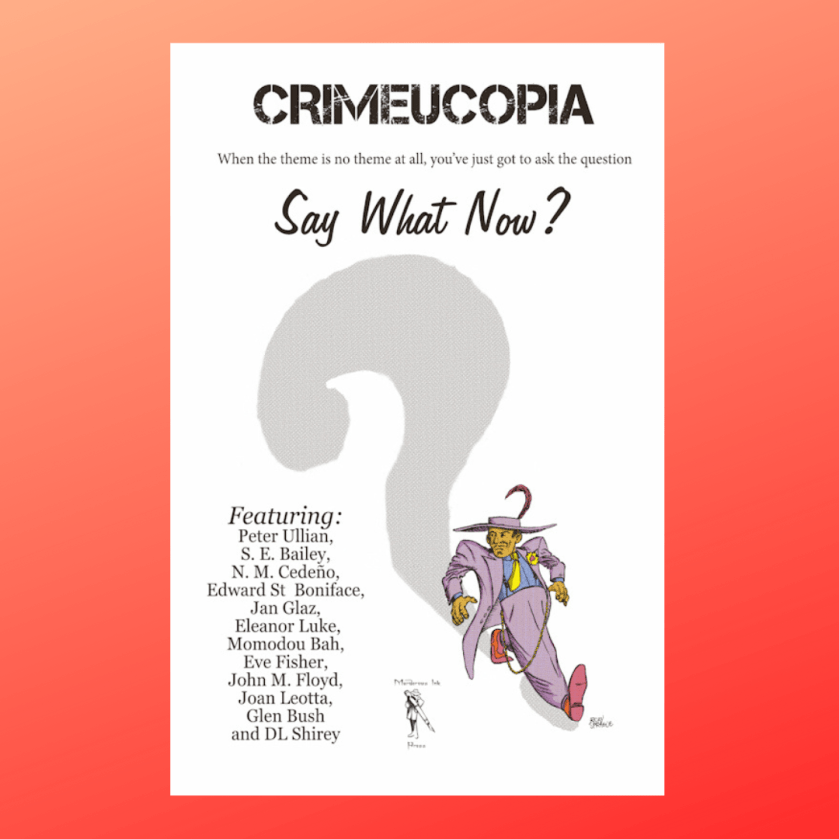
Sometimes, I’ll write a story based on requirements for a specific call for submissions, and it’s not accepted. I strike out. If the call was general enough, I can turn around and resubmit the story elsewhere with no changes. It’s ready for its next ‘at bat.’ That was the case for my story, “Reaching for the Moon.” After being initially rejected, and then rejected again, I submitted it to Murderous Ink Press, where editor John Connor accepted it for inclusion in the Crimeucopia: Say What Now? Anthology.

In other cases, the call for submissions may be in such a specific niche that I need to change the story in order to submit it elsewhere. Continuing the baseball analogy, I prepped the story to face a specific pitcher and have to make changes to face a new pitcher for the next ‘at bat.’

For example, my story “Serenity, Courage, Wisdom” was written for a very specific call for submissions for stories inspired by the music of a particular group and was rejected. In order to resubmit it elsewhere, I changed the title, which was originally a song title, and stripped out the details related to the song. Stripping those details left a hole, so instead of referencing a song, I settled on referencing a prayer that hung in my parents’ kitchen my entire childhood and that I have a copy of in my own kitchen.

After making these changes, I submitted the story to Black Cat Weekly, where the editor said the story needed a little work before he’d publish it and gave me some suggestions. In this case, I made a base hit, which requires more work on my part to make it to home plate. To get to home plate, I have to listen to the coach, aka the editor. I have to review the editor’s suggestions and work on the story with those suggestions in mind. If I don’t do the work, I get left on base and never make it home. If I do the work and send the story back to the editor, and he’s pleased and accepts the story, then I’ve rounded the bases to home plate and scored a run.

In this case, I did the work to earn the run. “Serenity, Courage, Wisdom” will be published in Black Cat Weekly #37 coming out in May 2022.

from Down & Out Books, 2022

Only one of my stories so far has been accepted on its first submission, which is the equivalent of hitting a home run. That story, “Nice Girls Don’t,” was written specifically for the anthology, Groovy Gumshoes: Private Eyes in the Psychedelic Sixties edited by Michael Bracken. I saw the call for submissions months ahead of the deadline and went to work researching material and writing the story. The anthology was published last week, debuting on April 11, 2022.

I have yet to retire any stories from the line-up. Eventually, I may have to set one aside, waiting to come out for the right call for submissions.

A Note: I’ll be participating in a panel discussion on mysteries, talking about my short mysteries, on Friday, May 13, at Hearth & Soul in Austin. Check the “Gather” tab on their website for time and location. Additional information will be posted soon.

****

N. M. Cedeño is a short story writer and novelist living in Texas. She is active in Sisters in Crime- Heart of Texas Chapter and is a member of the Short Mystery Fiction Society. Find out more at nmcedeno.com.

Writing “Reaching for the Moon” for Crimeucopia: Say What Now?

by N. M. Cedeño

Although I may veer off into other areas, my reading pile usually comprises two main categories of books: mysteries and histories. Sometimes when I’m writing, those two categories collide, and I write historical mysteries. Two of my historical mystery short stories will be published in March and April 2022.

Available March 2022 from Murderous Ink Press

The first story, “Reaching for the Moon,” is part of an anthology edited by John Connor entitled Crimeucopia: Say What Now? from Murderous Ink Press. The second story, entitled “Nice Girls Don’t,”  will be published by Down & Out Books in Groovy Gumshoes: Private Eyes in the Psychedelic Sixties edited by Michael Bracken. 

I wrote about the inspiration for “Nice Girls Don’t” in my last post. Today, I’ll review what inspired “Reaching for the Moon.”

Moon landing, NASA photo, from Pixabay.

I’m a fan of the history of space exploration. From Hidden Figures to Apollo 13, I’ve always been fascinated by the massive effort behind sending the first people into space and bringing them home safely. The space program’s tragedies – from Apollo 1 to Challenger and Columbia – and triumphs – from the Mercury Program to the International Space Station – are the stuff of legends.

Anyone who has read anything about the first US astronauts knows that the test pilot / astronaut lifestyle took a toll on marriages. Marital infidelity was common among the astronaut corps who were frequently away from home for training. Consequently, the divorce rate after leaving NASA was very high. But, NASA wanted to present a wholesome, clean-cut image of their astronauts that didn’t include divorce or infidelity. Life Magazine did full spreads on each of the first astronauts that presented the men as squeaky-clean Boy Scouts with perfect home-lives. This discrepancy between the public persona and private reality of the astronauts inspired ideas about the possibility of blackmail.

Because I live in Texas, I’ve toured the Apollo mission control center at Johnson Space Center in far south Houston several times. Anyone who has visited Space Center Houston knows that a mere thirty or so miles farther south down Interstate 45 is Galveston Island on the Gulf of Mexico.

Walking on a granite jetty, Galveston Island, Cedeño family photo 2021

Galveston Island has its own remarkable history. The barrier island was used as a pirate base before it became a major port city in the 1800s. Then, the 1900 Hurricane nearly obliterated the city, forcing port activity to move inland to Houston. The island became a vacation and pleasure spot infamous for ignoring the laws against drinking and gambling during the Prohibition era. Galveston enjoyed a lawless, mafia-run heyday between 1920 and 1950. Much of the illegal activity centered on the Balinese Room, a Maceo Family owned gambling joint and restaurant that perched on a pier over the Gulf and drew top talent from Hollywood, including Frank Sinatra and Bob Hope, to provide entertainment for guests.

The space center’s proximity to Galveston made me wonder: what if a 1960s astronaut wandered south to Galveston Island to see the places once made famous by Hollywood stars and mobsters and got himself into trouble? What if he had to seek the aid of a private detective to resolve the issue? And so, with a few name changes here and there to protect the innocent or the guilty, as the case may be, my story “Reaching for the Moon” was born.

I’m thrilled to have my story published with so many other great stories in Crimeucopia: Say What Now?, the 10th anthology in the Crimeucopia series from Murderous Ink Press and editor John Connor.

****

For additional historical reading, I recommend Hidden Figures by Margot Lee Shetterly, Moon Shot by Barbree, Slayton, and Shepard, Failure Is Not an Option by Gene Kranz, Light this Candle: the Life and Times of Alan Shepard by Neal Thompson, and Isaac’s Storm by Erik Larson.

N. M. Cedeño is a short story writer and novelist living in Texas. She is active in Sisters in Crime- Heart of Texas Chapter and is a member of the Short Mystery Fiction Society. Find out more at nmcedeno.com.

Writing “Nice Girls Don’t” for Groovy Gumshoes

So what if I wasn’t born in the 1960s? I can do research!

In 2020, I came across a call for submissions for mystery short stories to be included in an anthology. The anthology was to be called Groovy Gumshoes: Private Eyes in the Psychedelic Sixties. The editor, Michael Bracken, wanted stories set in the 1960s featuring private detectives, with bonus points given if the story included a major historical event.

The call caught my attention, but not having been born in the 1960s, I searched my brain for any specific event that I might use as starting point for a story. Two events for which I had a wealth of knowledge at my fingertips came to mind. One was the Assassination of President John F. Kennedy. When you grow up in Dallas, this one comes to mind quickly. But I thought that event, given its extreme historical prominence, might be covered by too many other authors submitting stories.

So I selected the second event: the UT Tower Shooting.

The University of Texas Tower Shooting on August 1, 1966, is a dark shadow on Austin’s history. It was a mass shooting at a school that happened decades before such events became regular occurrences. The Tower Shooting, like the JFK assassination, is reviewed regularly by the local media on anniversaries of the event. And I am intimately familiar with the locale where the shooting occurred since I attended the University of Texas at Austin and walked in the shadow of the Tower daily for four years. Additionally, the shooting is well-documented. Video taken that day is even available online. I knew that finding background details for a short story set around the time of the shooting wouldn’t be hard.

However, none of that is why the Tower Shooting came immediately to mind.

It came to mind because I knew someone I could question about life in the 1960s in Austin, Texas, and about the Tower shooting in particular: my father.

My father, whose grandparents were all Czech immigrants who arrived in Texas after the Civil War, graduated from tiny Rogers High School in rural central Texas and set out be the first in his immediate family to graduate from college. He worked his way up: first attending a junior college, then transferring to a small private college, then transferring, finally, to the University of Texas at Austin. On the fateful morning of August 1, 1966, my father turned in the final paper for the final class he needed to graduate. He arrived on campus early in the morning and left to report to his job at an Austin grocery store.

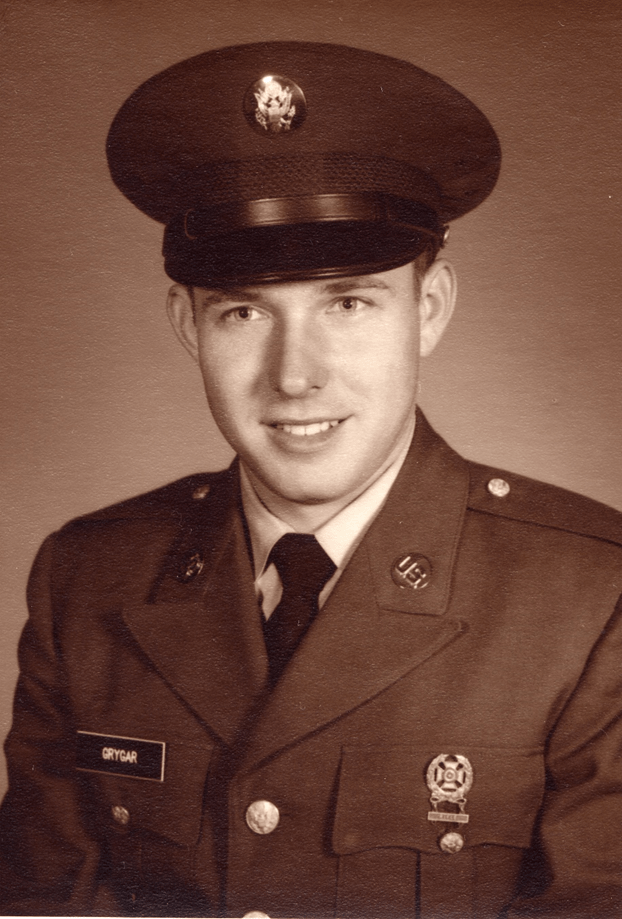
My father- Dec. 1966

He had a lot on his mind that day. With his upcoming graduation at the end of the summer term, my father should have been considering his improved employment prospects. But he wasn’t looking for jobs. He knew that his draft number was coming up in October. He had to make a decision: volunteer for the draft or wait to be drafted into the military in the midst of the Vietnam War. He volunteered for the draft in September 1966.

Twenty-seven years later, on my first day living in the dorms at UT, my father showed me where people had died near the balustrade on the South Mall. He pointed out the bullet holes marking the stone. He recounted his memory of leaving campus and listening to the shooting on the radio while at work. His story of that day, woven into the story of his life, became a piece of family lore, embedded in my memory.

And so, after picking my father’s brain and doing a ton of research, my short story “Nice Girls Don’t” came into being. The story features a private detective hired in September 1966 to investigate the death of a young woman, a UT student who died the day of the Tower Shooting. The girl’s parents believe their daughter’s case was ignored because the police were too busy dealing with the Tower Shooting to give her death the attention it deserved. The parents want the detective to find out what really happened.

After completing my story, I submitted it to the editor, hoping it might be selected for inclusion in the anthology… And the editor, Michael Bracken, chose my story to be included in Groovy Gumshoes: Private Eyes in the Psychedelic Sixties, coming from Down & Out Books in April 2022!

~~~~~~

N. M. Cedeño is a short story writer and novelist living in Texas. She is active in Sisters in Crime- Heart of Texas Chapter and is a member of the Short Mystery Fiction Society. Find out more at nmcedeno.com.

Book Review: FULL DARK, NO STARS by Stephen King

“From the start . . . I felt that the best fiction was both propulsive and assaultive.  It gets in your face.  Sometimes it shouts in your face.  I have no quarrel with literary fiction, which usually concerns itself with extraordinary people in ordinary situations, but as both a reader and a writer, I’m much more interested by ordinary people in extraordinary situations.  I want to provoke an emotional, even visceral, reaction in my readers.  Making them think as they read is not my deal.” (Full Dark, No Stars. p.365).

There are some who avoid works by Stephen King.  Literary elitists have shown distain towards King for years, dismissing his writing as story-telling for the masses.  This review isn’t about the literary merits of King’s works, or his overwhelming success, or even about the monumental effect King’s life-long dedication to writing has had on the horror genre.  This is a brief review and discussion of two of four novellas found in Full Dark, No Stars, released in 2010.

Short stories and novellas are not a new format for King.  King has published very successful short stories and multiple novellas over his 35-year-long career.  He has clearly succeeded yet again, with Full Dark, No Stars.

Full Dark contains a common theme within each novella, a theme exploring the darker side of the human psyche, retribution, revenge, and a sense of twisted justice.  Redemption is not a theme, but revengeful retribution is revealed in each.  Even evil has the opportunity towards a twisted kind of justice—a black and damaging kind of justice, but justice nonetheless.

The first novella, 1922, is set in Depression era Nebraska.  The story involves a barely working family farm, constant work, brutally harsh, and unrelenting.  The wife and mother, Arlette, is a bitter and manipulative character who harps without end her wish to sell the 100-acre farm that she inherited from her father.  Arlette’s dream is to leave the country life and move to the progressive city of Omaha.

The husband, Wilfred “Wilf,” dominated and hen-pecked, is a browbeaten, beleaguered husband whose only desire is to stay on the land.  Wilf tells Henry, their only child, of his mother’s, Arlette’s, plan.  Wilf then convinces Henry to help him murder his mother.  Wilf intones that if Henry does not help with this, they will be forced to leave the farm, and Henry will never see his girlfriend, who lives  close by, ever again.  Henry, a meek and obedient boy, resists but finally agrees to help murder his mother.

When Arlette’s demands to sell increase, Wilf and Henry determine they must go through with the murder.  It is a clumsy and brutal murder; both father and son are deeply shaken afterwards.   Arlette’s murder acts as a horrific prelude to a story which evolves into a twisted tale of backwoods justice and supernatural interference.

The vicious murder results in the destruction of both father and son.  The darker psyche of Wilf bobs and weaves throughout the tale, and in the end, destruction follows.

(Spoiler:  If you have a phobia against rats, you may not want to read this dark tale).

A GOOD MARRIAGE:  A Good Marriage is both thought provoking and highly believable.  The main character is a stay-at-home wife, Darcy, whose children have gone to college and left home to start their lives.  Darcy has been married to the same man, Bob Anderson, for over 25 years.  She believes she is living the American dream, or a semblance of it – not perfect, but predictable, comfortable.  It is by sheer accident that she trips over a misaligned carton residing in the garage.  Darcy opens the carton and realizes that the man that she believes she knows as well as herself, not only has a double life, but is a serial killer.

Once Darcy confirms her suspicions, she realizes that there has not been a killing for 16 years.  She attempts to come to grips with what she knows for certain.  Her husband, Bob, intuits that she knows about his secret life when he realizes that the garage carton has been moved.  Bob confronts Darcy, and manages to convince her that it is all up to her what happens next; his life and their life together, as well as their children’s, hang on her decision.  Bob assures her that as long as she keeps quiet, he will suppress his killing urges; he promises her won’t kill again, but she must make her decision to stay and keep their secret.

Bob explains to Darcy the reason he took a break from killing was because of her, that being with her has allowed him to suppress and ignore his urge to kill.  But if she breaks her word, the killing will start up again, and Darcy will suffer the consequences, will be ostracized by the very people she believes to be her friends.

Bob and Darcy’s lives resume; he goes back to work, Darcy takes up her house-wifely duties, and they ignore their shared secret and there are no killings.  But Darcy, never feels at ease; she is ashamed and feels responsible.

After years of silence, Darcy stages an accident and succeeds in killing Bob.  After an evening celebration with family and friends, Darcy manages to push Bob down a flight of stairs, and he falls to his death.  Although Darcy is cleared of any foul play, she knows someone will come knocking on the door sooner or later.  And the day does come, and that someone comes knocking, but it isn’t who she expects.

Retribution comes in the end, along with a good dose of twisted justice, but you have to read the book to find out.

You will enjoy this collection.  Both 1922 and A Good Marriage have been made into movies.  The book will make you think, and may even surprise you.

After all, no one knows what they might do if pushed to the absolute edge.

*

From the Afterword:
“I have tried my best in Full Dark, No Stars to record what people might do, and how they might behave, under certain dire circumstances. The people in these stories are not without hope, but they acknowledge that even our fondest hopes (and our fondest wishes for our fellowmen and the society in which we live) may sometimes be vain. Often, even. But I think they also say that nobility most fully resides not in success but in trying to do the right thing…and that when we fail to do that, or willfully turn away from the challenge, hell follows.” (Stephen King).

“Stephen King has proven himself to be one of the finest chroniclers of the dark side of the human psyche over the 35 years of his successful career. While literary snobs sometimes cock a snoot at his mainstream appeal, there is no doubt that on his day he can spin as compelling a yarn as anyone” . . . These tense tales delve into the dark heart of a knitting society and a serial killer’s last stand.” Doug Johnstone. Independent. November 14, 2010.

***

References

King, Stephen.  FULL DARK, NO STARS. New York: Simon & Schuster, 2010.

Kirkus Review.  “Deals with the darkest recesses of the human soul. . .”   Nov. 10, 2010.

Johnstone, Doug. Independent. November 14, 2010. 

Photos: Courtesy of Pixabay

Book Photo: Courtesy of Amazon

***

A former paralegal, Renee Kimball has a master’s degree in criminal justice. Among her interests are reading, writing, and animal advocacy. She fosters and rescues both dogs and cats and works with various organizations to find them forever homes.

Why Read Short Stories?

By N. M. Cedeño

If you don’t read short fiction, 2020 is the year to start. Busy, stressed, out of time, out of energy? Then short stories are for you. Here’s why:

Created with WordClouds.com

1. Finding the time to read isn’t a problem:

Even people with limited free time can find a few minutes to read a short story. While immersing readers in tightly woven plots, short fiction provides complete story arcs that can be consumed in minutes rather than the hours needed to read the average novel. Short stories may be read in small spurts rather than in long hauls, perfect for a lunch break or mental health break.

2. Short stories are the literary version of instant gratification:

Short stories are the chocolate cake of reading. photo from Pixabay.

Short fiction packs a powerful and entertaining punch into very few pages. By crafting concise prose to engage and captivate readers before quickly releasing them, short fiction authors grant even the busiest readers the sense of fulfillment that comes from finishing a work of fiction. Readers might feel bad that they never opened that massive tome on the nightstand, but a short story, quickly started and finished, gives readers a sense of accomplishment.

3. Find new authors within a favorite genre:

What if a reader wants to find a new author within a favorite genre? Maybe the book store and library only allow pick-up because of the pandemic, so no one can browse. Readers can browse by reading a short story collection. In one anthology, readers can try a dozen or more new authors and get a feel for how an author writes. Many novelists write short stories featuring their series characters for anthologies, collections, and magazines. These short stories give readers a chance to sample an author and meet characters before diving into a series.

from Pixabay

4. Try new genres or subgenres:

Readers can look to short fiction when they want to try something completely new. Anthologies, short story magazines, and e-zines contain samples of a wide variety of genres and subgenres of fiction. With magazines and e-zines filling a variety of niches, readers can get a taste of multiple genres for a low price. Some of these magazines provide sample stories on their websites or via newsletters for free. “Best of” anthologies collect award-winning stories in a variety of subgenres into one book. Reading a ‘best of’ anthology can introduce mystery readers to the year’s best science fiction, or science fiction readers to the year’s best horror. (See list below)

5. Build or rebuild a habit of reading:

Life gets busy, or even completely crazy, like this year. For some people, that causes reading to fall by the wayside. After falling out of the habit of daily reading, getting back into reading by diving into a novel might seem daunting. Short stories can provide a simpler, less time-demanding reintroduction to reading for those looking to establish the habit.

6. Perfect for emotionally or physically exhausted readers:

This year, 2020, has been hard on everyone emotionally and physically. If you’ve been trying to work, educate kids from home, care for the sick, and survive trying times without collapsing, starting a novel might seem an impossible task. For people low on energy, too exhausted to put forth the brain power a full-length novel might require, short stories are a better choice. Quick but meaningful bites of fiction like short stories can be a breath of fresh air for the exhausted mind.

Now you know why you should give short stories a try. Where do you find them?

Here is a nowhere-near-comprehensive list of mystery and science fiction short story magazines. Some provide sample stories on their websites or via newsletters. Check them out.

Don’t want magazines? How about books?

Try these anthology series. Your local library may have copies.

  • Best American Mystery Stories
  • Best American Mystery Stories of the Century
  • Best American Science Fiction and Fantasy
  • Best American Short Stories
  • The Best American Noir of the Century
  • The Best Science Fiction of the Year
  • The Year’s Best Dark Fantasy and Horror
  • The Year’s Best Science Fiction and Fantasy

Enjoy some short stories! They are perfect for 2020.

~~~~~

N. M. Cedeño is a short story writer and novelist living in Texas. She is currently working on a paranormal mystery series called Bad Vibes Removal Services. The second novel in the series, entitled Degrees of Deceit, came out in August 2019.  Ms. Cedeño is active in Sisters in Crime- Heart of Texas Chapter.

Agatha Christie Wrote Paranormal Stories?

Do you enjoy books that make a chill dance down your spine by invoking the otherworldly or the supernatural?

As a teen, I read all of my mother’s Agatha Christie novels, which fixed Christie’s place in my mind as a writer of traditional mysteries. I somehow dismissed the short stories written by Christie that fall firmly into the paranormal category until I picked up a copy of The Last Séance: Tales of the Supernatural. This collection of Agatha Christie’s short stories was put together and republished in 2019 by William Morrow, an imprint of HarperCollins Publishers. I’ll try to review the paranormal stories presented in the collection without too many spoilers.

The Last Séance: Tales of the Supernatural contains 20 stories of crime, murder, and suspense. Some of the stories feature clearly paranormal elements: otherworldly beings, premonitions of danger or death, possession or other transference of souls, and the ability to call upon supernatural forces. Other stories in the collection involve criminals using technology, complex cons, or gaslighting techniques to create the illusion of the supernatural, or malefactors taking advantage of an atmosphere of superstition to suggest a paranormal cause for a crime they committed. These latter stories hardly count as paranormal since the supernatural element is faked by the criminal. One or two of the stories fall into both camps, with the crime being committed from a mundane motive, but with the suggestion that perhaps the criminal wouldn’t have acted except for the influence of evil in the atmosphere weighing upon them.

Ghost from pixabay

Of the stories that contain clearly supernatural components, premonition is the most common element employed by Christie. The stories The Last Séance, In a Glass Darkly, S.O.S., The Gipsy, Philomel Cottage, and The Red Signal use premonition, either via dreams or via a sixth sense that something is wrong, to build suspense. The characters recognize that they are in danger, but don’t know the source and aren’t sure if they should believe the bells of warning ringing in their brains. Some heed the warnings as best they can, but still fall into dangerous situations. Other characters dismiss the warnings until circumstances force them to pay attention. From story to story, the results of heeding or ignoring the warnings vary as the characters dance to Agatha Christie’s tune.

A couple of the stories feature ghosts or supernatural beings. The title story, The Last Séance, features a medium channeling the soul of a dead child for a grieving mother. The second story with a ghost, The Lamp, involves a family moving into a long vacant house. The house has stood unoccupied for years because the ghost of a child is haunting it. While The Lamp is a pure “ghost story,” The Call of the Wings and The Dressmakers Doll both deal with nonhuman, otherworldly beings. The Call of the Wings describes a man’s interactions with a pan-like creature and angels. The Dressmakers Doll revolves around a doll with a mind of its own.

from Pixabay

Reincarnation and the suggestion of lost supernatural knowledge from ancient civilizations appear in Christie’s stories as well. However, little can be written about these stories or the ones featuring possession or transference of souls without spoiling them. Christie’s use of these story elements can be easily traced to the author’s own travels in Egypt and interest in archaeology and to the Egyptian archaeological discoveries of the early 1900s which aroused public interest in ancient belief systems and mystical powers.

The collection The Last Séance: Tales of the Supernatural is a mixed bag of suspense stories, mystery stories with a crime that needs to be solved, and stories that feature no crime at all. Christie’s two main detectives, Miss Jane Marple and Hercule Poirot, appear in a few of the stories. Poirot takes the stage in The Adventure of the Egyptian Tomb, The Dream, and The Flock of Geryon. Miss Marple reasons her way quietly to answers in The Idol House of Astarte and The Blue Geranium. While the crime provides the mystery in some of the stories, in a few of the purely paranormal stories, the only mystery lies in the paranormal or supernatural event itself.

*****

N. M. Cedeño is a short story writer and novelist living in Texas. She is currently working on a paranormal mystery series called Bad Vibes Removal Services. The second novel in the series, entitled Degrees of Deceit, came out in August 2019.  Ms. Cedeño is active in Sisters in Crime- Heart of Texas Chapter.