It’s fall in Paris. The rows of chestnuts flanking the Seine are turning golden-brown; gingko trees sport their distinctive yellow leaves, preparing to fling down, on one afternoon they keep secret, all their leaves at once.
Fall fashion? Long hair for women, slim tan trench coats at mid-calf, midi-length swishy skirts. Anyone can wear jeans and sneakers (male, female, old, young) with a blazer-cut jacket. In the markets, apples from the Garonne (Pixie Pommes!), quantities of mushrooms, cashmere scarves. Kids scurry to school at eight while their older siblings stride down Rue de l’Universite toward Science Po.
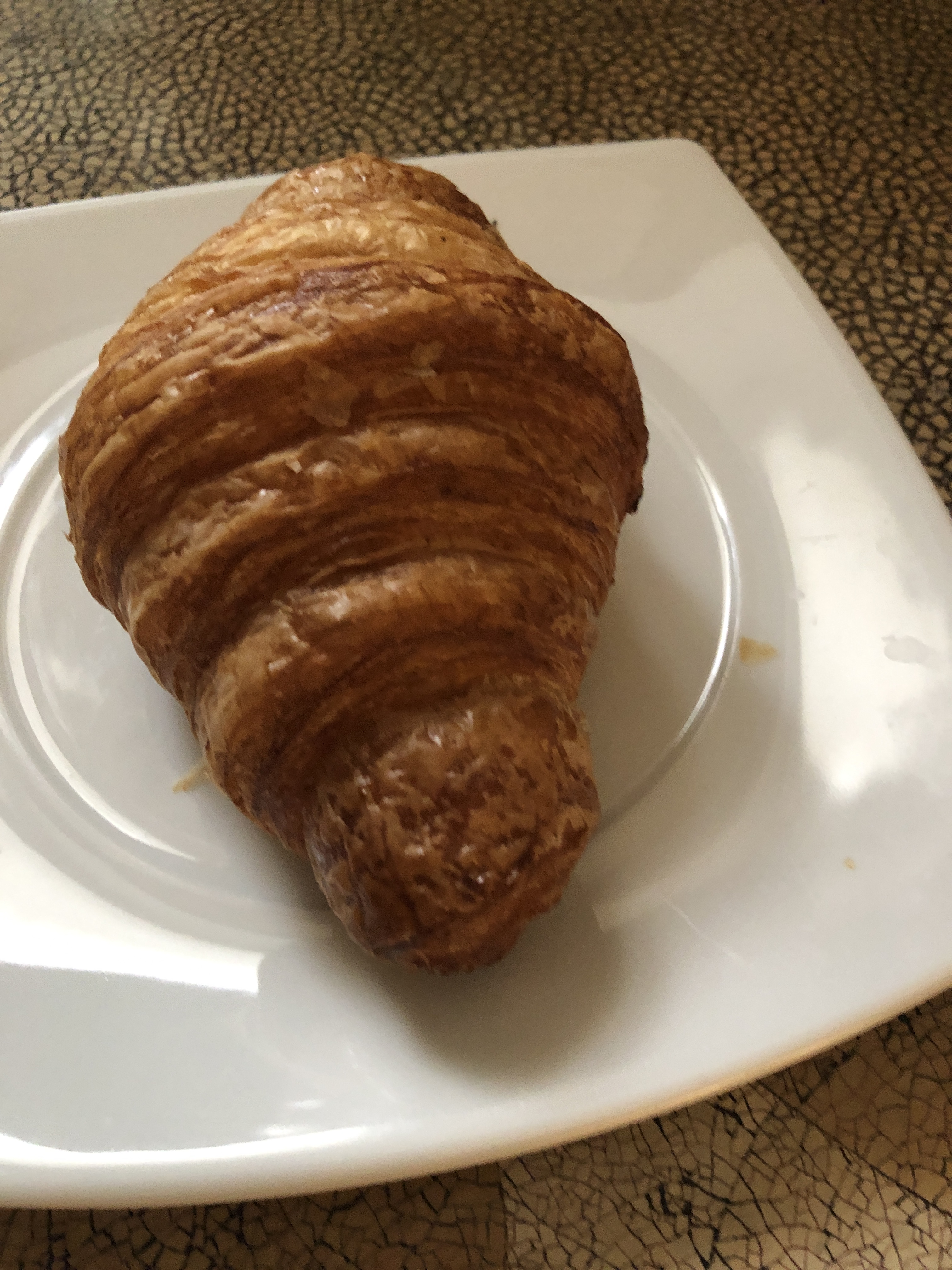
I’m forever grateful to Madame, our wondrous French teacher at McCallum High in Austin. On the first trip to Paris over fifty years ago, fresh off the early train, my husband and I stopped at a café where I opened my mouth in fear and trembling to order in French—deux cafes et deux croissants.
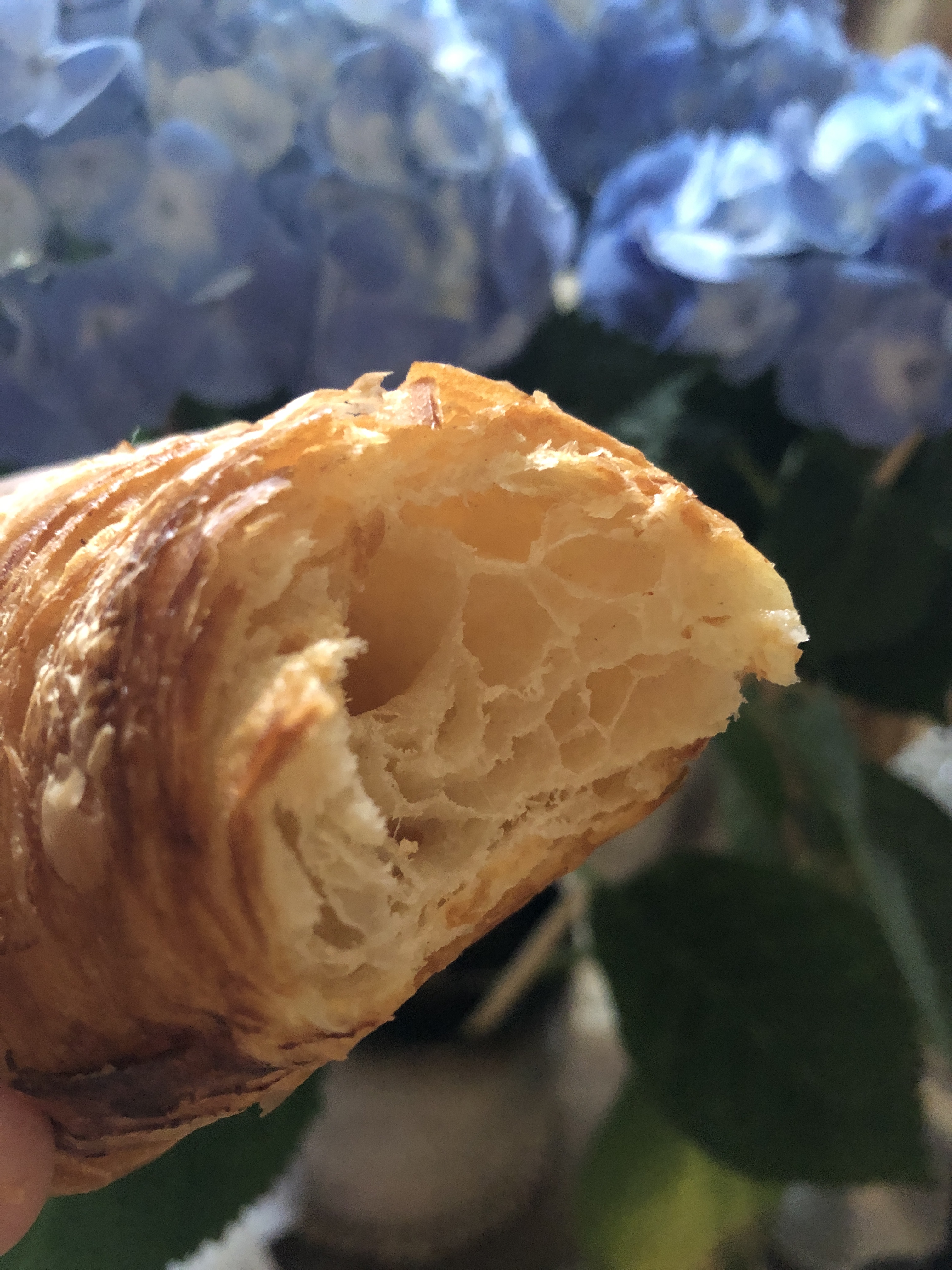
To my shock the proprietor didn’t blink. And the result was magic—our first taste of croissant.
Long past high school I still say “Merci, Madame!” A Parisienne, she had (I believe) a PhD. She maintained perfect class discipline—even with smarty seniors. When anyone asks, how did you learn French? I say, “Madame! She made us sing songs!” https://www.youtube.com/watch?v=96JRl7bER3g&list=RD96JRl7bER3g&start_radio=1
As to “à la Claire Fontaine” I suspect she omitted the first two verses—at least I don’t remember singing about bathing beneath a tree! But this song and the rest we still remember, decades later.
Sur le Pont d’Avignon…Frère Jacques…Alouette, gentille alouette, je te plumerai (le nez, le cou, et la tete, et le dos, etc.). At Christmas, Il est né, le divin enfant. Twisting your tongue around the pretty French words leaves you with life skills.
(She didn’t teach us La Marseillaise. But I still get chills when, in Casablanca, Victor Laszlo leads the crowd at Rick’s in singing it.)
And another beloved teacher taught both Latin and English. She could order grown seniors to race to the blackboard to diagram sentences, and insisted we use proper punctuation.
What was it about those favorite teachers? They made us learn. They brooked no foolishness. They could tell when we faked preparation. They thrust us into difficult novels, demanding paintings, complex unfamiliar music. Hitherto hidden histories. Concepts we hadn’t invented or come upon by ourselves.
Maybe we did learn. Maybe—that learning is worthwhile.
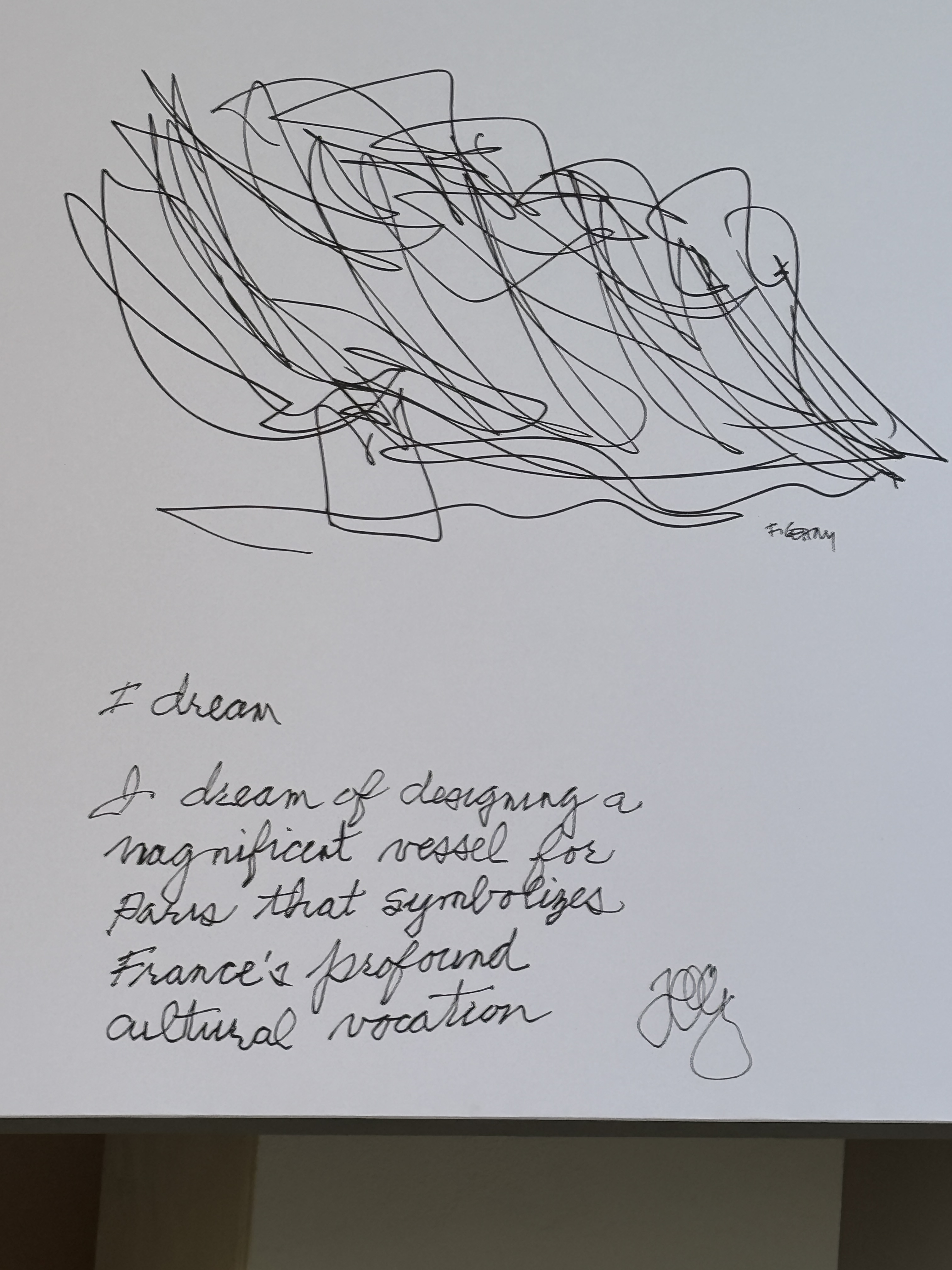
Yesterday we visited La Fondation Louis Vuitton to visit what architect Frank Gehry dreamed of as an iceberg with sails.
Curves, lines, water, wood… magical in their power.
The building invites you to wander and wonder. What imagination, what creativity, what a vision! I listened to the rippling water traveling down the slope—the sound took over. Couldn’t hear traffic, or talking. Just the water–in the middle of a vast city. Being there takes you back to Roman stonework (rectangles, arches, roads in straight lines), and then to the power of curved sails, moved by wind and water. People working there seemed quietly confident that visitors should and would be (but not literally) blown away.
READING: I’m very much enjoying Susan Wittig Albert’s Thyme, Place & Story website where she is now serializing the first China Bayles book–A Bitter Taste of Garlic. Many of us are fans of this series, and would be delighted to visit China’s herb shop in a town not far from Austin…!
I just finished Mick Herron’s Down Cemetery Road. I found it much scarier than the Slow Horses novels…but still wanted to know the ending. It was published over 20 years ago and apparently will be streaming in October.
On the flight over I was reading Graham Robb’s France, including some tales of Paris that were scarier than Down Cemetery Road. Like being the butt of your buddies’ jokes and winding up as a prisoner in Fenestrelle, a political prison during the Napoleonic era. https://fr.wikipedia.org/wiki/Forteresse_de_Fenestrelle
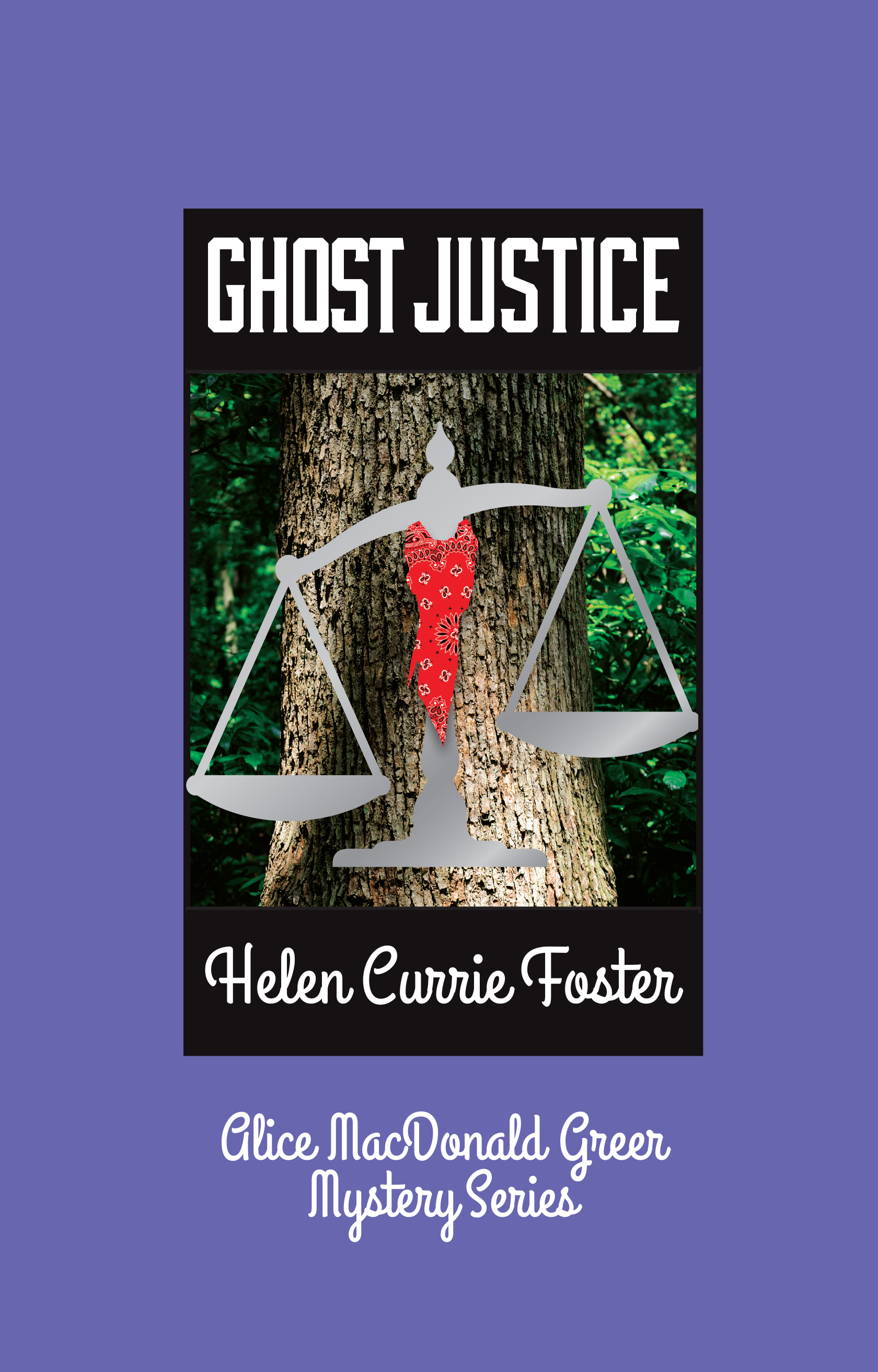
Meanwhile, at home, Ghost Justice is now out! Book 10 in my Alice MacDonald Greer Mystery Series set in the Hill Country. Available at BookPeople on Lamar Blvd. in Austin https://bookpeople.com/ and on Amazon. https://amzn.to/4pk8WQO
Hope you’ll enjoy it!
Helen Currie Foster lives and writes the Alice MacDonald Greer Mystery Series north of Dripping Springs, loosely supervised by three burros. She’s drawn to the compelling landscape and quirky characters of the Texas Hill Country. She’s also deeply curious about our human history and prehistory and how, uninvited, the past keeps crashing the party. Follow her at http://www.helencurriefoster.com.
I’m working on a mystery novel—I’ve been working on it for years, but am now seeing the light at the end of the tunnel—and am faced with dilemmas too numerous to whine about in only one post, so I’ll move along.
I will instead write about the one pleasure of the writing life: creating and naming characters.
My novel is set in a little town very like my own hometown. I don’t base my plot on real events, and I don’t use real people as characters—with one exception: Steve Dauchy.
Not Steve, but close
Note: One of my readers, Dr. Cullen Dauchy, knows more about Steve than I do, especially about his early life, and I hope he’ll feel free to correct any errors.
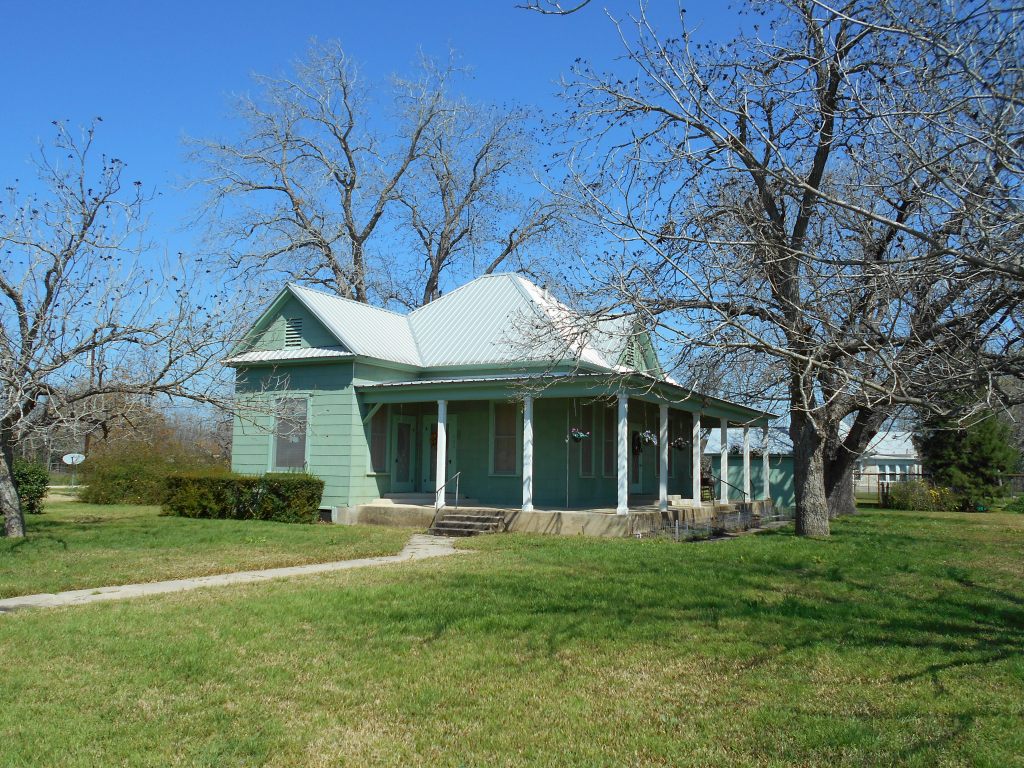
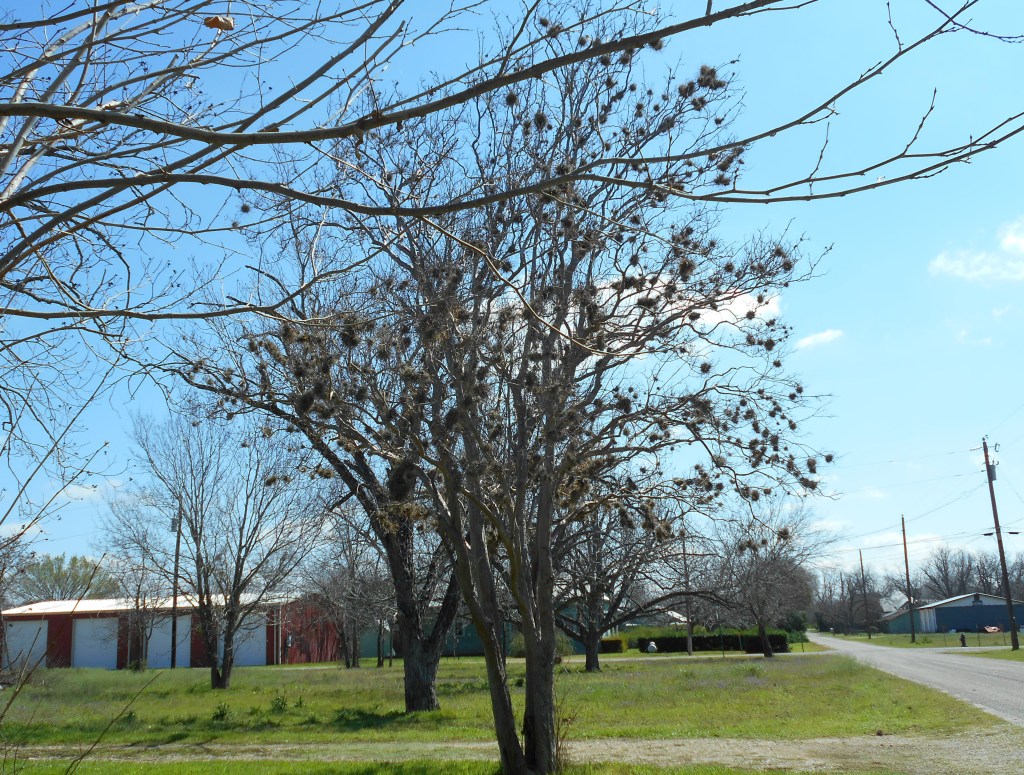
Steve Dauchy was a career blood donor at Katy Veterinary Clinicin Katy, Texas. On retirement he moved to Fentress, where he lived with his veterinarian-owner’s parents, Joe and Norma Dauchy. Joe and Norma lived next door to me; in local terms, next door meant that my house was on one corner, then there was a half-acre “patch” of pecan and peach trees and grass and weeds, then a street, and then on the next corner, the Dauchy yard and their house. The point being that when Steve visited me, he didn’t just stroll across a driveway.
Joe was my dad’s first cousin, so I guess that makes Steve and me second cousins. I have a lot of cousins on that side of the family, although most are human.
Steve is a family name, with a story behind it. As I understand it, back in the ’20s or ’30s, my Great-uncle Cull (Joseph Cullen Dauchy, Sr.), enjoyed listening to a radio program about a Greek character who frequently spoke of “my cat Steve and her little cattens.” Uncle Cull was so amused by the phrase that he named a cat—probably one of the barn cats—Steve. And for the next forty or so years, he always had a cat named Steve.
Uncle Cull and Aunt Myrtle Dauchy’s house, home of the first Steves
So when the clinic cat became part of the Uncle Cull’s son and daughter-in-law’s family, he became the latest in a long line of Steves.
How to describe Steve? He was a fine figure of a cat: a big tabby, deep orange, with an expression of perpetual boredom. His reaction to nearly everything translated as, “Meh.” I’ve heard that’s common among clinic cats.
Once when Steve was standing on my front porch, the neighbor’s Great Dane got loose and charged over. I was frantic, shouting at the dog, shouting at Steve. But when the dog hit the porch, Steve just looked up at him. Dog turned around and trotted home.
Some would say Steve was brave, and I’m sure he was. But I believe his grace under pressure had their roots elsewhere.
First, he had experience. He knew dogs. In his former employment, he’d observed the breed: big, little, yappy, whining, growling, howling, cringing, confined to carriers, restrained by leashes, sporting harnesses and rhinestone collars, hair wild and matted, sculpted ‘dos and toenails glistening pink from the OPI Neon Collection. He’d seen them all. He was not impressed.
Facing down a Great Dane, however, took more than experience. There was something in Steve’s character, an inborn trait that marked him for greatness: his overarching sense of entitlement. He was never in the wrong place at the wrong time. My porch was his porch. The world was his sardine.
Except for the kitchen counter. Steve thought kitchen counters were for sleeping, but Joe and Norma’s maid didn’t. Consequently, he stayed outside a lot. He took ostracism in stride and used his freedom to range far and wide. Far and wide meant my yard.
Steve’s house
At that time I had three indoor cats—Christabel, Chloe, and Alice B. Toeclaws—and a raft of outdoor cats. The outdoor cats started as strays, but I made the mistake of naming them, which meant I had to feed them, which meant they were mine. Chief among them was Bunny, a black cat who had arrived as a teenager with his gray-tabby mother, Edith.
One day Bunny, Edith, and I were out picking up pecans when Steve wandered over to pay his respects, or, more likely, to allow us to pay our respects to him. Bunny perked up, put on his dangerous expression, and walked out to meet the interloper. It was like watching the opening face-off in Gunsmoke.
But instead of scrapping, they stopped and sat down, face to face, only inches apart. Each raised his right paw above his head and held it there a moment. Next, simultaneously, they bopped each other on the top of the head about ten times. Then they toppled over onto their sides, got up, and walked away.
That happened every time they met. Maybe it was just a cat thing, a neighborly greeting, something like a Masonic handshake. But I’ve wondered if it might have had religious significance. Bunny was a Presbyterian, and Steve was a Methodist, and both had strong Baptist roots, and although none of those denominations is big on ritual, who knows what a feline sect might entail?
Steve had a Macavity-like talent for making himself invisible. Occasionally when I opened my front door, he slipped past and hid in a chair at the dining room table, veiled by the tablecloth. When he was ready to leave, he would hunt me down—Surprise!—and lead me to the door. Once, during an extended stay, he used the litter box. Christabel, Chloe, and Alice B. Toeclaws were not amused.
Distance Steve traveled between his house and mine. His house is way over there behind the trees.
Invisibility could work against him, though. Backing out of the driveway one morning, I saw in the rearview mirror a flash streaking across the yard. I got out and looked around but found nothing and so decided I’d imagined it. When I got home from work, I made a thorough search and located Steve under my house, just out of reach. I called, coaxed, cajoled. He stared. It was clear: he’d been behind the car when I backed out, I’d hit him, and he was either too hurt to move or too disgusted to give me the time of day.
It took a long time and a can of sardines to get him out. I delivered him to the veterinarian in Lockhart; she advised leaving him for observation. A couple of days later, I picked him up. Everything was in working order, she said, cracked pelvis, nothing to do but let him get over it.
“Ordinarily,” said the vet, “I would have examined him and sent him home with you the first day. I could tell he was okay. But you told me his owner’s son is a vet, and I was afraid I’d get it wrong.”
Although he was an indoor-outdoor cat, Steve managed plenty of indoor time at his own house, too, especially in winter, and when the maid wasn’t there. One cold day, the family smelled something burning. They found Steve snoozing atop the propane space heater in the kitchen. His tail hung down the side, in front of the vent. The burning smell was the hair on his tail singeing. They moved him to a safer location. I presume he woke up during relocation.
At night, he had his own bedroom, a little garden shed in the back yard. He slept on the seat of the lawnmower, snuggled down on a cushion. Except when he didn’t.
One extremely cold night, I was piled up in bed under an extra blanket and three cats. About two a.m., I woke up to turn over—sleeping under three cats requires you to wake up to turn over—and in the process, reached down and touched one of the cats. It was not my cat.
I cannot describe the wave of fear that swept over me. It sounds ridiculous now, but finding myself in the dark with an unidentified beast, and unable to jump and run without first extricating myself from bedding and forty pounds of cat—I lay there paralyzed.
Unnecessarily, of course. The extra cat was Steve. He’s sneaked in and, considering the weather forecast, decided that sleeping with a human and three other cats in a bed would be superior to hunkering down on a lawnmower.
Steve’s full name was, of course, Steve Dauchy. In my book, he will be Steve MacCaskill. MacCaskill was the name of a family who lived next door to my Aunt Bettie and Uncle Maurice. Their children were friends of my father and his brothers and their many cousins. They were a happy family.
“My family had to plan everything,” my dad’s cousin Lucyle Dauchy Meadows (Steve’s aunt) told me, “but the MacCaskills were spontaneous. If they decided they wanted to go to a movie, they just got into the car and went to a movie.” When Lucyle and the other girls helped their friend Mary Burns MacCaskill tidy her room before the Home Demonstration Agent came to examine it, one of the first things they did was to remove the alligator from the bathtub.
I heard so many delightful stories about the MacCaskill family that I decided they were too good to be true. Then, at Aunt Bettie’s 100th birthday party, my mother introduced me to Mary Burns MacCaskill, who had traveled from Ohio for the party.
So as an homage to that family, I’ve named my main character Molly MacCaskill. And when choosing a pet for Molly, I couldn’t choose a finer beast than Steve.
*
Note: Cullen Dauchy no longer owns Katy Veterinary Clinic, but he did when Steve worked there, and the clinic was Steve’s first home, so I’m leaving the link.
And I’m so glad the Home Demonstration agent didn’t inspect bedrooms when I was a girl. I didn’t have an alligator, but she might have thought I had something worse.
***
This post first appeared in Ink-Stained Wretches in 2021.
***
Kathy Waller blogs at Telling the Truth, Mainly. She has published short stories, and a novella co-written with Manning Wolfe. She is perpetually working on a novel.
Where small-timers are concerned, the rule seems to have fallen by the wayside, and that’s a shame. It stimulated creativity.
***
The backstory:
I wrote the following review to answer a “challenge.” I intended to post it at the end of September 2009. But in the process of writing, I got all tangled up in words and couldn’t finish even the first sentence.
I intended to post it at the end of October. I still couldn’t write it.
Finally, after telling myself I didn’t care, I managed to write it after the October deadline.*
In the middle of the “process,” I considered posting the following review: “I like Nancy Peacock’s A Broom of One’s Own very very very very very much.”
But the challenge specified a four-sentence review, and that was only one, and I didn’t want to repeat it three times.
So there’s the background.
I must also add this disclaimer: I bought my copy of A Broom of One’s Own myself, with my own money. No one told, asked, or paid me to write this review. No one told, asked, or paid me to say I like the book. No one told, asked, or paid me to like it. No one offered me tickets to Rio or a week’s lodging in Venice, more’s the pity. I decided to read the book, to like it, and to write this review all by myself, at the invitation of Story Circle Book Review Challenge. Nobody paid them either. Amen.
*********************************************
The review:
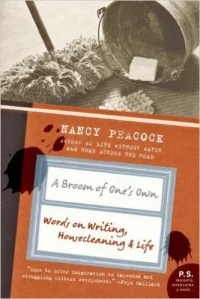
I like Nancy Peacock’s A Broom of One’s Own: Words About Writing, Housecleaning & Life so much that it’s taken me over two months and two missed deadlines to untangle my thoughts and write this four-sentence review, an irony Peacock, author of two critically acclaimed novels, would no doubt address were I in one of her writing classes.
She would probably tell me that there is no perfect writing life; that her job as a part-time house cleaner, begun when full-time writing wouldn’t pay the bills, afforded time, solitude, and the “foundation of regular work” she needed; that engaging in physical labor allowed her unconscious mind to “kick into gear,” so she became not the writer but the “receiver” of her stories.
She’d probably say that writing is hard; that sitting at a desk doesn’t automatically bring brilliance; that writers have to work with what they have; that “if I don’t have the pages I hate I will never have the pages I love”; that there are a million “saner” things to do and a “million good reasons to quit” and that the only good reason to continue is, “This is what I want.”
So, having composed at least two dozen subordinated, coordinated, appositived, participial-phrase-stuffed first sentences and discarding them before completion; having practically memorized the text searching for the perfect quotation to end with; and having once again stayed awake into the night, racing another deadline well past the due date, I am completing this review—because I value Nancy Peacock’s advice; and because I love A Broom of One’s Own; and because I consider it the equal of Anne Lamott’s Bird by Bird; and because I want other readers to know about it; and because this is what I want.
*Not caring is often the key to cracking writer’s block. Nancy Peacock probably would say that, too.
Research for book four of the Housekeeper Mystery Series brought me to legends and myths connected to jewels and gemstones, many of which have traveled a long way in storytelling traditions. Often, a mystical aura goes beyond the material value of some precious stones and metals, and these stories show us how jewelry is not only beautiful to look at but also carries the power of love, misfortune, and protection. Some of the most famous are The Curse of the Hope Diamond, The Myth of Pearls, and The Legend of Cleopatra’s Emeralds.
According to the legend, the curse of the Hope Diamond originated when the diamond was stolen from a statue of a Hindu god in India. The priests of the temple placed a curse on whoever possessed it, and throughout history, many who owned it have suffered great misfortunes, including King Louis XVI and Marie Antoinette.
Cleopatra, the last queen of Egypt, is said to have loved emeralds., which were symbols of fertility and protection in her time. Legend has it that Cleopatra possessed an enormous and valuable emerald that she wore often to show her power and divine status. The emerald was lost after her death, and its whereabouts have never been discovered.
The Myth of Pearls. Called Tears of God in many cultures, pearls became symbols of purity and femininity. In Greek mythology, pearls are said to be the tears of the goddess Aphrodite and were often used as wedding gifts to symbolize purity and happiness in marriage.
In Rome, onyx, especially sardonyx, which is a layered gemstone composed of bands of sard and onyx, both varieties of chalcedony (a variety of quartz (silicon dioxide) known for its fine, fibrous structure and waxy luster). Onyx is known for its striking contrast of colors, typically reddish-brown alternating with white or black onyx layers. This banded structure made it popular for jewelry and carvings and was considered a talisman for protection and good fortune. Onyx was favored by the Roman army. Soldiers often wore sardonyx amulets carved with images of Mars, the Roman God of War, or Hercules. The Romans believed that wearing onyx or sardonyx would instill bravery and courage in battle, bring good luck, and ensure success in combat while protecting the wearer. Many of these legends and myths began in connection with historical events, and such is the legend of the Miltiades Cross.
THE HISTORY: It began on October 28, 312 C.E. Miltiades, the first Christian bishop of Rome, was revered by his community and addressed as papa or father by his followers. He was a small man of 62 years and of humble means, working in the Roman marketplace. When he was summoned from his hiding place, a small house in an alleyway in Trastevere, by two centurions, he assumed he was about to meet his end since Christianity was outlawed in Rome and punishable by death. Wearing a threadbare robe, the poor little man made the sign of the cross and prepared to meet his fate as a martyr for Christ. He followed his Roman guards out into the sunlight and came face to face with the six-foot, imposing figure of Emperor Constantine, flanked by hundreds of soldiers, all of them, including the emperor, covered in blood and grime. They’d come from the battle of the Milvian Bridge, where Constantine had defeated his imperial rival, Maxentius. Constantine was now the sole ruler of the entire Roman Empire.
To Miltiades’s great shock, Constantine greeted him with a hug and had him wrapped in a purple robe. The emperor explained that he followed the instructions he’d received in a dream.,the night before the battle. He was told to paint the Chi Ro on his soldiers shields, and “in this sign, conquer,” and he did. After his victory, Constantine decided to make the god of the Christians his god and the god of the Roman Empire.
Instead of the gruesome death Miltiades expected, the emperor asked to be brought to the spot where the bones of Peter, Christ’s Apostle, were buried. In a little cemetery outside of Rome, Constantine dropped to his knees and swore to build a great basilica over those bones. Then, the emperor took the dazed bishop to a grand palace on Lateran Hill and decreed that, henceforth, all successors of Peter would live in that palace.
THE MYTH: Two weeks after Constantine’s conversion, Miltiades was again summoned to the Emperor. Terrified that Constantine had changed his mind, Miltiades again prepared to meet the fate. Trembling, the old bishop appeared before the emperor and knelt in respect, but Constantine pulled him upright. Around Miltiades’s neck, the emperor hung a gold chain with a gold cross studded with Servilia pearl, the most valued gemstone in Rome. Constantine then decreed that this cross should be handed down to all succeeding bishops of Rome. It was the cross Constantine had envisioned in the shape of the Chi Ro. Legend, has it that the cross was last seen on Pope Innocent I in 417 C.E. when he fled Rome before the invasion of the Visigoths. Over the following 1600-plus years, the position of the Catholic Church was that the cross either never existed or was taken by non-believers and refashioned.
In book four of the Housekeeper Mystery Series, Murder in the Cat’s Eye, Father Melvyn and Mrs. B. take a group of parishioners to Rome to study the lives of ancient Christians, where they become random victims of a criminal enterprise involving jewel theft and murder. This high-stakes web of deceit blurs the line between upholding and breaking the law, straddled by a police inspector when a not-so-scrupulous antiquities dealer disappears and a young woman is murdered. Organized crime, a member of Rome’s elite, and the Catholic Church face off when it’s discovered that among the stolen jewels is what may be the ancient and priceless Miltiades Cross, given to the first bishop of Rome by Emperor Constantine in 312.
Watch for Murder in the Cat’s Eye in the fall of 2025.
Today’s post is by our friend and former Austin Mystery Writer Kaye George, author of several successful mystery series. When I asked Kaye to do a guest post, I told her to pick her own topic. She’s chosen to write about her newest project, a departure from the mystery.
***
Kathy Waller gave me free rein, so I can write whatever I want here, right? Okay, okay, I’ll stick to writing about writing.
My latest project is foremost in my mind. SOMEONE IS OUT THERE came out in April, but it’s still getting noticed, which makes me so happy. I’ve done several mystery series, cozies and traditional, but got it into my head one day that I could write a suspense novel. It does kinda make sense, since I love to read them.
I’m trying to remember where the first seed for this came from, but I don’t really know, now that it’s done. I do know what went into it. I wanted to use a disaster that occurred in Ohio when we lived there. We lived in Dayton for about six years and, one day when the sky looked ominous and my husband was on the golf course, a disaster struck Xenia, a small town nearby—a town we used to drive to for chopping down our Christmas trees on a farm nearby. A vicious tornado struck the town in 1974, killing and injuring many, and wiping out, obliterating at least half of that town. That year they had what they called the 1974 Super Outbreak, one of the worst tornado seasons in US history. I figured it would make a good backdrop to a tense story.
To be honest, I also fed in some of the stories the people in Wichita Falls told me about the similar disaster they had there in 1979. We lived outside that town in Holliday years after that, but they people who had gone through it had vivid memories of every second. We had our own experiences there, too. Our second night in Holliday, there was a straight line windstorm with 90 mph winds that took off many roofs and caved in the school gymnasium, which had just been evacuated, fortunately. The night we moved out, a tornado touched down a mile away.
Anyway, enough about storms. I also needed to work up some stormy characters. I used my knowledge of nursing (from my mother, who was a nurse, and from my nurses’ aide experience) to create my main character. Unbeknownst to me, I used subconscious knowledge to create her name, Darla Taylor. I had a good portion of the book written when I realized I have a Facebook friend named Darla Taylor! I had used her name! I was mortified, and messaged her about it. She was actually okay with that, so I kept going. And gave her a copy when the book was finished. She liked it and reviewed it! Whew!
Stalking seemed like a scary thing to build the plot on, so I did that, keeping the identity of the stalker hidden until the end. I threw in my son’s family dog, Henry, a big chocolate lab (and renamed him Moose), and gave Darla a hobby of archery, since I used to love doing that.
You can see that so much of the book came from my life, because, where else would it come from? Although I have never been stalked. And hope it never happens.
Kaye George is an award-winning novelist and short-story writer. She writes cozy and traditional mysteries, a prehistory series, and one suspense novel, which is her seventeenth book. Over fifty short stories have been published, mostly in anthologies and magazines. A horror story will come out in 2026. With family scattered all over the globe, she makes her home in Knoxville TN. You can find out more here: http://kayegeorge.com/
I recognize that sometimes I can be excessively literal. That’s why when Julia Cameron reminds us to make time to fill our creative well, I picture an actual old-timely water well. In my mind’s eye, ideas, quotes, games, puzzles, cartoons, pictures, and music pour into the well from every direction – a rainstorm of colors, smells and sounds.
I was first introduced to the concept when I joined an Austin creative community, led by the inestimable Ann Ciccoletta, Artistic Director of Austin Shakespeare. The group draws inspiration from Cameron’s self-help classic, The Artist’s Way – A Spiritual Path to Higher Creativity. Since its initial publication in 1992 it has been reprinted more than forty times and served as a catalyst for dozens of other inspirational works by Cameron. Her message is intended for everyone– writers, artists, photographers, actors, composers, dancers, poets, musicians, singers, and everyday folks alike alike — who want to unlock their inner creative self. Her advice:
Filling the well involves the active pursuit of images to refresh our artistic reservoirs. Art is born in attention. Its midwife is detail… In filling the well, think magic. Think delight. Think fun. Do not think duty. Do not do what you should do …Do what intrigues you, explore what interests you; think mystery, not mastery. A mystery draws us in, leads us on, lures us.
Once married to Martin Scorsese, Cameron’s life was a rollercoaster of good times-bad times-terrible times until she ultimately found sobriety. In an article about the 30th anniversary of her landmark book, The Guardian says:
Inspired by the Alcoholics Anonymous model, the book offers a programme for “artistic recovery”.
Cameron has benefited from her own advice with twenty-three titles on creativity to her credit along with seven books on spirituality; three works of fiction; one memoir; seven plays; five prayer books; four books of poetry; and one feature film.
The prompt for that bombardment of ideas to “fill the well” is can be the weekly Artist Date – another Cameron recommendation consisting of making an appointment with yourself to intentionally seek out sources of inspiration. In gardens. In museums. In craft stores. In coffee shops. Anyplace that can excite the senses is a destination for a date with oneself.
I find that it’s often a good idea to pair these dates with something to nudge you forward. For instance, I subscribe to Austin Kleon’s weekly newsletter (it drops into my email each Friday). It lists his “ten things worth sharing” with brief commentary and links to articles, songs, books, films, podcasts, events, and other content. Kleon is an Austin-based, best-selling author (Steal Like an Artist) who, like Cameron, writes to inspire others. More can be found at his website: https://austinkleon.com.
I was reminded of these never-ending sources of inspiration when, in late April, I had the good fortune to share a table with Spike Gillespie at the Austin Public Library’s second annual Greater Austin Book Festival (aka GAB Fest). Gillespie is well known in Austin writing circles for her unflinching commentary and multiple books. She lives on a ranch outside the city where she hosts gatherings for writers to find inspiration.
We had a chance to chat as we watched readers and fellow authors mill around the book festival, occasionally dropping by our table to ask about our book displays. Then a little girl – probably no more than seven or eight years old — approached to help herself to our free mints. She kept picking up one after another until her hands couldn’t hold anymore. After she walked away my conversation with Gillespie built on the encounter …and how often desire can exceed capacity. From there we talked about the importance of being a listening writer. To observe. To absorb. To listen.
I thought about this later and remembered what Cameron advised writers in her 2021 book, The Listening Path: The Creative Art of Attention:
We do not struggle to think something up; rather we listen and take something down. Very little effort is required; what we are after is accuracy of listening.
Inspiration can be right under your nose. It can come over the transom unexpectedly. It can spring from an unplanned conversation. It may drop into your email. Watch for it so you can fill the well.
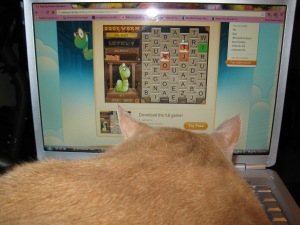
Last week I re-posted about the difficulty I experienced trying to compose a blog post when my keyboard malfunctioned: I pressed a key, no letter appeared; I pressed another, no letter appeared. And so 0n. Communication broke down. But on a very minor scale. After an hour of teeth-grinding, I saw the humor. No harm done.
Resurrecting that post reminded me of a novel I read years ago: Ella Minnow PeA: a progressively lipogrammatic epistolary, by Mark Dunn. An epistolary novel, written as a series of letters and notes. In the society Dunn envisions, when letters disappear, the events that ensue are funny. And not.
The book is set on the fictional island of Nollop, off the coast of South Carolina, and named for Nevin Nollop, author of the sentence, The quick brown fox jumped over the lazy dog. Islanders have honored Nollop with a cenotaph bearing his famous sentence. Leaders of Nollop, which declared its independence from the United States in 1870, have “sought to uplift its black and white citizens through almost monastic devotion to liberal arts education and scholarship, effectively elevating language to a national art form, while relegating modern technology to the status of avoidable nuisance.” Life is good.
Trouble begins when the tile displaying the letter Z falls from the cenotaph and shatters. Residents wonder why. Nineteen-year-old Ella Minnow Pea thinks it’s only logical–after a hundred years, the glue gave way. She recounts the events that ensue in a letter to her Aunt Tissie. The Council, suspicious of everything since a “predatory armada” of land speculators from the United Stated tried to buy real estate and turn the island paradise into a tourist trap, rejects offers to repair and reattach the tile; instead, they meet long and often, seeking to “grasp sign and signal” from the loss. Their decision:
the fall of the tile bearing the letter “Z” constitutes the terrestrial manifestation of empyrean, Nollopian desire, that desire most surely being that the letter “Z” should be utterly excised–fully extirpated– absolutely heave-ho’ed from our communal vocabulary.
Nollop has spoken from beyond the grave. Z is forbidden.
Penalties for speaking or writing any word containing the letter, or for possessing written correspondence containing it, range from a public oral reprimand to death.
Nollop’s sentence now reads,
The quick brown fox jumps over the la*y dog.
Letters fly from niece to aunt to cousin and back, discussing preparations for the Day the law goes into effect. Children under the age of seven will receive special dispensation to use the letter. But Uncle Zachary will have to be called Isaac; Zeke has applied to change his name to “Prince Valiant-the-Comely.” It could be worse. Maybe.
But islanders will no longer speak of “the topaz sea which laps our breeze-kissed sh0res” or of “azure-tinted horizons.” Nor will they order frozen pizza or booze, or waltz, or see Tarzan movies, or wheeze and sneeze, or recognize hazardous organizations of zealots . . .
Minutes before the midnight deadline, the clear-sighted Ella writes, “Immobilized we iz. Minimalized. Paralyzed.” And, “CRAZY.”
That’s just the beginning. Soon a second letter falls. Then a third.
Day by day, the alphabet shrinks, taking the vocabulary with it. Oddly enough, getting to the point now requires more words, and characters struggle to find synonyms. Under normal circumstanced, they would consult the thesaurus. But when Z was banned, so were all books.
Conditions deteriorate. Penalties are assessed; punishment is swift. The Council, certain it knows the will of Nollop, tolerates no opposition.
Before long, islanders wake up to the fact the Council has gone from banning one letter of the alphabet to banning the right to free expression.
After all, what can be said using only three consonants and one vowel? The islanders have no language. How can people forbidden to use language assert their rights? How can a government forbidden to use language deliberate or explain its actions? But since the government’s actions have caused the island go descend into chaos, perhaps it prefers to do neither.
It does, h0wever, offer dissidents one hope: prove that Nollop is not omniscient and all twenty-six letters of the alphabet will be restored. There’s only one method of proof, and it’s an impossible task, but Ella Minnow Pea accepts the challenge.
The book starts as a comedy, a farce, a romp through the ridiculous, wordplay at its best. But beneath the surface, it’s dead serious. Wikipedia highlights three themes: totalitarianism, freedom of speech, and good citizenship vs. freedom. I would add freedom of th0ught. Without words, how can you think?
Publisher’s Weekly calls Ella Minnow Pea “a novel bursting with creativity, neological mischief and clever manipulation of the English language.”
School Library Journal says it’s “perfect for teens fond of wicked wit, wordplay, and stories that use the absurd to get at the serious.”
I say, I have no more words, except these: Ella Minnow Pea is a funny book. A timely book. An important book. Read it.
*
Ella Minnow Pea is sometimes subtitled A Novel without Letters.
*
Kathy Waller (aka M.K. Waller) writes crime/suspense fiction, literary fiction, humor, and whatever else comes to mind. Her stories appear in anthologies and online. She’s co-author of the novella STABBED, written with Manning Wolfe. Currently, she’s working on a who-dun-it set in small-town Texas. A native of such a town (minus murders, of course), she lives in Austin. She no longer has two cats but is happy to still have one husband.
It’s been quite a while since I posted,* and I should wait until my turn rolls around again. But today a fellow Wretch shared something that had happened to her, and that reminded me of something that happened to me, and this is an Open week on ISW, so I decided to share what my friend’s remark reminded me of. Right now. Before I forget.
This is a repost of a repost of a post I wrote for Telling the Truth, Mainly in 2010, using my first laptop. A monster Dell, it weighed at least fifty pounds, or seemed to at the time, but I loved it and lugged it everywhere. My introduction to coffee-shop writing, it was a sort of movable feast. But—there was one little problem. Two or three times. Read on.
*
INTRO, PART 2
While I was writing a post one evening, my laptop keys stopped working–one at a time, in no particular order. No matter how hard or in which direction I tapped, they didn’t depress, and nothing appeared on the screen. I considered giving up, then decided to keep a-goin’. The next day, I called technical service, was told I could replace the keyboard myself, visited Radio Shack for tools, used them, nearly stripped a screw, called tech service, received a visit from a tech, and got a quick fix.
An easily replaceable keyboard isn’t usually much to worry about, but in my keyboard’s case, there were extenuating circumstances. I was afraid something beneath the keyboard might be causing the malfunction, and that the tech might think so too. He might know how it got there and give me a look of reproof, possibly a mild reprimand. He might even sneer.
William Davis & Bookworm
I would have to stand there, blushing, and take it. My innate honesty would prevent me from saying my husband did it.
To learn why I would have blushed, you’ll have to read to the end.
Hint #1 : A single e might mean tech. But it might not. An a might mean a, or not.
Hint #2: The thing I was afraid was under the keyboard–it wasn’t cat hair. Cat hair wouldn’t have made me blush.
Hint #3: Don’t sweat the small stuff. Whatever you don’t get is small stuff. You’ll get the drift.
Hint #4: If you’re tempted to stop, please, at least skim to the end. I’ve added a translation of the last few lines. Last lines are usually important, and I’d like these to be understood. In addition, I managed to throw in a couple of words from Hamlet.
Well, finally, here’s the post.
*****
THE POST
Wa do you do wen your keyboard malfunions?
Wen my spae bar sopped working, I aed online wi Dell e suppor. e e old me I would reeie a new keyboard in e mail. I was supposed o insall i.
“Me?” I said. “Insall a keyboard?”
e e said i would be a snap. If I needed elp, e would walk me roug i.
I go e keyboard and looked up e insruions, wi said I ad o unsrew e bak. I jus knew I would be eleroued.
Bu I boug a se of srewdriers a RadioSak and flipped e lapop oer, remoed e baery, and aaked e srews.
e srews wouldn’ budge. I exanged a srewdrier for anoer srewdrier. I used all six. None of em worked.
I wen online again o a wi Dell. e e lisened, en old me o ry again.
I oug abou e definiion aribued o Einsein: Insaniy is doing e same ing oer and oer and expeing a differen resul.
“I wouldn’ urn,” I old e e.
He said e would send a e ou o e ouse o insall e keyboard for me. (I’m no dummy. Wen I boug e lapop, I boug a e o go wi i.)
Anyway, e nex day a e ame. He go ou is se of 3500 srewdriers, remoed e srews, ook off e old keyboard, and insalled e new one. He said I didn’ ave e rig size srewdrier. en e asked wa else I needed.
“I know you don’ ae an order for is, bu ould you wa me insall is exra memory a Dell e said I’m ompenen o insall myself?” He said e’d o i for me. I oug a was ery swee.
Anyway, i’s appened again, exep is ime i’s more an e spaebar. I’s e , , , and keys.
I’e used anned air. So far all i’s done is make ings worse. Wen I began, only e key was ou.
How an I wrie wiou a keyboard?
So tomorrow I’ll chat with my Dell tech and—
Well, mercy me. I took a half-hour break and now all the keys are working again. I wonder what that was all about.
Nevertheless, I shall report the anomaly. Call me an alarmist, but I don’t want this to happen a third time. I might be preparing a manuscript for submission. I’m being proactive.
But still—I’m torn. If I do need a another new keyboard, I want a tech to make a house call. I don’t have the proper screwdriver, I don’t know what size screwdriver to buy, and I don’t want to tamper with something that is still under warranty.
On the other hand, I have to consider the worst-case scenario: The tech takes out his screwdriver, loosens the screws, turns the laptop over, removes the keyboard, and sees lurking there beneath the metal and plastic plate the reason for my current technical distress: crumbs.
And—sneer—”Been eating Oreos while you type, huh?”
e same, e earae, e disgrae a being found guily of su a soleism. e prospe is oo illing o spell ou.**
Bu for the sake of ar, I sall submi myself o e proud man’s onumely. omorrow I sall a wi Dell.***
[TRANSLATION OF ** and ***, ABOVE}
The shame, the heartache, the disgrace at being found guilty of such a solecism. The prospect is too chilling to spell out.
But for the sake of art, I shall submit myself to the proud man’s contumely. Tomorrow I shall chat with Dell.
***
I intended to wrap things up with a brief book review, but enough is enough. I’ll save the review for next time. Anyway, the book is too good to be an add-on. It deserves to have a space all to itself.
Kathy Waller (aka M.K. Waller) writes crime/suspense fiction, literary fiction, humor, and whatever else comes to mind. Her stories appear in anthologies and online. She’s co-author of the novella STABBED, written with Manning Wolfe. Currently, she’s working on a who-dun-it set in small-town Texas. A native of such a town (minus murders, of course), she lives in Austin. She no longer has two cats but is happy to still have one husband.
*Kathy wishes she could say she’s been too busy doing Good Works to post, but she hasn’t, and she doesn’t believe in telling fibs, and nobody who knows her would believe the Good Works story anyway. She’ll say only that she’s been on hiatus.
Before we had powerful computers in our pockets or on our laps, we had reference books. . . shelves and shelves of them.
One of my favorite possessions is a vintage Webster’s dictionary, published 1956 – when I was 10 years old. All 11-plus pounds of the five-inch-thick book teeter on a top shelf in my office. I can no longer safely lift it and the pages are laid out in three columns of typeface so tiny that my aging eyes strain to make out the words.
My book is a holdover from the days when library dictionaries were housed and opened on a specialized wooden lectern. I wonder, do libraries still have these throwbacks to that bygone day or have the enormous books all made their way to the shredder?
I never look at mine that I’m not reminded of the 1950s movie, Born Yesterday, starring Judy Holliday. She won an Oscar for her portrayal of the brassy girlfriend of an uncouth tycoon. Her character tries to overcome her limited education and rudimentary vocabulary by reading, among other texts, Alexis de Tocqueville’s Democracy in America. In one of the more humorous scenes, she struggles to make meaning of the archaic text and is advised to simply check the dictionary if she encounters any words she doesn’t understand. The increasingly frustrated Holliday would no more than read a sentence before she is up again, consulting a dictionary. Word by word. Trip by trip. Written today, the scene would surely lose its charm since she would likely be reading Tocqueville on a Kindle where all you must do is press and hold a finger on a word for the meaning to flash before you.
Like Holliday with a Kindle, writers don’t have the need for shelves full of reference books since language prompts are everywhere from the demons in autocorrect to the drop-down menus in word processing programs that produce synonyms.
The 19th Century French author Jules Renard is credited with saying, “What a vast amount of paper would be saved if there were a law forcing writers to use only the right word.
Yet, finding the right word isn’t always so easy even with all our modern assets. Luckily there are still some reference sources to help. Here are a few:
Evan Esar’s “20,000 Quips & Quotes: A Treasury of Witty Remarks, Comic Proverbs, Wisecracks and Epigrams.” If she’d thumbed through this one, Holliday would have learned that Tocqueville said, “The last thing a political party gives up is its vocabulary.”
“The Allyn & Bacon Handbook” by Leonard J. Rosen and Laurence Behrens. You must love any book that is willing to devote 22 pages to the uses and misuses of the comma alone.
Theodore M. Bernstein’s “Dos, Don’ts & Maybes of English Usage.” For instance, he explains why Mark Antony didn’t say “Friends, Romans, countrymen, loan me your ears.”
“Describer’s Dictionary: A Treasury of Terms & Literary Quotations,” by David Grambs and Ellen S. Levine. It indexes illustrative passages of more than 600 authors from travel writer Paul Theroux to contemporary British novelist Zadie Smith.
Eli Burnstein’s “Dictionary of Fine Distinction Book,” offering a humorous look at often misused words and phrases. For instance, couch vs. sofa.
Valerie Howard’s “1,000 Helpful Adjectives for Fiction Writers,” promises to spice up characteristics, qualities or attributes of a noun when a writer is having trouble capturing just the right word.”
Bill Bryson’s “Dictionary of Troublesome Words: A Writer’s Guide to Getting it Right” sets out to decipher the idiosyncrasies of the English language. Things such as 126 meanings of “set” when used as a verb and another 58 when used as a noun.
Brian Shawver’s “The Language of Fiction: A Writer’s Stylebook.” Need to be reminded when to use a comma or semicolon? Shawver’s there to help.
Kathy Steinemann’s “The Writer’s Lexicon: Descriptions, Overused Words, and Taboos.” Among other things, she offers writers cures for overused modifiers (I’m talking about you “very”).
John B. Bremner’s “The Columbia Dictionary for Writers: Words on Words.” Here you can learn the history of H. L. Mencken’s inspiration for coining the term “ecdysiast” to replace “striptease.”
Christine Lindberg’s “The Oxford American Writer’s Thesaurus.” Writing about bread? How about a baker’s dozen choices: dal, pita, rye, naan, tortilla, focaccia, ciabatta, challah, corn, sourdough, pumpernickel, baguette, etc.
“Associated Press Stylebook and Briefing on Media Law” has been found on the desk of every journalist for decades since it dictates uniform rules for grammar, punctuation, style for capitalization and numbers, preferred spelling, abbreviations, acronyms, and such.
“Words, words, words,” is the sarcastic response Hamlet gave when Polonius asked him what he was reading. Fortunately, authors still have no shortage of excellent reference books to help them find the right ones.
***
A former political reporter in Austin, Dixie also taught writing at Syracuse University. When she teamed up with Sue Cleveland to write fiction, they sold a screenplay to a Hollywood producer. Although the movie was never made, the seed money financed ThirtyNineStars, their publishing company. Through it they published two award-winning thrillers (Shrouded and Digging up the Dead) under the pen name, Meredith Lee. Dixie’s first solo mystery was Bloodlines & Fencelines, set in a tiny Texas town near Austin. Kirkus reviews described the book as, “A twisty whodunit that’s crafted with care and saturated with down-home Southern charm.” She is working on second mystery in the series. www.dlsevatt.com
People don’t stand or sit like stone statues, unless there’s a reason. They move, breathe, and respond to situations with emotions, internally and externally, and so they should in stories. Thus, the author must find words to bring the reader into the character’s heart and mind. Writers spend hours thinking about what their characters are feeling. How do we show the reader those emotions? Eyes are one of the most popular tools to convey feelings.
Yes, those spherical bodies of different shapes, colors, and densities are called the windows of the soul. Thousands of pages have been dedicated to the power of the eyes. There are hundreds, of eye expressions, including wild, frightened, gooey, flinty, evil and the list goes on. Each one of those words or phrases evokes a sense of the person’s feelings. For a writer, those eyes may be a windows of the story. But wait— Are they enough? How else may we show a character’s emotions?
Body language is one. He slouched, lowering his eyes. That may indicate disappointment to the reader. She flung her long blond hair back over her shoulder and lifted her chin. Conceit? Defiance? It could be either, depending on the scene. However, there is another often overlooked part of the body that exhibits emotions: hand gestures.
Hand gestures may emphasize words, or be used in place of words. Communication experts have recently added hand gestures to the lexicon of terms revealing emotions and thoughts.
An NIH, National Library of Medicine, 2014 article on gestures’ roles in speaking, learning, and creating language concludes, “gestures provide both researchers and learners with an ever-present tool for understanding how we talk and think,” and hand gestures are used in many cultures and societies.
In Around the World in 42 Gestures, we travel with examples of hand motions and their meanings and learn reasons to familiarize ourselves with them when visiting foreign lands. While polyglots speak many languages, for the majority, some prep time learning a few regional hand gestures would be easier and more effective than trying to master language skills. With hand gestures, one can say a lot with one move instead of struggling through vocabulary, grammar, and pronunciation combinations, and it would be wise to understand if a positive Western gesture isn’t welcome in a foreign land. For example, the gesture we use—crossed fingers to wish good luck, in Vietnam is an anatomically-themed insult.
Tapping your forehead with bunched fingers in Peru means, “I don’t get it. I’m not smart enough, and in France, touching your index finger below the eye indicates, “I don’t believe you.” Moving on to Spain, passing your forefinger and middle finger (V formation) down your face from your eyes indicates, “I’m broke.” Moving east to Russia, pulling your left hand behind your head and scratching your right ear, says, “This is getting too complicated.” Indeed, that is the right gesture for such a sentiment.
Coming back west, we end our short tour in Italy, a country one cannot visit, in reality or in fiction, without understanding the loaded meanings of at least some of the gestures so common in Italian culture.
Italians are universally known to incorporate hand movements with words and often in place of them. The Italian Language Center identifies roughly 250 hand gestures that are part of Italian conversations. Why so many?
“Theories suggest that the iconic hand gestures result from a long history of Italy being invaded by many nations that imposed their languages, cultures, and mannerisms. From the Ancient Greek colonization along the Mediterranean coast to subsequent invasions by the Carolingians, Normans, Visigoths, Arabs, and Germans, these hand gestures developed as a means of communication among people with no common language – and have stuck around ever since. The hand gestures may have sprung up to ease communication.”
Although many of these motions vary by region, among the most common and generally understood by all are bunching all five fingers on one hand and bringing them to the lips in a symbolic kiss, which expresses appreciation for any masterpiece, even in cooking.
There is one Italian gesture, however, one should use sparingly, if at all. Holding four fingers together and swiping them outward from under the chin can mean, “I don’t give a damn,” but it also has a ruder meaning. As a visitor to Italy, I think it’s best not to test that one.
In book four of the Housekeeper Mystery Series, Murder in the Cat’s Eye, Father Melvyn and Mrs. B. take a group of eccentric parishioners to Rome to learn about the lives of the earliest Christians. In this adventure, the reader will encounter the quirks of the travel group that could land them in the hoosegow, a series of crimes that engulf the unsuspecting travelers from Austin, Texas, an Italian detective, and several characters who are not what they seem. It will serve the reader well to understand the hand motions that are part of Italian communications. Perhaps this book will require a glossary of gestures.







 Last week I re-
 Resurrecting that post reminded me of a novel I read years ago:
  Trouble begins when the tile displaying the letter Z falls from the cenotaph and shatters. Residents wonder why. Nineteen-year-old Ella Minnow Pea thinks it’s only logical–after a hundred years, the glue gave way. She recounts the events that ensue in a letter to her Aunt Tissie. The Council, suspicious of everything since a “predatory armada” of land speculators from the United Stated tried to buy real estate and turn the island paradise into a tourist trap, rejects offers to repair and reattach the tile; instead, they meet long and often, seeking to “grasp sign and signal” from the loss. Their decision:
 But islanders will no longer speak of “the topaz sea which laps our breeze-kissed sh0res” or of “azure-tinted horizons.” Nor will they order frozen pizza or booze, or waltz, or see Tarzan movies, or wheeze and sneeze, or recognize hazardous organizations of zealots . . .

 Bu I boug a se of srewdriers a RadioSak and flipped e lapop oer, remoed e baery, and aaked e srews.
 One of my favorite possessions is a vintage Webster’s dictionary, published 1956 – when I was 10 years old. All 11-plus pounds of the five-inch-thick book teeter on a top shelf in my office. I can no longer safely lift it and the pages are laid out in three columns of typeface so tiny that my aging eyes strain to make out the words.
 brassy girlfriend of an uncouth tycoon. Her character tries to overcome her limited education and rudimentary vocabulary by reading, among other texts, Alexis de Tocqueville’s Democracy in America. In one of the more humorous scenes, she struggles to make meaning of the archaic text and is advised to simply check the dictionary if she encounters any words she doesn’t understand. The increasingly frustrated Holliday would no more than read a sentence before she is up again, consulting a dictionary. Word by word. Trip by trip. Written today, the scene would surely lose its charm since she would likely be reading Tocqueville on a Kindle where all you must do is press and hold a finger on a word for the meaning to flash before you.
 Like Holliday with a Kindle, writers don’t have the need for shelves full of reference books since language prompts are everywhere from the demons in autocorrect to the drop-down menus in word processing programs that produce synonyms.
 Ink-Stained Wretches