SERENDIPITOUS SURPRISES

by Helen Currie Foster

August 19, 2024

I wasn’t going to mention the dreadful heat. But facing August in Texas requires early rising. And early this morning came two in-spite-of-the-heat surprises. First, moonset of the August Supermoon: 

Second, a tiny frog, less than an inch long, sitting quietly in the shade. Could it be a Texas cricket frog? Maybe some frog-maven will know. Can you spot it here, on the big rock?

Another treasure: an email from a reader who’d read Ghost Cave, first book in my Alice MacDonald Greer Mystery series, and wanted the recipe for the coffee cake served by Alice’s redoubtable elderly friend Ilka:

They settled at the tea table. Ilka poured. Bone china, thin and old, the glaze crazed. Like Ilka’s face and hands, thought Alice. The cake stand held something Alice had never seen—a pale smooth yeasty-smelling cake with thin cinnamon topping…

“Oh, goodness, Ilka,” said Alice. “What is that?” The yeast dough, ivory and fragrant, left a mysterious fragrance in the air.

“Cardamom,” said Ilka.

Yikes! I had to tell the inquiring reader I had no recipe! Only—a memory! As kids we were in awe of our neighbor Mrs. Slinn, up the street. She wore her hair pulled back in a bun and longish dresses and, I think, always an apron. When we scruffy little children approached her door she always offered cookies. (We still roll out her classic “teacake” sugar cookie dough to make Santas, snowmen, reindeer.)

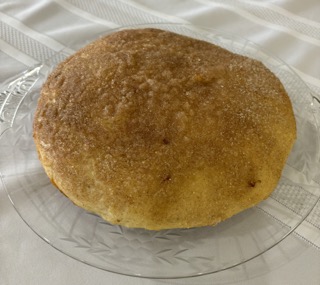
But occasionally Mrs. Slinn swept down the street to our kitchen bringing magic: a round yeast coffee cake, no taller than 3 inches in the middle, ivory-gold with a delicate sprinkle of cinnamon and sugar on top. It smelled amazing and when cut into small wedges was absolutely delicious…
To this memory, in Ghost Cave, I’d added cardamom—not a spice we knew when I was little. But where to find a recipe for the inquiring reader?

THE READER HERSELF! She wrote back that she’d located cookbooks from Mason County, Texas (dated 1976), and Fredericksburg (12th edition–Fredericksburg cooks published their first cookbook in 1916!). Each included a recipe for “yeast coffee cake.” (The Fredericksburg recipes include the original names—like Apfelkuchen, Schnecken, Kolatschen.) Which is further proof that mystery readers themselves are bright, curious sleuths. And why hearing from readers is wonderful.

Below you’ll find a slightly modified recipe from the excerpts she sent, but with a little cardamom added.

At a recent book talk I called the relationship between mystery reader and mystery writer a collaboration. Indeed, a primary rule of the 1930 Detection Club in London was that any clue must be instantly produced for the reader. No holding back explanations or back story until the end of the book! Of course that rule was sometimes violated (yes, Madam Christie, we’re talking about you). In contrast, Christie’s contemporary, the New Zealander Ngaio Marsh, occasionally added some colorful backstory at the end, but she also generally had already given the reader fair notice of the clues that identify the murderer.

In her series featuring the elegant Scotland Yard sleuth Roderick Alleyn, Marsh typically begins with the setting––often provided by a variety of characters––of the site where murder will inevitably take place, either in England or New Zealand. The setting could be an artist’s colony (“Colour Scheme”), a tour boat on an English river, a village church hall, a pub, a guest house in New Zealand, an elegant country house (“Dancing Footman”), the London apartment of a practically bankrupt upper-class family (no one seems to have a job) (“Surfeit of Lampreys”). Thus when we open a Marsh mystery, first we meet the potential suspects, including one we may hope is innocent, may hope is truthful. Then comes a seriously tricky murder. (Did someone disturb the fly rod on the wall? Why?) At that point Inspector Alleyn arrives, with his sidekick Fox and the crime scene specialists. For the competitive mystery reader—collaborating with the author to detect the murderer–each detail matters and is promptly disclosed. But who lied? Who was mistaken?

Rest assured Marsh knew her subject matter and her settings: she was an artist, an actor and a theatre director as well as a writer. She lived and worked in England as well as New Zealand. She was appointed Dame Commander of the British Empire in 1966. The Mystery Writers of America bestowed the Grand Master Award for her lifetime achievement as a mystery novelist. https://en.wikipedia.org/wiki/Ngaio_Marsh  I suspect her character Agatha Troy (an artist who finally marries Alleyn) may be in part a portrait of Marsh.

And Marsh received a birthday Google Doodle on April 23, 2015! https://doodles.google/doodle/ngaio-marshs-122nd-birthday/

Marsh’s first book came out in 1934, featuring Alleyn as the upper-class “grandee” who resigned from the foreign service to join Scotland Yard. By then a different sort of sleuth was emerging in the U.S. In 1930 Dashiell Hammett published The Maltese Falcon and we met Sam Spade. In 1933 Raymond Chandler, like Hammett, was already publishing in The Black Mask magazine, and in 1939 he published The Big Sleep, presenting Philip Marlowe. Decades later the mystery genre continues to grow and grow:  Noir! Culinary mysteries! Cozies! Mysteries narrated by dogs! (Spencer Quinn’s Chet and Bernie series.) Cowboy mysteries! Fantasy/sci-fi/mystery! Sleuths in Laos, China, Australia, Scandinavia, Russia, Alaska, Louisiana, national parks, Native American reservations. Edinburgh! The Shetlands! Botswana! Canada! Italy! France! Israel! Scandinavia! Legal thrillers! Spy thrillers! What a wealth of mysteries for us to enjoy.

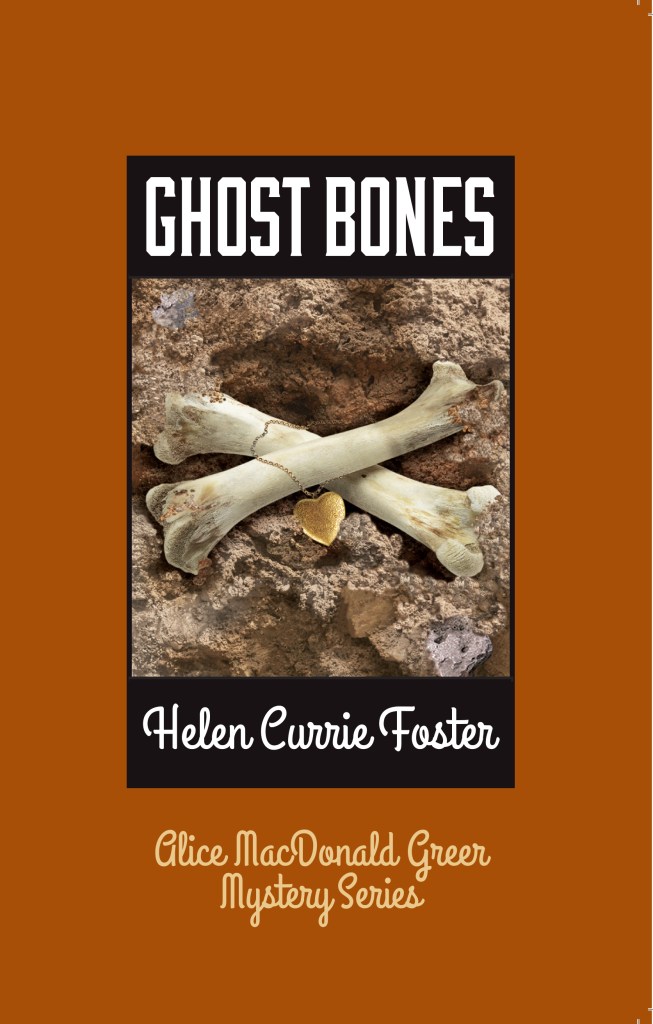
What about the Texas Hill Country? In her latest adventure, Ghost Bones, lawyer Alice MacDonald Greer grapples with the murder of a deeply respected judge. His death was apparently triggered by his efforts to solve the murders of six people on his property almost two centuries ago. Alice needs all the help she can get from her irrepressible assistant, Silla, and from Ben Kinsear, as she tangles with mystery, legal drama, and matters of the heart.

And a request: if you can identify the tiny froglet above, please share the name!

Helen Currie Foster lives and writes the Alice MacDonald Greer Mystery series north of Dripping Springs, Texas, loosely supervised by three burros. She’s drawn to the compelling landscape and quirky characters of the Texas Hill Country. She’s also deeply curious about our human history and prehistory, and how, uninvited, the past keeps crashing the party. Follow her at www.helen.currie.foster.com.
Nearly Mrs. Slinn’s Coffee Cake, with thanks to a wonderful reader and the cooks of Mason and Fredericksburg!

3/8 c. milk; 2 Tbls. sugar; 1/2 tsp. salt; 1/4 c. butter; 1 beaten egg; 2 tsp. dry yeast; 1 1/2 Tbls. warm water; 1 5sp ground cardamom; 1 3/4 c. flour, plus additional melted butter (about 2 Tbls.) and sugar-cinnamon mixture for topping (about 1 tsp cinnamon to 1/3 c sugar)

Scald milk and pour over the butter, salt and sugar. Stir and let stand until lukewarm. Dissolve yeast in warm water for 5 minutes. Stir egg and yeast mixture into milk mixture.  Stir in 1 tsp cardamom and 1 cup of flour. Beat well. Continue adding remaining flour.  Put dough on lightly floured board and knead until smooth (add a bit more flour if too sticky). Place in greased bowl, cover, and let double in size. Then punch down.

Butter bottom and sides of round 8” pan. Put parchment paper in the bottom.  Pat in dough. Brush with melted butter and sprinkle on the sugar/cinnamon mixture. Let rise again until double in size. Bake at 350 for about 20 minutes or until just turning golden.   Let cool. Serve it forth!
Pick Your Poison–An Almost Perfect Crime

“All things are poison and nothing is without poison; only the dose makes a thing not a poison.” Paracelsus, Swiss physician (1493 –1541) (emphasis added)

“Poison has a certain appeal . . . It has not the crudeness of the revolver bullet or the blunt weapon. I have no special knowledge of the subject, if that is what you mean.” (Agatha Christie, They Do It With Mirrors, p.178)

The history of poison is an ancient one, and before the birth of forensic medicine in the 1920s, poison was virtually untraceable; it was almost the perfect weapon

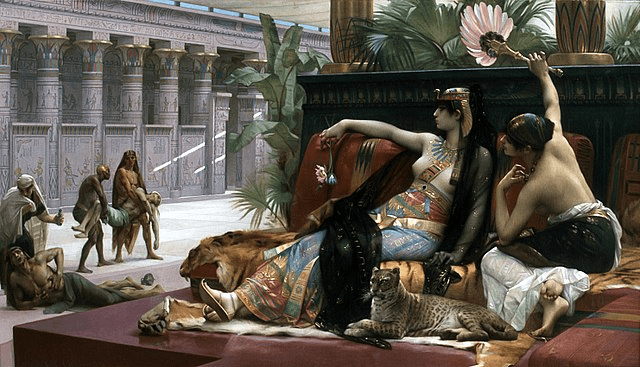
 Socrates drank poisoned hemlock and died in 399 BCE (Eyewitness).  Cleopatra orchestrated poisonous experiments on her slaves and prisoners of war.  Concoctions made from “Henbane, Belladonna Strychnos nux-vomica” were used to isolate the most painful and disfiguring combinations (Quave).  Cleopatra ruthlessly searched for the quickest and least painful poison for her future self, should she need it. In the end, in 30 BC, she chose the bite of an asp to end her life (Quave).  

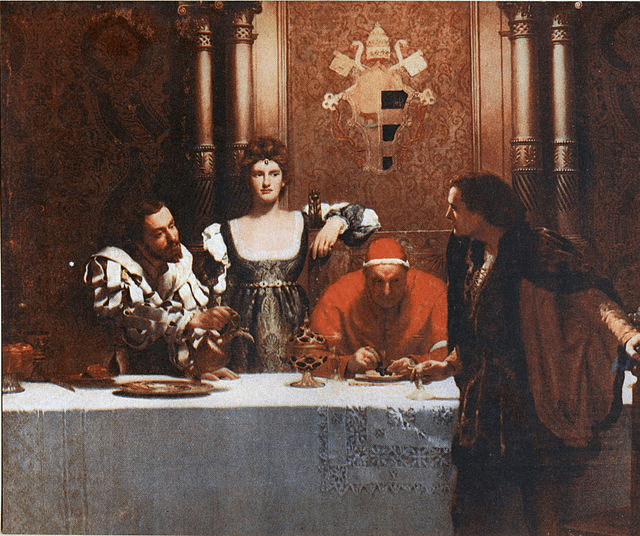
The Borgias of the Italian Renaissance, resorted to a wide variety of deadly formulas to eradicate obstinate Church officials and political rivals.  The Borgia’s parting gifts included combinations of “arsenic, strychnine, cantharidin, and aconite incorporated in drinks, clothes, gloves, book pages, flowers, and drugs” (Sage).  The deadliest poison in the Borgia arsenal, Cantarella, made with arsenic as a base was “so dangerous that the actual formula was destroyed after their deaths.” (Blum). 

“. . . Served in a goblet of wine at dinner, it had the reputation to function with time-clock precision. According to the desire of the murder, cantarella could kill in a day, a month, or a year. It was also believed that cantarella was so powerful that no antidote existed. . .” (Sage).

During Victorian times, married women frequently resorted to poisoning as the solution to a bad marriage, or to cash in on a spouse’s or relative’s life insurance policies.  Arsenic was so popular it was given a “nickname: the inheritance powder.” (Blum). 

In England, between 1857 and 1872, Mary Ann Cotton, a notorious female British serial killer and arsenic devotee, killed “eight of her own children, seven stepchildren, her mother, three husbands, a lover – and an inconvenient friend” before she was caught and hanged (Blum; Johnson; Murderpedia).  

Sometime between the 1880’s and 1908, in the United States Belle Gunness, known as “Lady Bluebeard,” is believed to have killed between “13 to 42” people,” including her own children.  (Murderpedia).  Using strychnine and/or bludgeoning to kill her victims, sometimes using both methods, Belle then butchered her victims and fed the body parts to her hogs. (Schecter; Murderpedia). 

Harold Schecter, who arduously documented Gunness’ murders in Hell’s Princess: The Mystery of Belle Gunness, Butcher of Men, wrote that despite years of diligent attempts to find or identify Belle, dead or alive, she was never found.  The Gunness case remains unsolved. 

Murderers are not the only ones who are on the lookout for the perfect murder weapon.  Mystery writers, including the most famous of mystery writers, Agatha Christie, frequently used poison as a weapon in her novels.  An extensive study of Christie’s use of poison was analyzed by Anne Harrison, detailed in her article, “Poisons Used in Agatha Christie’s Books, Foul Toxins From the Queen of Crime” (2017).  Harrison’s research found Christie had used poison more than any other mystery writer of her era. 

“. . .More than thirty victims fall foul to a variety of toxins (while others survive attempted poisonings). Christie’s knowledge was extensive, a result of her work as both a nurse and a pharmacy dispenser during both World Wars.” (Harrison).  

Agatha Christie plaque -: Torre Abbey.jpg : Violetrigaderivative work: F l a n k e r, CC BY-SA 3.0 /, via Wikimedia Commons

Harrison’s research proved Christie had more than a simple working knowledge of poison and drug interactions. Harrison’s findings further revealed how proficient Christie was ensuring not only the correct toxin’s application but how she skillfully determined appropriate outcomes for each. Harrison noted that not all of Christie’s literary victims died; some recovered. 

Research confirmed the drugs/poisons Christie actually chose for her stories were actual drugs available and accessible at the time she wrote her stories.  Christie did not fabricate the names or kinds of drugs, or their effects, or the application, but used her real-life knowledge to enhance her storyline, which as we all know, it did.

Christie’s novels incorporate a plethora of toxins: “strychnine, cyanide, arsenic, thallium, taxine, coniine, bacillus anthracis, plant arsenic, Belladonna (also known as Deadly Nightshade, Devil’s Berries or Death Cherries), physostigmine, Morphine, Vernol (sleeping tablets), and physostigmine” (Harrison). 

In the real world, poison had always been hugely problematic for law enforcement –if used for murder, its detection was virtually impossible.  The cause of death was widely determined by a medical examiner who was politically appointed.  Frequently appointees had no medical training, scientific knowledge, or access to detection tests.  People died of unknown causes, unsolved murders rose, and murderers walked free. 

The rate of unsolved murders rose as industrialization encroached on cities and towns.  According to Deborah Blum, in The Poisoner’s Handbook – Murder and the Birth of Forensic Medicine in Jazz Age New York, “As industrialization encroached throughout the U.S., new chemicals and poisons appeared unregulated.  Frequently, these poisons were undetectable.” (Blum)

Blum wrote that it was not until the first pioneers of forensic medicine appeared and true scientific detection tools were created and tested, that medical examiners and their staff were finally able to detect certain poisons as a definitive cause of death.  

Some toxins widely used at that time: “Morphine went into teething medicines for infants; opium into routinely prescribed sedatives; arsenic was an ingredient in everything from pesticides to cosmetics. Mercury, cyanide, strychnine, chloral hydrate, chloroform, sulfates of iron, sugar of lead, carbolic acid, and more, the products of the new chemistry stocked the shelves of doctors’ offices, businesses, homes, pharmacies, and grocery stores. . . “(Blum).

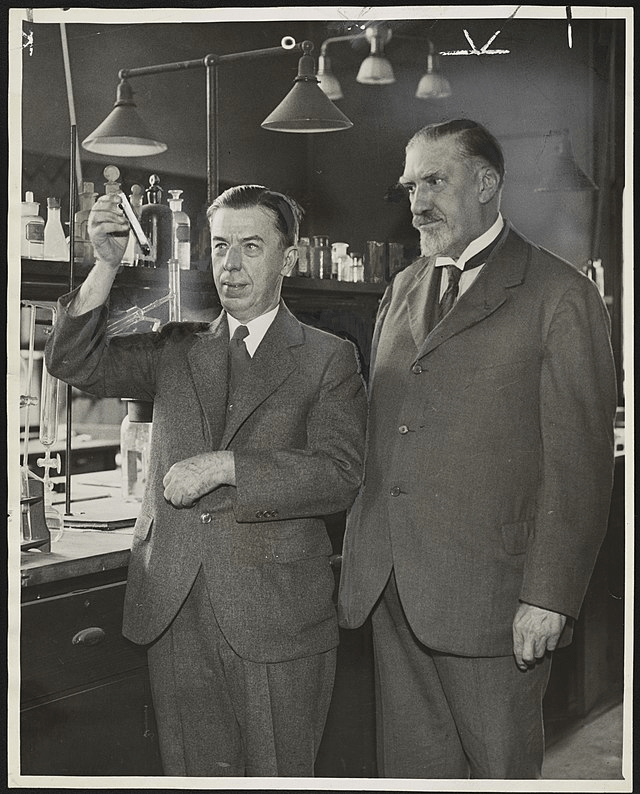
In New York, public outcry demanded a qualified non-political appointee medical coroner, a knowledgeable physician.  After years of political stonewalling, a decision was finally reached, and in January of 1918, “Dr. Charles Norris …became the new Chief Medical Examiner of New York” (Blum). 

No long after his appointment, Norris hired the chemist, Alexander Gettler.  It was Gettler who would later perfect tests to detect wood alcohol poisonings, cyanide gas poisoning, and he work tirelessly to find tests able to detect various poisons.  Norris and Gettler established the first forensic standards, tests, and mandatory forensic protocols, and through their efforts saved thousands of future lives.

It is not possible to encapsulate the entirety of Blum’s “The Poisoner’s Handbook – Murder and the Birth of Forensic Medicine in Jazz Age New York.”  Blum’s history of poison, its insidious effects on the public, the rise of the first forensic department in New York and the United States, along with the discoveries of both Norris and Gettler, and the incredible people who worked with them, is well worth reading.

The public owes a debt to the unfailing dedication of both Norris and Gettler, who demanded scientific rigor in the detection of toxins, but who also paved the way for regulatory reform and laid the foundation of forensic medicine. 

Norris died in 1935, and although few knew, Norris had been financially supporting the Medical Examiner’s office with his personal resources since his original appointment.  Two years after Norris’ death, three members of his staff published a “comprehensive textbook on forensic science, Legal Medicine and Toxicology. . .it was dedicated to Norris.” (Blum)

Gettler continued to work, finally retiring at seventy-five.  “On the day he left office, he estimated that he’s analyzed more than 100,000 bodies.” (Blum).  A prodigious writer, Gettler produced numerous scholarly papers on various toxins, detection methodology, and forensics.  Gettler had also trained a legion of young scientists known as the “Gettler Boys,” who went on to become medical examiners working “from Long Island to Puerto Rico.” (Blum).  Gettler died in 1968.  

The story of poison is far from complete; it continues to morph and change; new toxins are created every day.  Their detection, however, is far more likely thanks to Harris and Gettler. 

The Poisoner’s Handbook – Murder and the Birth of Forensic Medicine in Jazz Age New York, became a best seller in 2010, and a PBS NPR American Experience series feature in 2016. 

If you are looking for the perfect murder weapon, before considering poison, a bit of research is recommended. 

Other References

Lakeisha Goedluck. A Brief History of Women Putting Poison in Their Lovers’ Food.  

Chemical Safety Facts. Org.  “The Dose Makes the Poison.”

Photo Credits:

Book photo courtesy of Amazon.

###

A former paralegal, Renee Kimball has a master’s degree in criminal justice. Among her interests are reading, writing, and animal advocacy. She fosters and rescues both dogs and cats and works with various organizations to find them forever homes. 

Agatha Christie Wrote Paranormal Stories?

Do you enjoy books that make a chill dance down your spine by invoking the otherworldly or the supernatural?

As a teen, I read all of my mother’s Agatha Christie novels, which fixed Christie’s place in my mind as a writer of traditional mysteries. I somehow dismissed the short stories written by Christie that fall firmly into the paranormal category until I picked up a copy of The Last Séance: Tales of the Supernatural. This collection of Agatha Christie’s short stories was put together and republished in 2019 by William Morrow, an imprint of HarperCollins Publishers. I’ll try to review the paranormal stories presented in the collection without too many spoilers.

The Last Séance: Tales of the Supernatural contains 20 stories of crime, murder, and suspense. Some of the stories feature clearly paranormal elements: otherworldly beings, premonitions of danger or death, possession or other transference of souls, and the ability to call upon supernatural forces. Other stories in the collection involve criminals using technology, complex cons, or gaslighting techniques to create the illusion of the supernatural, or malefactors taking advantage of an atmosphere of superstition to suggest a paranormal cause for a crime they committed. These latter stories hardly count as paranormal since the supernatural element is faked by the criminal. One or two of the stories fall into both camps, with the crime being committed from a mundane motive, but with the suggestion that perhaps the criminal wouldn’t have acted except for the influence of evil in the atmosphere weighing upon them.

Ghost from pixabay

Of the stories that contain clearly supernatural components, premonition is the most common element employed by Christie. The stories The Last Séance, In a Glass Darkly, S.O.S., The Gipsy, Philomel Cottage, and The Red Signal use premonition, either via dreams or via a sixth sense that something is wrong, to build suspense. The characters recognize that they are in danger, but don’t know the source and aren’t sure if they should believe the bells of warning ringing in their brains. Some heed the warnings as best they can, but still fall into dangerous situations. Other characters dismiss the warnings until circumstances force them to pay attention. From story to story, the results of heeding or ignoring the warnings vary as the characters dance to Agatha Christie’s tune.

A couple of the stories feature ghosts or supernatural beings. The title story, The Last Séance, features a medium channeling the soul of a dead child for a grieving mother. The second story with a ghost, The Lamp, involves a family moving into a long vacant house. The house has stood unoccupied for years because the ghost of a child is haunting it. While The Lamp is a pure “ghost story,” The Call of the Wings and The Dressmakers Doll both deal with nonhuman, otherworldly beings. The Call of the Wings describes a man’s interactions with a pan-like creature and angels. The Dressmakers Doll revolves around a doll with a mind of its own.

from Pixabay

Reincarnation and the suggestion of lost supernatural knowledge from ancient civilizations appear in Christie’s stories as well. However, little can be written about these stories or the ones featuring possession or transference of souls without spoiling them. Christie’s use of these story elements can be easily traced to the author’s own travels in Egypt and interest in archaeology and to the Egyptian archaeological discoveries of the early 1900s which aroused public interest in ancient belief systems and mystical powers.

The collection The Last Séance: Tales of the Supernatural is a mixed bag of suspense stories, mystery stories with a crime that needs to be solved, and stories that feature no crime at all. Christie’s two main detectives, Miss Jane Marple and Hercule Poirot, appear in a few of the stories. Poirot takes the stage in The Adventure of the Egyptian Tomb, The Dream, and The Flock of Geryon. Miss Marple reasons her way quietly to answers in The Idol House of Astarte and The Blue Geranium. While the crime provides the mystery in some of the stories, in a few of the purely paranormal stories, the only mystery lies in the paranormal or supernatural event itself.

*****

N. M. Cedeño is a short story writer and novelist living in Texas. She is currently working on a paranormal mystery series called Bad Vibes Removal Services. The second novel in the series, entitled Degrees of Deceit, came out in August 2019.  Ms. Cedeño is active in Sisters in Crime- Heart of Texas Chapter.