I said to my critique partner this morning, The whole project is stinky it stinks it’s fatally flawed just nothing no hope.
She said, But Chapter 13 is so good so funny Molly is so funny it’s not stinky.
I said, Yes, the first part of chapter 13 and the last part of chapter 13 are funny and very very good but there’s still no middle of chapter 13 and what there is stinks and anyway the other 47,000 words stink except for a few hundred here and there.
And she said, But the middle could be revised and edited it has promise.
I said, But it won’t work because I have written myself into a hole and can’t get out so I have to trash that part and anyway the whole concept stinks.
And she said, NO you can fix it just keep going because I like Molly she’s so funny.
And that is why I go to critique group every blessed week.
*****
Writing is a solitary activity, but most of writing isn’t writing. It’s rewriting, rewriting, and rewriting. And then it’s revising and revising. And editing editing editing. And rewriting again. And . . .
Sometimes it’s whingeing and complaining and eating peanut butter out of the jar with a spoon and buying larger clothes and telling Molly she’s a heartless ***** who doesn’t deserve one paragraph of her own, much less a whole book.
And it’s feeling like a fraud when you tell people you’re a writer and deciding you’d be happier if you gave up and dedicated yourself to French cookery or tatting or riding a unicycle.
But if you’re lucky, it’s also going to critique group and then going home and writing and writing and writing and . . .
Here’s the way Austin Mystery Writers work: We email first drafts, revised drafts, or final (almost) drafts, depending on where we are in the process.
We read all the week’s submissions, then sit around a table–or on one side of a table in front of a monitor displaying partners in little Zoom squares–and talk about what each member has written.
Criticism here doesn’t mean trashing. It means that each member points out what the writer has done well and what she might have done better. Sometimes we suggest examples of better–the “experts” say that’s not proper, but it works for us–and sometimes we simply say what we think doesn’t work so well without elaborating. Sometimes we disagree; one person doesn’t like a word or sentence or paragraph, while another thinks it’s fine. Sometimes we all chime in and discuss ideas.
Then we say, “Thank you.”
Because we’ve become friends during our association, we can say what we think and appreciate what the others say.
We encourage one another.
We also laugh a lot.
Because of AMW, I’ve published short stories and co-written one novella.
Because of AMW, I’ve become a better writer.
I posted “Why I Go to Critique Group” (one time I titled it “Why I Go to Critique Group and Can’t Afford Not To”) on my personal blog on July 9, 2010, when Gale Albright and I were members of the two-person Just for the Hell of It Writers, which was soon swallowed up by Austin Mystery Writers (a consummation devoutly to be wished).
I periodically pull the piece out and repost it.
Because it’s important.
***
Has anyone noticed that the em dash (—) in my posts looks like an en dash (–)? I can’t help it. Sometimes I find an em dash on a grammar website (like now) and copy and paste into my post, but right now I’m just not in the mood. But I’d like picky readers, like myself, to know that I’m aware of the error and wish the platform would correct it,
***
Kathy Waller posts on her personal blog, Telling the Truth, Mainly, http://kathywaller1.com. She’s published the anthologies pictured above, the first three with Wildside Press, the last a novel co-written with Manning Wolfe, with Starpath. She has finally decided the ancient pre-published book is not stinky and has hopes of finishing it one day. If her critique partners agree.
Sir Arthur Conan Doyle wrote 60 mystery stories featuring the man who quickly became the favorite fictional super-detective of the late 19th and early 20th centuries, Sherlock Holmes, but in his years as a medical student, Doyle’s first efforts were short stories.
The Mystery of Sasassa Valley was an adventure of two young men and a reported ghost that scares off the natives in South Africa.
In TheAmerican’s Tale, A quarrel between an Englishman, and a ‘Yankee’ in a bar, results in Jefferson Adams, an American in England, telling a strange story set in Montana involving Joe “Alabama” Hawkins, who’d “been captured and killed by a giant Venus flytrap in the gulch.” One might view these as early prequels to the mysteries fomenting in Doyle’s mind.
While most readers have read at least one or two of Doyle’s creations, it is in the first two that we get a real sense of both Holmes and Watson, beginning with A Study in Scarlet. Written in 1887, Doyle was a practicing doctor and botanist, which provided him with in-depth knowledge of plant poisons, anatomy, and physiology.
The story begins with the narrator, Dr. John Watson, an ex-military man returning to London from the British war in Afghanistan, suffering from war wounds and in ill health. Unable to afford the hotel rates, he expresses his hope of finding rooms at a reasonable rate to a casual acquaintance known to the reader as Stanford. The latter then introduces him to Holmes, but first warns him that this gentleman, Holmes, also seeking a roommate to share expenses, is somewhat difficult.
Appropriately, the reader meets Holmes for the first time along with Watson, in a laboratory. The two men hit it off immediately and become roommates at 221B Baker Street, where they must accommodate one another’s needs, quirks, and habits.
Holmes’s peculiarities begin to disturb Watson. At first, the doctor is merely curious about some of Holmes’s idiosyncrasies. As he gets to know the crime solver, he’s appalled at Holmes’s ignorance of so many areas of education, politics, the arts, and other subjects in which gentlemen should be educated. Watson is shocked by Holmes’s rationale for why it wasn’t essential. Further, Holmes’s expertise in crimes and criminals is all-consuming, which Watson finds bizarre. Holmes’s peculiarities begin to disturb Watson. At first, the doctor is merely curious about some of Holmes’s characteristics. As he gets to know the crime solver, he’s shocked at Holmes’s ignorance in so many areas of education, politics, the arts, and other subjects in which gentlemen should be educated. Furthermore, Holmes’s expertise in crimes and criminals is all-consuming, which Watson finds bizarre.
The good doctor is frustrated by what he thinks must be trickery for Holmes’s uncanny ability to guess so accurately. It is when Holmes is asked by detectives Lestrade and Gregson to help with a mysterious case, and Watson is invited to go along, that the doctor’s opinions change.
In the Lauriston Garden Mystery, a man is found dead in an empty house. The deceased has no wounds, yet there is a message in blood scrawled on the wall. In time, Holmes dubs this case A Study in Scarlet, reflecting “the scarlet thread of murder running through the colorless skein of life…” Holmes unravels the case, and with each deduction, Watson develops a grudging admiration that evolves into genuine esteem and respect for the detective’s extraordinary powers of observation.
At the end of part one, the murder is solved, but the tale isn’t over. Doyle takes the reader to The United States for the backstory, explaining the details of the case, and why it ends in London.
In the second novel, The Sign of Four, Holmes and his sidekick, Watson, who has become Holmes’s internal voice to the reader, are drawn into a new mystery.
Miss Mary Morstan arrives at Baker Street to ask for Holmes’s help in solving the mystery of her missing father and a mysterious annual and anonymous gift of pearls. But now, she has received a letter asking to meet an unknown person that evening and is afraid to go alone. Holmes, of course, takes the case, and the adventure is on.
In The Sign of Four, the reader can discern many of Doyle’s personal experiences in the military as told through Watson’s narrative, as the detective tracks a hidden treasure and a murderer. In this story, the reader understands more of John Watson’s life and desires, and Holmes’s drug use is addressed head-on.
Doyle wrote two volumes worth of stories about Holmes and Watson, and it’s interesting to know that he often felt he was slogging through the work of continuing the character he’d created. In 1891, he threatened to kill off the now-famous Sherlock Holmes, but his mother, the woman who inspired his imagination, was furious. And, of course, Conan Doyle did no such thing. Instead, he pressed the financial success of his books, urging publishers to pay more for his Holmes stories, which they did.
In his biography, Doyle admits the influence of his mother in his early childhood, “as far as I can remember anything at all, the vivid stories she would tell me stand out so clearly that they obscure the real facts of my life.” And the facts were not happy ones.
Though well respected in the art world, Doyle’s father was an alcoholic with little impact on his son. At the age of nine, Arthur was shipped off to boarding school in England to Hodder Place, then Stonyhurst, a Jesuit prep school, where he was bullied and ridiculed by his peers and feared ruthless corporal punishment by the Jesuits. It was his ability to hide in his fantasies that got him through.
After graduating from Stonyhurst College in 1876, Doyle pursued a medical degree at the University of Edinburgh. There, he met his mentor Dr. Joseph Bell, whose very keen powers of observation inspired the Holmes character.
While struggling to make his name as a writer, he married Louisa Hawkins, with whom he had a son and a daughter. In 1893, Louisa was diagnosed with TB, and after her death, Doyle married Jean Leckie, with whom he had two more sons and another daughter.
In addition to his medical practice, which he gave up when the writing became successful, Conan Doyle took it upon himself to visit South Africa after the Boar war to investigate and defend his nation against charges of war crimes. He wrote a “pamphlet” of 60,000 words entitled The War in South Africa, Its Causes and Conduct, which the Crown found enlightening. In 1902 and 1903, Arthur Conan Doyle was knighted—twice, for his service to the Crown.
However, through his adult years, there was a continual thread of spiritualism, and he believed it was “the most important thing in the world.” Later in his life, he was diagnosed with a heart condition, but that didn’t stop him from making a spiritualism tour through the Netherlands. When he returned home, however, his chest pains were so severe that he was almost completely bedridden until he died in 1930.
Sir Arthur Conan Doyle collapsed and died in his garden, clutching his heart with one hand and holding a flower in the other. Although his life ended on that July day, his stories have survived and continue to thrill readers with adventures in the world of criminology and crime-solving. Reading his beliefs, remarkable life, and brilliant writings, it is easy to conclude that Doyle, Holmes, and Watson were three dimensions of the same man.
Although I may veer off into other areas, my reading pile usually comprises two main categories of books: mysteries and histories. Sometimes when I’m writing, those two categories collide, and I write historical mysteries. Two of my historical mystery short stories will be published in March and April 2022.
Available March 2022 from Murderous Ink Press
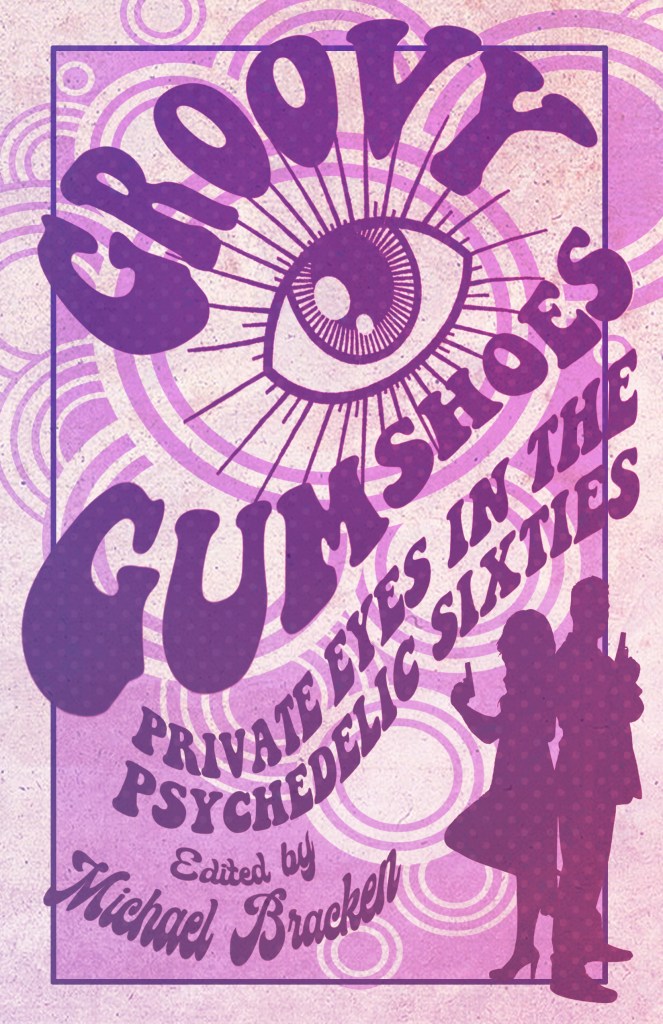
The first story, “Reaching for the Moon,” is part of an anthology edited by John Connor entitled Crimeucopia: Say What Now?from Murderous Ink Press. The second story, entitled “Nice Girls Don’t,” will be published by Down & Out Books in Groovy Gumshoes: Private Eyes in the Psychedelic Sixties edited by Michael Bracken.
I wrote about the inspiration for “Nice Girls Don’t” in my last post. Today, I’ll review what inspired “Reaching for the Moon.”
Moon landing, NASA photo, from Pixabay.
I’m a fan of the history of space exploration. From Hidden Figures to Apollo 13, I’ve always been fascinated by the massive effort behind sending the first people into space and bringing them home safely. The space program’s tragedies – from Apollo 1 to Challenger and Columbia – and triumphs – from the Mercury Program to the International Space Station – are the stuff of legends.
Anyone who has read anything about the first US astronauts knows that the test pilot / astronaut lifestyle took a toll on marriages. Marital infidelity was common among the astronaut corps who were frequently away from home for training. Consequently, the divorce rate after leaving NASA was very high. But, NASA wanted to present a wholesome, clean-cut image of their astronauts that didn’t include divorce or infidelity. Life Magazine did full spreads on each of the first astronauts that presented the men as squeaky-clean Boy Scouts with perfect home-lives. This discrepancy between the public persona and private reality of the astronauts inspired ideas about the possibility of blackmail.
Because I live in Texas, I’ve toured the Apollo mission control center at Johnson Space Center in far south Houston several times. Anyone who has visited Space Center Houston knows that a mere thirty or so miles farther south down Interstate 45 is Galveston Island on the Gulf of Mexico.
Walking on a granite jetty, Galveston Island, Cedeño family photo 2021
Galveston Island has its own remarkable history. The barrier island was used as a pirate base before it became a major port city in the 1800s. Then, the 1900 Hurricane nearly obliterated the city, forcing port activity to move inland to Houston. The island became a vacation and pleasure spot infamous for ignoring the laws against drinking and gambling during the Prohibition era. Galveston enjoyed a lawless, mafia-run heyday between 1920 and 1950. Much of the illegal activity centered on the Balinese Room, a Maceo Family owned gambling joint and restaurant that perched on a pier over the Gulf and drew top talent from Hollywood, including Frank Sinatra and Bob Hope, to provide entertainment for guests.
The space center’s proximity to Galveston made me wonder: what if a 1960s astronaut wandered south to Galveston Island to see the places once made famous by Hollywood stars and mobsters and got himself into trouble? What if he had to seek the aid of a private detective to resolve the issue? And so, with a few name changes here and there to protect the innocent or the guilty, as the case may be, my story “Reaching for the Moon” was born.
I’m thrilled to have my story published with so many other great stories in Crimeucopia: Say What Now?, the 10th anthology in the Crimeucopia series from Murderous Ink Press and editor John Connor.
****
For additional historical reading, I recommend Hidden Figures by Margot Lee Shetterly, Moon Shot by Barbree, Slayton, and Shepard, Failure Is Not an Option by Gene Kranz, Light this Candle: the Life and Times of Alan Shepard by Neal Thompson, and Isaac’s Storm by Erik Larson.
N. M. Cedeño is a short story writer and novelist living in Texas. She is active in Sisters in Crime- Heart of Texas Chapter and is a member of the Short Mystery Fiction Society. Find out more at nmcedeno.com.
“I must be taken as I have been made. The success is not mine, the failure is not mine, but the two together make me.” ~ Charles Dickens, Great Expectations
In 1812, eight years after Queen Victoria began her reign and the start of the Victoria Era, Charles John Huffman Dickens was born. England was the most powerful empire in the world–”one on which the Sun never set” (Royal Forum). It was a time of class division, social unrest, poverty, and the start of the Industrial Revolution.
Charles Dickens went on to become the most revered author in English history. His career was meteoric, his influence immense; his work remains in print today.
Yet, in spite of all that has been said, researched and written, about Charles Dickens–the author, the family man, the father—Charles Dickens, “the inner man,” remained hidden. It was the private Dickens who created an alternate secret life, a life so well hidden that it was a long time after his death that the efforts that he had gone to to bury that secret life were revealed.
When Dickens died at 58 years of age, all of England mourned his passing. It was only after his death, and many years later, after the death of his children, that a cache of personal documents were released. The discovery confimed that Dickens had been concealing a hidden life—a life he shared with one other person for thirteen years; that person, the “other woman,” was Ellen “Nelly” Ternan, an actress he met while attending a play in 1857 (Ackroyd, Tomalin).
Knowing there was another Dickens, a Dickens other than what he presented to the world, who had a dark streak, an obsession, can we still admire him? Respect his memory? Can we look past his mistakes?
Whether we are aware of it or not, Charles Dickens is never far away; his characters are in our hearts. If you hear his name, what do you think of? Do you know a “Scrooge”? Do you see Marley’s Ghost wrapped in “chains of his own making,” warning the cowering, disbelieving, obstinate Scrooge? (A Christmas Carol). Or Oliver’s quavering request, “Please, sir, I want some more” (Oliver Twist). “He hoped the people saw him in the church, because he was a cripple, and it might be pleasant to them to remember upon Christmas day who made lame beggars walk, and blind men see” (Bob Cratchit, A Christmas Carol). And Tiny Tim, “God bless us every one!” (A Christmas Carol).
Before writing fiction, Dickens held a variety of positions, but all that changed forever in 1833 with the publication of the weekly serialization of The Pickwick Papers; Dickens was an instant success; he became a household name.
Dickens was an early social reformer, using his stories as a platform for change. If you were one of London’s lower classes, you faced unrelenting poverty, degradation, constant hunger, rampant disease, and high child mortality rates. Unabashedly, he exposed these issues through his characters to arouse empathy in the upper classes towards those who struggled.
London’s readers –rich or poor—were drawn together weekly by the installments that cut through class lines; these installments became something to look forward to, talk about, and share. Dickens raised awareness –every week on every street corner, with every weekly publication.
But there was something less desirable behind Dickens’ strident, boisterous personality. In spite of his popularity, financial success, and a growing family, as well as his many talents, Dickens remained unfulfilled, emotionally adrift. Unable to find balance in his life, his bitterness grew heavier, the work he once loved, less and less appealing; familial relationships became frayed. The once exciting and successful life became nothing more than a quagmire of business and family demands.
Dickens believed that something or someone outside himself was to blame for this despair; he decided the cause was no other than his wife of twenty-two years —Catherine Hogarth Dickens. Catherine had failed him; it was time for change.
Many have offered opinions as to why the Dickens’ marriage failed, but Peter Ackroyd’s biography, Dickens – A Biography, published in 1990, is brief.
Ackroyd describes Charles’ dissatisfaction with his marriage with one word: “Lassitude. In other words, want of ardour. Want of enthusiasm and quickness. Want of all the qualities on which Dickens prided himself” (Ackroyd, 1990, p. 687).
At what point does indifference take the place of love and commitment? As for Catherine, she had borne Dickens ten children in twenty-two years of marriage; it had taken a toll. Catherine was no longer slim, no longer young; she was not energetic. To Dickens, Catherine’s love, loyalty, congeniality, and her care of the children were not enough any longer. And just like that, Ellen “Nelly” Ternan appeared and calamity and despair followed.
Dickens met Ternan in 1857 while attending a play; she was in the cast. Ternan was 18, Dickens was 45. Not long after, their affair began, and Nelly left the stage forever.
Obsessed with having Nelly in his life, Dickens began a private long-range plan to keep her close by, accessible only to him, even though they could never marry.
The first step was removing Catherine from the home, relocating her, beginning the legal separation, and ensuring future care of the children. Dickens’ initial plan was to have total custody of all ten children, but their oldest son chose to move with Catherine while the remaining nine children remained at the Dickens home under the care of Catherine’s younger sister, Georgina Hogarth. Georgina’s loyalty to Dickens, rather than to her sister, shattered relations with the Hogarth family; their relationships never recovered.
In spite of these enormous difficulties, Dickens kept his relationship with Nelly Ternan a secret. For the next thirteen years, he hid Nelly from prying eyes, by moving her in and around London, once to an outlying village. Dickens continued to provide financially for Nelly, Catherine and all the children, while continuing to maintain his regular frenetic pace of publications and appearances.
On June 9, 1870, Charles Dickens died; at his bedside were Ellen Ternan and Georgina Hogarth, his sister-in-law. Dickens’ will bequeathed to Nelly Ternan £1,000.
Despite years of sleuthing by literary experts, Nelly Ternan’s relationship with Dickens remained a mystery. It wasn’t until Claire Tomalin published The Invisible Woman: The Story of Nelly Ternan and Charles Dickens, in 1990, that many of the age-old questions were answered.Tomalin was unrelenting in her search for information related to the Dickens-Ternan love affair, and her finished biography shows just how successful her efforts were.
Tomalin successfully connected information found in old documents and ledgers that were written in Dickens’ personal shorthand. The clues and notes together proved just how far Dickens had used his formidable reputation and resources to keep prying eyes away. For his plan to be foolproof, he made sure Nelly Ternan’s real identity “disappeared,” that she become “invisible” (Tomalin). When Dickens died at fifty-eight, Nelly “the person, the actress” had been erased; she was a non-entity. Nelly had been out of the public eye for thirteen years.
Tomalin’s work is comprehensive, tracing the affair, the numerous relocations, the false names and identities, and the revelation that Nelly may have had one, or possibly two, pregnancies during the thirteen years the couple were together. The fate of the children, if they came to full term, or failed to survive, remains unknown. It is highly probable that the real facts will never be known, but Tomalin has definitely come closer to the truth more than anyone else.
Some Additional Thoughts . . .
Catherine Hogarth Dickens: Catherine, deprived of her home, children, and status, lived another twenty years after Dickens died. His actions towards her and his children were cruel and selfish. While Dickens remains a phenomenal author, his behavior towards his wife Catherine Hogarth, family and even Nelly Ternan, revealed a man with a skewed sense of self-importance, a broken sense of right and wrong, and a man emotionally bankrupt.
Admitting Nothing: Ternan went on to marry a school teacher, had two children, and lived until seventy-five years of age. Ternan died without ever admitting to or discussing her relationship with Charles Dickens.
Unanswered Question: Nelly Ternan’s mother, Frances Eleanor Ternan (née Jarman) was an actress of some renown; her father, Thomas Lawless Ternan, was a renowned actor. The family was a theatrical family by profession. When Dickens became interested in 18-year-old Nelly, her mother allowed Dickens’ pursuit of Nelly–even acting as a chaperone–essentially giving her approval despite knowing that Dickens was already married and much too old for Nelly. Why did Frances Ternan allow Dickens to pursue the illicit affair with her 18-year-old daughter? The social consequences would have been disastrous for the entire Ternan family if the secret came to light; what motivated the mother to acquiesce to the arrangement? Whatever those reasons were, they went with Frances Ternan to her grave.
Lastly, but importantly, there is the question as to whether or not Ellen Nelly Ternan actually loved Charles Dickens. Like so many other questions related to this affair, it will remain unanswered forever.
Perdue, David. A. The Charles Dickens’ Page. “The Mystery of Ellen Ternan.” Explore Charles Dickens’ relationship with the young actress. (1997-2022). David A. Perdue https://www.charlesdickenspage.com/ellen-ternan.html
A former paralegal, Renee Kimball has a master’s degree in criminal justice. Among her interests are reading, writing, and animal advocacy. She fosters and rescues both dogs and cats and works with various organizations to find them forever homes.
I knew so much in college. So much! I was after a solid liberal arts education. I knew biology—I’d dissected the largest dead cat ever delivered to a biology lab, possibly large enough to require a human-size body bag. I scrutinized bones and organs, ears, whatever. Articulated the brute’s vertebrae, sort of. But now…?
And geology! Of course I knew the earth had igneous and volcanic and sedimentary rocks and a solid molten core consisting mostly of iron. Didn’t we all? I was confident I could find north by following two stars in the Big Dipper down to Polaris, in the Little Dipper. But now…?
Human history? We all knew North Americans arrived via a land bridge from Asia around 10,000 years ago, based on dating the Clovis point. But now…?
These Facts of Life, as we understood them…turn out to be wrong. Out the window. Over. So what should a mystery writer do about this?
Biology? Human history? Clovis points? So much we “knew” is out of date or just plain wrong. We’d heard of the double helix, but didn’t know the human genome could be replicated, leading to amazing genetic discoveries. While many of us hoped we’d inherited a gene from some favored forebear in family history, now we know we’re related to practically everyone, including villains and scoundrels. Bracing news. Ongoing analysis of ancient DNA now suggests humans were in North America by at least 16,000 -20,000years ago. So Clovis points were…much later. Think what this suggests about early peoples—all the languages, all the cultures, all the implications. A fabulous update on these debates: Origin, A Genetic History of the Americas, by anthropological geneticist Dr. Jennifer Raff. https://www.amazon.com/Origin-Genetic-Americas-Jennifer-Raff-ebook/dp/B08B6F2YFX/ref=sr_1_2?crid=2I6NFU5M8KMC2&keywords=jennifer+raff&qid=1645458138&sprefix=jennifer+raff%2Caps%2C190&sr=8-2
Based on exciting research at the Gault Site we Central Texans got a head start on this news. Those immigrating forebears got here as soon as they could. https://www.gaultschool.org/
But wait, there’s more. Explorers dismissed tales from indigenous people about a huge tsunami in the 1700s along our northwest coast. Now we’ve heard of—and school districts are planning against–dangers posed by the Cascadian Subduction Zone off that coast. https://www.newyorker.com/magazine/2015/07/20/the-really-big-one
And that reliably solid molten core of our Earth? We now hear that “the inner core of the Earth is not a normal solid but is composed of a solid iron sublattice and liquid-like light elements, which is known as a superionic state,” and that this intermediate state between solid and liquid “widely exists in the interior of planets.” https://scitechdaily.com/scientists-reveal-superionic-secrets-of-earths-inner-core/
Does our wandering pole mean Polaris won’t stay our North Star? (Sigh) Yes. By about 4,000 CE, due to axial procession, we humans will have to shift our North Star gaze to “Gamma Cephei, also called Errai, …a moderately bright star” in the constellation Cepheus. https://earthsky.org/brightest-stars/gamma-cephei-errai-future-north-star/
Does any of this matter to the mystery genre? Yes, of course. Many mystery lovers take refuge from current shocks in historical mysteries, enjoying Rhys Bowen’s period pieces set in London; Susan Elia MacNeal, with her World War II Maggie Hope series; Laurie King’s Russell & Holmes series, set in 1920’s England; and the late Anna Castle’s Francis Bacon mysteries. Arthur Conan Doyle’s characters Sherlock Holmes and Professor Moriarty have inspired writers to try follow-on mysteries. Authors of historical mysteries have an advantage: they know the “known facts” of the epoch they’ve chosen. They know Mary Russell was unaware of penicillin—and so does the reader.
What about mystery science fiction? There, a writer can pick and choose which “facts” of 2022 to carry forward, and which to abandon. The writer can define new “facts” for the setting, without the fear of making a mistake.
But what a conundrum for mystery writers who choose the “present” as setting.
First and foremost, mystery writers cannot forget that mystery lovers relish learning about specific settings. Alexander McCall Smith told the Texas Book Festival that he “starts with the place.” Place is key. That’s one reason mystery reader rejoice when they find an appealing new mystery series, because it deepens our grasp of a setting—distinctive food, landscape, characters. The setting’s part of the experience. I certainly want readers to feel immersed in the Texas Hill Country in my Alice MacDonald Greer Mystery series books, including book 7, Ghost Daughter. https://www.amazon.com/Ghost-Daughter-Alice-MacDonald-Mysteries/dp/1732722919?asin=1732722919&revisionId=&format=4&depth=1
Often mystery writers keep the mystery’s timeframe somewhat vague, omitting overreliance on specific recent events. Mystery lovers are looking for a mystery. That doesn’t mean, of course, that authors won’t deal with tough contemporary issues. They can and do. But readers decidedly want a puzzle, want to use their own minds and life experience with the world and human nature to solve a mystery, involving motive, method and opportunity. Don’t we consider good mysteries “classics” when they can be read and re-read in subsequent decades?
The writer may take a middle road, addressing one or more contemporary issues. In her Guido Brunetti series set in Venice, Donna Leon does not dodge the impacts of climate change (rising sea levels), pollution, and the desperate plight of African and Eastern European immigrants. But her Inspector Brunetti comforts us by his fierce adherence to traditional Venetian values (and cuisine).
But still, all this new knowledge (genomes! Fourth dimension! Cascadian subduction!) is exciting stuff. Now, perhaps a mystery about archeologists disputing whether or not that rock shard is a knife…or just a rock shard?
Helen Currie Foster writes the Alice MacDonald Greer Mystery Series north of Dripping Springs, Texas, supervised by three burros. She’s drawn to the compelling landscape of the Texas Hill Country, and the quirky characters who live there. She’s deeply curious about human prehistory and why, uninvited, the past keeps crashing the party. She’s active with Austin Shakespeare and the Heart of Texas chapter of Sisters in Crime.
The definition of reading readiness is the point at which a child goes from not reading, to reading. ~ Sight and Sound Reading
But, Gwammy, I can’t wead.* ~ Jenny, five years old, after one week in kindergarten
When I was five, my Great-aunt Ethel gave me an ancient primer. She had found it in an old school building, abandoned when consolidation sent children in my hometown to a school two miles away, and then used only as a polling place. The primer had also been abandoned, and Aunt Ethel, election judge, liberated it and gave it to the youngest member of the family (youngest by about forty years; it was an old town).
My parents read to me almost from day one. The story goes that, as a toddler, I met my father at the door every evening when he got home from work, saying, “‘Ead a book, Daddy.” (Unlike Jenny, I had no pwoblem pwonouncing my ahs; I just dropped them.)
We didn’t have a library nearby, but I plenty of books: a Bumper Book, Little Golden Books, Grimms’ Fairy Tales, Andersen’s Fairy Tales, which I didn’t like, in part because they were dark (“The Little Match Girl”), but mostly because the end papers sported a hairy black thing with an ugly humanish face and enough long, winding legs to qualify it as a spider. Grimms’ tales were more pleasant.
When I received the primer, I already knew the alphabet. In fact, a year before, I’d written my name in red adhesive tape–the gooiest, stickiest adhesive I’ve ever come across–on the inside of the kitchen door. It stayed there for years.
Anyway, armed with the primer–a school book, for reading–I set about teaching myself. While my mother did housework, I trailed behind, spelling out words.
“T-h-e”
“The”
“m-a-n”
“man”
“s-a-i-d”
“said”
I don’t think I taught myself to read. But the next year, when I entered first grade–no kindergarten back then–I was ready. I took right off on the underwhelming adventures of Dick, Jane, and Sally (siblings who never had a decent disagreement) plus Spot and Puff, who came and ran a lot.
In second grade, I got a Little Big Book—Gunsmoke–that had one hundred pages. I read it on Saturday and reported the accomplishment in our Class News at school on Monday. Later I got a literary Little Big Book, Huckleberry Finn. One sentence confused me: a dead man’s leg was stuck out at a strange angel. I was about thirty when I realized angel was really angle. I was also surprised when, in high school, I learned that the Little Big Book had been severely abridged.
Then I discovered comic books. They were more educational than most people think. From Scrooge McDuck, I learned that emeralds come from South America. Unfamiliar with physics, I pronounced Atom Cat as A-Tomcat. Seemed reasonable.
The next year, thanks to a Christmas present from my grandmother, I discovered Nancy Drew. Nancy had a blue convertible and drove around wherever she wanted, and her father never grounded her. I envied Nancy her freedom. I didn’t like her, though; she had a tomboy friend, George, who said, “Hypers, you slay me,” which was fine, but her other friend, Bess, was plump, and Nancy often referred to how much Bess ate. I presume in later editions, Nancy behaved better. But her treatment of Bess didn’t stop me from reading about her. I wrote letters to Joske’s Department Store in San Antonio: “Please send me one copy of The Hidden Staircase and one copy of The Clue in the Jewel Box. Please charge my account.” They each cost two dollars. My mother kindly signed the letters. It was her account.
I soon outgrew Nancy, but, like many other mystery readers and writers, I credit her for getting me hooked. I read a couple of Trixie Beldens–Trixie was sickeningly enthusiastic when her mother made her dust the living room before going out to solve mysteries, but she did manage to sneak out at night. I read some Kathy Martins. Kathy, a nurse, often suspected her (nice guy) brother for whatever (minor) crime had been committed, which I thought strange, but she was more mature and more realistic than other characters. No convertible, no sneaking.
Young Adult novels didn’t exist as a genre until the late sixties, when increased federal money became available to schools, and authors found a new audience. Born too soon, I moved from children’s books into adult fare: Zane Grey, Thomas B. Costain, Charles Dickens, Aldous Huxley, Jane Austen, Harper Lee, Daphne DuMaurier, Rafael Sabatini (Scaramouche: “He was born with a gift of laughter and a sense that the world was mad.”) Noticing that I read the classics, the bookmobile librarian, unasked, brought me a copy of the scandalous Madame Bovary. I was fifteen. He’s still my hero.
On the bookmobile, I rediscovered mysteries in the real thing—Sherlock Holmes. I cried and cried when he and Moriarty went over Reichenbach Falls. Nobody told me he would be back.
But enough about me. The point is that reading was, and is, important to me.
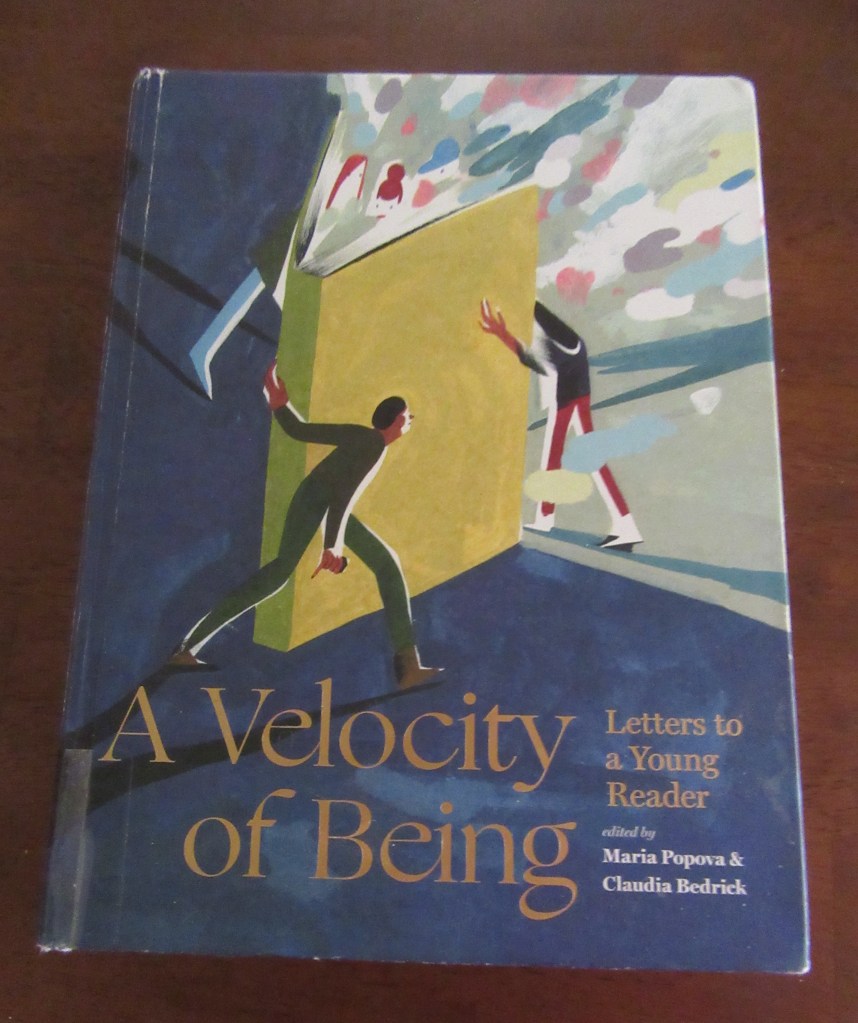
And that this week I’ve been reading A Velocity of Being: Letters to Young Readers, edited by Maria Popova & Claudia Bedrick. The editors compiled 121 letters from “scientists, musicians, artists, philosophers, composers, poets, actors, a 98-year-old Holocaust survivor, Italy’s first woman in space, and many more remarkable humans whose splendor of spirit cannot be contained in the shorthand descriptors we often use to condense a person’s character and cultural contributions.” Each letter is paired with an illustration to “bring it to life visually.”
Many letters describe books as portals to the universe, to other worlds, to adventure, to curiosity and questions, to dreams, to logic and imagination; they’re boats and planes and magic carpets. Contributors write about hating book reports, and being hellions when they were little and refused to listen to Goodnight Moon at bedtime because they wanted dinosaurs, and being called antisocial when they preferred to read instead of play with friends.
But other contributors take the subject to a deeper level:
Author Alain deBotton writes, We wouldn’t need books quite so much if everyone around us understood us well. But they don’t. Even those who love us get us wrong. They claim to know what we need, but forget to ask us properly first. They can’t understand what we feel . . . That’s the moment to turn to books They are friends waiting for us, and they will always speak honestly to us. They are the perfect cure for loneliness. They can be our very closest friends.
Screenwriter Shonda Rhimessays, Reading saved me. When I was twelve, I spent most of my day trying to be invisible. The year before I’d been the new girl in school, and I’d spent a lot of time trying to be accepted. . . . The very desire to bend and twist to fit in–assures your rejection They did not like me. They hated me. I spent a lot of time alone. I rode the bus alone. I spent weekends alone, I ate lunch alone. Except I was never alone. I always had a book in my hand. If you have a book, you don’t need to bend and twist to fit–you’re there. You are in. . . . If you have a book in your hand, you can stop being invisible. Because you’re a little more invincible.
Venture capitalist Chris Sacca says that books are dangerous: If you keep reading, you might learn so much that you can take over for the adults and then you kids will be in charge! You all could be the journalists, entrepreneurs, artists, professors, authors, doctors, explorers, scientists, and even the leaders of our countries! Then what would the grown-ups do? Live in a world run by brilliant, interesting, innovative, and compassionate young people. Ugh. No, thank you. So please stop reading before you become really smart, successful, and happy.
But seriously, books are dangerous. Holocaust survivor Helen Fagin writes about life in the World War II Polish ghetto, where being caught reading by the Nazis meant anything from hard labor to death. But books were smuggled in, read by each person for only one night, and then, for the sake of safety, passed on. She stayed up all one night reading Gone with the Wind. Then she decided the children she secretly taught needed not dry information, but stories. And for one hour each night, she told them the story of Scarlett and Melanie, Rhett and Ashley; and for that hour they “escaped a world of murder.” Then “a knock at the door shattered our dream world.” Years later, she met one of only four of the students who survived. The woman called her “the source of my hopes and my dreams in times of total deprivation and dehumanization.”
Composer Mohammad Fairouz shares a story that I cherish from my upbringing; . . . 1400 years ago in the deserts of Arabia, a meditative prophet named Mohammad had a vision of the Angel Gabriel who came to him with a message: “Read” . . . This was the first word of the Quran. In the years following the prophet’s death, his followers built an empire where they contributed to every branch of knowledge, from algebra to optics and medicine to music. Countless things we have today would not exist without their contributions: that includes space stations, glasses, aspirin, your iPad. They were able to do this because they were inspired to seek out the power that comes with being to read. You deserve the same power . . .
Years ago, I knew a young man who had never learned to read. I don’t know why; he just hadn’t. As an adult, he took a literacy class. He said that when he traveled for his work, he was always scared, because he couldn’t read road signs, and he was afraid he would get lost. At the most basic level, reading is power.
And consider: At one time in the American South, it was illegal to teach slaves to read. If they were literate, they might be able to read signs that would help them escape. They might also read some inconvenient truths: “. . . that all men are created equal, that they are endowed by their Creator with certain unalienable Rights, that among these are Life, Liberty and the pursuit of Happiness . . .” Inconvenient for their owners, that is.
“So the research shows that perhaps reading fiction does make people behave better. Certainly some institutions consider the effects of reading to be so significant that they now include modules on literature. At the University of California Irvine, for example, Johanna Shapiro from the Department of Family Medicine firmly believes that reading fiction results in better doctors and has led the establishment of a humanities programme to train medical students.
“It sounds as though it’s time to lose the stereotype of the shy bookworm whose nose is always in a book because they find it difficult to deal with real people. In fact, these bookworms might be better than everyone else at understanding human beings.”
Philosopher and professor Martha Nussbaum gives an example: The great African-American novelist Ralph Ellison said that a novel like his Invisible Man could be “a raft of hope, perception, and entertainment” on which America could “negotiate the snags and whirlpools” that stand between us and the democratic ideal. He’s referring here to Huck Finn and Jim, who got to know one another as full human beings, rather than just as a white man and a black man, when they traveled down the river on a raft together. On the raft, they had to look at one another, listen to one another’s stories. In our divided society, such encounters happen all too seldom in real life, and are fraught with mistrust when they do. Reading can create such encounters in the head, so that the ones that happen in the world are a little less crude, a little less deformed by fear and anger.
Huckleberry Finn has for years made the American Library Association’s list of most often challenged, banned, or restricted books–a novel that can teach us to be better people.
Design writer and educator Steven Heller extends the idea that reading is power and issues a challenge: Books are weapons in humankind’s battle against ignorance. I don’t mean like lasers and drones. I mean that knowledge is strength and the kind of knowledge you get from books is not the same as the quick fix that Googling gets you. What’s more, books can’t be hacked. But they can he censored, which means blocked or forbidden from being published. And this is why they are so valuable to us all. Often in fighting ignorance, the ignorant take books prisoner. If you don’t read books, then those that have been censored over the ages will be lost and forgotten. So kids, don’t let them down. Read them, savor them protect them. Don’t let others make books irrelevant.
*
*Jenny soon learned to wead. And to pwonounce her ahs.
*
I’ve gone on too long. If you’re still with me, thanks for sticking. And one more thing: Despite the title, A Velocity of Being isn’t just for young readers. It’s also for adults who need to be reminded to make reading part of their children’s lives.
While writing this post, Kathy was watching/listening to an old TV series of Dorothy L. Sayers‘ Lord Peter Wimsey mysteries. Bless Youtube and all who post on her. (Opinion: Ian Carmichael was the best Peter Wimsey by far.)
This week I lost a very good friend and an incredible mentor. Anna Castle wrote historical mysteries including two internationally successful series: The Francis Bacon Mysteries and the Professor and Mrs. Moriarity. Her books can be found on her website at https://www.annacastle.com/books/
Writing a series of any kind requires a great deal of research. Triple that for historical mysteries. The writer has to learn the dialects, the clothes, the food, the politics, the religions, the caste systems, the locations—the list goes on. It takes a special person to get all of that right, and for Anna to do it in two series is off the charts. And while getting all of the “facts” right, Anna also had the task of creating characters that needed to be loved, laughed at, hated, suspected, intriguing, whatever was needed to propel the plot forward. The character must be seen, understood, memorable—well, you get the drift.
And in reading a series, the characters must be people that intrigue the readers so much, they are not just willing to buy the next book in the series, but the writer must create a story where the readers will wait for that next book, hope for it, buy it in advance. The reader becomes bonded to the characters. I as a reader find myself worried about them, excited for them, scared for them, and yes, hate them and love them. To me, they were real people.
And now, Anna’s characters will never live again. The next book won’t happen. There will be no more intrigue for them, romance for them, fear for them. Life for them.
As I write this, I am devastated as I mourn Anna’s passing. No more lunches with her. No more emails. No more hugs. No more bragging or complaining or learning or all those things that dear, dear friends do together.
But also, I will deeply mourn the passage of the characters she put in my head and in my heart.
Unlike sequels, which are straightforward continuations of possibilities that may happen after a novel ends, the prequel tries to imagine and show what happened before the novel’s story began.
A prequel attempts to provide the reader with information about what came first, what impacted the characters’ development, places where the stories occurred, the times in which they happened, and a host of other matters upon which a novel may be built not necessarily included in the story.
It may surprise many that even among classics, there are prequels. While The Adventures of Huckleberry Finn is a sequel to Mark Twain’s Tom Sawyer, in 2017, author John Clinch released Finn, a prequel to both of Twain’s masterpiece novels. Finn is about Huck Finn’s father and the dysfunctional family relations that came before the adventures of Huck Finn began. It immerses the characters in the chaotic, murky waters of antebellum America with all its complexities, the shame of slavery, and the racial attitudes of the time that almost destroyed the nation.
In Porto Bello Gold, Arthur D. Howden Smith imagines a pirate story with Captain Flint and Murray stealing treasure and burying it as the Prequel to Robert Louis Stevenson’s Treasure Island.
Then we have Mario Puzo’s contemporary classic, The Godfather, a gripping story of the 1940s underworld in America and Italy. Author Ed Falco wrote a prequel entitled The Family Corleone. In this prequel, Mr. Falco gives us background on many of the characters before Vito Corleone became a Don. Shortening it by at least a third would not have damaged the storyline. If a reader is very familiar with Puzo’s characters, there are few, if any, surprises or new information. Much of what came before was included in Puzo’s novel. The only new information was about Sonny, Don Vito’s first-born son. He’d witnessed his father’s criminal activities early on and decided that he would follow in his father’s footsteps. This is hardly surprising given how Puzo portrayed Sonny in the original novel. Perhaps a more interesting avenue would have been a fuller portrait of Michael, whose younger years do not prepare the reader for his change of heart after the Don is almost murdered. (For more insights and reviews of prequels written by authors other than the creators of the original stories, see the source materials below.)
So, where did the interest in prequels start and why? It should come as no surprise that the new mania started when Hollywood became obsessed in the 1970s and 80s after the 1969 success of Butch Cassidy and the Sundance Kid. By 1979, Hollywood released Butch and Sundance, the Early Years, as a prequel. Another Hollywood success, Star Wars, was released in 1977, and its succession of successful movies sparked the Star Wars prequels. Still, there are mixed reviews of the values for each of the abovementioned prequels and others, which may make one ask if it’s worth reading them at all.
Before writing a story, most authors have a sense of the characters’ backgrounds, times they live in, and other essential building blocks. As the novel unfolds, critical information is included to advance the plot. However, some characters or events may be more compelling. Who were these characters before the story began? What happened to them? What factors influenced their development into their current selves? These questions create fertile ground for a prequel and give way to the next question. Should prequel materials precede a stand-alone novel or become book one in a series?
Prequels can flesh out backgrounds, locations, personalities, and what came before. The danger is that offering new angles for consideration may also ruin the impact intended because the reader may not come at the story with the same sense of anticipation, feel the intended shocks or enjoy the sense of surprise. Reading a prequel first, even for blockbuster books such as The Godfather, can also turn a reader off. If I’d read The FamilyCorleone, first, I might have passed on Puzo’s masterpiece.
Prequels then should be published judiciously. They did not create interest in a particular story. It is the story that made the prequel possible.
So what if I wasn’t born in the 1960s? I can do research!
In 2020, I came across a call for submissions for mystery short stories to be included in an anthology. The anthology was to be called Groovy Gumshoes: Private Eyes in the Psychedelic Sixties. The editor, Michael Bracken, wanted stories set in the 1960s featuring private detectives, with bonus points given if the story included a major historical event.
The call caught my attention, but not having been born in the 1960s, I searched my brain for any specific event that I might use as starting point for a story. Two events for which I had a wealth of knowledge at my fingertips came to mind. One was the Assassination of President John F. Kennedy. When you grow up in Dallas, this one comes to mind quickly. But I thought that event, given its extreme historical prominence, might be covered by too many other authors submitting stories.
So I selected the second event: the UT Tower Shooting.
The University of Texas Tower Shooting on August 1, 1966, is a dark shadow on Austin’s history. It was a mass shooting at a school that happened decades before such events became regular occurrences. The Tower Shooting, like the JFK assassination, is reviewed regularly by the local media on anniversaries of the event. And I am intimately familiar with the locale where the shooting occurred since I attended the University of Texas at Austin and walked in the shadow of the Tower daily for four years. Additionally, the shooting is well-documented. Video taken that day is even available online. I knew that finding background details for a short story set around the time of the shooting wouldn’t be hard.
However, none of that is why the Tower Shooting came immediately to mind.
It came to mind because I knew someone I could question about life in the 1960s in Austin, Texas, and about the Tower shooting in particular: my father.
My father, whose grandparents were all Czech immigrants who arrived in Texas after the Civil War, graduated from tiny Rogers High School in rural central Texas and set out be the first in his immediate family to graduate from college. He worked his way up: first attending a junior college, then transferring to a small private college, then transferring, finally, to the University of Texas at Austin. On the fateful morning of August 1, 1966, my father turned in the final paper for the final class he needed to graduate. He arrived on campus early in the morning and left to report to his job at an Austin grocery store.
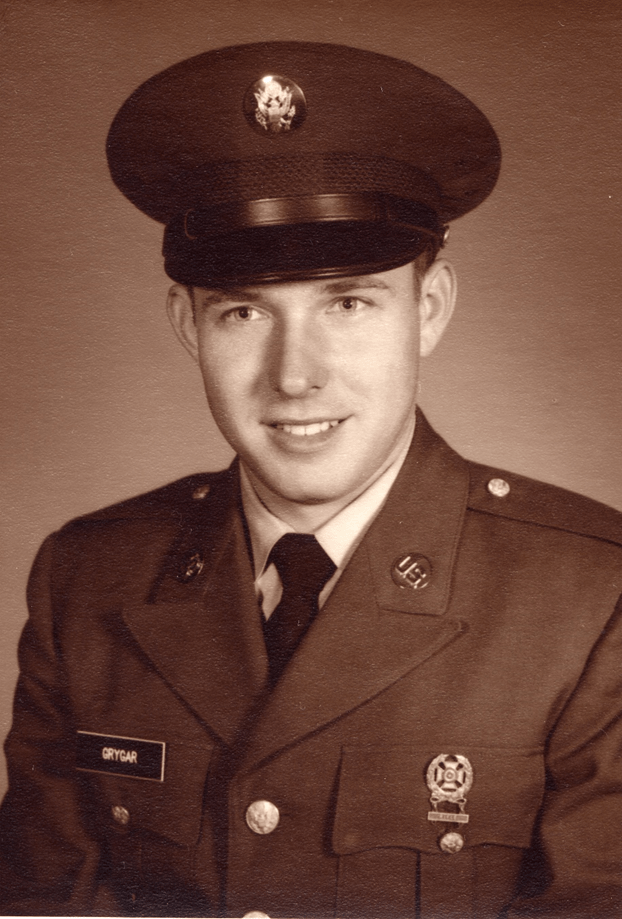
My father- Dec. 1966
He had a lot on his mind that day. With his upcoming graduation at the end of the summer term, my father should have been considering his improved employment prospects. But he wasn’t looking for jobs. He knew that his draft number was coming up in October. He had to make a decision: volunteer for the draft or wait to be drafted into the military in the midst of the Vietnam War. He volunteered for the draft in September 1966.
Twenty-seven years later, on my first day living in the dorms at UT, my father showed me where people had died near the balustrade on the South Mall. He pointed out the bullet holes marking the stone. He recounted his memory of leaving campus and listening to the shooting on the radio while at work. His story of that day, woven into the story of his life, became a piece of family lore, embedded in my memory.
And so, after picking my father’s brain and doing a ton of research, my short story “Nice Girls Don’t” came into being. The story features a private detective hired in September 1966 to investigate the death of a young woman, a UT student who died the day of the Tower Shooting. The girl’s parents believe their daughter’s case was ignored because the police were too busy dealing with the Tower Shooting to give her death the attention it deserved. The parents want the detective to find out what really happened.
After completing my story, I submitted it to the editor, hoping it might be selected for inclusion in the anthology… And the editor, Michael Bracken, chose my story to be included in Groovy Gumshoes: Private Eyes in the Psychedelic Sixties, coming from Down & Out Books in April 2022!
~~~~~~
N. M. Cedeño is a short story writer and novelist living in Texas. She is active in Sisters in Crime- Heart of Texas Chapter and is a member of the Short Mystery Fiction Society. Find out more at nmcedeno.com.
Sometimes you stumble unawares into a book and then, in total surprise, you are rewarded. That was my experience when I happened to find The Secret Library: A Book-Lovers’ Journey Through Curiosities of History by Dr. Oliver Tearle. This is a book a bookish reader can gobble up, each chapter one more rich tidbit that goes on and on – an entertaining, multi-layered literary feast.
Tearle begins with an old question: “What book would you like to take with you if you are left on a desert island?” (We all know that question, and we also know the answer varies widely in response both to what you have read, as well as, your age). And having asked this question, Tearle provides G.K. Chesterton’s still witty reply: “Thomas’ Guide to Practical Shipbuilding.” A response Tearle says is guaranteed to produce a smile.
But you ask, who is Oliver Tearle?
Dr. Oliver Tearle is a professor of English at Loughborough University, United Kingdom, and the author of The Secret Library: A Book Lovers’ Journey through Curiosities of History. Tearle is also the creator of the highly popular literature blog, Interesting Literature: A Library of Literary Interestingness, touting 25,000 followers, along with an enviable presence on Twitter and Facebook. If numbers are proof of success, those that follow Tearle appear much more than just a little bit interested in literature’s long and quirky history.
In the “About,” section of Tearle’s website, he offers the intent behind his blog:“. . . The aim is simple: to uncover the little-known interesting facts about the world of books, and to shine a light on some of the more curious aspects of literature.”
Backtracking to Chesteron as to what might prompt a choice of books on that desert island, Tearle argues that for a book to be important enough, “the . . . book needn’t mean ‘great work of literature’ or ‘novel you’ve always wanted to read but have never had the time or courage to take on. . .”
“An important book can be relatively unknown except to a few, but its impact upon ‘Western society’, is immense, citing to Euclid’s Elements, or Dr. Johnson’s Dictionary.
Writing The Secret Library, Tearle’s goal was to simply answer some questions he had had about literature; even though these may have been previously addressed, he wanted to go further and include “non-literary texts” as well.
Tearle stated he had . . . “two related aims: to bring to light the lesser-known aspects of well-known books, and to show how obscure and little-known books have surprising links with the familiar world around us. . . In short, it attempts to bring to light some hidden facts about both the best-known and the least-known books ever written, typed, inscribed, dictated, or indeed fabricated.”.
Beginning with what we have inherited from the Classical era that created the basis for all the arts, we are linked back to Ancient Greece (in gratitude). With Tearle, we are led even further forward into a bibliophile’s wonderland . . .” its a medley of curiosities, a whistle-stop tour around an imaginary library stuffed full of titles both familiar and forgotten. . .” If you are a curious book lover seeking unknown facts and authors, this is the reading adventure for you.
Throughout nine chapters, Tearle explores literature (gone but not forgotten) chronologically, from the Classical time forward. Each chapter ends with a clue tying it to the next chapter – it is up to the reader to puzzle it out and connect the clues. Without spoiling the book for would-be-readers, below are just a few of the interesting answers found within The Secret Library. . .
What is the oldest book known to man? . . .The Etruscan Gold Book, which was produced around 2,500 years ago. It comprises six large sheets of 24-carat gold which have been bound together with rings, thus forming a unified object that might be labelled a ‘book.” It was discovered in the mid-twentieth century; unfortunately, as it was written in Etruscan language, which we know very little about, deciphering it proved tricky, to say the least.(Note, Wikimedia Commons does not have a photo of this book; however, there are images of it on the web at various sites).
Is the Iliad the first great work of Western literature? “The Iliad is the first great work of Western literature probably composed in around the eighth century B.C. . . who Homer was remains a mystery. . .and after nearly three millennia unknowable. The story of the Greeks . . disguised in a big wooden horse inspired the Trojan horse (in computing, a piece of malware that infiltrates your computer by disguising itself as something benign).”
Who was Euclid? “. . .The greatest mathematician of ancient Greece was Euclid. But which Euclid? There were, it would appear, several. . .The attribution of the work to Euclid is the result of one passing reference made by a later writer, Proclus, naming Euclid as the author of, the book . . .most historians accept the attribution as fact.
Who was the first science fiction writer? “Pinpointing the starting-point of science fiction is a tricky undertaking. Did it begin with Jules Verne’s Journey to the Centre of the Earth in 1864? Or Mary Shellye’s Frankenstein in 1818? . . .Asimov and Carl Sagan give the mantle to . . . astronomer Johannes Kepler, whose Somnium written in Latin in 1608, speculated on what the Earth might look like from the Moon. . .but the origins of science fiction can be traced back far earlier even than Kepler. . .to the second century. . . to a Syrian writer named Lucian, whose short work A True History has claim to being the first-ever work of science fiction. . .
Who owned the largest library in medieval England? “. . . Richard de Bury would have to be a contender. . .a fourteenth-century bishop of Durham, de Bury appears to have been something of an incurable bibliophile whose library dwarfed those of his fellow bishops. . .he has been described by his biographer Samuel Lane Boardman as the patron saint of book lovers. . .De Bury even wrote a book about his book obsession, Philobiblon(literally, ‘love of books’), which has been described as the first-ever book about library management. . .he completed it shorty before his death in 1345.”
Flatulent Demons? “Dante Alighieri. . .is best remembered for the epic poem about heaven, hell, damnation, purgatory and salvation called The Divine Comedy. . .It is not a comedy, because it is not funny. . .it might be viewed as the original fantasy trilogy, charting the poet’s journey from hell to purgatory before arriving in heaven. T. S. Eliot, to whom Dante meant a great deal, said of Dante’s work that genuine poetry is able to communicate before it is understood. Rumour has it that Dante taught his cat to hold a candle up for him in its paw while he was eating or reading.”
And . . .there is so much more: The First Autobiography (a manuscript found by “William Erdeswick, a lieutenant-colonel, found in a cupboard in his house in Chesterfield. . .a book first transcribed in the 1430s written by Margery Kempe;” “The discovery by an Italian librarian during the fifteenth century of Lucretius’ epic poem De Rerum Natura” was the spark that began the Italian Renaissance (according to literary historian Stephen Greenblatt); “Rabeliais, who wrote Gargantua and Pantagruel gave us two popular adjectives. . .gargantuan. . .and panurgic. . .”
There are more tales, more improbable but true connections, that Tearle deftly reveals and magically weaves into a cohesive whole. This is the book you keep in your carryall, in the car, by your beside table; pick it up at any point and you will be amazed at just what you can learn.
The first page of Richard De Bury’s Philobiblon. Wikimedia Commons, attribution. Richard de Bury (Life time: 1287-1345), Public domain, via Wikimedia Commons.
A former paralegal, Renee Kimball has a master’s degree in criminal justice. Among her interests are reading and writing. She is an active Animal Advocate and fosters and rescues both dogs and cats and works with various organizations to find them forever homes.








 Ink-Stained Wretches
