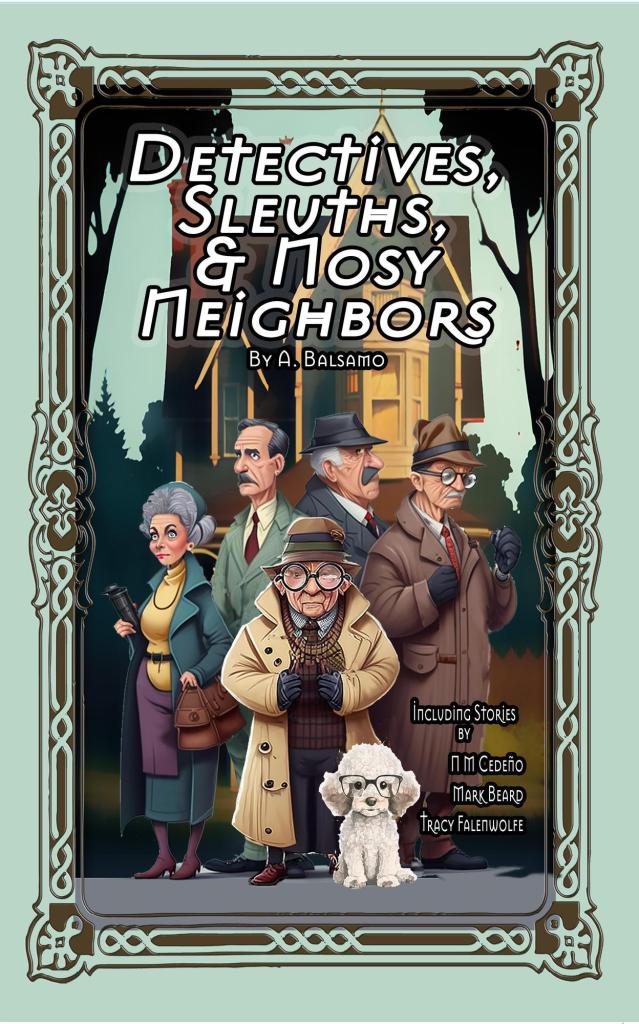
The Million Dollar Question and A Goodbye

If mystery/crime is still one of the top selling genres for books, why are so many mystery magazines and publishers having such a hard time surviving compared to speculative fiction markets? The demise of Down & Out Books this month, coming on the heels of other closures, sales, and consolidations, has me thinking about the continued shrinkage of the mystery market and about what really drives sales for a particular genre. (With Down & Out’s closure, two of my stories that were awaiting publication need new publishers.)

Every couple of months, someone in the short mystery community asks how to sell more crime fiction short stories to the reading public. Someone else always answers that short stories don’t sell well because they are considered literary fiction, a category which sells far less than any other form of fiction. Others say that it’s simply a well-known fact that people don’t read short stories because they prefer novels and series.

Why assume short fiction is considered “literary” when short science fiction and short fantasy don’t seem to have problems selling? Why assume few people read short fiction when the existence of so many successful short speculative fiction markets seems to belie that supposition?

Go to any writers’ submission information site, Submission Grinder, Chill Subs, etc., and you will find far more markets for short speculative fiction (science fiction / fantasy / some horror) than you will for short mystery / thriller / suspense. The markets for short speculative fiction pay their authors far better than the crime genres, too. Why do they pay more? Because they have the sales numbers to support the pay.

In the short mystery fiction community, authors are frequently exhorted to buy more anthologies and subscribe to more magazines to support our community so that it doesn’t vanish. But if authors are the only audience, something is seriously wrong. Are dancers or actors told to buy tickets to their own theatrical performances so the show doesn’t close? Are artists urged to purchase artwork to prevent galleries from failing? Are musicians told to buy as many songs and albums as possible to help keep the music industry afloat? No. In all those creative-arts-based industries, business leaders recognize that it takes more than just the creators to support the industry. It would be ludicrous to believe that the creators alone could support an industry. Ergo, no amount of chiding of short mystery authors is going to improve sales numbers. It takes fans to support a genre.

So why aren’t crime and mystery fans buying short fiction while sci-fi and fantasy readers are? Are we marketing in the wrong places? Are we failing to draw in younger readers who then grow up to be buyers and subscribers? Maybe. But I think the situation is more complex than that. The mystery genre had a heyday, a golden age when it was all the rage in the early to mid-1900s. Once upon a time, Ellery Queen was a television series. So was Alfred Hitchcock Presents.

Today, we have Michael Connelly’s many works on streaming services. Craig Johnson’s Longmire and Tony (and Anne) Hillerman’s Leaphorn and Chee did well on screen, too. Only Murders in the Building has made a splash. The Enola Holmes movies are popular. People love the Brit Box mystery offerings. But the mystery genre offerings for the last three or four decades have been a drop in the bucket compared to the speculative fiction options available in the larger world of entertainment.

Today’s science fiction and fantasy stories are features of computer games and blockbuster movies. A glance at market offerings confirms that some mystery computer games exist, but very few are pure mystery. Most computer games with mystery plots are set on other planets, in other galaxies, in the future, or have other speculative elements.

Is there a connection between the current abundance of speculative fiction entertainment in games and movies and the thriving speculative short fiction market? Probably. Speculative fiction has been central to the cultural zeitgeist for several decades now, the same decades in which the mystery genre markets have been slowly vanishing.

What short mystery fiction really needs is a new golden age of mystery with a strong resurgence in the crime genre on screens. Until then, short mystery fiction writers will have to find other ways to reach readers. Which means we have to try the smaller-scale techniques and the more personal methods to increase our fanbase.

Some authors are trying book trailers on TikTok, YouTube videos, and social media posts in the hope of going “viral.” This month, I tried an even more direct approach to spread the word about short mystery fiction to youth. I spoke to a class at the local high school about how to revise short stories. I brought with me a half a dozen crime fiction anthologies and a handful of magazines and displayed them for the students. I told them to read, read, read. I recommended that they seek the “best of” anthologies for their genres. I recommended that they subscribe to magazines and ezine.

Will any of those kids read a crime fiction anthology or buy a crime fiction magazine subscription? I have no idea. However, I do know that we need to stop blaming authors for not buying enough magazine subscriptions to keep a magazine afloat or enough books to keep a small publisher from going bankrupt.

And now, a farewell. The Ink-Stained Wretches blog is closing, too. I will be moving over to post on the Austin Mystery Writers blog. All of the other members of this blog, except me, are already there. Look for my next post over at Austin Mystery Writers.

Thanks for reading.

Noreen

Bouchercon and Imposter Syndrome

Bouchercon is what the mystery community calls the World Mystery Convention. When I registered to attend my first Bouchercon in 2019, I didn’t place myself on the list of authors willing to be on a panel to discuss writing in front of attendees. I felt like I was a rank beginner who needed to attend the conference to learn, not to teach anybody anything. In spite of receiving encouragement to sign up for a panel from a regular conference attendee, I didn’t feel qualified.

At that time, I’d had one short story traditionally published and had self-published four novels and a bunch of short stories. That one traditionally published story, entitled “A Reasonable Expectation of Privacy,” had appeared in Analog: Science Fiction and Fact in 2012 and came in third in the 2013 Analog Readers Poll. In 2019, I was also the chapter president for Sisters in Crime: Heart of Texas Chapter after previously serving two years as vice-president. While I volunteered at the 2019 Bouchercon to sit and greet people at the Sisters in Crime table and organized meetups for my chapter members, I felt discussion panels were for distinguished writers with long lists of publications, not me. Who was I to sit on a panel?

I arrived at Bouchercon in Dallas and eagerly set out to attend discussion panels, and quickly realized that I’d under-rated myself. In several of the panels I attended, men were up on the dais, discussing their one and only short story publication. Those men felt confident enough with a single publication to place themselves on the list for a panel assignment. And that one story had indeed qualified them to discuss their writing.

“Imposter Phenomenon” was first described in high-achieving women by two female psychologists in 1978. They discovered that despite receiving recognition, accolades, or achieving success in their fields, many high-achieving women suffered from severe self-doubt, feeling that they didn’t deserve their success. Later studies found the phenomenon doesn’t discriminate, striking both men and women.

photo by KT Bartlett 2025

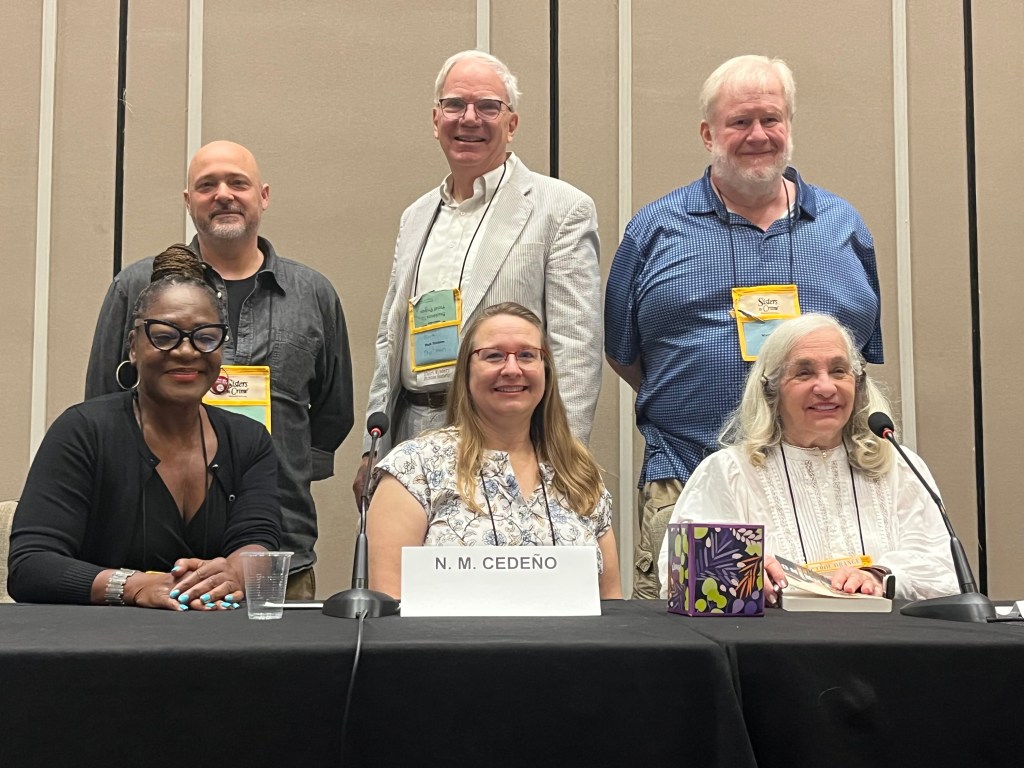
Last week, I attended Bouchercon 2025 in New Orleans, my second time to attend the world mystery conference. I learned my lesson in 2019 and placed myself on the list to be on a panel when I registered. And I was assigned to a panel discussing how authors create their authorial voices. I arrived in the assigned room to discover that I’d been placed on a panel with two English professors, a magistrate judge, and an art expert who were all mystery writers, with another mystery writer as the moderator. The line-up could have been intimidating. But I held my own and had as much intelligent information to offer about the topic as everyone else.

During the conference, I witnessed someone else suffering from “Imposter Syndrome.” I attended the Anthony Awards Ceremony and found myself seated at a banquet table with another author and her husband. The author was nominated for the Anthony Award. When an organizer of the event announced that each nominee and a guest or two of their choice should come to the front of the room to sit at tables reserved especially for them, the nominee at my table told her husband that she didn’t feel like she should go. I told her that she was nominated and deserved to be at the front. She refused to move, too self-effacing to feel that she belonged, even though she’d been nominated. The look on her face said that she doubted she would win, so she didn’t belong with those at the front closest to the stage.

When the ceremony reached my table-mate’s category, her husband began to record video on his phone. He had more faith in his wife than she had in herself. The look on her face when her name was called as the winner of the Anthony in her category was sheer surprise. She rose and went to accept her reward, no speech in hand, because she never expected to win. She managed to say a few words, thanking people while trembling slightly, and returned to our table, still in shock.

I congratulated her and told her that she deserved the award. She gave me a doubtful smile. I hope after she processes her win, she will realize that she did belong at the front of the room. I hope that she learns to accept that she is worthy of her own success.

I’ve met and heard of writers who do beautiful work, but are too filled with self-doubt to submit the work for publication or to publish it themselves. Their stories remain hidden in drawers and on hard drives. I’ve read novels that barely rose above average, but still were published. The difference in an average story that was published and a great story that was hidden away is frequently found in the confidence of the author in their own work.

What many of those self-doubting writers don’t know is how welcoming the mystery community is. The mystery community welcomes everyone at Bouchercon. By virtue of your attendance, you belong. Strangers will walk up and start conversations with you. Year round, organizations such as the Crime Writers of Color, Sisters in Crime, and the Short Mystery Fiction Society welcome aspiring writers and writers at every level of their careers, providing support and information to help them succeed.

If you are a writer, aspiring or published, of any genre, join a group and meet other writers. You belong!

*****

N. M. Cedeño is a short story writer and novelist living in Texas. She is active in Sisters in Crime- Heart of Texas Chapter and is a member of the Short Mystery Fiction Society. Find out more at nmcedeno.com.

The End of a Dream?

My first published story appeared in Analog: Science Fiction and Fact in 2012. Since about 2020, I’ve been making a concerted effort to land a story in that magazine’s sister mystery magazines, Ellery Queen Mystery Magazine (EQMM) and Alfred Hitchcock Mystery Magazine (AHMM). This has been my dream, my professional goal for years now. Thanks to changes in the industry, I may need to find a new goal.

Those who don’t follow the short fiction world may not be aware that a handful of the top paying professional mystery and science fiction magazines were sold to new owners in the last six months. Analog: Science Fiction and Fact, Asimov’s Science Fiction, EQMM, and AHMM were operated by Dell Magazines which was owned by Penny Press since 1996. The magazines were purchased earlier this year by Must Read Magazines, a division of Must Read Publishing, which is owned by Paragraph 1, Inc. Paragraph 1 also purchased The Magazine of Fantasy and Science Fiction which had been owned by Gordon Van Gelder since 2001.

What does that mean for readers?

So far, not much, other than a delay in the release of the latest magazine. My July/August issue of AHMM arrived this week, late under the previous publication timeline. The editors at the mystery magazines remain the same, which suggests that kinds of stories chosen for publication will remain the same.

What does this mean for authors?

Contract changes galore! UGLY ONES! The new owners have disposed of the old contracts, which were industry-standard short fiction contracts, and replaced them with new contracts that do not reflect the industry standard in any way.

The changes to the contracts are so extreme that authors are protesting loudly. Some, like Kristine Kathryn Rusch, have publicly announced that they will not be submitting to the magazines anymore and have pulled all pending stories because of failed contract negotiations. The Science Fiction and Fantasy Writers of America and Mystery Writers of America have both reviewed the contracts and entered negotiations on behalf of authors in hopes of improving the contract terms. Writer Beware has issued a warning statement on the contract terms, which included a waiver of moral rights and clauses covering production, merchandising, reprint, anthology, and other rights. The Submission Grinder formally delisted all of the magazines because of these “non-standard” contract terms.

In response, the owners of Must Read Magazines state that they are revising the contracts, supposedly replacing the moral rights waiver with other language. But even if that waiver is removed, the intellectual property rights grab involving production, merchandising, reprints, anthology, and other rights may remain.

This leaves me questioning what I should do. My last story in the queue at EQMM was recently rejected, but I have two stories submitted to AHMM right now. Do I leave them in the queue and see how negotiations play out? Do I pull them, as other authors have done, and submit them elsewhere?

If the top authors are pulling out, the quality of the magazines may decrease. Admittedly, my chances of getting a story published increase if others choose not to submit. But do I want to be in a magazine only because others decided the terms of the contract were too unfair? Does that make me a scab, willing to accept harmful terms out of desperation? Do authors stand a better chance of getting better terms if we all reject onerous contracts? We are all free-lancers with loose affiliations through memberships in writing organizations, not members of a union.

For now, this is all just a thought exercise about a dream, a goal I’d set for myself, a goal I may have to reset.

*****

N. M. Cedeño is a short story writer and novelist living in Texas. She is active in Sisters in Crime- Heart of Texas Chapter and is a member of the Short Mystery Fiction Society. Find out more at nmcedeno.com.

May is Upon Us! : A Spring Report

N.M. Cedeño

Derringer Awards: Short Mystery Fiction Society

I spent part of April reading to vote for the Derringer Awards and to come up with my nominations for the Anthony Awards. The Derringer Award Winners were announced May 1 by the Short Mystery Fiction Society. I’m happy to recommend all of the Derringer Awards winners to anyone looking to dip their feet into the world of mystery short stories. If you have time, read all of the Derringer finalists, too. All of the stories were extremely well done. The Anthony Award nominees also have been announced.

Then, April’s reading fun ended to make way for May’s madness.

May is one of those months that I hope to survive and not drop any of the many balls I’m trying to keep in the air while dealing with whatever curveballs the world throws at my family.

May brings the expected…

Torrential rains causing Flash Flooding. Tornado watches and warnings. Hail. A family birthday. Mother’s Day. AP Exams requiring early morning drop-offs. The end of the college semester and dorm move-out. Tech week for a senior showcase musical review plus two performances of the review. A high school graduation with a family party planned and invitations mailed to celebrate it. Etc.

These May events mark the passage of the season like clockwork. From the end of school events to the spring storms, I’m used to dealing with these things.

This May has also brought the unexpected.

This month’s unexpected events so far include a car wreck, knocking a vehicle out of commission, so that I have to drive my offspring everywhere again. This driving includes 7:30 am drop offs at the high school for AP exams and 9:00 pm pick-ups at the theater after rehearsal for tech week. As a bonus, I get to deal with two insurance companies calling and emailing me for information. On the bright side, the motorcycle rider who collided with the bumper of the car was miraculously uninjured. (The call telling me that the accident involved a motorcycle was heart-stopping. They aren’t called donor-cycles in hospitals for nothing.)

The second unforeseen event was the sad and horrific suicide of a high school senior that my daughter knew. Knowing that a girl so full of promise ended her life a mere three weeks before graduation is gut-wrenching for everyone, even those only tangentially connected to her. For my child, who saw her every day at school, the death came as a terrible shock.

So, of course, since my brain is spinning, I started an unnecessary project– stripping the paint from a 1960s Drexel secretary desk that is in need of refinishing. My dear brother, who goes to more estate sales than he should, dropped…er gifted the piece to me after his wife rejected it for their house. The process of refinishing the desk is coming along slowly since I’m only working on it an hour or two a day, here and there. I needed a somewhat mindless, manual project to work away some stress. Scraping and sanding has been therapeutic and soothing.

When I’m done with the refinishing project, I’ll have something tangible to show for my labors and a sense of satisfaction in a job well done, like the feeling I get from writing a story but without the deep concentration needed to invent a plot and characters. That deep concentration is eluding me at the moment, so I’ve been editing what I’ve already written more than writing new material. However, in spite of May’s madness, I have submitted three stories to magazines already this month. I hope to submit a few more since I’m behind schedule on my submissions for the year.

I do have three stories accepted for publication at the moment. I’ll provide more about those stories when I have fixed publication dates.

I hope your May is going well!

***

N. M. Cedeño is a short story writer and novelist living in Texas. She is active in Sisters in Crime- Heart of Texas Chapter and is a member of the Short Mystery Fiction Society. Find out more at nmcedeno.com.

When Disinformation Leads to Death

N.M. Cedeño

Here in Texas over four hundred people have contracted measles in the past few months, resulting in the death of at least one child. Most of these cases were preventable with a vaccine. So why weren’t the victims immunized? Some are infants, too young to be vaccinated. A few may be people with compromised immune systems or other medical conditions that prevent them from receiving vaccines. However, the majority aren’t vaccinated because of conspiracy theories and false information being fed to parents, making them fear the vaccine.

Back in the 1990s, a British doctor, whose medical license was later revoked because of the medical hoax he perpetrated, falsified a study claiming to have identified a causal link between the vaccine for measles, mumps, and rubella, (the MMR vaccine) and autism. He published a massive lie that spread like wildfire and caused vaccination rates in Europe and the United States to plummet. By the time the fraud was revealed, the damage had been done.

As a parent of a child on the autism spectrum, I am absolutely certain the MMR vaccine did not contribute to the condition. I spotted variances in my child’s development by the time he was six months old. I knew something was different about the way he did and did not focus on motion months before he was given his first MMR vaccine. No vaccine caused his neurological differences. The most likely cause is a complex interaction of genetic factors.

Measles and rubella are not diseases that should ever be allowed to spread unchecked. Measles can kill, and when it doesn’t kill, it can obliterate the patient’s immune system, leaving them susceptible to a variety of infections. In countries where vaccination rates for measles are low, children who survive measles frequently die of other illnesses within a short time after having measles. Measles is also one of the most contagious diseases in the world, able to linger on surfaces and in the air for hours after an infected person has left the area.

William Morrow Paperback, reprint edition cover 2004

Rubella, depending on the stage of a woman’s pregnancy when she contracts the disease, can cause blindness, deafness, heart deformities, developmental abnormalities, and death for babies. Many infants only survive a short period after birth due to the damage caused in utero by rubella, also known as German measles. A well-known example of the harm caused by rubella was the case of actress Gene Tierney’s daughter, Daria, which inspired Agatha Christie’s novel The Mirror Crack’d from Side to Side.

Growing up, I heard the story of my uncle’s birth from my grandmother more than once. She contracted rubella while pregnant and decided not to go to the doctor for her check up that month because she knew that the doctor would push her to abort. In 1950s America, doctors saw so many deaths of newborns caused by rubella that they frequently advised a mother to abort if she contracted rubella while pregnant.

My grandmother made a choice, believing one should always give life a chance, knowing that her baby might not survive. My uncle was born at around three pounds, his growth and development stunted by the disease. He was deaf in one ear, had heart problems, had very poor vision, and only grew to about five feet tall. But he survived and lived to the age of 70, managing to get a driver’s license, go to community college, and work a variety of jobs.

As a parent, I have met other parents who chose not to vaccinate their kids. That decision, made by otherwise intelligent and educated people, still shocks and disheartens me. Reading that the parents of the child who died from measles still say that they wouldn’t have vaccinated their child scares me. How could they possibly think that the vaccine is somehow worse than the death of their child?

This current measles crisis is yet another example of conspiracy theories and false information being promoted over facts and truth to the detriment of society. Disinformation campaigns, conspiracy theories, and the current general distrust of any authority inspired me to write my latest story, entitled “Murder by Alternate Facts.” In the story a young woman named Arlene stumbles upon a wreck on a lonely country road and is forced to make a choice affecting who lives and who dies. The repercussions of Arlene’s choice inspire conspiracy theories, dividing her hometown and leading to murder.

“Murder by Alternate Facts” appears in the Murderous Ink Press anthology Crimeucopia: Chicka-Chicka Boomba! from editor John Connor.

*****

N. M. Cedeño is a short story writer and novelist living in Texas. She is active in Sisters in Crime- Heart of Texas Chapter and is a member of the Short Mystery Fiction Society. Find out more at nmcedeno.com.

Thank You, Encyclopedia Brown!

A post by editor and author Michael Bracken over at Sleuthsayers last week made me ponder my writing influences when it comes to detective fiction. Michael, who has read more than his share of detective fiction in the course of his work recently, suggested that authors need to move away from the trope of the “broke, drunk, and horny” private eye if they want to write something that stands out from the pack. He also recommended not always starting the case in the detective’s office because that can lead to too much back story and a severe delay in moving the plot forward. Reading his post, I realized that I’ve never once had the urge to write that stereotypical “broke, drunk, and horny” character. Then, I wondered why I hadn’t.

My first published short story was a detective story. And while my character, a private investigator named Pete Lincoln, was broke, his financial situation had more to do with the times in which he lived than with his own inability to manage funds. His sex life was irrelevant to the case and didn’t come into the story at all. If he drank, it wasn’t to excess, and also didn’t come into the story. Pete lived and worked in a future world in which privacy rights didn’t exist. He appeared in a story entitled “A Reasonable Expectation of Privacy,” which was first published in Analog: Science Fiction and Fact in 2012, and reprinted in Black Cat Weekly #19 in 2022.

Given that most writers, when they first start crafting fiction, write the tropes that they absorbed while reading, I asked myself what detective fiction I had absorbed at an early age that influenced my writing and that didn’t lead me straight to writing the classic stereotype that Michael was lamenting. Who was the first fictional private detective that I read?

And the answer came to me: Encyclopedia Brown, Boy Detective.

Image Created with Canva

While the boy detective did teach me the basics for detective fiction, he wasn’t in financial straits since he was a child who lived a quite middle-class life with his parents. Everyone knew Encyclopedia liked his friend and partner Sally, but that didn’t remotely approach the trope of womanizing detective. As for drunk, no! While some of his cases started in his garage office with a client paying the twenty-five-cent fee, other times Encyclopedia solved cases for his father, the police chief, while sitting at the family dinner table. So the stories also taught me that not all cases had to start in the detective’s office.

By the time I read Sherlock Holmes a few years later, the pattern of how detective fiction worked was already firmly fixed in my head. While Holmes indulged in illicit substances, he also wasn’t a classic “drunk.” Holmes never panicked about paying the bills or complained about being broke. As for women, the only one that counted for anything for Holmes was Irene Adler. So Holmes, another of my early fictional detective influences, didn’t fit the stereotype either.

Since writing my first PI story, I’ve written many other detective stories. While I have started several of them in the detective’s office with the arrival of a client, not one of my detectives has been “drunk, broke, and horny.” For example, Detective Maya Laster is a former middle school teacher who turned a genealogy hobby into a detective business, solving mostly cold cases with the help of forensic genetic genealogy. She has appeared in two stories in Black Cat Weekly (issue #79 and #110) and will be appearing again in an upcoming anthology.

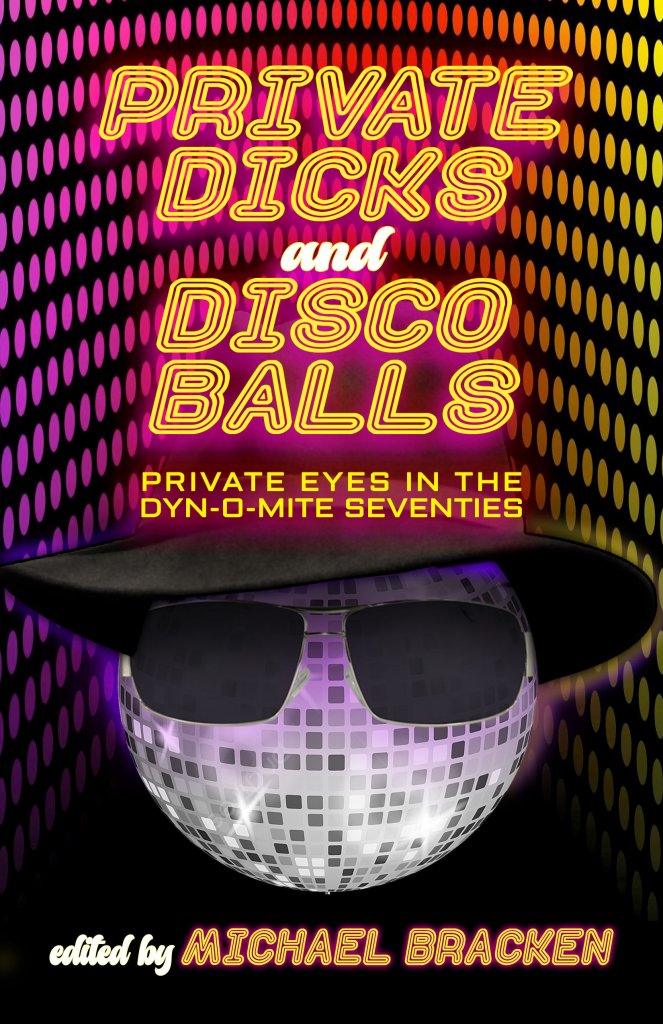
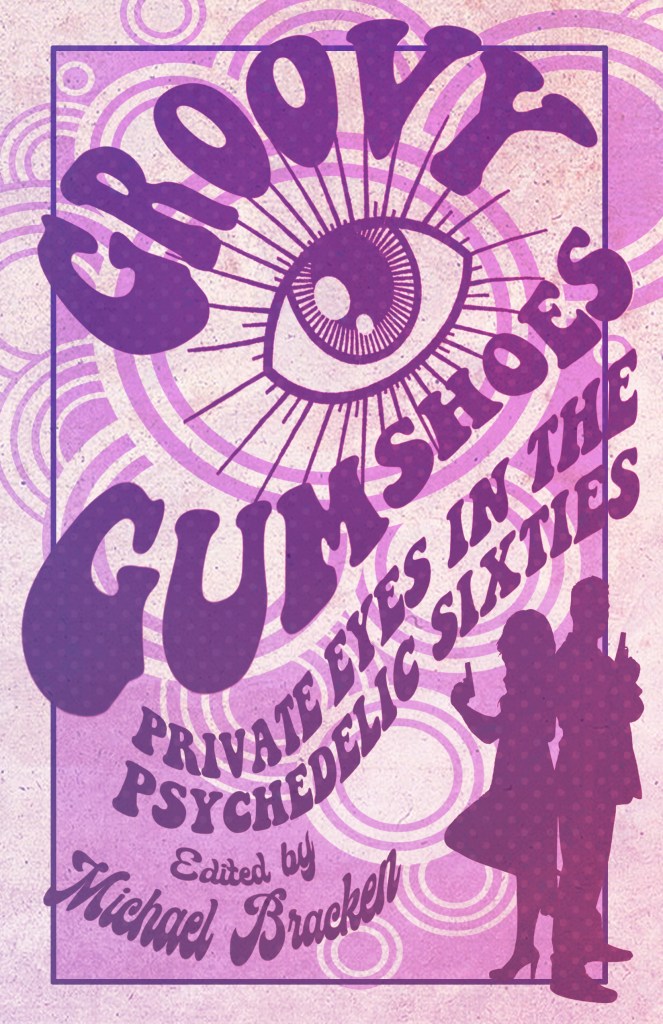
Another of my characters, PI Jerry Milam, came of age during World War II, became a police officer following the war, and suffered terrible injuries in a car wreck which ended his police career, leading him to become a private investigator. He’s a teetotaler with a solid income and chronic left hip pain who feels he missed his chance with women. He appeared in Groovy Gumshoes: Private Eyes in the Psychedelic Sixties and Private Dicks and Disco Balls: Private Eyes in the Dyn-O-Mite Seventies. One of my current works-in-progress sees him solving a case in the 1950s.

If my detectives managed to side-step the cliché of the “broke, drunk, and horny” private investigator, I have my early reading influences to thank for it. So thank you Donald J. Sobol for creating Encyclopedia Brown and teaching me to create private investigators who avoid falling into clichés.

*****

N. M. Cedeño is a short story writer and novelist living in Texas. She is active in Sisters in Crime- Heart of Texas Chapter and is a member of the Short Mystery Fiction Society. Find out more at nmcedeno.com.

Goodbye 2024 / Goals 2025

N.M. Cedeño

Between writing, watching a child graduate from high school and leave for college, shepherding another child through obtaining a driver’s license and applying for college, and undergoing unexpected eye surgery, 2024 was a busy year. The year also featured my father’s eightieth birthday party, my twenty-fifth wedding anniversary, and a vehicle totaled in a car accident. Call it the usual assortment of life’s ups and downs.

Last year I set a goal to submit three stories a month. Thanks to my unexpected vision issues and subsequent eye surgery, I didn’t quite hit that goal. I did manage to submit twenty-two unpublished stories and nine previously published stories to various venues for a total of thirty-one submissions.

Seven of the unpublished stories were accepted for publication. Four are still pending either acceptance or rejection. Of the previously published stories that I submitted, seven are still pending and two have been rejected.

Six of my stories were published in 2024. Three appeared in anthologies; two appeared in Black Cat Weekly e-zine; and one appeared on the Redneck Press website. Three short stories and one novella that were accepted for publication in 2024 are pending publication, marching toward their release dates.  

These three anthologies containing one of my stories that came out in 2024.

Speaking of that novella. Writing the novella was a challenge and an occasion for learning in 2024. I have a writing process for short stories and another process for novels. I didn’t have a process for the intermediate length. For short stories not requiring research I typically make a few notes and start writing. For full novels I make a few notes and start writing, stop after a few chapters, make more notes, write until I’m two-thirds of the way done with the plot, make revised notes, and then write until I finish the first draft of the book. My process for the novella ended up looking like neither my short story nor my novel processes.

The novella required research, which was difficult to do with one of my eyes seeing double. Writing it was difficult for the same reason. The situation called for flexibility. So, I did something that I don’t normally do. I wrote the story scene by scene by asking myself “what scenes will this story need?” Instead of starting at the beginning, I started writing with a scene I knew I would need.

After writing a few scenes, I made a list of scenes I still needed. Then I went down the list writing the scenes. If I wasn’t sure about how to write a scene, I skipped it and wrote a different scene. Then I went back, figured out the missing scenes, while adding other scenes that I came up with after I made the initial list. Finally, I connected everything. It worked better than I expected. I completed the initial draft in about a month, and finished it with time to spare before the deadline.

Looking forward to 2025, I am setting the same goal of submitting three stories per month. I already have some story deadlines on the calendar, and I’m looking forward to diving into writing them. How many stories will I write? I don’t know, and I’m a bit reluctant to set a goal. However, I do plan to stick with writing short stories with no plans to write a novel.

I plan to attend at least one writing conference in person this year. I have my sights set on Bouchercon New Orleans.

I plan to keep learning from webinars.

I also plan to read more than in 2024, an easy goal, since my reading was severely curtailed by the eye issue.

On the home front, some of 2025 will mirror 2024, with a child graduating from high school and leaving for college. We’re still waiting to find out what college. The main difference from 2024 will be that my last chick will likely fly the nest for the dorms in 2025. We will have a temporarily empty nest until the two youngest chicks return home to the nest during school breaks. Having no children at home will be a huge change in my household routines. I’m sure it will affect my writing patterns and plans in more ways than I can predict.

Here’s looking forward to the new world of 2025!

*****

N. M. Cedeño is a short story writer and novelist living in Texas. She is active in Sisters in Crime- Heart of Texas Chapter and is a member of the Short Mystery Fiction Society. Find out more at nmcedeno.com.

Writing “Galápagos People Watching”

As some readers may already know, my husband is from Ecuador. I met him when we were both students at the University of Texas at Austin.

View of the harbor from the hotel – Puerto Baquerizo Moreno. My son being held by my husband’s cousin. Photo by NM Cedeño, 2003.

Most of my husband’s extended family still lives in Ecuador. On our second trip to visit them, in 2003, my husband’s grandmother asked if we’d like to go to the Galápagos for a few days. We said, “Yes, thank you!” So my husband, son, my brother, two of my husband’s cousins, his aunt and uncle, and I all flew from Guayaquil to Puerto Baquerizo Moreno on San Cristóbal Island. From the memory of this trip, the story “Galápagos People Watching” was born.

The boat tour featured in the story is drawn from a tour we took during that trip. We visited Leon Dormido and Isla Lobos to see blue-footed boobies, frigate birds, marine iguanas, sharks, and sea lions, just as the characters do in the story.

Those familiar with the history of the Galápagos will note the use of the surname Cobos for one of the characters. Manuel Cobos was the first owner of San Cristóbal Island and started a plantation there. The ruins of his house, left abandoned after a revolt by the prisoners he used as forced labor, can be seen on the island.

Characters’ names in the story are inspired by the Ecuadorian propensity to name people after famous historical figures. Top 100 Ecuadorian male first names include Washington, Jefferson, Lenin, Edison, Franklin, César, and Ulises. One can even find people named Stalin and Hitler.

The hardest thing about writing the story was not putting in too many details. Did I need to explain the different fees paid by foreign tourists vs Ecuadorian citizens when arriving in the Galápagos? No. Did I need to describe every activity a tourist can do on San Cristóbal? No. Did I need to mention the newer system that tracks how often Ecuadorians visit? No. My first draft of the story contained far too many details that had to be cut.

But once I cut all the extraneous information, a story of family, finding one’s path in life, and crime emerged. Editor Michael Bracken selected “Galápagos People Watching” for publication in Black Cat Weekly #164.

Eye Update

After several months attempting conservative treatment, my eye doctor sent me to a corneal specialist. The specialist formally diagnosed me with map-dot-fingerprint dystrophy of the cornea. The “fingerprint” patch on my cornea covered half my pupil, which left me seeing through the unaffected part of my cornea and the damaged part simultaneously. The result was blurred, double vision in my right eye.

To resolve the problem, in early October, the doctor performed a superficial keratectomy using a tiny laser to remove the damaged epithelial layer on part of my cornea. The procedure took less than five minutes and was relatively painless. About thirty minutes after the procedure, when the numbing drops in my eyes wore off, extreme discomfort started and lasted for about four days. My cornea took about three weeks to completely heal.

I am happy to report I am no longer seeing double through my right eye. My vision is back to normal. I can once again read print on screens and on paper without severe eyestrain forcing me to stop.

The eye condition hampered both my reading and my writing in June, July, August, September, and October. I definitely won’t meet the writing goals I set for myself this year. But at least the problem is solved. There’s always next year!

In other news, my story “Predators and Prey” was published by editor Rusty Barnes at Redneck Press! It’s free to read online.

*****

N. M. Cedeño is a short story writer and novelist living in Texas. She is active in Sisters in Crime- Heart of Texas Chapter and is a member of the Short Mystery Fiction Society. Find out more at nmcedeno.com.

Setting: East Texas Piney Woods

I have a couple short stories in the works set in the piney woods around the Houston area. One story, entitled Predators and Prey, features a homeless teenager who is forced into working for an illicit animal breeder hidden in the forest. The other story, for an upcoming music based anthology, features a mismatched couple in the piney woods: a young man who loves his small town Texas roots and a young woman who can’t get out fast enough. Both stories came together somewhat organically, growing from a lifetime of memories of the piney woods of East Texas.

My grandparents acquired a piece of property in the piney woods north of Houston, Texas, between New Waverly and Willis, before I was born. In pastures cut from stands of pines my grandfather kept a dozen or so white-faced Hereford cows. As my grandparents aged, they needed help. My parents moved to the property as caretakers for my grandparents and for the property. I visited the “ranch” frequently as a child and as an adult, bringing my own children to visit their grandparents and great-grandparents.

The piney woods are “lovely, dark, and deep” and full of who knows what.

People, who relinquish all claim to the word “humane,” drive from the city and drop unwanted pets there. Puppies, kittens, pregnant dogs, and pregnant cats are common sights on the roads, wandering after being dumped.

When they wandered onto the property, my mother sometimes collected puppies and kittens to take to the local animal shelter. When walking, she protected herself from dangerous, roaming dog packs by carrying a cattle prod.

However, people don’t only dump domestic pets. Sometimes they dump exotic ones.

Once on a walk with her dog, my mother spotted something large and black in the distance. She turned and walked the other way when she realized the that the creature she had seen was a crouched feline in hunting mode that was far bigger than a housecat. Not something she wanted tangling with her dog.

After spotting the “black panther,” she asked her neighbor, a retired doctor, if he’d seen anything strange, like a large black animal, recently. The retired doctor replied, “You mean that black panther? Yes, I’ve seen it.”

Now, there aren’t supposed to be “black panthers,” really melanistic jaguars or leopards, in the piney woods. In fact, a man was ridiculed in the news for claiming he saw one. Tigers aren’t supposed to be wandering neighborhoods in Houston either. Yet the sight of a tiger in a Houston neighborhood makes the news fairly regularly.

Who knows what non-native animals hide in those forests!

In addition to the non-native species, the area is home to a variety of predators, from alligators swimming in the lakes, rivers, and streams, to multiple species of venomous snakes including rattlesnakes, copperheads, coral snakes, and cottonmouths (also called water moccasins).

Once you’ve dealt with the animals species present, then you have to consider the people. With cattle ranchers, sovereign citizens, criminals, and people who simply like acreage and solitude, the woods of East Texas are full of characters. The farther East you go, the more likely you are to find the people speaking with their own dialect and a distinct East Texas accent. While some of the people are newcomers, some seemingly have been entrenched in those woods for generations, going all the way back to the Civil War.

Inhabited by critters both foreign and domestic and peopled with more than its fair share of odd characters, the forests of East Texas provide a fertile ground for setting crime fiction stories.

*****

N. M. Cedeño is a short story writer and novelist living in Texas. She is active in Sisters in Crime- Heart of Texas Chapter and is a member of the Short Mystery Fiction Society. Find out more at nmcedeno.com.

Work-Arounds

By N.M. Cedeño

As I type this, I’m seeing double through my right eye. Well, not quite double. On the screen, it’s more like printed letters have their own ghostly echoes lingering directly above and behind. This has been an ongoing issue for over a month due to a dry patch on my cornea, making working on the computer and reading an exhausting slog. My left eye is compensating, allowing me to still have twenty/twenty vision with both eyes open, but I have to take frequent breaks from screens. The eye doctor added a new medicine this past week, so I’m hoping to “see” some improvement soon. If not, the next step is to see a specialist.

I had to come up with a work-around for my current writing project because of the eye-strain. What do you do when reading long articles looking for details that you need for a story makes you tired too quickly? The answer I came up with is “watch videos containing the needed information.”

 Because of eye strain, I’ve found watching videos to be easier than reading long articles. With the help of the Sisters in Crime Webinar Archive of videos, I’ve dug into the structure of the FBI, which crimes are under their jurisdiction, and which aren’t, and how cases are assigned and handled. I also watched a webinar on forensics, because why not. The archive contains a wide variety of videos on topics from writing craft to crime-solving. I’ll be watching more videos even when my eye issue is resolved because of the variety of topics and the amount of information available.

Thanks to YouTube videos, I’ve learned how to prevent the theft of a certain model of car, and I’ve learned about what features the car has to prevent the theft of a cargo trailer that the vehicle might be towing. Various videos helped me learn about the particular model of vehicle I need for a story, its security systems, and about the wide world of custom cargo trailers. Now I know how a thief might get around all of those security features to steal both the vehicle and the trailer, which moves the plot on my work-in-progress forward considerably.

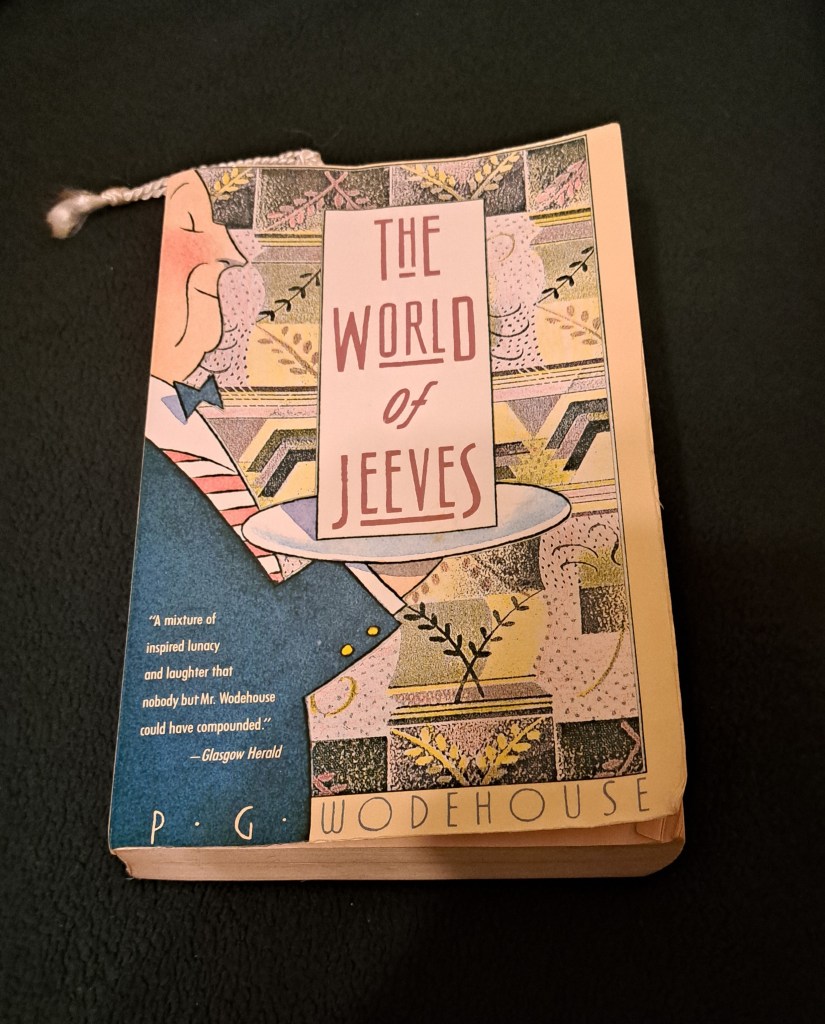
Of course, I’m still reading, but far more slowly than usual. I’ve read a couple books by Donna Leon this month and a lot of P.G. Wodehouse. I read the Wodehouse to lighten my mood. Jeeves and Bertie are wonderful if you need to laugh at something utterly ridiculous. I love Bertie’s confusion as Jeeves gets him out of an unwanted engagement by making him appear to be insane. The story where Jeeves and Bertie aid one of Bertie’s friends who has gone to jail for “biffing” a policeman while drunkenly trying to steal the policeman’s helmet left me in stitches.

On the non-writing front, my middle child starts college this month. He will have moved into dorms on campus by the time this blog posts. Thirteen years ago, a neuropsychologist walked me through the challenges he was facing. I realized he had a long road ahead of him and a lot of work to do. Being what’s now called neurodivergent, he would have to fight to learn many things that are innate to the majority of people: everything from proprioception and bilateral coordination to reading facial expressions. And he did ALL of that hard work. He went from being asked to leave a private school in kindergarten and being placed in special education for three years in elementary school to finishing high school in the top 6% of his class.

He is an incredibly talented, intelligent, outgoing young man with a “punny” sense of humor. Watching him leap into a world that has frequently been unkind to him because of his differences is an emotional challenge for a mom. But I believe he will find his way. He knows how to face obstacles, pick himself up and try again when he fails, and persist in chasing his dreams.

On top of that, my youngest earned her driver’s license this summer and has started going out into the world without me driving her. She is embarking on her senior year of high school and filling out college applications.

Watching my kids spread their wings is breathtaking and anxiety-inducing. An empty nest is on the horizon. My empty nest goals include attending a writing convention or two. I’ve only been to Bouchercon once and I’d like to attend again.

Speaking of Bouchercon, the Anthony Boucher World Mystery Convention is this coming weekend. I won’t be attending, so I hope everything goes well for everyone who is traveling to Nashville to attend. If you are there, stop by the book room and pick up a free copy of the anthology Private Dicks and Disco Balls: Private Eyes in the Dyn-O-Mite Seventies edited by Michael Bracken. I have a story in the anthology called “A Woman’s Place.”

*****

N. M. Cedeño is a short story writer and novelist living in Texas. She is active in Sisters in Crime- Heart of Texas Chapter and is a member of the Short Mystery Fiction Society. Find out more at nmcedeno.com.