Bouchercon and Imposter Syndrome

Bouchercon is what the mystery community calls the World Mystery Convention. When I registered to attend my first Bouchercon in 2019, I didn’t place myself on the list of authors willing to be on a panel to discuss writing in front of attendees. I felt like I was a rank beginner who needed to attend the conference to learn, not to teach anybody anything. In spite of receiving encouragement to sign up for a panel from a regular conference attendee, I didn’t feel qualified.

At that time, I’d had one short story traditionally published and had self-published four novels and a bunch of short stories. That one traditionally published story, entitled “A Reasonable Expectation of Privacy,” had appeared in Analog: Science Fiction and Fact in 2012 and came in third in the 2013 Analog Readers Poll. In 2019, I was also the chapter president for Sisters in Crime: Heart of Texas Chapter after previously serving two years as vice-president. While I volunteered at the 2019 Bouchercon to sit and greet people at the Sisters in Crime table and organized meetups for my chapter members, I felt discussion panels were for distinguished writers with long lists of publications, not me. Who was I to sit on a panel?

I arrived at Bouchercon in Dallas and eagerly set out to attend discussion panels, and quickly realized that I’d under-rated myself. In several of the panels I attended, men were up on the dais, discussing their one and only short story publication. Those men felt confident enough with a single publication to place themselves on the list for a panel assignment. And that one story had indeed qualified them to discuss their writing.

“Imposter Phenomenon” was first described in high-achieving women by two female psychologists in 1978. They discovered that despite receiving recognition, accolades, or achieving success in their fields, many high-achieving women suffered from severe self-doubt, feeling that they didn’t deserve their success. Later studies found the phenomenon doesn’t discriminate, striking both men and women.
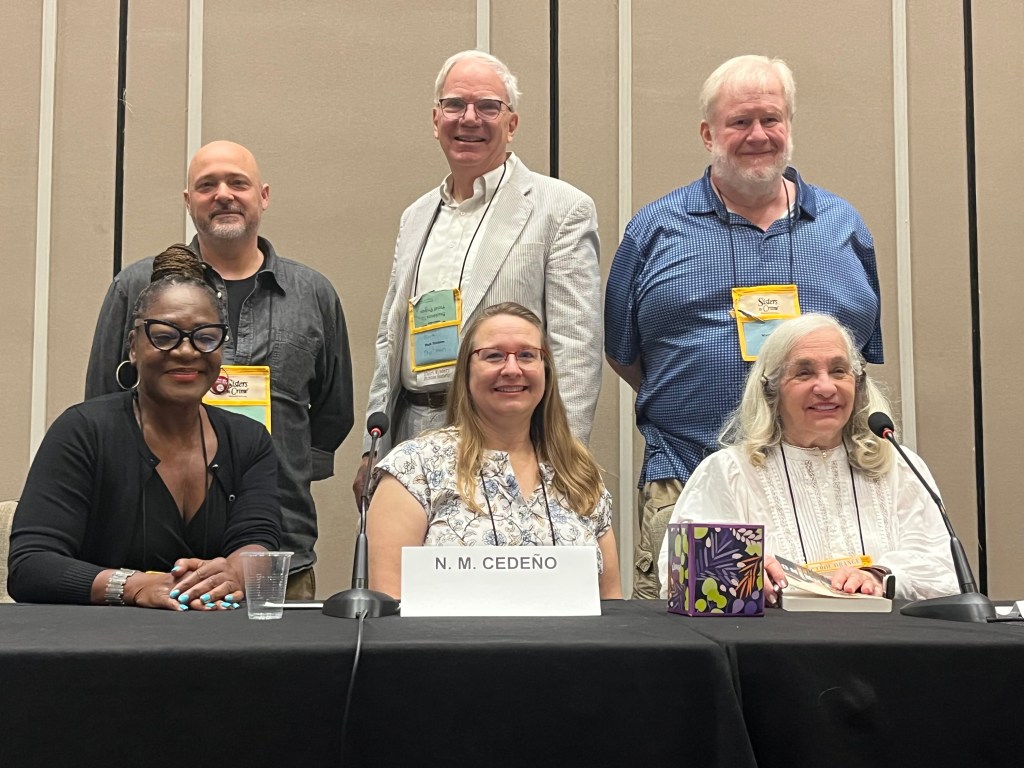
photo by KT Bartlett 2025

Last week, I attended Bouchercon 2025 in New Orleans, my second time to attend the world mystery conference. I learned my lesson in 2019 and placed myself on the list to be on a panel when I registered. And I was assigned to a panel discussing how authors create their authorial voices. I arrived in the assigned room to discover that I’d been placed on a panel with two English professors, a magistrate judge, and an art expert who were all mystery writers, with another mystery writer as the moderator. The line-up could have been intimidating. But I held my own and had as much intelligent information to offer about the topic as everyone else.

During the conference, I witnessed someone else suffering from “Imposter Syndrome.” I attended the Anthony Awards Ceremony and found myself seated at a banquet table with another author and her husband. The author was nominated for the Anthony Award. When an organizer of the event announced that each nominee and a guest or two of their choice should come to the front of the room to sit at tables reserved especially for them, the nominee at my table told her husband that she didn’t feel like she should go. I told her that she was nominated and deserved to be at the front. She refused to move, too self-effacing to feel that she belonged, even though she’d been nominated. The look on her face said that she doubted she would win, so she didn’t belong with those at the front closest to the stage.

When the ceremony reached my table-mate’s category, her husband began to record video on his phone. He had more faith in his wife than she had in herself. The look on her face when her name was called as the winner of the Anthony in her category was sheer surprise. She rose and went to accept her reward, no speech in hand, because she never expected to win. She managed to say a few words, thanking people while trembling slightly, and returned to our table, still in shock.

I congratulated her and told her that she deserved the award. She gave me a doubtful smile. I hope after she processes her win, she will realize that she did belong at the front of the room. I hope that she learns to accept that she is worthy of her own success.

I’ve met and heard of writers who do beautiful work, but are too filled with self-doubt to submit the work for publication or to publish it themselves. Their stories remain hidden in drawers and on hard drives. I’ve read novels that barely rose above average, but still were published. The difference in an average story that was published and a great story that was hidden away is frequently found in the confidence of the author in their own work.

What many of those self-doubting writers don’t know is how welcoming the mystery community is. The mystery community welcomes everyone at Bouchercon. By virtue of your attendance, you belong. Strangers will walk up and start conversations with you. Year round, organizations such as the Crime Writers of Color, Sisters in Crime, and the Short Mystery Fiction Society welcome aspiring writers and writers at every level of their careers, providing support and information to help them succeed.

If you are a writer, aspiring or published, of any genre, join a group and meet other writers. You belong!

*****

N. M. Cedeño is a short story writer and novelist living in Texas. She is active in Sisters in Crime- Heart of Texas Chapter and is a member of the Short Mystery Fiction Society. Find out more at nmcedeno.com.

Goodbye 2024 / Goals 2025

N.M. Cedeño

Between writing, watching a child graduate from high school and leave for college, shepherding another child through obtaining a driver’s license and applying for college, and undergoing unexpected eye surgery, 2024 was a busy year. The year also featured my father’s eightieth birthday party, my twenty-fifth wedding anniversary, and a vehicle totaled in a car accident. Call it the usual assortment of life’s ups and downs.

Last year I set a goal to submit three stories a month. Thanks to my unexpected vision issues and subsequent eye surgery, I didn’t quite hit that goal. I did manage to submit twenty-two unpublished stories and nine previously published stories to various venues for a total of thirty-one submissions.

Seven of the unpublished stories were accepted for publication. Four are still pending either acceptance or rejection. Of the previously published stories that I submitted, seven are still pending and two have been rejected.

Six of my stories were published in 2024. Three appeared in anthologies; two appeared in Black Cat Weekly e-zine; and one appeared on the Redneck Press website. Three short stories and one novella that were accepted for publication in 2024 are pending publication, marching toward their release dates.  

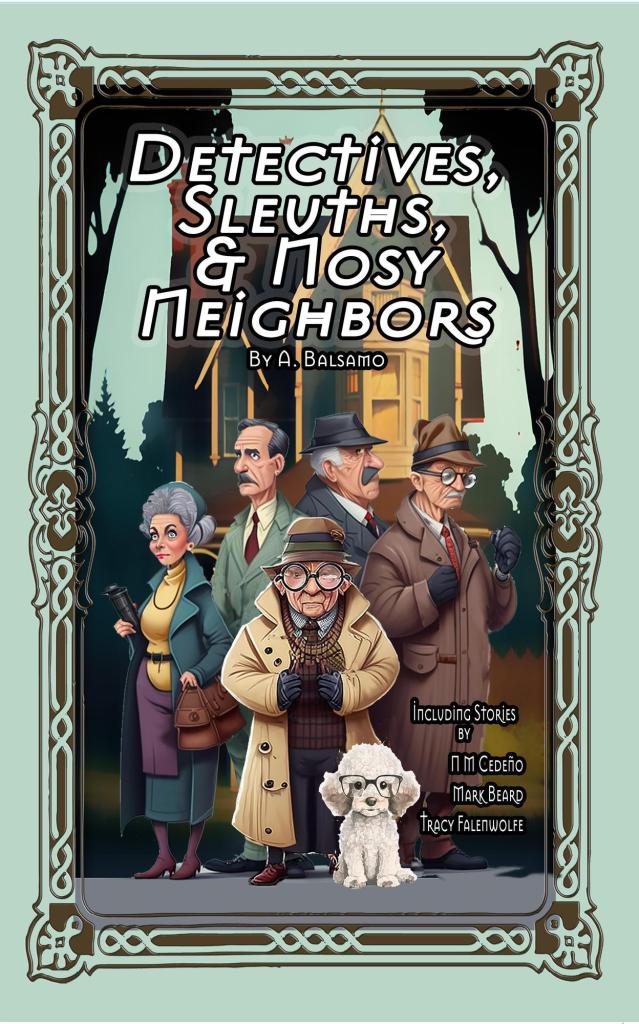
These three anthologies containing one of my stories that came out in 2024.

Speaking of that novella. Writing the novella was a challenge and an occasion for learning in 2024. I have a writing process for short stories and another process for novels. I didn’t have a process for the intermediate length. For short stories not requiring research I typically make a few notes and start writing. For full novels I make a few notes and start writing, stop after a few chapters, make more notes, write until I’m two-thirds of the way done with the plot, make revised notes, and then write until I finish the first draft of the book. My process for the novella ended up looking like neither my short story nor my novel processes.

The novella required research, which was difficult to do with one of my eyes seeing double. Writing it was difficult for the same reason. The situation called for flexibility. So, I did something that I don’t normally do. I wrote the story scene by scene by asking myself “what scenes will this story need?” Instead of starting at the beginning, I started writing with a scene I knew I would need.

After writing a few scenes, I made a list of scenes I still needed. Then I went down the list writing the scenes. If I wasn’t sure about how to write a scene, I skipped it and wrote a different scene. Then I went back, figured out the missing scenes, while adding other scenes that I came up with after I made the initial list. Finally, I connected everything. It worked better than I expected. I completed the initial draft in about a month, and finished it with time to spare before the deadline.

Looking forward to 2025, I am setting the same goal of submitting three stories per month. I already have some story deadlines on the calendar, and I’m looking forward to diving into writing them. How many stories will I write? I don’t know, and I’m a bit reluctant to set a goal. However, I do plan to stick with writing short stories with no plans to write a novel.

I plan to attend at least one writing conference in person this year. I have my sights set on Bouchercon New Orleans.

I plan to keep learning from webinars.

I also plan to read more than in 2024, an easy goal, since my reading was severely curtailed by the eye issue.

On the home front, some of 2025 will mirror 2024, with a child graduating from high school and leaving for college. We’re still waiting to find out what college. The main difference from 2024 will be that my last chick will likely fly the nest for the dorms in 2025. We will have a temporarily empty nest until the two youngest chicks return home to the nest during school breaks. Having no children at home will be a huge change in my household routines. I’m sure it will affect my writing patterns and plans in more ways than I can predict.

Here’s looking forward to the new world of 2025!

*****

N. M. Cedeño is a short story writer and novelist living in Texas. She is active in Sisters in Crime- Heart of Texas Chapter and is a member of the Short Mystery Fiction Society. Find out more at nmcedeno.com.
Work-Arounds

By N.M. Cedeño

As I type this, I’m seeing double through my right eye. Well, not quite double. On the screen, it’s more like printed letters have their own ghostly echoes lingering directly above and behind. This has been an ongoing issue for over a month due to a dry patch on my cornea, making working on the computer and reading an exhausting slog. My left eye is compensating, allowing me to still have twenty/twenty vision with both eyes open, but I have to take frequent breaks from screens. The eye doctor added a new medicine this past week, so I’m hoping to “see” some improvement soon. If not, the next step is to see a specialist.

I had to come up with a work-around for my current writing project because of the eye-strain. What do you do when reading long articles looking for details that you need for a story makes you tired too quickly? The answer I came up with is “watch videos containing the needed information.”

 Because of eye strain, I’ve found watching videos to be easier than reading long articles. With the help of the Sisters in Crime Webinar Archive of videos, I’ve dug into the structure of the FBI, which crimes are under their jurisdiction, and which aren’t, and how cases are assigned and handled. I also watched a webinar on forensics, because why not. The archive contains a wide variety of videos on topics from writing craft to crime-solving. I’ll be watching more videos even when my eye issue is resolved because of the variety of topics and the amount of information available.

Thanks to YouTube videos, I’ve learned how to prevent the theft of a certain model of car, and I’ve learned about what features the car has to prevent the theft of a cargo trailer that the vehicle might be towing. Various videos helped me learn about the particular model of vehicle I need for a story, its security systems, and about the wide world of custom cargo trailers. Now I know how a thief might get around all of those security features to steal both the vehicle and the trailer, which moves the plot on my work-in-progress forward considerably.

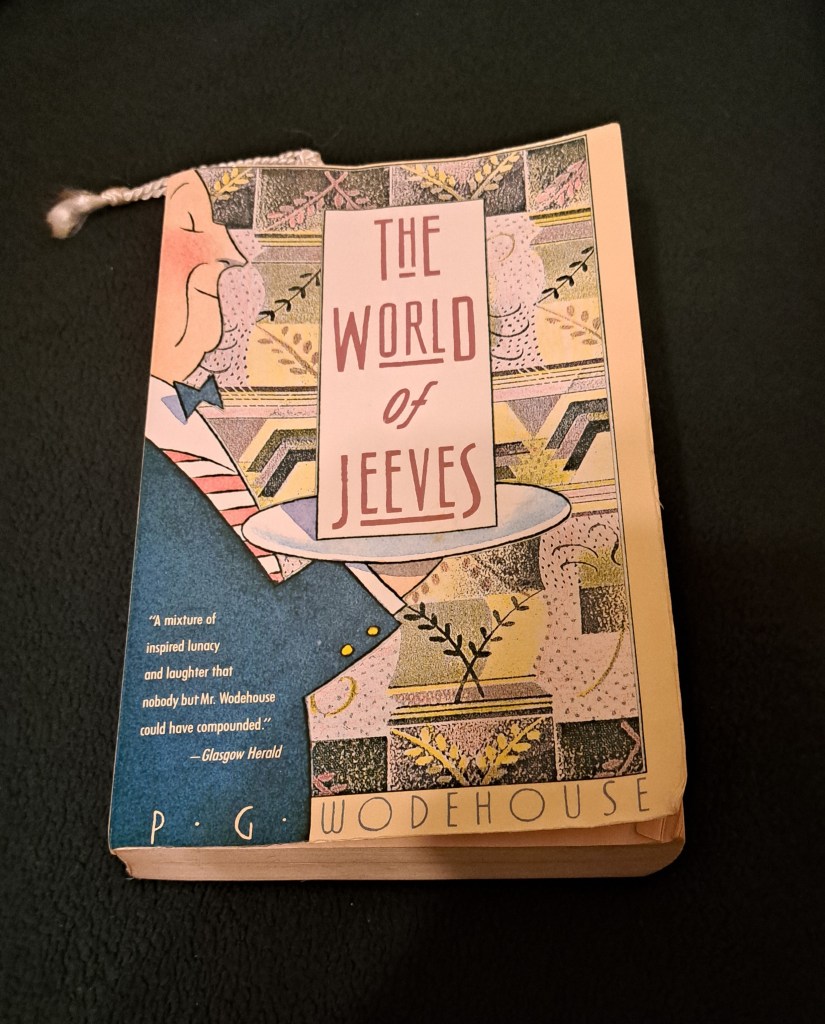
Of course, I’m still reading, but far more slowly than usual. I’ve read a couple books by Donna Leon this month and a lot of P.G. Wodehouse. I read the Wodehouse to lighten my mood. Jeeves and Bertie are wonderful if you need to laugh at something utterly ridiculous. I love Bertie’s confusion as Jeeves gets him out of an unwanted engagement by making him appear to be insane. The story where Jeeves and Bertie aid one of Bertie’s friends who has gone to jail for “biffing” a policeman while drunkenly trying to steal the policeman’s helmet left me in stitches.

On the non-writing front, my middle child starts college this month. He will have moved into dorms on campus by the time this blog posts. Thirteen years ago, a neuropsychologist walked me through the challenges he was facing. I realized he had a long road ahead of him and a lot of work to do. Being what’s now called neurodivergent, he would have to fight to learn many things that are innate to the majority of people: everything from proprioception and bilateral coordination to reading facial expressions. And he did ALL of that hard work. He went from being asked to leave a private school in kindergarten and being placed in special education for three years in elementary school to finishing high school in the top 6% of his class.

He is an incredibly talented, intelligent, outgoing young man with a “punny” sense of humor. Watching him leap into a world that has frequently been unkind to him because of his differences is an emotional challenge for a mom. But I believe he will find his way. He knows how to face obstacles, pick himself up and try again when he fails, and persist in chasing his dreams.

On top of that, my youngest earned her driver’s license this summer and has started going out into the world without me driving her. She is embarking on her senior year of high school and filling out college applications.

Watching my kids spread their wings is breathtaking and anxiety-inducing. An empty nest is on the horizon. My empty nest goals include attending a writing convention or two. I’ve only been to Bouchercon once and I’d like to attend again.

Speaking of Bouchercon, the Anthony Boucher World Mystery Convention is this coming weekend. I won’t be attending, so I hope everything goes well for everyone who is traveling to Nashville to attend. If you are there, stop by the book room and pick up a free copy of the anthology Private Dicks and Disco Balls: Private Eyes in the Dyn-O-Mite Seventies edited by Michael Bracken. I have a story in the anthology called “A Woman’s Place.”

*****

N. M. Cedeño is a short story writer and novelist living in Texas. She is active in Sisters in Crime- Heart of Texas Chapter and is a member of the Short Mystery Fiction Society. Find out more at nmcedeno.com.

Characters We’re Drawn To

By Helen Currie Foster

Last week Big D hosted the Bouchercon book conference. Two sessions made me wonder why we’re drawn to particular book characters, and how key they are to readers.

At the Bouchercon “Success in Publishing” panel, a speaker said, “People read for character. Conflict turns pages.” A second speaker said she’ll re-read a writer’s submittal if, the next day, she remembers the characters.

Best-selling author Elizabeth George (Inspector Lynley series) told a spellbound audience (me too) that for a new book, before she starts writing anything else, she creates her characters and settings.

George designs her characters to “reflect the human heart in conflict.” Sometimes she’ll have as many as six characters telling the story from their point of view. She creates a character prompt sheet, deciding, for each, what is this character’s real need? She considers the character’s psychopathology: what would the character do under stress? If the character appears only once, what is the character’s agenda in
that scene?

George then decides, where does this novel begin? Only then does she start to outline the first ten scenes. Each must be causally related to another scene. She then writes a rough draft of those first ten scenes, and repeats the process for the next ten scenes. Nothing is set in concrete.

In the tug-of-war for primacy between plot and character, what gives a character “pull”? If we “read for character,” which characters really attract us––perhaps even more than a forceful plot? What does Elizabeth George mean––the human heart in conflict?

Each of you has your own list of favorite characters, some from favorite childhood books. Take Charlotte’s Web. I’m fond of the pig Wilbur, and the child Fern. I empathize with Wilbur’s terror when he’s being chased for the slaughter. But Charlotte…isn’t she the magnet? Aren’t we as fixated on her as Wilbur is? Using Elizabeth George’s approach, how is Charlotte’s spiderly heart in conflict? We know she’s determined to teach Wilbur how to survive. We know that a spider has no duty to befriend an orphan pig. Conflict? We know by the end that Charlotte has spent her last days using her remaining energy to teach Wilbur what he needs to know, while fully aware that her own end is nigh. We’re drawn to Charlotte’s generosity, her clever planning, her foresight, her perseverance: we admire her. Like Wilbur we hope for her approval. Do we empathize with her? Yes, when she’s working so hard on those webs. We feel her exhaustion! We too are swinging from one side of the web to the other! Wilbur has learned from Charlotte’s work, too. Perhaps he has learned gratitude? Awe? Aw.

We’re also drawn to childhood characters who learn. Think of that little sourpuss Mary in The Secret Garden. Readers can empathize with her lonely railroad journey to a place where she knows no one, but honestly, she is essentially unlikable: rude, willful, suspicious, unkind. Her heart distrusts the world. As the gorse bushes blossom and the downs bloom, as the children find their way to each other and into the secret garden, Mary slowly changes, slowly learns friendship, slowly learns generosity. We see from her eyes, hear with her ears, and experience her transformation ourselves.

What about Kim? This little orphan, footloose in the Raj, asks himself the great question: “Who is Kim?” Is he English? Hindu? Pathan? Who deserves his loyalty? I love Kim’s rapid costume changes, his effortless switches of vernacular as he deals with beggars, farmers with sick children, high-born old ladies in their palanquins. I itch for him in the woolen school uniform he must wear when sent off to a miserable English school, separated from the beloved Tibetan lama he has adopted. Kipling’s rich plot takes Kim (and us) across India and up into the high cool hills of the Himalayas, as Kim is initiated into the perilous Great Game of spying between the British and the Russians. Such a rich plot––secret messages, invisible ink, spies dressed as beggars, hypnotic jewel games––could dominate the characters. I don’t think it does. On one long day of healing after Kim finishes his exhausting trip from the high hills down to the plains, carrying the sick lama, we experience Kim’s discovery. The lama finds his long-sought river, and Kim begins to know who he is.

Okay, one last favorite character from that grand tale, Lonesome Dove. The question “which is your favorite character…?” occasioned great debate at our house. I opt for Gus. We meet him at the beginning, we see what he sees, hear what he thinks, we know just how he feels as the sun slowly––finally––sinks low enough in the first chapter that he can stalk out to the adobe springhouse to get his jug and have a swig in the dab of shade on the porch. We see other characters through his eyes. But I also admire Gus: I admire his taking care to help Lorena survive, his concern for Newt. I hate that Deets dies, that the little Irish boys die, but I can ascribe that to fate (as wielded by Larry McMurtry). Gus is different. Oh, yes, the author made me care for other characters on that long drive to Montana. But I personally experienced most of the book from Gus’s saddle, as if I were perched right behind him. I don’t want McMurtry to let Gus ride over that hill.… Gus, don’t go over that hill!

Oh, and let’s add A Gentleman in Moscow. Mmm, that tenacious Count Rostov.

My favorites share some qualities: generosity, intelligence, some humor. But in addition, despite their human hearts in conflict, they choose to take action, action potentially at odds with their own interests, despite personal danger and fear of loss. So, throw determination in there too.

***

Helen Currie Foster is the author of the Alice MacDonald Greer Mystery series. She earned a BA from Wellesley College, an MA from the University of Texas, and a JD from the University of Michigan.

Having grown up in Texas surrounded by books and storytelling, she taught high school English and later became a prize-winning feature writer for a small Michigan weekly. Following a career of more than thirty years as an environmental lawyer, the character Alice and her stories suddenly appeared in Foster’s life. In her writing, Foster explores the interaction between history and the present and the reasons we tell the stories we do.

Married with two children, she lives north of Dripping Springs, Texas, supervised by three burros. She works in Austin, and she’s active with the Hays County Master Naturalists and the board of Austin Shakespeare.

Bouchercon: It’s All About Community!

No one else in my family writes novels. When I talk about plotting and pacing, my husband gives me the same blank stare that I give him when he goes into detail about software architecture and development. However, my husband has community and coworkers available to him for discussing the intricacies of his work. Sitting at home at my desk, I didn’t have that same community available because writing is generally a solitary occupation. Writers have to go out of their way to find other writers with whom to socialize and talk shop.

MeAtSinCtable
Beth Wasson, Sherry Harris, and me (N. M. Cedeno) at the SinC table at Bouchercon 2019, photo by Molly Weston

Recognizing the need for colleagues who understood my work, I sought out a local organization that I could join. My search brought me to a chapter of Sisters in Crime, an organization created to support the work of crime fiction writers like me. My local chapter, the Heart of Texas Chapter, provides monthly meetings on topics related to crime fiction and writing and creates a place to meet and talk to other crime fiction authors. Suddenly, I had colleagues with whom to discuss my work. I had found my people.

What I didn’t immediately realize was the extent of the community that I had joined. While I knew that other chapters of Sisters in Crime (SinC) existed around the world, I didn’t consider the larger writing community as a whole. Comfortable with my local community, the world community’s existence escaped my attention.

Never having attended one, I knew nothing about large conventions. I have never been a fan-girl, anxious to meet and shake the hand of my favorite authors. If I thought about my favorite authors at all, I would have assumed they were sitting at home, writing, like I was, and sometimes going out to meet with other local authors. Sure, some of the top 5% go on book tours, and children’s authors visit schools. But, I’d never imagined what it would look like if mystery writers and readers from across the country got together to meet, talk about crime fiction, and socialize.

IMG_6917
Helen Currie Foster and Peter Lovesey at Bouchercon 2019, photo by N. M. Cedeno

Then, Bouchercon came to my state.

Bouchercon, the annual gathering of mystery writers and readers named after Anthony Boucher, a founding member of the Mystery Writers of America, celebrated its 50th Anniversary this year with a massive conference in Dallas, Texas. The importance of the event dawned on me as I began to receive notifications from Sisters in Crime about the events that they would be holding during the convention. As a local chapter president, I was asked to attend the chapter presidents’ meeting to be held after the Sisters in Crime Breakfast on a Friday during the conference. With an invitation to attend, vote on important matters, and discuss issues facing chapters, I registered for the conference and signed up to attend the SinC breakfast.

20191031_112748
Rhys Bowen at Bouchercon 2019, photo by N. M. Cedeno

Arriving at the conference, I realized I’d walked into an event that looked like my local Sisters in Crime chapter meetings multiplied a hundred-fold in scale. Instead of local authors getting together to discuss topics and socialize for an hour or two, mystery writers and readers from all over the world came together to talk and socialize for 4 days. And almost everyone was friendly. I found myself riding in elevators with world-renowned editors, discussing the schedule with best-selling authors, and sitting with critically acclaimed international authors at breakfast.

When I could make my introverted-self attempt a conversation, each and every author I spoke to was polite, interested in talking to me, and happy to pose for pictures as I documented the event for my chapter newsletter.

withAnneHillerman
Me (N. M. Cedeno) and Anne Hillerman at Bouchercon 2019, photo by Helen Currie Foster

After attending lunches, breakfasts, dinners, award ceremonies, and many panel discussions with mystery authors and readers from around the world, I came home exhausted, but extremely happy to have been welcomed into the larger mystery community. While I won’t be able to attend massive mystery conferences every year, simply knowing that they exist is a boost to my spirits.

I look forward to the next time I’m able to join the larger mystery community and talk to colleagues from around the country and around the world. In the meantime, I hope to infuse my local Sisters in Crime meetings with the welcoming spirit and sense of community that I found at Bouchercon.