
Thank You, Encyclopedia Brown!

A post by editor and author Michael Bracken over at Sleuthsayers last week made me ponder my writing influences when it comes to detective fiction. Michael, who has read more than his share of detective fiction in the course of his work recently, suggested that authors need to move away from the trope of the “broke, drunk, and horny” private eye if they want to write something that stands out from the pack. He also recommended not always starting the case in the detective’s office because that can lead to too much back story and a severe delay in moving the plot forward. Reading his post, I realized that I’ve never once had the urge to write that stereotypical “broke, drunk, and horny” character. Then, I wondered why I hadn’t.
My first published short story was a detective story. And while my character, a private investigator named Pete Lincoln, was broke, his financial situation had more to do with the times in which he lived than with his own inability to manage funds. His sex life was irrelevant to the case and didn’t come into the story at all. If he drank, it wasn’t to excess, and also didn’t come into the story. Pete lived and worked in a future world in which privacy rights didn’t exist. He appeared in a story entitled “A Reasonable Expectation of Privacy,” which was first published in Analog: Science Fiction and Fact in 2012, and reprinted in Black Cat Weekly #19 in 2022.

Given that most writers, when they first start crafting fiction, write the tropes that they absorbed while reading, I asked myself what detective fiction I had absorbed at an early age that influenced my writing and that didn’t lead me straight to writing the classic stereotype that Michael was lamenting. Who was the first fictional private detective that I read?

And the answer came to me: Encyclopedia Brown, Boy Detective.

Image Created with Canva

While the boy detective did teach me the basics for detective fiction, he wasn’t in financial straits since he was a child who lived a quite middle-class life with his parents. Everyone knew Encyclopedia liked his friend and partner Sally, but that didn’t remotely approach the trope of womanizing detective. As for drunk, no! While some of his cases started in his garage office with a client paying the twenty-five-cent fee, other times Encyclopedia solved cases for his father, the police chief, while sitting at the family dinner table. So the stories also taught me that not all cases had to start in the detective’s office.

By the time I read Sherlock Holmes a few years later, the pattern of how detective fiction worked was already firmly fixed in my head. While Holmes indulged in illicit substances, he also wasn’t a classic “drunk.” Holmes never panicked about paying the bills or complained about being broke. As for women, the only one that counted for anything for Holmes was Irene Adler. So Holmes, another of my early fictional detective influences, didn’t fit the stereotype either.
Since writing my first PI story, I’ve written many other detective stories. While I have started several of them in the detective’s office with the arrival of a client, not one of my detectives has been “drunk, broke, and horny.” For example, Detective Maya Laster is a former middle school teacher who turned a genealogy hobby into a detective business, solving mostly cold cases with the help of forensic genetic genealogy. She has appeared in two stories in Black Cat Weekly (issue #79 and #110) and will be appearing again in an upcoming anthology.
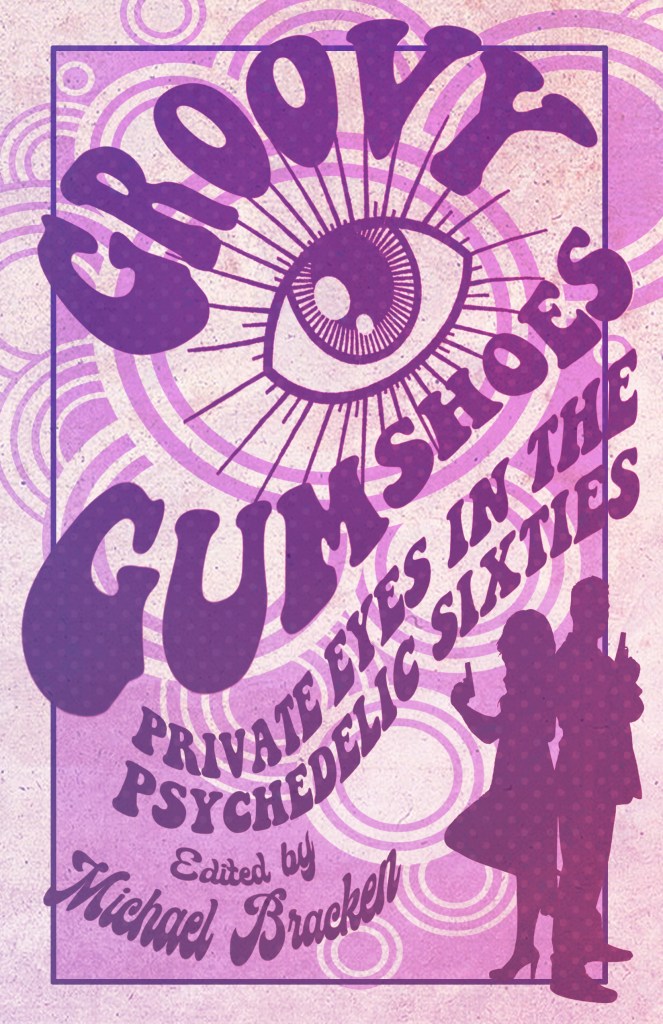
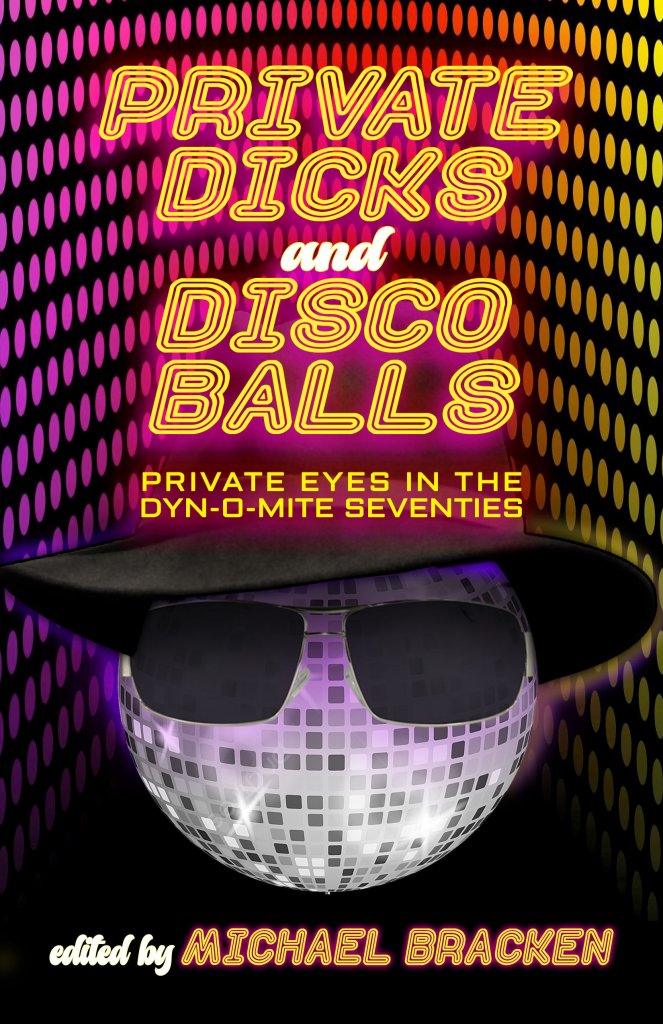
Another of my characters, PI Jerry Milam, came of age during World War II, became a police officer following the war, and suffered terrible injuries in a car wreck which ended his police career, leading him to become a private investigator. He’s a teetotaler with a solid income and chronic left hip pain who feels he missed his chance with women. He appeared in Groovy Gumshoes: Private Eyes in the Psychedelic Sixties and Private Dicks and Disco Balls: Private Eyes in the Dyn-O-Mite Seventies. One of my current works-in-progress sees him solving a case in the 1950s.

If my detectives managed to side-step the cliché of the “broke, drunk, and horny” private investigator, I have my early reading influences to thank for it. So thank you Donald J. Sobol for creating Encyclopedia Brown and teaching me to create private investigators who avoid falling into clichés.

*****

N. M. Cedeño is a short story writer and novelist living in Texas. She is active in Sisters in Crime- Heart of Texas Chapter and is a member of the Short Mystery Fiction Society. Find out more at nmcedeno.com.

Rain, rain go away. . .

By: Dixie Evatt

It might just be the Texas temperatures that have been rocking from the 20s to the 80s since the first of the new year. Or maybe it’s the ominous news reports about melting ice caps or the drought conditions paired with hurricane-force winds that helped fuel the Los Angeles wildfires. Whatever the case, I find my mind traveling again and again to thoughts of weather and the influence it has on stories, both fictional and real. 

As writers we’ve inherited wise advice about incorporating weather into our stories. For instance, Number One in Elmore Leonard’s Ten Rules for Good Writing is “never open a book with weather.” While that advice is close to dogma, it has been debated (see: Jo-Anne Richards bit.ly/41a4oCk and Roz Morris bit.ly/3WUcAEk

Richards, an internationally published novelist, says of the admonition to avoid opening your novel with weather isn’t an iron-clad rule. It’s a prompt to the writer to if the story is stronger by opening with a paragraph where you find people doing something. That doesn’t mean a weather opening never works. She gives this example of an opening from Maggie O’Farrell’s “The Hand that First Held Mine.”

Listen. The trees in this story are stirring, trembling, readjusting themselves. A breeze is coming in gusts off the sea, and it is almost as if the trees know, in their restlessness, in their head-tossing impatience, that something is about to happen.

Morris, a former ghost writer who writes the “Nail Your Novel” blog, offers an example of a weather opening that she likes because it is intensely descriptive and the storyteller lures in the reader. Her sample story opening is from “The Rapture” by Liz Jensen.

That summer, the summer all the rules began to change, June seemed to last for a thousand years. The temperatures were merciless …It was heat to die in, to go nuts in or to spawn. Old folk collapsed, dogs were cooked alive in cars…The sky pressed down like a furnace lid, shrinking the subsoil, cracking concrete, killing shrubs from the roots up…

Although the advice about beginning a story with weather can be debated, there’s also the middle and end of the story to consider. Susanne Bennett, a German-American writer, identified seven ways writers can use weather to tell their story in her 2022 post on “Writers Write”: conversation starter; backdrop; sensual experience; foreshadowing; sense of conflict; motif; and acting force. In fact, she advised, the weather can stand as the last word (where it is almost another character).  bit.ly/4hSBBYq

Bennett also reminds us that the old saw about showing not telling is likewise true for weather. For example, she edited the sentence, “On a sunny day, Jane went to the public library” to read “A T-shirt is enough,” Jane thought, glad to put her cardigan aside… Who needed extra baggage on a day like this?”

“The Great Gatsby” by F. Scott Fitzgerald is chock full of weather references, many illustrating Bennett’s points. One researcher counted 111 separate weather references, from heat, to wind to sun to rain, most of which can be linked to mood or passion in the story.

Weather can also emerge out of the obscurity of background symbolism to overtly influence action. There’s an oft-cited example of one snow scene in “Catcher in the Rye” by J.D. Salinger when Holden Caufield makes a snowball but is so conflicted he is unable to throw it. Would Agatha Christie’s closed-room mystery “And Then There Were None” even have been possible if a ferocious storm hadn’t trapped the ten victims on an isolated island off the Devon coast? Or, how about the necessity of a crop-killing drought to cause the Joad family to pick up stakes and abandon their home in John Steinbeck’s “Grapes of Wrath”?

Weather might incite action or prevent it. My book club recently read “To the Lighthouse” by Virginia Woolf and one of the most memorable refrains is about weather. In the story, the family plans, again and again, to visit the lighthouse the next day but only if the weather is “fine.” It almost never seems to be. 

Would the passionate and cruel relationships in “Wuthering Heights” by Emily Brontë feel the same without a violent storm “rattling over the Heights in full fury,” taking down tree limbs in its wake? Wuthering, after all, means tumultuous storms.

Sometimes weather carries double duty, carrying both mood and action, as in “The Scarlet Letter” by Nathaniel Hawthorne; “Misery” by Stephen King; and “Transit of Venus” by Shirley Hazzard. When the long-suffering Hester Prynne in “The Scarlet Letter” removes her cap and then the scarlet letter she is awash in sunlight. 

In “Transit of Venus” you just know Ted Tice is going to have a rough go of it when he arrives, soaked through. “He looked up from his wet shoes and his wet smell and his orange blotch of cheap luggage. And she looked down, high and dry.”

Not unlike Annie Wilkes the weather is unsettling and unpredictable in “Misery.” As the weather changes, she changes, leading Paul Sheldon, the author she holds captive, to conclude, “I am in trouble here. This woman is not right.”

There are so many other memorable weather scenes in literature that Pulitzer Prize winning writer Kathryn Schultz pulled from her almanac of examples in a 2015 article in “New Yorker” magazine. bit.ly/3WVj0D9

And, finally the 2024 Academy-Award nominated movie “The Room Next Door,” brings together all of the advice about injecting weather into a story. We see its use to create mood, develop characters and foreshadow events when the dying Martha (played by Tilda Swinton) recites parts of James Joyce’s “The Dead” to her friend Ingrid (played by Julianne Moore).

It had begun to snow again. He watched sleepily the flakes, silver and dark, falling obliquely against the lamplight..His soul swooned slowly as he heard the snow falling faintly through the universe and faintly falling, like the descent of their last end, upon all the living and the dead.

Dixie Evatt (DLS Evatt)

A former political reporter in Austin, Dixie also taught writing at Syracuse University. When she teamed up with Sue Cleveland to write fiction, they sold a screenplay to a Hollywood producer. Although the movie was never made, the seed money financed ThirtyNineStars, their publishing company. Through it they published two award-winning thrillers (Shrouded and Digging up the Dead) under the pen name, Meredith Lee. In 2021 Dixie launched a solo mystery (Bloodlines & Fencelines) that Kirkus described as, “A twisty whodunit that’s crafted with care and saturated with down-home Southern charm.” She is working on a prequel (Gravel Roads & Shallow Graves) set to launch in 2025. www.dlsevatt.com