THE DAILY GRIND: COFFEE TIME!

by Fran Paino, a.k.a. F. Della Notte

Coffee is a staple of life all around the world. Something I can understand and agree with. In “Coffee Facts and Statistics,” Lark Allen offers fascinating stats on the American Coffee habit.

A once famous bishop said, “Americans may not consider themselves ‘addicted’ to coffee, but the average American is physically, biologically, psychologically, and neurologically unable to do anything worthwhile before he has a cup of coffee. And that goes for prayer, too.”  The Venerable Fulton J. Sheen.

 What is coffee, anyway? A scientific answer can be found in The New Rules of Coffee: A Modern Guide for Everyone, where authors Jordan Michelman and Zachary Carlson go into lengthy detail about different types, brands, and varieties of coffees. They point out, “Like wine grapes, arabica or robusta plants have their own typicity and genetic diversity.” After more botany details than one might want to read, they conclude, ‘… you’re talking about a piece of fruit with seeds inside.’ Just like wine grapes. Yes? And like wine, coffee has an ancient history.

There is much speculation about the origins of coffee. Still, all agree that coffee originated in the high-altitude forests of Ethiopia, Sudan, and Kenya and goes back to a time when North America was yet unknown to the extant world. My favorite possibility/story/myth about the discovery of coffee is the legend of Kaldi, first told by Antoine Faustus Nairon, a Maronite who became a Roman professor of Oriental languages. His treatise is considered one of the first ever written on coffee, in 1671, Rome.

The legend takes us to Abyssinia (now Ethiopia), where a goat herder named Kaldi noticed that his unfriendly goats changed after eating berries from a particular tree that grew in the forest high up on the Abyssinian plateau. They became lively and more pleasant and couldn’t sleep at night. Kaldi decided to eat the berries and found himself filled with energy. Not knowing what to do, Kaldi brought some to the Islamic abbot of a nearby Sufi monastery. The abbot brewed the berries into a drink and found that it kept him awake throughout the long, required hours of night prayers. The abbot informed other monks who tried the brew made from these berries, and word spread rapidly eastward and reached the Arabian Peninsula, then spread throughout the world. Before coming to the United States, coffee found its greatest fans in European cities.

America’s love affair with coffee is estimated to have begun as early as 1607, when John Smith, founder of Jamestown, Virginia, introduced it to the colonists. Here are other fun facts, supplied by A.I., about coffee’s rise to power in the U.S. Tracing coffee in the United States, one can find specific dates and activities. In 1670, Dorothy Jones became the first person to sell coffee in Boston, Massachusetts, and in 1697, the Dutch opened the first coffee house in New York. In 1713 a Dutch merchant presented a coffee tree to King Louis XIV of France. George Washington recorded in his diary in 1760 that he attended a ball where coffee was served. Coffee grew in popularity after the 1773 Boston Tea Party. Understandable, I’d say. One of the most interesting activities around coffee took place during the American Civil War, 1861-1865. Coffee was a standard issue ration for the Union and Confederate armies. The soldiers on both sides often ran out of food and supplies, including coffee and tobacco. Union and Confederate soldiers occasionally exchanged northern coffee for southern tobacco along the quieter fronts.

Today, in the U.S., we no longer worry about north and south for our coffee supply. We may buy it in coffee shops such as Starbucks and sometimes sit down, but we most often take it away.  In Europe, however, the takeaway culture hasn’t taken over. In Italy and France, it is customary to drink a small, strong shot of espresso standing at the bar. This is considered a quick, social interaction, with many people opting to savor it at the bar while chatting with the barista or friends. 

Some key points about European coffee bar customs: Espresso is the norm. Most European coffee cultures center around espresso as the standard coffee order, with variations like “lungo” (longer shot) or “ristretto” (shorter, stronger shot) available depending on what one prefers.  Standing at the bar to drink it is common, and it’s paid for before receiving the drink.  Morning coffee is different. While espresso is enjoyed throughout the day, milk-based drinks like cappuccino or café au lait are often considered more of a breakfast item. 

Country-specific nuances: In Italy: “Un caffè” means a single espresso, and it’s considered a faux pas to order a cappuccino after lunch. In France, “Café” refers to a standard espresso, and a “café au lait” is a coffee with a more significant portion of milk.  In Spain, the term ‘solo’ is received as a request for espresso coffee served in a small glass.  

Here in the United States, we drink our coffees sitting, on the go, in large or small containers or cups. Most Americans prefer their coffee with at least some milk and often with sugar or artificial sweeteners.

I love my coffee any time of the day, but in the late afternoon, I bow to caffeine’s power to keep me awake at night, so I cheat and switch to decaf.  

Thus, it is no surprise that the protagonists in the Housekeeper Mystery Series, Father Melvyn Kronkey, is an unusual Irishman who prefers coffee to tea, a habit instilled in him by his trusty right hand, Mrs. B. Over many a cup of coffee, they use wit, intellect and intuition to reason out motives and solve crimes.  

In book four, Murder in the Cat’s Eye, now underway on the pages and in Italy, Father Melvyn, and Mrs. B. take a group of parishioners to Rome to study the lives of ancient Christians, living in a harsh, pagan society, and how they flourished after being outlawed, and punished by gruesome deaths. But will Father Melvyn and Mrs. B. only deal with the ancient world, or will they find themselves embroiled in current crimes, death, and destruction in a strange country? Watch for it in late spring or early summer.

Meanwhile, Happy Reading!
Frosty Weather!

by Helen Currie Foster

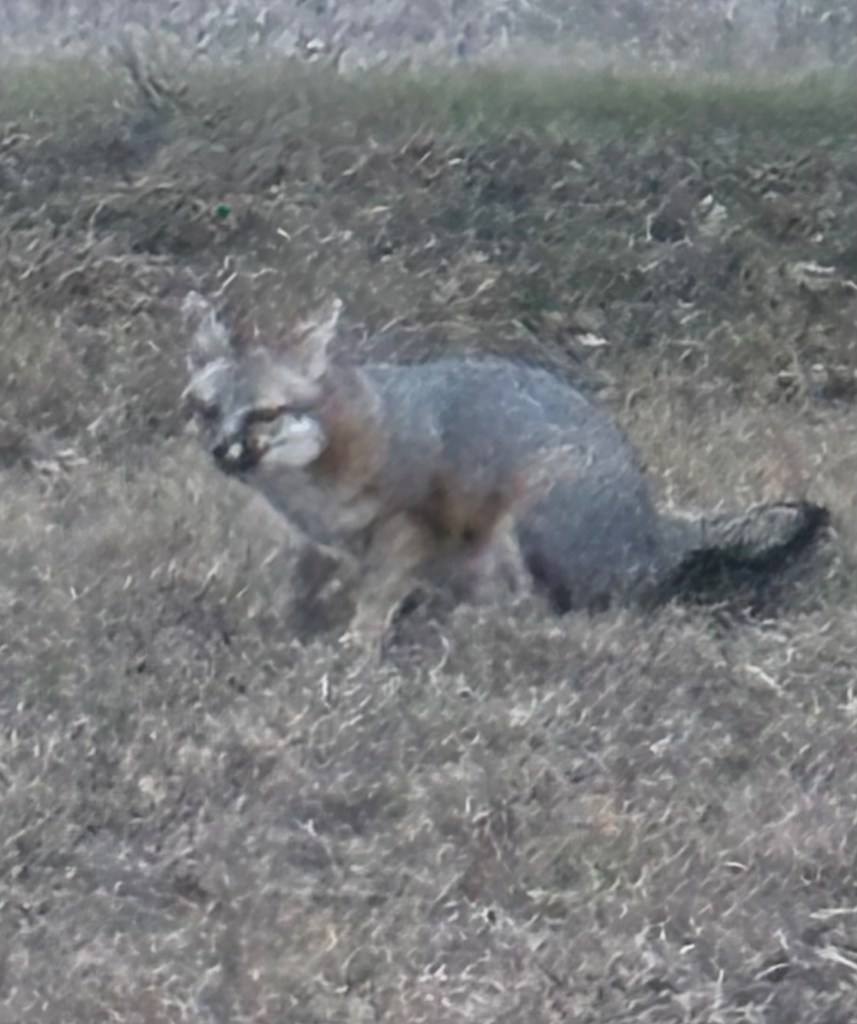
Brr!! It’s so cold the foxes are prowling the front yard looking for snacks and the birds are up at dawn waiting for their humans to show up with the bird feeders.

Dawn and twilight, twilight and dawn: Out here in the Hill Country, planets and stars still visit regularly. Lately Mars (on Jan. 12 it came as close to us as it gets, every couple of years) has been showing off after dark in the eastern sky, glowing orange-red like a war god’s shield. Jupiter rises high above, competing on brightness with Venus off in the west. Last week Venus revealed itself above the sunset, above rows of pink clouds like swishing skirts below. Close to Venus but a bit “left” or south you can spot Saturn (admittedly I get help from the Skyview app)—small and far away but Saturn still hopes we’ll at least leave a comment in the planetary visitor’s book. I find it both exciting and comforting that out here we still can see planets, unbothered by earthly chaos, spinning through space, away from us, then back again. (If lights are encroaching on your nights, consider joining Dark Sky!)

Which takes me back to our earlier sky-watching ancestors. Housebound this icy weekend, I found myself checked 23andMe and discovered I have the first in a list of Neanderthal gene variants, tactfully (really beautifully) described as: “…one variant associated with having difficulty discarding rarely-used possessions.”

Spang on! So true! I know some of you readers are fully capable of blithely opening a dusty box of someone’s old t-shirts and thinking—does he really want to keep his t-shirt from basketball camp thirty years ago? Surely not. Off to Goodwill!

But because that shirt unearthed memories of stories of basketball camp, my Neanderthal variant ordered, “put that box back on the shelf!”

And “rarely-used possessions” can still be extremely valuable. The perfect rock for chipping a new axe? The best cave for winter living? The skin bag of crushed ochre? It’s important to remember where these things are! https://www.durham.ac.uk/departments/academic/archaeology/archaeology-news/neanderthals-the-oldest-art-in-the-world-wasnt-made-by-homo-sapiens/

Still, in our “too much stuff” world, while 23andMe offered a tactful way to describe this Neanderthal variant, perhaps a more useful term is—“difficulty discarding memory-stirring possessions.”

Maybe your home (like mine) also holds a number of “rarely-used possessions.” For Marie Kondo the operative question was “does it evoke joy?” My new question for the “rarely-used possession” is, does this actually stir memories? What “memory containers” do we really, truly, keep going back to? Not just keep, but go back to? Pick up and look at again? And remember?

For me? Not old diaries. Certainly not yearbooks. Nor even boxes of pictures. But certain old clothes do remind me of memories and milestones: the suit bought for interviewing during law school. A treasured fleece from a rowing competition. Even childhood clothes that are long-gone live in memory—the sweater a grandmother knitted (second grade), the scratchy little swimsuit for swimming in a mountain lake (third grade), the blouse saved for with baby-sitting money.

Other sources of memories, similarly intangible? Music, of course, especially if dancing was involved! First time slow-dancing in seventh grade! First time at the Broken Spoke, trying the Cotton-Eye Joe! Sam’s Town Point on a perfect night–– https://www.samstownpointatx.com/––with Floyd Domino and the All-Stars and everyone dancing! http://www.floyddomino.com/dates-news.html Do dance memories stick in your head too?

One cache of memories I desperately wish I had––and you might too––involves the night-time communal dances of the San people of the Kalahari, in southern Africa. These memories are vividly described in Once Upon a Time Is Now, A Kalahari Memoir,

by the extraordinarily distinguished anthropologist Dr. Megan Biesele, a treasured friend. https://amzn.to/4at9o8o  Megan lived with the San people and on many, many nights watched them engaged for hours of singing, dancing, retelling traditional stories—and healing. She describes the synchrony of the dance around the fire:

“Anything…could happen as the people took up the tools…of their voices and their hands, their legs and their feet, their knowledge of each other, and of their reliable power to create, with each other, a force for heath and peace. As the voices blended in a polyphony of endless incremental variation, as the powerful stamping of the men’s feet took them in measured, inexorable progress around and around the dance circle, I felt the waves of energy…it was impossible not to become linked to the process myself.  [P]eople seemed with each movement, each note of singing, to call out to each other and to receive instantaneous response…. Every dark night could become a bright night of the soul.” (Id. at 173-4)

I still haven’t figured out how to get Alice, my protagonist in the Ghost mystery series set in the Texas Hill Country, to the Kalahari. She and her beau, Ben Kinsear, would really like to go. Meanwhile they will keep dancing at the Beer Barn, in Coffee Creek. Also, Alice still keeps her kids’ baby clothes, and one of her mother’s hand-made dresses, and the white Gibson-girl dress her great-grandmother wore back before WWI.

But maybe I’ll take a spring-cleaning-vow for a box or two. Watch this space.

Meanwhile, remember the birds can lose 10% of their weight just keeping warm on a frigid night. Keep your feeders filled! And stay warm!

Helen Currie Foster lives and writes the award-winning Alice MacDonald Greer mystery series in the Texas Hill Country, north of Dripping Springs, loosely supervised by three burros. Coming soon–Book 10 in the series!

Goodbye 2024 / Goals 2025

N.M. Cedeño

Between writing, watching a child graduate from high school and leave for college, shepherding another child through obtaining a driver’s license and applying for college, and undergoing unexpected eye surgery, 2024 was a busy year. The year also featured my father’s eightieth birthday party, my twenty-fifth wedding anniversary, and a vehicle totaled in a car accident. Call it the usual assortment of life’s ups and downs.

Last year I set a goal to submit three stories a month. Thanks to my unexpected vision issues and subsequent eye surgery, I didn’t quite hit that goal. I did manage to submit twenty-two unpublished stories and nine previously published stories to various venues for a total of thirty-one submissions.

Seven of the unpublished stories were accepted for publication. Four are still pending either acceptance or rejection. Of the previously published stories that I submitted, seven are still pending and two have been rejected.

Six of my stories were published in 2024. Three appeared in anthologies; two appeared in Black Cat Weekly e-zine; and one appeared on the Redneck Press website. Three short stories and one novella that were accepted for publication in 2024 are pending publication, marching toward their release dates.  

These three anthologies containing one of my stories that came out in 2024.

Speaking of that novella. Writing the novella was a challenge and an occasion for learning in 2024. I have a writing process for short stories and another process for novels. I didn’t have a process for the intermediate length. For short stories not requiring research I typically make a few notes and start writing. For full novels I make a few notes and start writing, stop after a few chapters, make more notes, write until I’m two-thirds of the way done with the plot, make revised notes, and then write until I finish the first draft of the book. My process for the novella ended up looking like neither my short story nor my novel processes.

The novella required research, which was difficult to do with one of my eyes seeing double. Writing it was difficult for the same reason. The situation called for flexibility. So, I did something that I don’t normally do. I wrote the story scene by scene by asking myself “what scenes will this story need?” Instead of starting at the beginning, I started writing with a scene I knew I would need.

After writing a few scenes, I made a list of scenes I still needed. Then I went down the list writing the scenes. If I wasn’t sure about how to write a scene, I skipped it and wrote a different scene. Then I went back, figured out the missing scenes, while adding other scenes that I came up with after I made the initial list. Finally, I connected everything. It worked better than I expected. I completed the initial draft in about a month, and finished it with time to spare before the deadline.

Looking forward to 2025, I am setting the same goal of submitting three stories per month. I already have some story deadlines on the calendar, and I’m looking forward to diving into writing them. How many stories will I write? I don’t know, and I’m a bit reluctant to set a goal. However, I do plan to stick with writing short stories with no plans to write a novel.

I plan to attend at least one writing conference in person this year. I have my sights set on Bouchercon New Orleans.

I plan to keep learning from webinars.

I also plan to read more than in 2024, an easy goal, since my reading was severely curtailed by the eye issue.

On the home front, some of 2025 will mirror 2024, with a child graduating from high school and leaving for college. We’re still waiting to find out what college. The main difference from 2024 will be that my last chick will likely fly the nest for the dorms in 2025. We will have a temporarily empty nest until the two youngest chicks return home to the nest during school breaks. Having no children at home will be a huge change in my household routines. I’m sure it will affect my writing patterns and plans in more ways than I can predict.

Here’s looking forward to the new world of 2025!

*****

N. M. Cedeño is a short story writer and novelist living in Texas. She is active in Sisters in Crime- Heart of Texas Chapter and is a member of the Short Mystery Fiction Society. Find out more at nmcedeno.com.