Submissions and Rejections

By N.M. Cedeño

No one likes rejection. Being rejected certainly doesn’t feel good, but anyone who wants to write (and who isn’t self-publishing their work) has to become inured to receiving rejections. While some of my stories have been accepted on their first submission, the vast majority of my traditionally published work was rejected at least once before it was accepted for publication. If I believed that the rejections were commentaries on the quality of the stories, I might have thrown the stories in a drawer after the first rejection and given up. This post is for everyone out there whose fellow writers and beta readers have told them their work is ready for publication, but who are afraid of rejection or think a single rejection is the end of the line.

Sometimes stories (even phenomenal stories that go on to win awards, so I’ve heard) take multiple submissions to find a publication home. These stories, through no fault of the story or the author, simply have trouble landing at the right market with the right editor at the right moment.

If I was the type of person to give up on a story and forget it after one rejection or even after five rejections, several of my stories would never have been published in magazines or anthologies.

Why do some stories take multiple submissions to be accepted if the story is well-written and ready for publication? Mostly, the story has to land in the right niche.
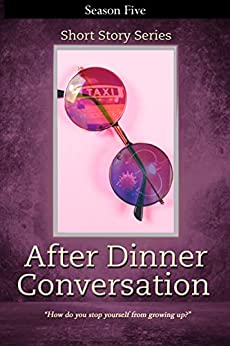
For example, one of my stories, “The Wrong Side of History,” ended up finding a home after ten submissions in After Dinner Conversation, which publishes stories that examine particular ethical questions. The story contains difficult subject matter that some editors won’t touch. I knew the story would be a hard one to place when I wrote it, so I wasn’t surprised when it wasn’t accepted until its tenth submission. Since the story was partially inspired by a paragraph in an article I read in a bioethics textbook, a magazine devoted to advancing ethical discussions was definitely the best place for it. The story can be found in After Dinner Conversation: Season Five.

Another hard-to-place story, “It Came Upon a Midnight Ice Storm,” was a cozy Christmas mystery. It was accepted on its ninth submission. I can find far more markets right now for dark crime fiction than for cozies, let alone Christmas cozies. Trying to figure out the right time to submit a seasonal story for a particular market is also difficult. Happily, I spotted an open call for cozy mysteries from Black Cat Mystery Magazine and found this story a home in issue #12 Cozies.

Other stories just linger on submission. Who knows why.

Recently another story with a long submission history was published. I wrote the first version of “The Ghostly Lady’s Curse” in about 2013, then left it in a file for a while. As near as I can tell, I rewrote a second version of it in 2017 and reviewed the story almost every time I submitted it after that. This was one of those stories that I kept tweaking– a word here, a sentence there, a paragraph added, a paragraph removed– between submissions, as opposed to one that I simply turned around and resubmitted without any changes. While the heart of the story never changed, the details did. On its tenth submission, it finally found a home in the Inkd Publishing anthology Detectives, Sleuths, and Nosy Neighbors.

My ghost story, “A Lonely Death,” which was published in Noncorporeal II from Inkd Publishing, was accepted on its eleventh submission. Among all my stories, this story has the dubious distinction of having the most submissions before being accepted. I changed a word here and there, but after about the third submission, simply resubmitted it. I had a reader tell me recently that they thought this is one of my best stories ever, which is nice to hear!

A glance through my submission records spreadsheet shows I have two other stories with lengthy submission histories. One story that I particularly like and want to see in publication is on its tenth submission. I’m hopeful that it will be accepted soon. But I know it might take some time to find the right market. The story in question contains difficult material, making it doubly hard to place. If it’s not accepted this time around, then maybe it will tie or set a new “number of submissions before publication” record.

If you want to see one of your stories published in a magazine or anthology, and you receive a rejection, DON’T GIVE UP! Don’t dwell on the rejection. Resubmit. Consider rejections as stepping stones to eventual publication.

N. M. Cedeño is a short story writer and novelist living in Texas. She is active in Sisters in Crime- Heart of Texas Chapter and is a member of the Short Mystery Fiction Society. Find out more at nmcedeno.com.


“PURE WRITERS…”

By Helen Currie Foster

A treat awaits at the end of the Audible recording of The Last Devil to Die, Book 4 in Richard Osman’s Thursday Murder Club series. https://bit.ly/4bJ55EP

The narrator, actress Fiona Shaw, interviewed Osman, who declared that, like so many of us, he believes in Stephen King’s On Writing. Thus his commitment: “Use no adverbs!” As Osman works on a scene he asks—“Is the scene propelling the action”? If not—out it goes. And how to propel the action? “Do it all with dialogue!”

I still believe mystery readers need to love (or at least like, or at the very least admire) their favorite protagonists. Osman says he loves his characters. He tells Shaw that he knows how each one talks. If you’ve read any of the Thursday Murder Club series you know that each character has a distinctive voice. Elizabeth, the retired spy, does not sound like Joyce, the voluble  diary-writer, or Ibrahim, the psychiatrist, or Ron, the finally-grown-up Tough Guy. Or Bogdan, the mysterious and indispensable…sometime criminal? Osman issues a challenge to fellow writers: consider what you yourself, or a particular character, would not say? (And maybe—what happens when you—or they––do say it?)

Another treat—this month we have two new books to relish! Daniel Silva gives us A Death in Cornwall, with his now retired Israeli spy Gabriel Allon rebuilding his original life as a restorer of old paintings. https://bit.ly/3LoP7Vz  Donna Leon presents Commissario Brunetti in A Refiner’s Fire, confronting and trying to understand youth gangs terrorizing the antique squares of Venice. https://bit.ly/46duLIE  Both books center on highly contemporary topics tied to—you guessed it—old sins in old wars.

Daniel Silva takes us on a deep dive into the almost unimaginably corrupt world of the ultra-rich, centered on the Geneva Freeport, where, Silva explains in his Author’s Note, 1.2 million paintings are stored, including more than a thousand by Picasso. Silva doesn’t mince words in describing one way the planet’s ultrarich escape paying taxes: they rent vaults at the Freeport using anonymous shell companies and avoid taxation if they sell paintings (or other assets) to another offshore anonymous shell company—in “transactions largely invisible to tax authorities.” https://en.wikipedia.org/wiki/Geneva_Freeport

A darker side to the Freeport vaults? Hiding works stolen from European Jews before and during World War II, with new “provenances” and new histories. Silva engages us from the beginning with Allon’s return to the Cornwall setting, the mysterious light burning in the cottage of a British art expert who has identified a Picasso stolen in 1943, and the return of young Timothy Peel, a lonely Cornwall lad befriended by Allon years earlier, and now an exceptionally able young policeman.

Add in a corruption issue involving British politics and Russian oligarchs and I predict you’ll be turning the pages. The famous spy doesn’t work singlehandedly, either—we travel to Corsica to find Allon’s mysterious colleague Christopher, then to Monaco with the computer whiz Ingrid, ready to steal documents from the Freeport, and then? As to telling the story with dialogue, and a separate voice for each character, maybe the way Allon chooses what not to say is what pushes the action.

Three days ago I picked up Donna Leon’s new A Refiner’s Fire at 8 a.m. Then I could not put it down. The first chapter starts fast (in a dark Venetian piazza), then accelerates. Meanwhile, Leon must reintroduce her characters. Her mastery of dialogue lights them up. One example: Commissario Brunetti must tread cautiously around Vice-Questore Patta, the vain and arrogant head of the police and not a Venetian, hence untrustworthy. Patta has lost at least five kilos in a new training program at a gym. A colleague tells Brunetti she overheard a compliment paid to Patta by the subtle and dazzling Signorina Elettra, the secretary who quietly controls the entire Questura office. Patta wore a new suit one day; Elettra admired it, saying “it was bolder than what he usually wore,” “[b]ecause it was single-breasted and thus more . . . revealing.” Elettra then complimented Patta “on his dedication to his vitality programme.” Brunetti whispers: “The Vice-Questore’s ‘vitality programme.’” He shakes his head a few times, “marvelling at Signorina Elettra’s ability to seduce people with a few kind words.” This exchange—combining a very Venetian fixation on exquisite fashion with the subtlety with which Elettra manages her boss––leave no doubt that she will also manage to extract from top-secret national computer systems the information Brunetti will need to resolve the crime wave Venice faces.

As in A Death in Cornwall, A Refiner’s Fire links new crimes––ongoing midnight gang battles and a vicious attack on the elderly Questura crime scene officer––to old crimes, committed during Italy’s participation in the Iraq war.

One more recommendation. I reread Dog Will Have His Day, from the Three Evangelists series by French archeologist-mystery writer Fred Vargas, set in Paris and Brittany. https://bit.ly/3WlR7nT  This time our protagonist, Louis Kehrweiler, bears the psychic wounds of an old war, World War II, with a German father and French mother. Kehrweiler is still investigating crimes by certain government officials—even though he’s been dismissed from the investigating ministry, he keeps watch over certain apartment buildings where potential targets live. When the book opens he’s watching people who walk their dogs, because he has found dog excrement on a grate by a bench…and then, after rain, when the excrement is rained away, he’s found that a bone remains. A bone from a human toe. Now he’s looking for the dog–and the victim. I found myself liking Kehrweiler a great deal—he’s a subtly drawn character. And Vargas? Oh, you must mean Fréderique Audoin-Rouzeau, French archeologist, historian and novelist, known for her work on the Black Death. and wildly creative with deep roots in French legends, tales, and countryside. https://www.fpa.es/en/princess-of-asturias-awards/laureates/2018-fred-vargas.html?texto=trayectoria&especifica=1;https://www.theguardian.com/books/booksblog/2009/jul/17/fred-vargas-deserves-prizes

Writers and readers both can enjoy Foul Matter, a 2004 sendup of the New York publishing world by Martha Grimes, author of the 25-book Richard Jury mystery series. https://bit.ly/3WnoqqJ

 (“Foul matter” is a sarcastic term for original manuscripts, galleys, and proofs which have been superseded by revised (i.e. edited) versions or the bound book and returned by the printer to the publisher.) Grimes’s Foul Matter threatens to morph into a murder mystery, even a thriller, while making fun of genre classifications and publisher behavior. The plot begins with a wildly successful author engaged in his own devious plot. His first step: “What Paul needed was hard to find: a pure writer.” He meant “a writer of a certain kind, one who didn’t really think about the arena of publishing.”

It’s fun to hear Foul Matter’s characters comment on their writing processes. One hates writers’ retreats, “Because we love to complain about not having enough time, or that we lack a proper writing environment. We don’t want any more time, and any environment will do, if we’re honest. Writing’s just damn hard. It can be torturous.. I don’t want to torture myself any more than is absolutely required. Besides, can you imagine having to sit down to dinner with thirty or forty other writers?”

Another character mocks this “writing is torture” complaint: “You can’t be blocked if you just keep on writing words. Any words. People who get ‘blocked’ make the mistake of thinking they have to write good words.” She analogizes to Field of Dreams: “Write it, and they will come.” A would-be writer asks, “Do you need to start with an idea?” No, says one writer: “If you want to write a mystery, just start with a body draped over a gate.” But do you need talent? “You just take out your yellow legal pad and pen and just start.”

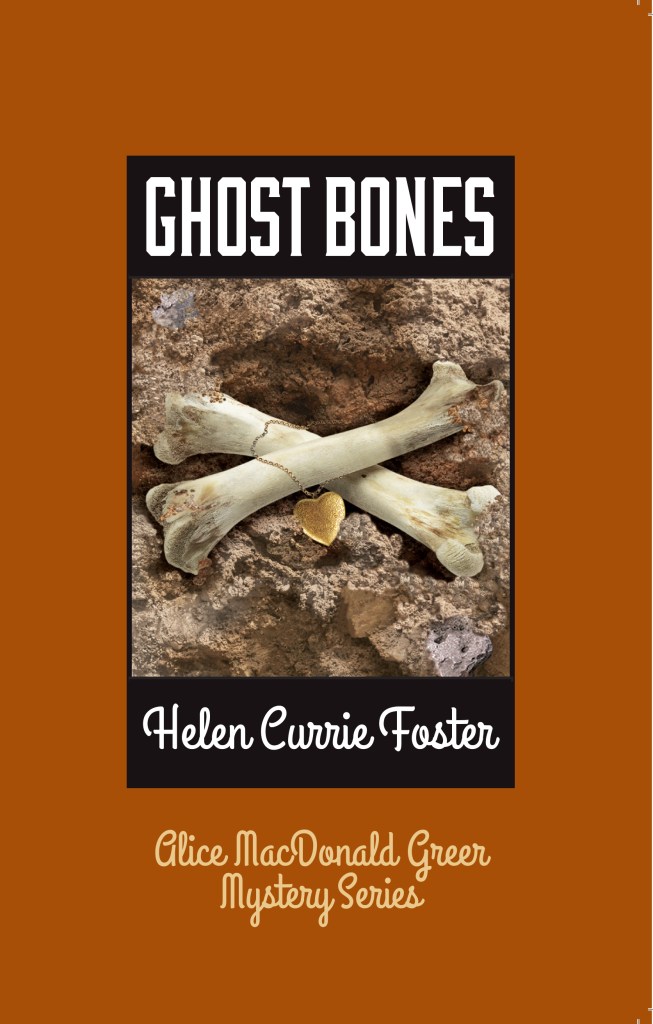
Okay, fellow writers. Laugh, then pick up your pens. I can say that since momentarily I’m in the wonderful space where a book has just come out—Ghost Bones! (Book 9 in the Alice MacDonald Greer Mystery series)—and a new book is just beginning to ferment. 

Helen Currie Foster lives and writes the Alice MacDonald Greer Mystery series, set in the iconic Texas Hill Country, north of Dripping Springs, loosely supervised by three burros. She’s active with Heart of Texas Sisters in Crime, Austin Shakespeare, and Hays County Master Naturalists.

Follow her at http://www.helencurriefoster.com, and https://www.facebook.com/helencurriefoster/

THE MAGIC OF SUMMER AND HERBS.

Francine Paino, a.k.a. F. Della Notte

The long, dreamy days of summer are upon us – some places hotter than others, but summer all the same.  Along with daylight for twelve-plus hours to enjoy beaches, sand, and vacations from work and school, we are blessed with a profusion of herbs to flavor our food and our lives.

In archeology, evidence indicates the use of medicinal plants dates back to the Paleolithic age, approximately 60,000 years ago, and written information dates 5,000 years to the Sumerians, who compiled lists of plants and uses. It is no wonder that herbs flavor our foods and, through the centuries, has been used in medicines, and magic spells. Most people associate herbs in witchcraft with poisons, but even the herbs most commonly used in cooking have fun lore surrounding them, and summer is when we enjoy them in abundance and freshly picked.

There’s nothing sweeter than a bright, lush Basil plant. Its leafy growth gives off an aroma that is slightly sweet, clove-like, and peppery. It’s also described as giving hints of mint and anise. Basil is one of the few herbs that can be enjoyed raw. One of my favorites is the Caprese Salad, where its peppery flavor enhances sliced tomato, mozzarella, and olive oil. 

Basil has far-reaching, ancient folklore. With over 5,000 different varieties, ranging from Thai to Genovese, Basil is one of the most popular herbs in the world. In Hinduism, it is considered sacred. In India, it’s also regarded as holy and used to ward off evil. In Ancient Egypt, Basil was used in the mummification process because of its antibacterial properties. It didn’t, however, protect Lord Carnarvon.

Other than culinary and religious books, I haven’t found any fun fiction involving Basil in stories, other than Basil, the Great Mouse Detective. The same goes for what’s become known as the “pizza herb.”  

Oregano has a piney, peppery, sharp flavor with menthol and lemon undertones. Depending on the conditions in which it’s grown, it can have a warm, slightly sour, and spicy taste, and it lends its flavors to meats and sauces. Personally, this cook favors the Greek Oregano over the Italian—believe it or not!

It is reported that Oregano has been used in magic spells, and brings good fortune and protection. Some believe that growing Oregano near your home can protect you from evil.  Kept near you while sleeping, it may aid in visions and psychic dreams.  – I’ll pass on that one.

In herbal lore, Oregano is said to promote good fortune and was used as an antidote to poisons, treating convulsions and skin irritations. “In Shakespearian time, it was thought to cure overdoses of opium and hemlock.”  Whether or not any of that is true, herbalists still recommend it for its antibacterial properties.

Have you ever munched on Parsley? Try it sometime. Fresh and clean, it’s a good palate cleanser. It’s uplifting, chopped into soups, stews, and sauces, from Tabbouleh to Gremolata. I particularly enjoy its piney taste mixed with ricotta cheese prepared for lasagna. High in vitamins C, A, and K, iron, and folic acid, it has incredible health benefits on the spectrum of ancient uses.

In the spirit world, sprinkling chopped Parsley over your food would  help protect you from low-level spirits. Here’s an exciting find. “Ancient Greeks associated Parsley with Achromous, the Herald of Death, and covered their tombs with wreaths of it.” “Superstition held that only pregnant women or witches could grow Parsley.” Happily, that cultural restriction is long gone. You will find uses for Parsley in any cookbook, from domestic to foreign recipes, and Tamar Myers’s Parsley, Sage, Rosemary and Crime series may entertain you.  

Among my favorite herbs is Rosemary. This herb, with its woodsy flavor and subtle tones of pepper, lemon, and mint, is powerful, both in cooking and in magic. Adding a little is more than enough to enhance the flavors of chicken and roasts. Rosemary’s scent is described as pungent, astringent, somewhat similar to Eucalyptus or camphor. I liken it to pine.

Ancient uses and beliefs were that it strengthened memory. In literature and folklore it was a sign of remembrance and faithfulness. The power of Rosemary doesn’t stop in the cooking pots.

In fiction, it is mentioned in the movie Practical Magic—“plant it outside your front door for good luck.” Hang bundles to keep harmful people, like burglars, from entering. I have Rosemary beside my front door walkway and outside my kitchen door, but I don’t suppose I can leave either door unlocked.

In literature, Rosemary is a popular name, and there is the Jane Louise Curry mystery series, Parsley, Sage, Rosemary, and Thyme. Moving along, the next herb to season our foods and entertain us is Sage.

Stroking the soft, furry Sage leaf reminds me of stroking my cat’s soft, shiny fur. Sage doesn’t smell like any animal I’ve ever petted. It’s complex and multi-layered, with both herbal and earthy notes. Described as warm and woody, it hints of camphor and eucalyptus. I find Sage is especially effective in brightening the flavors of gamey, earthy meats like lamb.

“Sage was recognized as an herbal remedy in ancient Greece and Rome, as well as in Native American and Chinese medicine.” According to the Naturally Modern Witch’s website, Sage impacts balance, business clairvoyance, comfort, concentration, focus, consciousness, gratitude, harmony, insights, mental clarity, money, and wisdom.  That’s a lot of power for one leaf!

I’ve found Sage mentioned in fiction on a list of cozy mystery and witchy books.  Again, we can look to the Amish Mystery Series by Tamar Myers to find Sage referenced in multiple roles.

Thyme. The smell of spring. I have a large pot growing  a verdant Thyme planted outside my kitchen door. One of my pleasures is to cut a bouquet and before storing it in the fridge or freezer, bury my nose in it and inhale its beautiful, fresh, floral scent with hints of Rosemary, lemon, and grass. Close your eyes and breathe in its scent on dark, dreary days, and you’re transported to a summer field with clear blue skies and crisp air. I am happy to report that this morning I opened a plastic bag of Thyme in my veggie compartment, and the fragrance is almost as strong as when I cut it weeks ago. 

Thyme’s medicinal properties have been relied upon for thousands of years. In ancient Egypt, its antimicrobial properties made it essential in embalming. The Romans thought it brought strength and courage and used it in bathhouses to purify body and mind. It was relied upon in ancient Greece for its antiseptic powers and was often used to treat battle wounds.

Thyme has a strong herbal flavor, somewhat like lavender or Rosemary, and gives dishes a minty flavor—a little sweet and a little peppery. Its flavoring works for all types of meats and fish, and it’s great in vegetable soups, and stocks. . It can withstand long cooking times, so it can be added early to infuse dishes with its flavor Another interesting fact is that Thyme is often used in Cajun and Creole cooking, because it was easily available to the earliest settlers in Louisiana, who incorporated it into their cooking.

I’ve found a new fun book, with Thyme. Susan Wittig Albert’s mystery, Thyme of Death. It takes place in a small Texas town where an attorney leaves his law practice to open an herb shop and becomes involved in the first China Bayles Mystery.

All of these fascinating stories and facts about herbs are fun, but the true magic of herbs, even beyond the ones I’ve mentioned, is while often described with the same adjectives once they’re added to food, they add layers of flavors to any dish and are easily distinguishable.

So, happy summer, happy reading, and happy eating herb-infused foods.

References:
https://universalium.en-academic.com/188866/Rosemary
https://bronchostop.com/our-herbal-ingredients/what-is-sage.html
https://hort.extension.wisc.edu/articles/parsley-petroselinum-crispum/
https://foodprint.org/real-food/rosemary-and-thyme/#:~:text=According%20to%20%E2%80%9CThe%20Spice%20Lover’s,settlement%20of%20the%20Louisiana%20territory

This Blonde Had More Fun

by M. K. Waller

For my eighth Christmas, my grandmother gave me two Nancy Drew Mysteries: The Secret of the Old Clock and The Hidden Staircase.

And I fell in love.

Nancy Drew was so lucky. She was eighteen years old and had a housekeeper, a steady boyfriend, two best girlfriends, and a blue convertible.  The convertible seemed to have a perpetually full tank of gasoline.  She was also a blonde, which meant she had more fun.*

Her father, prominent River Heights lawyer Carson Drew, was not the average parent. He rarely, if ever, asked where she’d been all day, and when he found out, he never said anything like, “Nancy, the next time you climb into a moving van driven by thugs and hide under a rug, you’ll be grounded till you’re thirty.” Or, for that matter, “Time to get serious, Nancy. Either enroll in Emerson College and start working on a degree, or find yourself a job. You can’t play detective for the rest of your life.”

Hannah Gruen cooked and cleaned, so Nancy did no chores. Boyfriend Ned Nickerson escorted her to dances when appropriate but otherwise stayed busy at Emerson College and didn’t get underfoot. Friends—tomboy George, whose pet phrase was, in 1959,  an anachronistic “Hypers! You slay me!”; and George’s “plump” cousin Bess—provided companionship as well as help with investigations.

What was there not to love?  Well, Nancy herself wasn’t perfect. She teased Bess about being plump; I didn’t like that.  And her unfailing self-confidence sometimes grated. I’d have been happier if she’d expressed self-doubt now and then.

But she was eighteen and could take off in her convertible, wind blowing through her hair, seeking and finding adventure, solving mysteries along the way. To an eight-year-old convinced she’d never be old enough for a driver’s license, much less a car, Nancy’s freedom sounded like heaven.

But Nancy wasn’t a party girl; she took detective work seriously. She solved mysteries because she wanted to help people.

In The Clue of the Tapping Heels, for example, she helped restore a child’s trust fund. In The Secret of the Wooden Lady, she found the lost figurehead belonging to a historic clipper and helped the captain establish clear title to the ship. In The Clue of the Leaning Chimney, while looking for a valuable Chinese vase she stumbled upon a gang using immigrants as slave labor. In The Secret in the Jewel Box, she reunited Madame Alexandra with her long-lost grandson, a prince.

In addition to enjoying the stories, I picked up some interesting bits of information. From The Clue of the Black Keys, I learned about obsidian; from The Clue of the Leaning Chimney, about kaolin.

And Madame Alexandra, her long-lost grandson, and Mr. Faber, the jeweler who created the ornate jewel box, took on new meaning when I later read about the Tsarina Alexandra of Russia, Tsarevitch Alexei, and the Faberge eggs.

I said earlier that I fell in love with Nancy Drew mysteries, but I could just as well have said I got hooked on them. Two years after I read the first ones, I was penciling, in my neatest handwriting, letters to Joske’s Department Store:

Dear Sir:

Please send me the following books:

1 copy of The Secret in the Old Attic                   $2.00
1 copy of The Clue of the Tapping Heels             $2.00

Please charge my account.

My mother signed them. It was, after all, her account.

By my eleventh birthday, I’d moved along, fallen in love with Zane Grey’s westerns—society ladies from the East meeting up with cowboys down on the Mexican border, very romantic—and was writing to Joske’s about those.

But even though I no longer read Nancy Drews, I’m still hooked—on mysteries. Every time I pick up an Agatha Christie, a P. D. James, a Ruth Rendell, an Elizabeth George, a Martha Grimes, a Tana French, a Donna Leon, a . . . as I said, I’m hooked.

Nancy Drew made me a mystery reader. And Nancy is the reason I write mystery.

From what my friends tell me, a lot of them are in the same boat.

That Nancy Drew has a lot to answer for.

***

How did we know blondes have more fun? Television  and Lady Clairol told us so.

***

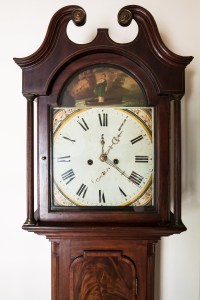
Image of clock by stux from Pixabay

Image  of egg by opsa from Pixabay