READING WHILE TRAVELING

by Helen Currie Foster

Just before a trip I get anxious: is there enough stored in my Kindle to keep me happy? You constant readers know that feeling. Did you upload enough for the waiting room at the airport? For the plane? For a sleepless first night, jet-lagging? Enough to keep you happy even if weak (or no) wi-fi at the (tent, cabin, hotel, boat, campsite, rental) precludes another download? Yes, there’ll be news–but I am escaping!

We’re on a family trip to France, with children and grandchildren. I loaded up the Kindle diligently beforehand. Of course there are way too many wonderful things to do besides read…

Still, my heart sang when we entered the rental in the French mountains and spied—A BOOKCASE!

Moreover, the shelves held mysteries! Ian McEwan, Patricia Cornwell, Elizabeth George, Janet Evanovich, V.I. Warshawski, Alexander McCall Smith…

Also serious nonfiction and titles from Kazuo Ishiguro, Dostoevsky, Graham Greene, Julian Barnes and more. Then I spotted Kinky Friedman’s Frequent Flyer and thought—eclectic tastes! Perhaps some were left behind by guests. Still, the shelves made me want to meet the owners. The welcoming bookshelves and, to boot, a choice of comfortable corners where a tired tourist can flop, prop up the well-used feet, and read…what more can one ask?

(Sidebar—when you see a Talking Head on your screen, with a bookshelf behind—do you wonder if the books really belong to the Head? Or are they just a prop intended to impress? Maybe we’ll see some interviewer pose a question: “How did you like Crimes Against Humanity?” Blank stare.)

I know I’ve mentioned her in a prior blog, but have you discovered Dorothy Dunnett yet? https://en.wikipedia.org/wiki/Dorothy_Dunnett

If you’re familiar with Dunnett’s stunning two historical fiction series, The Lymond Chronicles and The House of Niccolo, you already know she delivered powerful (and powerfully surprising) plots, magnetic characters, and vivid reconstructions of the 15th and 16th centuries. Using (for all that detail) an omniscient narrator.

But in her spare time she also wrote the Dolly mystery series, involving an astoundingly talented portrait painter named Johnson Johnson (yes, two), who happens to turn up in scenic locations in his yacht, the Dolly, on secret missions for the British ministry of defense. I’ve reread three of those on this trip—one set in Ibiza, one in Morocco, one in Canada. Unlike the Niccolo or Lymond historical series, Dunnett’s heroines in these first-person mysteries are in their late teens or twenties and trying to make their way in the world (as an au pair, a cook, an executive assistant, etc.). Naturally they find themselves in dangerous situations while trying to identify a murderer, and Dunnett gives each her own first-person voice—each interestingly different.

Clearly Dunnett didn’t merely set foot in these locales: she absorbed them. The action’s fast-moving, but she paints a landscape with details that place you right in the square where the villains are about to—well, here’s an example from Moroccan Traffic, in the Atlas Mountains, where Wendy, a young executive assistant, watches as Johnson and the engaging inventor Mo pursue two ruthless adversaries up perilous cliffs:

…where they had set their faces to climb was the flank of the mountain; the boulder slope rising to cliffs and ridges and rock bands interlaid with tongues of snow, and scree-fields, and stony pockets of pasture. And further up, behind escarpment and terrace, the burning forepeaks of the range.

         I had seen it all from the road. Somewhere there, already entrenched, already waiting, were Gerry and Sullivan, ex-SAS marksmen.

You can also tell that Dunnett (as well as her character Johnson) was a painter:

All around us the hills, limp as blankets, glowed in soft reds, their milky hollows the colour of amethyst. The snow on Sirwa was tinged golden pink, and cast china blue shadows which were technically impermanent. A man walked by the road, a black goat like a scarf around his neck.

         And from Roman Nights – the young heroine, an astronomer, battles spy dealings in Italy including the Aragonese Castle on Ischia in the Bay of Naples:

         On a plateau the cathedral reared its three roofless sides like a kind of dismembered Versailles, white and flaking; the walls furnished with crumbling cherubs and statues, with rococo arches and pillars and architraves.

Dunnett gives her astronomer heroine plenty of tongue-in chic wit:

Johnson and Lenny sailed out of Amalfi, in a pure, warm air blowing about eight on the bloody Beaufort scale, and the rain lashing down. After becoming exceedingly well acquainted with the water filling the Gulf of Salerno, we fled into a fishing harbour called San Marco and spent the night offshore in a cat’s cradle of other boats’ cables.

Thank you, Dorothy Dunnett, for stupendous scholarship and for witty mysteries in places so believably described. What a gift to the traveler! Sorry, gotta go—I’m deep into Tropical Issue, set in Madeira, where I’ve never been—but it sure looks great in this prose…

What gifts they are to humans—to write, to read!

Award-winning writer Helen Currie Foster lives and writes in the iconic Texas hill country, supervised by three inquisitive and persistent burros. After practicing law for more than thirty years, she found the Alice MacDonald Greer Mysteries had suddenly appeared in her life. Book 10 in the series, Ghost Justice, is expected to debut in August 2025. Helen is continually fascinated by human history and how, uninvited, the past keeps invading our parties. Follow her on Facebook and Amazon, and in Austin at BookPeople.

https://www.facebook.com/helencurriefoster

https://www.amazon.com/Books-Helen-Currie-Foster/s?rh=n%3A283155%2Cp_27%3AHelen%2BCurrie%2BFoster

A Well. A Story.

By Dixie Evatt

I recognize that sometimes I can be excessively literal. That’s why when Julia Cameron reminds us to make time to fill our creative well, I picture an actual old-timely water well. In my mind’s eye, ideas, quotes, games, puzzles, cartoons, pictures, and music pour into the well from every direction – a rainstorm of colors, smells and sounds.

I was first introduced to the concept when I joined an Austin creative community, led by the inestimable Ann Ciccoletta, Artistic Director of Austin Shakespeare. The group draws inspiration from Cameron’s self-help classic, The Artist’s Way – A Spiritual Path to Higher Creativity. Since its initial publication in 1992 it has been reprinted more than forty times and served as a catalyst for dozens of other inspirational works by Cameron. Her message is intended for everyone– writers, artists, photographers, actors, composers, dancers, poets, musicians, singers, and everyday folks alike alike — who want to unlock their inner creative self. Her advice:

Filling the well involves the active pursuit of images to refresh our artistic reservoirs. Art is born in attention. Its midwife is detail… In filling the well, think magic. Think delight. Think fun. Do not think duty. Do not do what you should do …Do what intrigues you, explore what interests you; think mystery, not mastery. A mystery draws us in, leads us on, lures us.

Once married to Martin Scorsese, Cameron’s life was a rollercoaster of good times-bad times-terrible times until she ultimately found sobriety. In an article about the 30th anniversary of her landmark book, The Guardian says:

Inspired by the Alcoholics Anonymous model, the book offers a programme for “artistic recovery”.

Cameron has benefited from her own advice with twenty-three titles on creativity to her credit along with seven books on spirituality; three works of fiction; one memoir; seven plays; five prayer books; four books of poetry; and one feature film.

The prompt for that bombardment of ideas to “fill the well” is can be the weekly Artist Date – another Cameron recommendation consisting of making an appointment with yourself to intentionally seek out sources of inspiration. In gardens. In museums. In craft stores. In coffee shops. Anyplace that can excite the senses is a destination for a date with oneself.

I find that it’s often a good idea to pair these dates with something to nudge you forward. For instance, I subscribe to Austin Kleon’s weekly newsletter (it drops into my email each Friday). It lists his “ten things worth sharing” with brief commentary and links to articles, songs, books, films, podcasts, events, and other content. Kleon is an Austin-based, best-selling author (Steal Like an Artist) who, like Cameron, writes to inspire others. More can be found at his website: https://austinkleon.com.

I was reminded of these never-ending sources of inspiration when, in late April, I had the good fortune to share a table with Spike Gillespie at the Austin Public Library’s second annual Greater Austin Book Festival (aka GAB Fest). Gillespie is well known in Austin writing circles for her unflinching commentary and multiple books. She lives on a ranch outside the city where she hosts gatherings for writers to find inspiration.

We had a chance to chat as we watched readers and fellow authors mill around the book festival, occasionally dropping by our table to ask about our book displays. Then a little girl – probably no more than seven or eight years old — approached to help herself to our free mints. She kept picking up one after another until her hands couldn’t hold anymore. After she walked away my conversation with Gillespie built on the encounter …and how often desire can exceed capacity. From there we talked about the importance of being a listening writer. To observe. To absorb. To listen.

I thought about this later and remembered what Cameron advised writers in her 2021 book, The Listening Path: The Creative Art of Attention:

We do not struggle to think something up; rather we listen and take something down. Very little effort is required; what we are after is accuracy of listening.

Inspiration can be right under your nose. It can come over the transom unexpectedly. It can spring from an unplanned conversation. It may drop into your email. Watch for it so you can fill the well.

CAPTIONS

Well — AI Generated

Photo — Dixie (L) and Spike (R) 2025 GABFest

EQUINOX!

by Helen Currie Foster

March 14, 2025

“An excess of animal spirits”–springtime! Really? Molly Ivins was right as usual when she wrote, “Texas–land of wretched excess!” We’ve had ridiculous lows, unseen for decades. Early daffodils and hyacinths came, shivered, and shriveled in the unholy cold winds roaring across the plains. But we’ve also had the earliest 90 degrees in decades! Wretched excess indeed!

Just two days until the vernal equinox on March 19, and spring. What makes us wander outside, searching for the first bluebonnet, the first violet? What makes us huddle outside the garden store, searching through the little plants shivering in the breeze, fingering seed packets, carrying home small pots of basil and blue salvia even though the weather’s far too untrustworthy for planting? What is this proto-agricultural spirit that makes us lug home the potting soil, hoe the garden bed? More sunlight? Cabin fever? Some early human gene? We, the Animal Kingdom, working with the Plant Kingdom?

I’m rereading Barry Cunliffe’s Europe Between the Oceans: 9000 BC-AD 1000 (https://amzn.to/3RfJzj6), a book I value not just for the stunning photographs of prehistoric sites and art, but for describing a history of human inventiveness. Cunliffe, Oxford Professor Emeritus of Archeology since 2007 (many books–– https://bit.ly/3XZkmNA), says “massive transformation” occurred in Europe between 1300-800 BC. Population growth required developing more crops than wheat and barley, including lentils, peas and—“the celtic bean (Vicia faba).”

Immediately I ordered a giant pack of fava bean seeds.

This image has an empty alt attribute; its file name is img_0981.jpg

Then I read the label: they’re mostly a winter crop–but this year I’m desperate. With last year’s blistering hot drought, I wound up with only one pot of cherry tomatoes on the porch and a dozen wilting jalapeno plants in the garden. Cunliffe’s reference to Vicia faba fired my imagination—envisioning myself harvesting large fuzzy green pods, containing delectable beans, and adding a little vinaigrette…olive oil (since 4000 BC) and vinegar (3000 BC). Using an ancient bean and ancient vinaigrette recipe! Possibly those beans were harvested, and the vinaigrette shaken, by some long-ago ancestor 3000 years ago, making me wonder if we have genetic preferences, genetic recipe roots? After all, we of the Animal Kingdom depend on the Plant Kingdom (oxygen, vinaigrette, and wine!).

Mysteries offer escape—a protagonist we like, an intriguing plot, a vivid setting. Like plants, favorite old mysteries offer much when we revisit. Mystery writers? They’re good to “talk to.” This morning I discovered on the shelf my dad’s 1934 Modern Library edition of Dashiell Hammett’s The Maltese Falcon, with a brief bio and the “new introduction” by Hammett.

This image has an empty alt attribute; its file name is img_0980.jpg

I didn’t know Hammett had worked as an operative for Pinkerton’s Detective Agency before he started writing! “Drifting through a miscellany of ill-paid jobs, he found a temporary solution to his economic problem by shadowing real malefactors with what might be called conspicuous success.” Then came the World War: “He won a sergeantcy and lost his health.”

Hammett can remember where he got his characters. Here’s a snippet of what he says about The Maltese Falcon:

“Dundy’s prototype I worked with in a North Carolina railroad yard; Cairo’s I picked up on a forgery charge in Pasco, Washington, in 1920; Polhous’s was a former captain of detectives…Effie’s once asked me to go into the narcotic smuggling business with her in San Diego…”

Hammett then muses about his own protagonist. “Spade had no original. He is a dream man in the sense that he is what most of the private detectives I worked with would like to have been and what quite a few of them in their cockier moments thought they approached. For your private detective does not—or did not ten years ago when he was my colleague—want to be an erudite solver of riddles in the Sherlock Holmes manner; he wants to be a hard and shifty fellow, able to take care of himself in any situation, able to get the best of anybody he comes in contact with, whether criminal, innocent by-stander or client.”

What a great description, and didn’t Humphrey Bogart nail it?

It strikes me that this new character of his upended the vision of the members of the London 1930 Detectives Club—Hammett gave the wide-eyed mystery audience a protagonist who is not a secret member of the aristocracy (Albert Campion) or a perfect gentleman (Roderick Alleyn) or a hyper-particular French veteran drinking tea and waxing his moustache (Hercule Poirot)…but a “hard and shifty fellow…able to get the best of anybody.” Welcome to the New World’s new-style mystery protagonists, the children of Hammett, Raymond Chandler, Sara Paretzky and others…including that hybrid protagonist, Mary Russell, in Laurie King’s Mary Russell and Sherlock Holmes series.

For Mary Russell and Sherlock Holmes, the scent of honey is a repeat theme (her Holmes is a beekeeper). I like her Holmes, I like her Russell, and just finished her Garment of Shadows (2012). https://bit.ly/4iTwmYZ King has chosen a fascinating and ambitious setting: the 1920’s, with Spain and France fighting for control of Morocco, each coveting its crucial strategic location at Gibraltar, while various Moroccan groups—Berber and otherwise—fight for independence. King uses first person point of view for Mary Russell, who’s suffering from acute amnesia—forgetting her childhood and even her marriage––but uses third person POV for Holmes’s chapters. Those shifts sometimes confused me. But her depth of history and geography, and her vivid descriptions of the magical city of Fez with its souk, bring the setting alive. Mary Russell herself has become quite a protagonist, with linguistic skills—including Arabic––and the imagination and drive to devise a daring escape from a horrible prison. I’d like to learn knife-throwing like Mary Russell (she keeps one in her boot) but the likelihood seems dim.

Writer/theologian Bruce Reyes-Chow mentioned how, when stuck, he’d “talk through ideas with myself, my plants…” I intend to follow his lead. On our deck sit five jasmine plants we’ve toted around since the seventies. I think they sometimes do communicate with me—“I’m dry-y-y-y!” But from now on, when I’m stuck on a plot, I’ll go consult them. Every spring, those jasmine produce tiny white flowers with an unmatchable scent. In search of even more scent, this year I’ve planted another mix of old and new. Rose de Recht is a fragrant pink heirloom damask, Fragrant Blush promises pink perfume, and Star of the Republic is tough, like her name, but delicate pink with exquisite fragrance.

This image has an empty alt attribute; its file name is img_0978.jpg

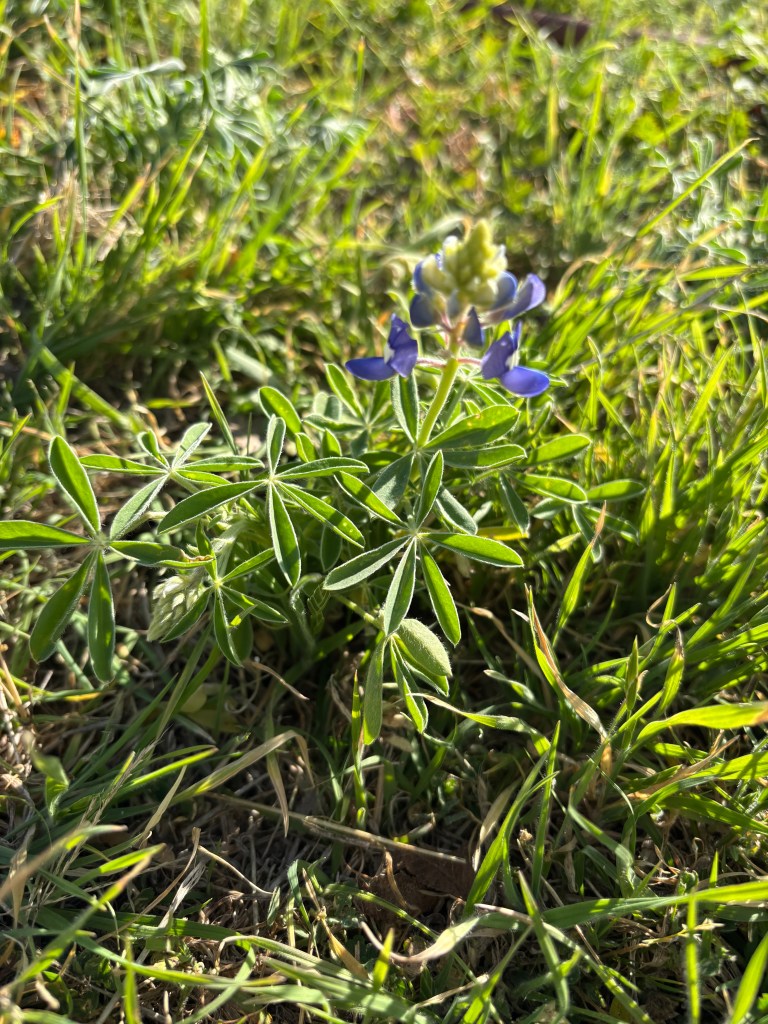
And now suddenly the redbuds, with their irresistible yet evanescent fuchsia buds, are blooming. I’ve seen our first bluebonnet,

This image has an empty alt attribute; its file name is img_0974.jpg

and the first purple prairie verbena. The live oaks know it’s almost the equinox—they’ve flung down their old leaves (aided by the fierce winds) and are preparing their catkins and baby leaves. The cedar elms have put out tiny chartreuse leaves just in the last two days.

This image has an empty alt attribute; its file name is img_0973.jpg

So it’s spring! Grab that trowel! And after all your work, you deserve to loll on the couch at night with a good mystery. I’m halfway through the tenth book in my Hill Country murder mystery series. This one raises a question I find intriguing and difficult. Can justice be served when, unauthorized to pronounce justice, we take justice into our own hands? Is that still justice? I’m discussing it with the plants. More to come….

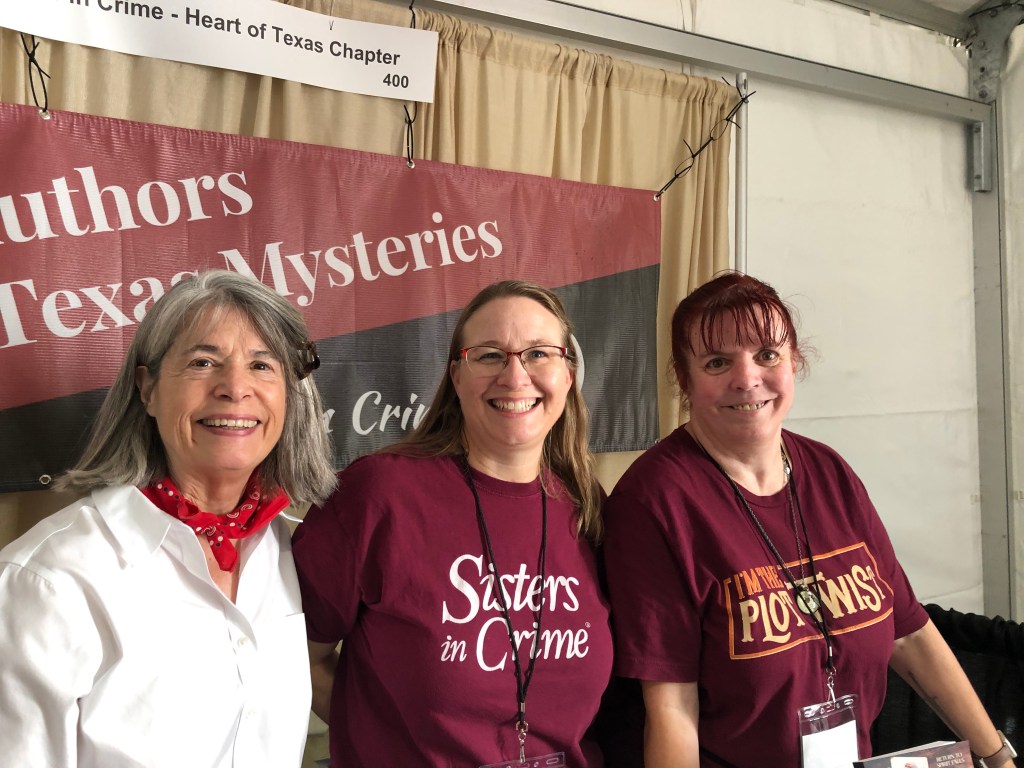
This image has an empty alt attribute; its file name is img_1776.jpg

Here are Helen, Noreen Cedeno, and Juanita Houston at the Texas Book Festival!–Heart of Texas Sisters in Crime

Award-winning Helen Currie Foster lives and writes the Alice MacDonald Greer Mystery series (9 volumes so far) north of Dripping Springs, Texas, loosely supervised by three burros. She’s working on Book 10. She’s drawn to the compelling landscape and quirky characters of the Texas Hill Country. She’s also deeply curious about our human history and how, uninvited, the past keeps crashing the party.

Follow her at http://www.helencurriefoster.com and at https://www.amazon.com/stores/Helen-Currie-Foster/author/B00R1X9RXK?https://www.facebook.com/helencurriefoster

Neil Gaiman’s Art Matters: “Make Good Art”

by Renee Kimball

Neil Richard Gaiman will turn 60 this year. Gaiman’s stories and characters are now in our hearts and embedded in our lexicon. These stories are part of the story of us.

Who does not know the tale of Coraline, little girl lost, or American Gods, a tale of forgotten cultures and religions? And Anansi Boys (American Gods Book 2), a captivating yarn springing from African lore? And the popular collaborative work with Terry Pratchett, Good Omens: The Nice and Accurate Prophecies of Agnes Nutter, Witch, now a Netflix production.

Gaiman is more than a fantasy writer, he reveals encyclopedic knowledge of world mythologies, world religion, world history, and a smorgasbord of other oddly relatable facts.

Mostly, people are drawn to him because he was and is a bookish person, and was once a very lonely boy who lived in libraries nurtured by librarians.

That lonely boy grew up and became one of the most famous graphic artists in the world, pushing graphic arts to new heights with his Sandman series. He has become a well-respected author for his research, and his multiple adult and children’s fiction. And he is the champion of Libraries and Librarians.

In 2018, Gaiman published a small book illustrated by Chris Riddell titled Art Matters-Because Your Imagination Can Change The World.

The world always seems brighter when you’ve just made something that wasn’t there before.’ Neil Gaiman

This book is a story about reading, libraries, librarians, writing, life choices, disappointments, and the belief that Art Matters.

Gaiman’s credo:

I believe that it is difficult to kill an idea because ideas are invisible and contagious, and they move fast.”

Gaiman stands as the champion of the freedom of ideas and against suppression of any ideas. He is a believer in the right of expression; whether these notions are correct or not, they are yours. Your idea of God, the state of the world, or anything else is individual—if you don’t agree, you can ignore or object—it’s your choice.

And Gaiman believes that our future, your future, “Depends on Libraries, Reading and Daydreaming.”

“I suggest that reading fiction, that reading for pleasure, is one of the most important things one can do. I’m making a plea for people to understand what libraries and librarians are, and to preserve both of these things.”

Simply, librarians are unique in their position in the world. More than ever, they provide a universe in which “the love of reading” is encouraged, they show that reading is a “pleasurable activity.” 

. . .Everything changes when we read. . .Fiction builds empathy. . .”

I was lucky I had an excellent local library growing up, and met the kind of librarians who did not mind a small unaccompanied boy heading back into the children’s library every morning and working his way through the card catalogue looking for books with ghosts or magic or rockets in them, looking for vampires or detectives of witches or wonders. . .”

A Library is a place of safety, a haven from the world. It’s a place with librarians in it.”

For writers there is a personal desire that people should want to read, buy your books, your stories, become engaged in what you write. But more importantly there needs to be a concerted effort by everyone to teach all children “to read and enjoy reading.” To do that, libraries and librarians are the key, without them, we have nothing.

Neil Gaiman, by Rhododendrites. CC BY-SA 4.0. Via Wikipedia.

And where did all this reading lead this small bookish boy? Gaiman admits that starting a “career in fine arts, you have no idea what you are doing,” and that is a good thing, because you will not be held back by others’ limitations. Regardless of what befalls you, he admonishes, “Make Good Art.”

If you do decide to pursue a career in fine arts, know that not everything is going to work. It will make you uncomfortable, it will make you want to stop, it will make you want to hide. The point is, try again, write or draw and explore again. If we listen to Gaiman’s message, the message to create in your own way, even if it is uncomfortable or not understood, even if you feel like a fraud, or even if you are criticized, you will survive it.

“Be bold, be rebellious, choose Art. It Matters.” Neil Gaiman

***

A former paralegal, Renee Kimball has a master’s degree in criminal justice. Among her interests are reading and writing. She is an active Animal Advocate and fosters and rescues both dogs and cats from shelters and works with various organizations to find them forever homes.