BOO! By Fran Paino

All Hallows Eve approaches, and it’s not just the children who love this holiday, with its ghost stories and the trick-or-treat traditions. According to the National Retail Federation, “more than 148 million U.S. adults plan to participate in Halloween-related activities,” [[i]] despite the restrictions of COVID-19! What is it that we love so much about Halloween? 

        According to a Purdue University professor, Halloween lets us experience a good scare without being in real danger. It is within human nature to seek out and suffer unpleasant feelings – but in small doses, allowing us to flirt with danger and experience the emotional rush— free of real consequences.[[ii]]   

        Historically, Halloween is believed to have originated with the pagan Celtic festival of Samhain. This ancient community, which lived 2,000 years ago, celebrated their new year on November 1 and believed that the boundary between the worlds of the living and the dead collided. 

On October 31, the Celts believed the spirits of the dead returned to earth to cause trouble and damage their crops. They built huge sacred bonfires, where they burned crops and sacrificed animals to the Celtic deities. During the celebration, the Celts wore costumes, typically consisting of animal heads and skins, and attempted to tell each other’s fortunes. Before the festivities began, they extinguished their hearth fires at home. When the celebration was over, they re-lit them with flames from the sacred, ceremonial bonfire to help protect themselves during the coming winter.

        By the ninth century, Christianity had spread into Celtic lands and blended Christian ceremonies with older pagan rites. In 1,000 A.D., the Catholic church designated November 1 as All Saints’ Day, or All-hallows/All-hallowmas (from Middle English Alholowmesse meaning All Saints’ Day), absorbing the Celtic traditions of Samhain, with bonfires and masquerades. This became All-Hallows Eve, and the word eventually compressed into Halloween.[[iii]]During this time, new rituals sprang up and were theforerunners to trick-or-treat, a custom not loved universally by parents in today’s world.

        In Medieval England, on All Hallows Eve, poor people would visit the homes of wealthy families to receive soul cakes. The custom was called souling because “Little pastries were given in exchange for a promise to pray for the souls of the dead relatives.” [[iv]]  In Scotland and Ireland, young people disguised themselves by dressing in costume, and accepting offerings from households in return for singing, reciting poetry, telling jokes, or performing a trick before receiving their treat.[[v]]

        In the U.S., the custom of trick-or-treating became a staple of the American Halloween celebrations after WW II, when sugar rationing ended. In 1952, Walt Disney released the first Trick-or-Treat cartoon movie, starring Donald Duck, which helped solidify Halloween’s celebration in American culture.

        Whatever one feels about the practice of trick-or-treating, there is another tradition that almost everyone looks forward to. Halloween is a fine time to revisit our beloved and deliciously scary, creepy stories and find new ones. Who can resist the urge to vicariously experience, without consequence, the chills, thrills, and fright of ghost stories and strange happenings? 

Among thousands of spooky tales are Edith Wharton’s Ghost Stories, ranging from the unnerving appearance of ghosts in All Souls’, who appear at Sara Clayburn’s house to wreak havoc for one night. There is a spirit in The Lady’s Maid’s Bell, leaving the reader to wonder if the bell rang to warn of something terrible happening, or was it the narrator’s imagination?

 Then there’s the frightful notion of not recognizing a being from the afterlife in Afterwards when a husband disappears – and only at the end does the bereft wife understand that the ghost of someone dead had visited. 

Often, the tales of crime by Sir Arthur Conan Doyle imply something supernatural, as in The Adventure of the Speckled Band, about a mysterious death and a young woman’s fear that her own was approaching. And, of course, his classic The Hound of the Baskervilles can be read repeatedly and still maintain its emotional impact.Just the thought of the hound braying on the moor raises goosebumps.

There is hardly room to mention every author whose work has become a Halloween special. Among the scariest are Shirley Jackson’s The Haunting of Hill House, in which an occult scholar and his searchers seek evidence of hauntings and get more than they bargained for.


And the scariest, ever, Henry James’s The Turn of the Screw. Again, the author creates a terrifying picture of two dead servants returning and possessing the bodies of two young children, a brother, and sister. Again, the author leaves the reader questioning whether or not the events and their interpretations are from the nanny’s imagination, or are they real? Only Henry James knew for sure—or did he?


So, on All Hallow’s Eve, when you’re done with your traditions, trick-or-treating – whether ringing doorbells or handing out safely wrapped candies set the mood. Darken the house, keep a reading lamp bright to illuminate the pages and curl up with a hot chocolate or something more robust and let yourself be immersed in the netherworld and allow yourself to be scared.BOO!


                              [i] https://nrf.com/media-center/press-releases/consumers-anticipate-new-ways-to-celebrate-halloween-despite-covid-19  10/23/20

[ii] https://www.dailymail.co.uk/sciencetech/article-3860638/The-science-Halloween-Researchers-reveal-safe-gross-appeal-spooky-celebration.html 10/22/20

[iii] https://www.history.com/topics/halloween/history-of-halloween 10/21/20
[iv] Ibid
[v] Ibid
ART:
Image OF HANDS ON GLASS  by Sergey Gricanov from Pixabay
Image  SETTING THE MOOD by Enrique Meseguer from Pixabay
Image of GHOST WOMAN  by DarkmoonArt_de from Pixabay
Image OF ESTATE FOR HOUND by Basil Smith from Pixabay 

Mary Oliver—Who Heeded the Call


by Renee Kimball


“Tell me, what is it you plan to do
with your one wild and precious life?”

~ Mary Oliver

 “Ten times a day something happens to me like this – some strengthening throb of amazement – some good sweet empathic ping and swell. This is the first, the wildest and the wisest thing I know: that the soul exists and is built entirely out of attentiveness.

~ Mary Oliver                          

* 

Sometimes we bump into an author that shakes us—strikes deep.  In complete amazement we say, I wish I had had the advantage of her wisdom sooner.  Now, going forward, may we all be as aware as Mary Oliver, may we all practice her approach to life, love, and nature.


*

Mary Oliver was born on September 10, 1935, and died at the age of 83, on January 17, 2019. She published over 25 books of poetry and prose during her lifetime.

Oliver rarely wrote of her Ohio childhood.  She was a victim of extreme child abuse and family dysfunction. To survive, she escaped to nature and literature and they sustained and saved her.

She studied at Ohio State University and Vassar College, but left before completing her studies.

Oliver won the Pulitzer Prize for Poetry in 1984.  She continued to win numerous other literary awards as well as honorary doctorates during her lifetime.

*

—from Upstream (Penguin Press, 2016).

“. . .Teach the children.  We don’t matter so much, but the children do. . . Show them daisies. . .Give them the fields and the woods and the possibility of the world salvaged from the lords of profit. Stand them in the stream, head them upstream, rejoice as they learn to love this green space they live in, its sticks and leaves and then the silent, beautiful blossoms. . Attention is the beginning of devotion.”

“. . . But first and foremost, I learned from Whitman that the poem is a temple—or a green field—a place to enter, and in which to feel. . .I learned that the poem was made not just to exist, but to speak—to be company.  It was everything that was needed. . .”

“I quickly found for myself two such blessings—the natural world, and the world of writing: literature.  These were the gates through which I vanished from a difficult place. . .”

“. . . And this is what I learned: that the world’s otherness is antidote to confusion, that standing within this otherness—the beauty and the mystery of the world, out in the fields or deep inside books—can re-dignify the worst-stung heart.”

—from Dream Work (Atlantic Monthly Press, 1994)

“. . . You don’t want to hear the story
of my life, and anyway
I don’t want to tell it, I want to listen
to the enormous waterfalls of the sun. . .”


Wild Geese

You do not have to be good.
You do not have to walk on your knees
for a hundred miles through the desert,
repenting.

You only have to let the soft animal of
your body
love what it loves.

Tell me about your despair, yours, and I will tell
you mine
Meanwhile the world goes on.

. . .

Whoever you are, no matter how lonely,
the world offers itself to your imagination,
calls to you like the wild geese, harsh and exciting—
over and over announcing your place in the family of things.”

—from Devotions (Penguin Press, 2017)

I Wake Close to Morning

Why do people keep asking to see
God’s identity papers
when the darkness opening into morning
is more than enough?
Certainly any god might turn away in disgust.
Think of Sheba approaching
the kingdom of Solomon.
Do you think she had to ask, “Is this the place?”

The World I Live In

I have refused to live
locked in the orderly house of reasons and proofs.
The world I live in and believe in
is wider than that. And anyway,
what’s wrong with Maybe?

You wouldn’t believe what once or twice I have seen. I’ll just
tell you this:
only if there are angels in your head will you
ever, possibly, see one.

*

The world is much lonelier now without Mary Oliver.  We are fortunate that she left us a word filled legacy that advises us to be awake, attentive, read without stopping, and become a lover of nature.

Lastly,  if you are lucky and should hear the creative call, then do the work, whatever that may be that calls to you—open your arms, your mind, your being, and respond.

Those of us left behind remain immensely grateful that Mary Oliver heeded her call.

*

“. . . My responsibility is not to the ordinary, or the timely.  It does not include mustard, or teeth.  It does not extend to the lost button, or the beans in the pot . . My loyalty is to the inner vison, whenever and howsoever it may arrive. . .

 “There is no other way work of artistic worth can be done.  And the occasional success, to the striver, is worth everything.  The most regretful people on earth are those who felt the call to creative work, who felt their own creative power restive and uprising, and gave to it neither power nor time.”

 —from Upstream (emphasis added).

***

References

Cover photos from Amazon

Mary Oliver page from Goodreads.

Mary Oliver 1935–2019. Poetry Foundation.

Mary Oliver website.  Beacon.

“On Being with Krista Tippett  Mary Oliver Listening to the World.” Radio Podcast. September 3, 2020. Original Air Date February 5, 2015.

Devotions: The Selected Poems of Mary Oliver. October 10, 2017

Upstream: Selected Essays by Mary Oliver. October 29, 2019.

Dream Work by Mary Oliver.  May 1, 1986

***

A former paralegal, Renee Kimball has a master’s degree in criminal justice. Among her interests are reading and writing. She is an active Animal Advocate and fosters and rescues both dogs and cats and works with various organizations to find them forever homes.


PLAIN OR FANCY?

by Helen Currie Foster

Mystery readers are tetchy. We want an interesting plot with a fair shot at noting each clue—but don’t want to guess whodunnit too soon. We’re prepared to care about the protagonist, the sleuth, perhaps the victim. We hope some characters will intrigue us; others should do their part and get offstage.

Of course, setting is key. We may want a mystery set in our own state—or on the far side of the world. We demand accurate detail; we’re slow to forgive mistakes. We want to feel we’re actually in the setting: riding the Cornwall train with an exhausted Cormoran Strike, in the basement of the Russian Club with Peter Wimsey, escaping from a southside Chicago industrial complex with V.I. Warshawski.

So for setting, how much description is too much? Do you find yourself sometimes turning the page, skipping the paragraph describing the view from the ski-lift, the row of shops in the village, the squalor of the factory yard?

Recall Oliver Strunk’s Rule 6, Do Not Overwrite (Section V, “An Approach to Style (With a List of Reminders”): “Rich, ornate prose is hard to digest, generally unwholesome, and sometimes nauseating.”

Oliver Strunk’s Elements of Style

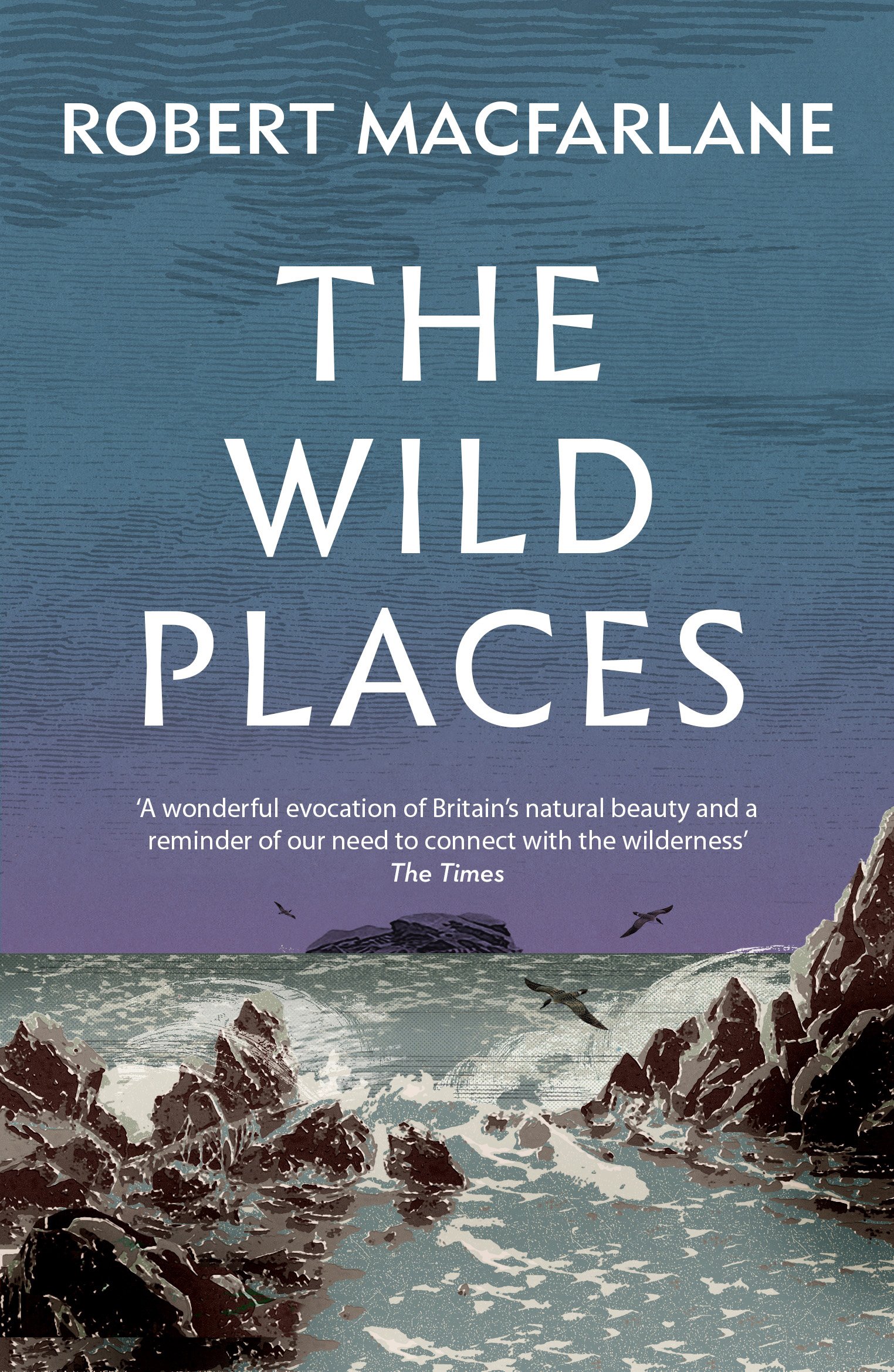
The Wild Places: 9781783784493: Amazon.com: Books

Yes, but sometimes a writer stops us in our tracks with beauty. Take Robert MacFarlane, The Wild Places (my favorite, describing hikes in Britain)or The Old Ways, or Landmarks. Contrary to habit I scribbled many quotes in the back of my copy of The Wild Places. He describes moonlight on a freezing night atop a mountain: “trillions of lunar photons pelting on to my face and the snow about me, giving me an eyeful of silver…”

An eyeful of silver! He writes of hiking an eroded old seabed, “We moved through dozens of weathers.” Of a frozen waterfall: “A hard portcullis of ice, beautifully mottled by dark figures of thaw.” Can’t you see it? Feel it? He quotes Stephen Graham on the rare moment when we feel part of nature: “‘As you sit on the hillside, or lie prone under the trees of the forest, or sprawl wet-legged by a mountain stream, the great door, that does not look like a door, opens.’”

The great door, that does not look like a door!

Maybe our sleuth lacks the time, is in too much peril, to describe moonlight “giving me an eyeful of silver,” or the moment when she or he, lying beneath a tree, momentarily sensed “the great door, that does not look like a door…” Too contemplative, when the sleuth has no time to contemplate.

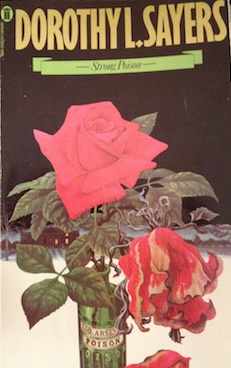
A mystery setting has additional jobs besides painting the landscape. Ideally it draws us straight into the plot, shaping our view of the characters. Here’s the beginning of Sayer’s Strong Poison:

Mystery Monday: Strong Poison by Dorothy L. Sayers | Ms M's Bookshelf

“There were crimson roses on the bench; they looked like splashes of blood.

The judge was an old man; so old, he seemed to have outlived time and change and death. His parrot-face and parrot-voice were dry, like his old, heavily-veined hands. His scarlet robe clashed harshly with the crimson of the roses. He had sat for three days in the stuffy court, but he showed no signs of fatigue.

He did not look at the prisoner as he gathered his notes into a neat sheaf and turned to address the jury, but the prisoner looked at him. Her eyes, like dark smudges under the heavy square brows, seemed equally without fear and without hope. They waited.”

Already we’re caught, sensing the prisoner’s peril. Immediately we must turn to the next page.

Or Tony Hillerman’s first paragraphs in The Ghostway:

The Ghostway (Leaphorn & Chee, #6) by Tony Hillerman

“Hosteen Joseph Joe remembered it like this.

He’d noticed the green car just as he came out of the Shiprock Economy Wash-O-Mat. The red light of sundown reflected from its windshield. Above the line of yellow cottonwoods along the San Juan River the shape of Shiprock was blue-black and ragged against the glow. The car looked brand new and it was rolling slowly across the gravel, the driver leaning out the window just a little. The driver had yelled at Joseph Joe.

“Hey!” he’d yelled. “Come here a minute.”

Joseph Joe remembered that very clearly. The driver looked like a Navajo, but yelling at him like that was not a Navajo thing to do because Joseph Joe was eighty-one years old, and the people around Shiprock and up in the Chuska Moutains called him Hosteen, which means “old man” and is a term of great respect.”

Hillerman has us. Shiprock silhouetted against a sunset, the Chuska Mountains, Navajo tradition being violated––we’re hooked by this authoritative voice placing us where we wanted to be, in Navajo country.

Strunk has other words for us writers as well. His Rule 14, Avoid Fancy Words: “Anglo-Saxon is a livelier tongue than Latin, so use Anglo-Saxon words.” I checked: “word” itself is Anglo-Saxon. https://www.etymonline.com/search?q=word

This instruction helps mystery writers follow several other rules, such as not overwriting, and choosing powerful verbs and specific nouns. See page two of Hillerman’s The Dark Wind:

Amazon.com: The Dark Wind (9780062018021): Tony Hillerman: Books

Lomatewa glanced past the rabbit brush at the second boot. It matched. Beyond the second boot, the path curved sharply around a weathered granite boulder. Lomatewa sucked in his breath. Jutting from behind the boulder he could see the bottom of a foot. The foot was bare and even from where Lomatewa stood he could see there was something terribly wrong with it.”

Here he uses mainly (not all) Anglo-Saxon words, though some traveled from Latin through old French.

When I’m writing I’m always aware of Strunk’s strictures (uh-oh, late Latin). Indeed, I should probably reread him every week. But in working on this seventh mystery I also hope to discover “an eyeful of silver”, or “the smell of charred stone”, or move through “dozens of weathers,” or more.

***

You can find more information about Helen Currie Foster at helencurriefoster.com

How to Get Your Brain Unstuck: Overcoming Writer’s Block Caused by Minor Stress

By N. M. Cedeño

Most people find it hard to concentrate on work when their stress levels rise. Meeting work goals becomes a challenge, and even routine tasks become hard-fought slogs because of stress. For many writers, the more stress we have in our day-to-day lives, the harder it is to put words on the page. Conversely, we feel less stressed when we have accomplished writing something. So while stress can prevent writing, writing can relieve stress, if we can get past the obstructions that are making it difficult for us to focus on writing.

from Pixabay

Stressors can pile on top of each other like bricks in a wall, forming a barrier that prevents focusing on other important matters.

Pandemic and natural disaster news = a load of bricks.

Kids attending school virtually from home = a load of bricks.

Election year politics = a load of bricks.

The insurance hassle of a minor car accident = a load of bricks.

Someone’s oral surgery to remove an impacted tooth = a load of bricks.

Zoom meeting after zoom meeting = a load of bricks.

Appliances and plumbing demanding immediate attention in an escalating pattern that explodes to include the dishwasher, clothes washer, water heater, refrigerator, water softener, several emergency water shut-off valves, and every faucet, shower head, and toilet in the house = a load of bricks.[i]

 All of those bricks can build a solid mental barricade. Demolishing that wall and getting back to writing takes effort. We need to take the time to de-stress by doing activities we enjoy. Lots of people are working from home right now, so taking a day off looks different than it has in the past. We have to consciously avoid sitting down to work that is ever-present and, instead, choose to do other activities.

image from Pixabay

First, we have to identify relaxing activities. Things I’ve found to alleviate stress include walking a few miles, scrubbing things, yardwork, reading mysteries, drinking tea, baking, eating chocolate, and, sometimes, binge-watching a television series in the evening.

This week, I set aside a morning to transplant my aloe vera plants from their overcrowded pots into more spacious ones. Ignoring those plants for five years allowed them to multiply like rabbits behind my back. Two bags of potting soil and 70 or so plants later, the plants looked much better, and I felt less stressed.

About half my aloe vera plants.
Photo by N. M. Cedeño

I have several walking routes measured to cover two to three miles near my house. One of them, perhaps fortuitously, or maybe not, depending on your point of view, passes right by a local coffee and donut shop.

Walking and yardwork are healthy ways to relieve stress, and they counterbalance unhealthier, but enjoyable activities like baking sweets and consuming chocolate. This past week, I baked homemade Nestle triple chocolate cookies and chocolate chip banana bread, and interspersed the baking with walking eight miles, edging and trimming the property, and transplanting all those plants.

Reading and watching television can refocus the brain on story plots, pushing stressors aside. Last weekend, I read Rhys Bowen’s latest in her Royal Spyness Series, The Last Mrs. Summers. This week, I’m working my way through a mystery short story collection. A few months ago, I watched the entire Star Trek: Enterprise series, watching one or two episodes every evening for a few weeks. This month, I watched a Canadian police drama.

When life’s minor stresses start to pile up and begin to interfere with writing deadlines, we must set aside time to de-stress with activities we enjoy. Generally speaking, a little exercise and a dose of relaxation can get the creative juices flowing and allow the words to start tumbling onto the page again. And, if all of the usual methods fail, it might be time for a vacation.[ii]


[i] Yes, this happened. While annoying, this is still minor stress compared to the loss of life, jobs, and property many people are facing right now.

ii] Note: This advice is for minor stress. If you are living with the floods, fires, storms, or disease that have defined 2020, as opposed to on the fringes of it all, these techniques may help mitigate stress, but won’t relieve it. For those with major stress, you have my sympathy.

~~~~~

N. M. Cedeño is a short story writer and novelist living in Texas. She is currently working on a paranormal mystery series called Bad Vibes Removal Services. The second novel in the series, entitled Degrees of Deceit, came out in August 2019.  Ms. Cedeño is active in Sisters in Crime- Heart of Texas Chapter.